 Burlington
 What Allura Fiber Cement Actually Is
Before explaining why we don't install it, it's worth being straight about what Allura is: a real fiber cement siding product, not a knockoff. Allura (the company was formerly known as Cemplank) manufactures lap siding, panels, trim, and shingle products from the same basic recipe as every other fiber cement maker — portland cement, sand, and cellulose fiber, cured under pressure into a dense, fire-resistant board. It's manufactured in the United States, sold through building supply distributors, and installed by contractors across the country, including plenty here in Washington.
We bring this up because a lot of "why we don't install X" pages online lean on scare tactics about competitors' products being cheap or defective. That's not our situation with Allura. It's a legitimate, code-compliant fiber cement siding. Our decision to standardize on James Hardie instead came down to fit — for our crews, our warranty process, and the specific demands of building envelopes in Skagit County — not a belief that Allura is a bad product in the abstract.
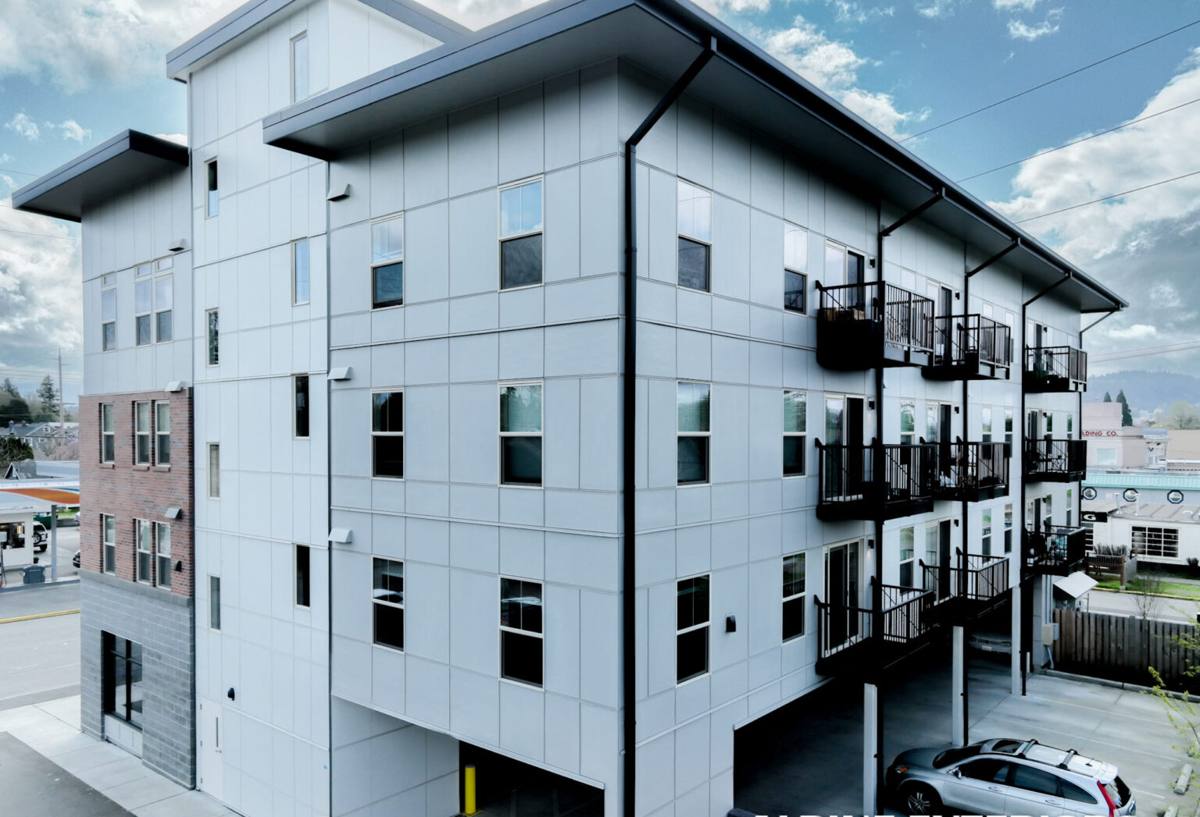
What Allura Gets Right
Fair is fair, so here's the honest case for Allura before we get into why we chose differently:
- It's genuine fiber cement, meaning it shares fiber cement's core advantages over vinyl or wood: non-combustible, resistant to rot and insects, and dimensionally stable in wet climates.
- It's available in prefinished (factory-painted) and primed options, similar to how Hardie offers ColorPlus finishes and primed-for-paint boards.
- It carries a manufacturer's limited warranty on the product itself, which is more protection than you get with vinyl or unfinished wood siding.
- It's generally priced competitively with other fiber cement brands, which matters to homeowners comparing bids.
If a homeowner in Burlington already has Allura siding and wants repair, painting, or partial replacement work, that's a different conversation than new installation — we're happy to talk through those situations directly. This page is about why we don't put it on new jobs.
Where Our Experience Led Us to Standardize on One Product
Regional Supply and Installer Support
James Hardie has built out an unusually deep distribution and training network in the Pacific Northwest — local lumberyards stock Hardie profiles and trim in the sizes we actually use, and Hardie runs a formal contractor certification program (Hardie Preferred and Elite tiers) with installation training, jobsite audits, and direct manufacturer support when something needs troubleshooting. Allura is available through regional distributors too, but the depth of stock, the breadth of trim and accessory matching, and the contractor training infrastructure aren't at the same scale here. When a crew needs a specific trim profile or a color-matched touch-up kit on a Tuesday afternoon in Burlington, that logistics gap is the difference between finishing on schedule and a job sitting half-sided for a week.
Finish System and Long-Term Color Match
ColorPlus, Hardie's factory finish, is baked on in a controlled environment and backed by a separate finish warranty that covers fading and peeling — not just the substrate. We've installed enough of it, in enough Skagit County weather, to know exactly how it performs, how the touch-up system works, and how to set expectations with homeowners. We don't have that same depth of field experience with Allura's prefinished line, and we're not willing to guess on a homeowner's largest exterior investment.
Climate Engineering for the Skagit Valley
Hardie engineers its HZ5 product line specifically for regions like ours — areas that see sustained damp weather, freeze-thaw cycling, and salt-laden air off Puget Sound and Skagit Bay. That's not marketing language we're repeating blind; it reflects real formulation differences (moisture resistance, dimensional stability) between Hardie's zoned products and a one-size-fits-all national fiber cement line. Standardizing on a product built for our specific climate zone, rather than a generalized version, is a big part of why we made the switch.
Fiber Cement Basics: Why Brand Still Matters
Composition and Moisture Behavior
All fiber cement is more moisture-tolerant than wood, but it isn't waterproof — it's moisture-resistant, and how it's manufactured affects how it handles repeated wetting and drying. Cut edges, in particular, need to be sealed and back-primed correctly on every brand of fiber cement, or you invite moisture into the fiber matrix over years of exposure. In a region with our rainfall totals and a moss season that can run from fall through spring, that detail isn't optional — it's the difference between siding that looks the same in year fifteen and siding that starts showing edge swelling in year eight.
Installation Tolerances
Every fiber cement manufacturer publishes its own fastener schedule, clearance requirements, and joint treatment specs, and they are not interchangeable. A crew trained and calibrated on Hardie's install specs — nail placement, minimum clearances above grade and roof lines, gap treatment at butt joints — can make mistakes if they're switching between brands job to job. We standardized on one manufacturer's install system so every crew member works from the same muscle memory on every job, instead of mentally swapping spec sheets depending on which siding showed up on the truck.
Allura vs. James Hardie: A Side-by-Side Look
| Factor | Allura | James Hardie |
|---|---|---|
| Product type | Genuine fiber cement | Genuine fiber cement |
| Climate-zoned formulations | General national product line | HZ5 line engineered for Pacific Northwest conditions |
| Factory finish system | Prefinished options available | ColorPlus baked-on finish with separate finish warranty |
| Regional stock & trim matching | Available through distributors, thinner local network | Deep local distribution and matching trim/accessories |
| Contractor certification program | Limited formal training infrastructure in our area | Hardie Preferred/Elite certification with audits and direct support |
| Our field experience | Minimal — not our standard install | Extensive, on homes across Skagit and Whatcom counties |
What Burlington's Climate Actually Demands From Siding
Skagit County sits in a spot that combines several stressors most siding never has to handle all at once: salt-laden air moving in off Padilla Bay and Puget Sound, long stretches of driving rain off the water, and a moss and algae season that can linger nearly year-round on shaded north- and west-facing walls. That combination accelerates two things — corrosion of exposed fasteners and trim, and prolonged moisture contact on any surface that doesn't shed water and dry out quickly. Any fiber cement product can be installed to handle this, but the finish quality, fastener corrosion resistance, and manufacturer-specific flashing details all affect how well it actually does over 20-plus years, not just on day one.
We also see a lot of homes here with mixed sun and shade exposure on the same elevation — a garage wall that bakes in afternoon sun next to a shaded corner that never fully dries. Siding systems need to perform consistently across that range, which is part of why we lean on a product line and finish system we've tested extensively in exactly these conditions rather than one we'd be learning on a live job.
The Real Cost of Getting Fiber Cement Installation Wrong
Fiber cement's biggest weakness isn't the material — it's installation sensitivity. Almost every early fiber cement failure we get called out to inspect traces back to installation, not the board itself: unsealed cut edges, insufficient clearance above grade or roofing, caulk used where a gap should have been left, or fasteners driven at the wrong depth. That's true whether the siding is Hardie, Allura, or any other brand. It's also exactly why we don't spread our crews thin across multiple manufacturers' spec sheets — every brand switch is a chance for a detail to get missed, and on fiber cement, missed details show up as expensive problems five to ten years down the road, not next week.
Our Installation Checklist
Regardless of brand, here's what should never be skipped on a proper fiber cement installation in our climate:
- Weather-resistant barrier installed and lapped correctly before any siding goes up
- Rainscreen or drainage gap behind the siding to let incidental moisture escape
- All field-cut edges sealed per manufacturer spec, not just painted over
- Minimum clearance maintained above grade, decks, and roof lines
- Corrosion-resistant fasteners rated for the specific siding thickness and exposure
- Flashing at every window, door, and horizontal trim transition
- Butt joints and corners treated per the manufacturer's exact spec, not general fiber cement practice
Why We Standardized on James Hardie
We didn't rule out Allura because of a bad experience with a specific job — we ruled it out because running one certified, deeply understood product system produces more consistent results than juggling several. James Hardie's climate-zoned HZ5 formulation, its ColorPlus finish and warranty structure, its regional supply chain, and its formal contractor certification program all line up with how we run our crews and how we want a Skagit County home to hold up over decades, not just years. That's the whole case: not that Allura is a bad product, but that after years of installing fiber cement in this specific climate, Hardie is the system we trust enough to put our name behind on every job.
If you're weighing fiber cement options for a home in Burlington or anywhere in Skagit County, we're glad to walk through what we see in the field and why we install what we install. Reach out for a free, no-pressure estimate — there's no obligation, and we'll give you a straight answer even if it's not the one you expected.