 Burlington
 If you've priced out fiber cement siding in Skagit County, you've probably heard both names — James Hardie and Cemplank. They look similar on a spec sheet. Both are fiber cement. Both come pre-primed or factory-finished. Both get marketed as the "durable alternative" to vinyl or wood. So it's a fair question: why does a Burlington siding contractor install only one of them?
The short answer is that fiber cement is a category, not a single product, and the differences between manufacturers show up over years, not on install day. This page walks through what Cemplank does well, where it and James Hardie actually diverge, and why we standardized on Hardie for homes in this part of Washington.
What Cemplank Is — And What It Gets Right
Cemplank is a fiber cement siding line manufactured by Etex Group (the same parent company behind Nichiha's competitor products), and it's a legitimate fiber cement product — not a knockoff. It's made from the same basic recipe as every fiber cement siding: Portland cement, sand, and cellulose fiber, cured under pressure. That means it shares fiber cement's core advantages over wood, vinyl, or LP SmartSide:
- It's non-combustible, which matters for insurance and for peace of mind in a region that sees wildfire smoke and occasional red-flag warnings in late summer.
- It doesn't rot, and it isn't a food source for the moisture-loving fungi that show up during a Skagit Valley wet season.
- It holds paint and factory finish far longer than wood siding, and it doesn't dent, crack from hail, or warp in the sun the way vinyl can.
Cemplank is also generally priced a step below James Hardie, which is the main reason it shows up in bids at all. For a budget-driven remodel, that price gap is real and we're not going to pretend otherwise.
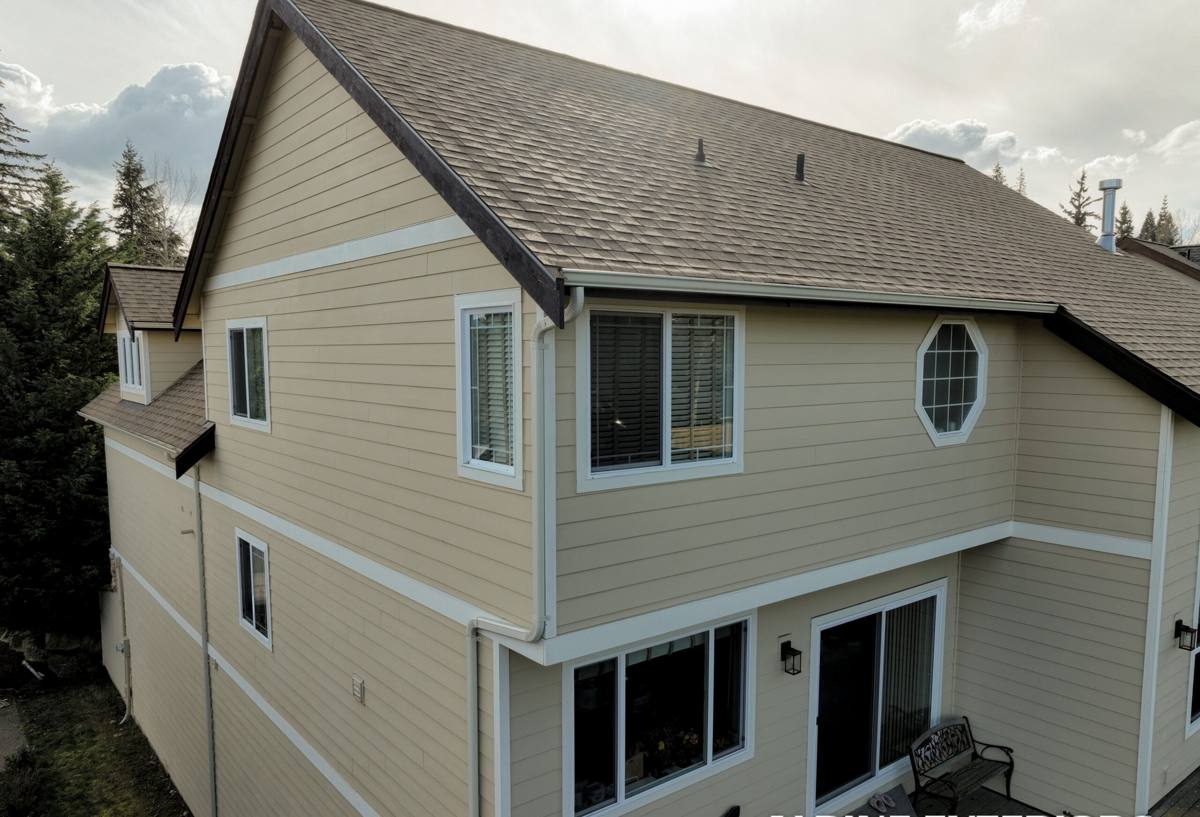
Where the Two Products Actually Diverge
Manufacturing Consistency
James Hardie invented modern fiber cement siding and has spent over three decades refining the formula, the curing process, and the factory finish system. Hardie also engineers regional product lines — HZ5 for wet, humid climates like ours — with formulations tuned to a specific set of weather conditions. Cemplank is a solid product, but it doesn't have the same depth of climate-specific engineering behind its lineup, and it hasn't been in the North American market as long. That matters less on a sunny day and more after fifteen winters of Puget Sound weather.
Factory Finish
This is the biggest practical difference for a homeowner. James Hardie's ColorPlus finish is a baked-on, multi-coat factory finish with a documented track record and a finish warranty that runs separately from the substrate warranty. Cemplank offers factory-primed and some factory-finished options, but the finish system doesn't carry the same track record or the same length of finish-specific warranty coverage. Over a 10-15 year window in a climate with this much rain, the quality and durability of the finish is arguably more important than the substrate underneath it — a finish that chalks, fades unevenly, or needs repainting sooner erases most of the "low maintenance" pitch that makes fiber cement worth the price premium in the first place.
Warranty Structure
Both companies offer warranties, but they're not structured the same way, and the fine print is where warranties either protect you or don't. James Hardie's warranty is transferable to a new owner if you sell the home within the coverage window, which matters in a market where buyers are increasingly asking what siding is on a house and how old it is. We'd rather hand a homeowner a warranty we've read closely and trust than one we haven't installed enough of to know how claims actually play out.
Availability and Installer Familiarity
James Hardie is the dominant fiber cement brand in the Pacific Northwest by a wide margin. That means more crews are trained on it, more suppliers stock the full range of profiles and trim, and more of the accessory system — starter strips, corner posts, trim boards — is designed to work together as one system rather than mixed and matched. Cemplank is less common here, which means fewer installers have deep, repeated experience with its specific handling and fastening requirements. Fiber cement is installation-sensitive regardless of brand — improper fastening, wrong nail placement, or skipped caulk joints can undercut the product's durability no matter whose name is on the board — and we'd rather run one system at high fluency than split our crew's expertise across two.
Side-by-Side: Cemplank vs. James Hardie
| Factor | Cemplank | James Hardie |
|---|---|---|
| Base material | Fiber cement | Fiber cement |
| Climate-specific product lines | Limited | Yes — HZ5 engineered for wet/humid regions |
| Factory finish system | Primed / some factory finish options | ColorPlus, baked-on multi-coat finish |
| Finish warranty | Shorter, less standardized | Separate, longer-term finish warranty |
| Transferable warranty | Varies by product | Yes, within coverage window |
| PNW market presence | Lower — fewer trained installers | Dominant — widely stocked and installed |
| Typical cost | Somewhat lower | Moderate premium |
Why Regional Climate Tips the Scale
Skagit County isn't a brutal climate, but it's a persistent one. Burlington sits close enough to Puget Sound and Padilla Bay that homes catch real salt-laden air, on top of a driving-rain pattern that runs from October through May and a moss season that can stretch even longer on shaded or north-facing walls. None of that destroys fiber cement outright — that's the whole appeal of the category over wood or vinyl — but it does mean the finish, the caulking, and the manufacturer's moisture engineering are doing real work, year after year, not just sitting there looking good in a showroom.
That's the environment where the gap between "a fiber cement product" and "the fiber cement product with the deepest climate-specific engineering and the longest factory-finish track record" actually shows up. It's rarely visible in year one or two. It shows up as chalking, uneven fade, or finish wear a decade in — right when a homeowner assumed they were done thinking about their siding for another twenty years.
Why We Chose to Install Only One Brand
We're not a big-box operation that stocks five siding lines and lets price steer the conversation. We're a crew that installs one system, knows its fastening schedule, its trim details, and its finish behavior cold, and stands behind it with warranty paperwork we've actually read and explained to homeowners dozens of times. Running one product line means:
- Our installers aren't guessing at a second manufacturer's fastening specs or clearance requirements.
- Our trim, corner, and accessory inventory is one coordinated system, not a patchwork.
- When a warranty question comes up years later, we know exactly how to file it and what it covers.
- We can speak to how the product has actually performed on homes we've done, not just what a spec sheet claims.
James Hardie is what came out on top of that decision — not because Cemplank is a bad product, but because Hardie's climate-specific engineering, factory finish track record, and warranty structure are the strongest package we found for homes that have to deal with this much rain, salt air, and moss pressure for decades at a stretch.
What to Ask If You're Comparing Bids
If you're getting quotes and one contractor is proposing Cemplank while another is proposing James Hardie, the price difference alone won't tell you much. Ask these questions of any bid before deciding:
- Is the finish factory-applied, and what specifically does the finish warranty cover — and for how long?
- Is the warranty transferable if you sell the home, and what voids it?
- Does the product line have a version engineered for this region's moisture and humidity levels?
- How many homes has this specific crew installed with this specific product, and can they speak to how those installs have held up?
- What's included in the accessory system — trim, starter strips, corner posts — and is it all from the same manufacturer?
The Bottom Line
Cemplank is real fiber cement siding and it will outperform wood and often vinyl. It's a defensible choice, and we're not going to tell you it isn't. But when we looked at what stands up best to a Burlington winter — the rain, the salt air off the Sound, the moss that finds every shaded wall — James Hardie's climate-engineered product lines, factory finish system, and warranty structure were the combination we were willing to put our name behind, install after install.
If you're weighing siding options for a home in Burlington or elsewhere in Skagit County, we're glad to walk through what we'd actually recommend for your house and why. Request a free, no-pressure estimate using the form below.