 Burlington
 Exterior Work Built for Alger's Climate
Alger sits in a quieter corner of Skagit County, tucked between wooded hillsides and the pull of saltwater air drifting in from Samish Bay and the greater Puget Sound. It's a different exterior environment than the flat farmland a few miles east, and different again from the busier commercial corridors around Burlington and Mount Vernon. Homes out here tend to sit on wooded or partially wooded lots, often with more tree cover and shade than you'd find in town, and that combination of moisture, shade, and salt-tinged air is exactly the kind of environment that wears exteriors down faster than most homeowners expect.
We're a Burlington-based siding, roofing, window, and deck contractor, and Alger is well within our regular service area. That matters more than it sounds like it should. A crew that works Skagit County exteriors every week understands how a north-facing wall under a stand of fir trees behaves differently than a sun-exposed gable, and how homes closer to the water pick up salt residue that homes ten miles inland never deal with. That local pattern recognition shapes real decisions — where we flash, how we handle transitions, and what products we're willing to put our name behind.
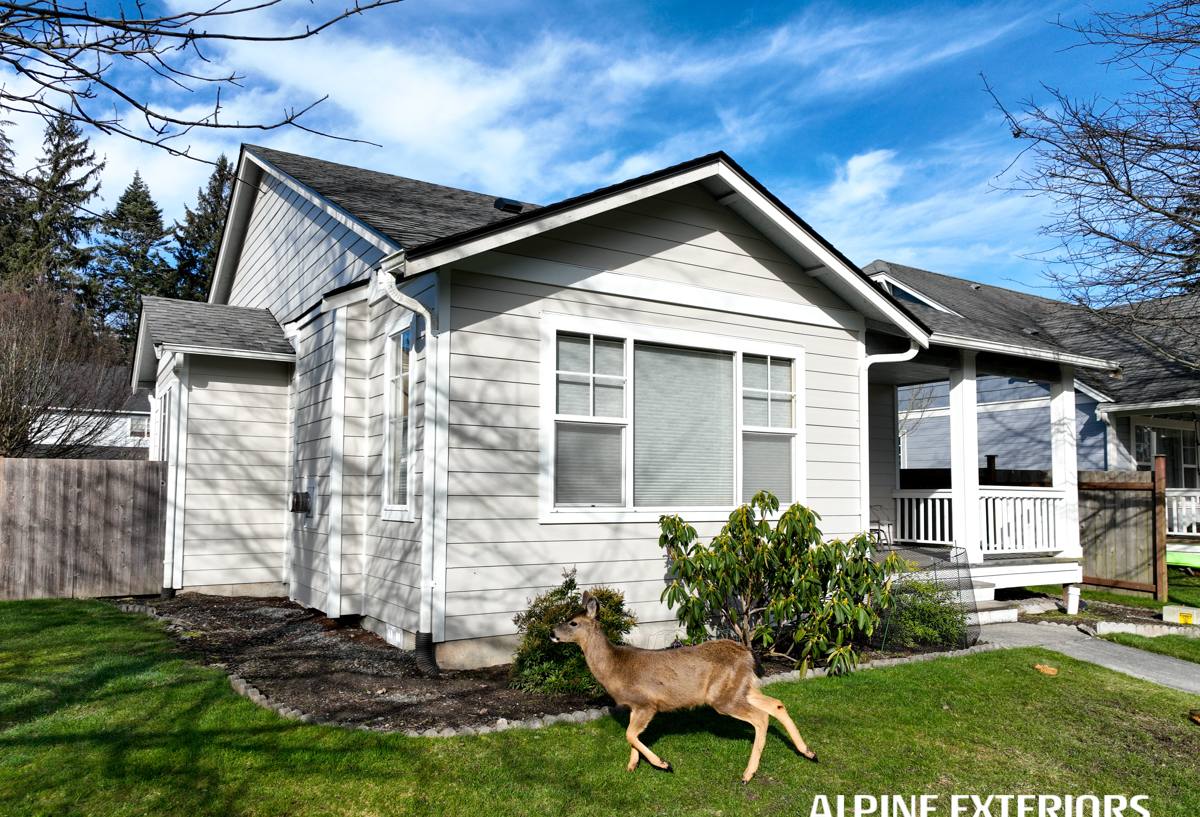
What Alger Homes Are Actually Up Against
Salt Air and Corrosion
Proximity to Samish Bay means a steady, low-grade exposure to salt-laden air, especially on days with onshore wind. Salt air accelerates corrosion on fasteners, flashing, and any exterior hardware that isn't rated for it, and it can degrade certain paints and coatings faster than manufacturers' inland test data would suggest. This is one of the reasons product choice and installation detail matter more here than in a drier, inland climate.
Driving Rain
Skagit County gets a lot of rain, but it's the wind-driven rain off Puget Sound systems that does the real damage to siding. Driving rain doesn't just fall straight down — it gets pushed sideways into seams, laps, and penetrations that a calm-weather installation might never test. Poor flashing details or undersized overlaps that look fine on a dry day can let water in during a January storm, and once moisture gets behind siding it often stays there far longer than it should.
Moss Season
Between the tree cover common on Alger lots and the long stretch of wet, mild months typical of this part of Washington, moss and algae growth on north-facing and shaded exterior surfaces is close to unavoidable without the right materials and maintenance habits. Moss holds moisture against a surface, and on materials that aren't dimensionally stable or properly sealed, that sustained dampness is where rot, swelling, and paint failure usually start.
Why We Only Install James Hardie Fiber Cement
We made a deliberate decision to install exclusively James Hardie fiber cement siding. We don't install vinyl, LP SmartSide, Cemplank, Allura, primed spruce, or cedar. That's not a marketing line — it's a standard we hold to because of what we've seen happen to exteriors in exactly the kind of climate Alger sits in.
Vinyl siding is affordable and low-maintenance in mild, dry climates, but it can warp or become brittle over time, and its seams and J-channels give wind-driven rain more opportunities to find a way in. Wood-based products like cedar or primed spruce look great when new, but they demand ongoing painting, caulking, and moisture vigilance — maintenance that's easy to fall behind on, especially on a wooded, shaded lot where things stay damp longer. Engineered wood products like LP SmartSide have improved over the years, but they're still wood-based at their core, meaning edge sealing and joint maintenance stay critical for the life of the product. Other fiber cement brands, like Cemplank or Allura, are legitimate products, but we've standardized on one manufacturer so our crews install to one spec, one set of details, and one warranty structure — consistency that shows up in fewer callbacks and fewer surprises for the homeowner.
James Hardie fiber cement is non-combustible, dimensionally stable, and manufactured with regional climate zones in mind — their HZ5 product line, for example, is engineered for the freeze-thaw and moisture conditions common to the Pacific Northwest. The factory-applied ColorPlus finish is baked on under controlled conditions, which gives it better fade and moisture resistance than field-applied paint, and it carries a real, transferable warranty. For a property exposed to salt air, driving rain, and heavy shade like a typical Alger home, that combination of stability and finish durability is the difference between an exterior that holds up for decades and one that needs attention every few years.
How the Siding Project Works
Assessment and Estimate
We start with an on-site look at the home — not just the siding itself, but the flashing, trim, window and door transitions, and any areas showing early signs of moisture damage or moss buildup. On wooded Alger lots, we also pay attention to how much shade a wall gets and whether nearby trees or landscaping are keeping certain sections perpetually damp.
Removal and Substrate Check
Once old siding comes off, we check the sheathing and framing underneath. This step catches problems that aren't visible from outside — soft sheathing, past water intrusion, or inadequate house wrap. It's far cheaper to fix these issues during a siding project than to discover them years later after new siding has been installed over a hidden problem.
Weather Barrier and Flashing
Given how much of the damage in this climate comes from wind-driven rain finding its way behind siding, correct house wrap installation and flashing at every window, door, and roofline transition is not optional. This is one of the most installer-sensitive parts of a Hardie project — the product performs as designed only when the water management details behind it are done right.
Installation to Manufacturer Spec
James Hardie siding has specific nailing patterns, clearances, and joint treatment requirements. Proper gaps at the ground, deck, and roofline keep the material out of standing moisture, and correct fastening keeps panels performing the way they're engineered to over the long run.
Final Walkthrough
We finish with a walkthrough covering caulking, trim details, and touch-up, and we talk through basic care so the exterior stays looking the way it should.
Roofing, Windows, and Decks
Siding rarely tells the whole story on an Alger property. Roofs in this area deal with the same moss pressure and driving rain, and a roof that's shedding granules or holding onto moss puts more water at the top of every wall below it. Windows that have lost their seal let moisture and drafts in around openings that are already vulnerable to wind-driven rain. Decks — especially on shaded, wooded lots — are some of the first structures to show rot because they sit low, collect debris, and dry out slowly. We handle all four of these trades, which means we can look at a home as one connected system instead of patching one component while ignoring the ones feeding water into it.
Comparing Common Siding Options for This Climate
| Material | Moisture Behavior in Wet, Shaded Climates | Maintenance | Salt Air Durability |
|---|---|---|---|
| James Hardie Fiber Cement | Dimensionally stable, engineered moisture resistance | Low — factory finish, occasional wash | Strong, non-combustible material |
| Vinyl | Can warp; seams allow water entry under driving rain | Low, but limited repair options if damaged | Moderate; can degrade with UV and salt exposure |
| Cedar / Primed Spruce | Absorbs moisture; prone to rot in shaded, damp areas | High — regular painting and sealing required | Requires diligent upkeep near salt air |
| LP SmartSide | Improved but still wood-based; edge sealing critical | Moderate — joint and edge maintenance needed | Moderate; performance tied to installation quality |
| Other Fiber Cement (Cemplank, Allura) | Generally stable, similar category to Hardie | Low | Generally good; varies by finish system |
What Drives the Cost of a Siding Project
Every Alger property is a little different, so exact numbers depend on a real site visit, but a few factors consistently move the price:
- Total square footage and number of stories on the home
- Condition of the existing sheathing and whether repairs are needed underneath
- Amount of trim, window and door detailing, and architectural features to work around
- Accessibility of the lot — wooded or sloped Alger properties can add setup time
- Siding profile and color selection within the James Hardie product line
- Whether roofing, windows, or deck work are bundled into the same project
A Homeowner's Maintenance Checklist for This Climate
Whatever siding a home currently has, a few habits go a long way toward slowing the effects of salt air, driving rain, and moss season:
- Rinse siding annually, focusing on shaded, north-facing walls where moss and algae collect fastest
- Keep gutters clear so overflow doesn't run down and pool against siding or trim
- Trim back trees and shrubs to improve airflow and sun exposure on damp wall sections
- Inspect caulking around windows and doors each fall before the wet season sets in
- Watch for soft spots, discoloration, or bubbling paint — early signs of moisture behind the surface
- Check deck ledger boards and low-clearance siding areas, which trap moisture longest
Why a Local Crew Matters
Skagit County isn't a uniform climate zone — a home near the water in Alger deals with different pressures than one further inland toward Sedro-Woolley or out on the valley floor near Burlington. A crew that works this region regularly knows to check for salt-related corrosion on hardware, to take moss growth seriously as a moisture issue rather than a cosmetic one, and to detail flashing for driving rain rather than just calm-weather installation. That local familiarity shows up in the small decisions made on-site, which are usually the decisions that determine whether an exterior holds up for twenty years or needs attention in five.
Get a Free, No-Pressure Estimate
If you're weighing a siding, roofing, window, or deck project for a home in Alger, we're happy to take a look and give you a straightforward assessment — no pressure, no obligation. Use the form below to request a free estimate and we'll get in touch to schedule a visit.