 Burlington
 Exterior Work for Guemes Island, Built Around Its Climate
Guemes Island sits in Skagit County waters just off Anacortes, reachable only by a short ferry crossing. That detail matters more than it might seem for exterior construction. Homes here face a combination of marine exposure, near-constant winter moisture, and limited easy access for equipment and materials — three things that separate island siding, roofing, window, and deck work from a typical mainland Burlington job. We treat Guemes Island as its own project type, not a smaller version of a Burlington or Mount Vernon job, and we plan logistics, material staging, and crew scheduling around the realities of working on the water.
As a Burlington-based crew, we're close enough to Guemes Island to make regular trips practical without treating every visit as a special event. That's the difference between a contractor who occasionally takes island work and one who's actually set up to do it well.
What Guemes Island's Climate Does to a House
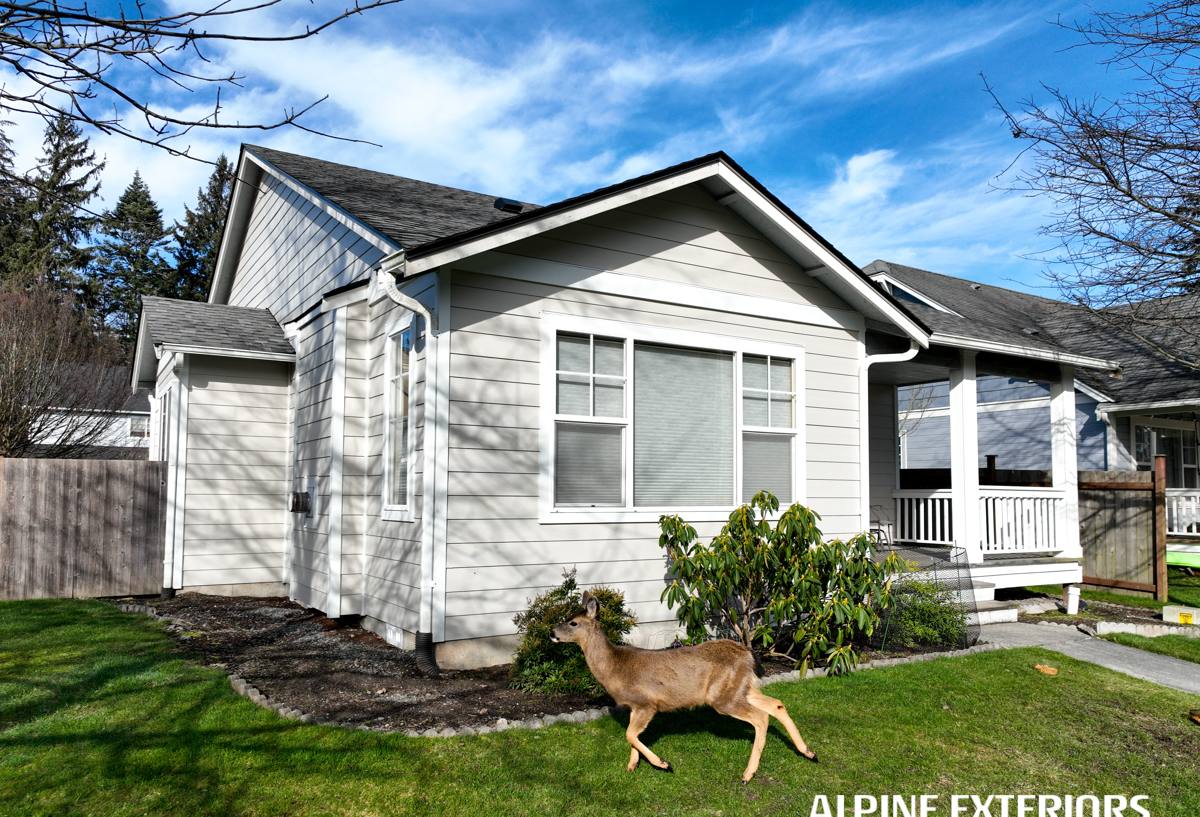
Skagit County's marine climate is already demanding on exterior materials — long wet seasons, persistent humidity, and a short dry window in summer. Guemes Island adds a layer on top of that: direct exposure to Puget Sound air. Salt-laden moisture moves inland off the water and settles on siding, trim, fascia, and any exposed metal fasteners or flashing. Over years, that exposure accelerates corrosion in lower-grade hardware and degrades finishes that aren't engineered to resist it.
Driving rain off the Sound doesn't fall straight down — wind pushes it sideways into wall assemblies, which is exactly the condition that exposes weak siding laps, poor caulking, and undersized flashing details. Add in a moss season that, in this part of Washington, can run from fall through spring, and you get exterior surfaces that stay damp for extended stretches. Moss and algae don't just look bad; they hold moisture against a wall system longer than a clean, well-ventilated surface would, which shortens the useful life of anything not built to shed water aggressively.
The Combination That Wears Homes Down Fastest
It's rarely one factor alone. It's salt air softening a finish, driving rain finding a seam, and moss holding moisture in place through a long wet season — repeated year after year. A siding or roofing system that handles any one of those conditions in isolation can still fail under the combination.
Why We Install Only James Hardie Fiber Cement Siding
We made a decision, company-wide, to install James Hardie fiber cement siding exclusively — not vinyl, not LP SmartSide, not Cemplank, Allura, primed spruce, or cedar. That's not a marketing position; it's the product line that holds up best against the specific combination of conditions this region throws at a house, and Guemes Island's salt-air exposure is a clear example of why.
Fiber cement is non-combustible, which matters in a state with real wildfire risk, and it doesn't absorb and swell the way wood-based products can when exposed to sustained moisture. Hardie's ColorPlus factory finish is baked on under controlled conditions rather than field-applied, which gives it better, more consistent resistance to fading and moisture intrusion than a job-site paint job. Hardie also engineers regional HZ5 product lines specifically for climates like ours, with panel composition and coating tuned for wet, marine-influenced weather rather than a generic national spec.
None of that means other products are without merit — vinyl is inexpensive and low-maintenance in mild climates, cedar has real aesthetic appeal, and engineered wood siding has improved over the years. But we've chosen not to install them because, in our professional judgment and experience in this specific climate, the long-term maintenance burden, moisture sensitivity, or warranty structure of those alternatives doesn't match what fiber cement offers here. On an island with direct Sound exposure, that gap becomes more pronounced, not less.
Siding Material Comparison for Marine-Exposed Homes
| Material | Moisture/Salt Air Performance | Maintenance | Typical Longevity |
|---|---|---|---|
| James Hardie Fiber Cement | Engineered for wet, marine climates; non-combustible; factory finish resists fading | Low — occasional wash, repaint on ColorPlus timeline is optional, not required | Multi-decade with proper installation |
| Vinyl | Can warp or fade under sustained UV and temperature swings; seams are moisture entry points | Low but limited repair options if damaged | Variable, shorter effective life in harsh exposure |
| Cedar | Attractive but absorbs moisture; prone to rot, splitting, and moss growth without diligent upkeep | High — regular sealing/staining required | Shorter without consistent maintenance |
| LP SmartSide / Engineered Wood | Improved over older wood products but still wood-based and moisture-sensitive at cut edges and seams | Moderate — edge sealing and caulking upkeep matters | Depends heavily on installation quality and upkeep |
Roofing, Windows, and Decks: The Full Exterior Envelope
Siding is only one piece of how a Guemes Island home holds up against salt air and driving rain. We handle roofing, window, and deck work as well, because a house is one connected system — a roof that's shedding granules or flashing poorly will feed moisture into wall assemblies no matter how good the siding is, and a deck built with the wrong fasteners will corrode fast this close to the water.
Roofing
Roof coverings and flashings on the island take the same wind-driven rain and salt exposure as the siding below them. We pay particular attention to flashing details at chimneys, valleys, and wall intersections — these are the spots where driving rain and long wet seasons find weaknesses first.
Windows
Window flashing and sealant integration matter as much as the window unit itself. A well-built window installed with poor flashing will leak; a modest window installed correctly, properly integrated with the siding water-management plane, generally won't. We treat window replacement and siding work as connected, not separate trades.
Decks
Decks facing the Sound take direct salt spray and sun exposure. Fastener selection and material choice matter more here than on an inland deck — corrosion-resistant hardware isn't optional this close to saltwater air.
Why Fastener and Flashing Grade Matters More Here
On a mainland Burlington project, standard-grade fasteners and flashing often perform fine for the expected service life of the siding. On Guemes Island, the salt content in the air accelerates corrosion in lower-grade metal, which means small details — fastener coating, flashing material, trim hardware — carry more weight in how long the whole system lasts. We spec corrosion-resistant fasteners and flashing for island and other marine-exposed jobs as a standard practice, not an upcharge option.
Working on Island Time: Access, Scheduling, and Logistics
Ferry-dependent access changes how a project has to be planned. Material deliveries, dumpster or waste hauling, and crew transport all need to be scheduled around ferry timing rather than assumed to work like a driveway delivery on the mainland. A contractor unfamiliar with that reality can end up with delayed timelines, missed ferry windows, or crews standing around waiting on materials that didn't make the crossing.
Because we're based in Burlington and work Skagit County regularly, we build ferry logistics into the schedule from the start — staging materials in advance, batching site visits efficiently, and setting realistic timelines with the homeowner up front rather than discovering the access challenge mid-project.
What to Expect From an Estimate and Project on Guemes Island
- An on-site walk-through to assess current siding, roofing, window, or deck condition and identify moisture or moss-related wear
- An honest conversation about what's actually needed versus what can wait, based on the home's specific exposure
- A written estimate that accounts for ferry logistics and material staging, not a mainland-only timeline applied blindly
- Clear communication about scheduling around ferry access, weather windows, and the realistic wet-season constraints of working on the island
- A plan for waste removal and site cleanup that accounts for limited island disposal options
Choosing a Contractor for Island Exterior Work
Not every Burlington or Skagit County contractor is set up to do island work well, and it's worth asking a few direct questions before hiring anyone for a Guemes Island project.
- Do they have real, recent experience with ferry-dependent scheduling, or will your project be their learning curve?
- Do they spec corrosion-resistant fasteners and flashing for marine-exposed work, or use standard mainland hardware by default?
- Are they licensed and insured to work in Washington, and can they provide proof without hesitation?
- Do they explain material choices honestly, including trade-offs, rather than pushing whatever's cheapest to install?
- Will the same crew that gives the estimate actually be the crew doing the work, or is it subcontracted out sight unseen?
A Long-Term View for a Demanding Climate
Exterior work on Guemes Island isn't a one-and-done decision — it's a long-term bet on how well a house holds up against decades of salt air, driving rain, and moss season. That's the lens we bring to every material and installation decision, from why we standardized on James Hardie fiber cement siding to how we spec fasteners and flashing for marine exposure. The goal isn't the lowest bid today; it's an exterior that's still doing its job fifteen and twenty years from now, with maintenance that stays manageable rather than becoming a recurring headache.
If you're weighing siding, roofing, window, or deck work on Guemes Island, we're happy to walk the property, look at what your home is actually dealing with, and give you a straightforward estimate — no pressure, no scare tactics, just an honest read on what it needs.