 Burlington
 Serving Stanwood From a Skagit County Base
Stanwood sits at the edge of Puget Sound, close enough to the water that homes here deal with a different set of exterior problems than houses further inland in the Skagit Valley. We're based in Burlington and cover this whole corner of Skagit and Snohomish County, so a Stanwood service call isn't a special trip for us — it's part of the regular route, and it means we already know what the local building conditions tend to do to siding, trim, and roofing over the years.
That local familiarity matters more than it sounds like it should. A crew that mostly works dry, inland subdivisions will size up a Stanwood exterior the same way they'd size up a house forty miles away from salt water, and they'll miss the details that actually determine how long the job lasts.
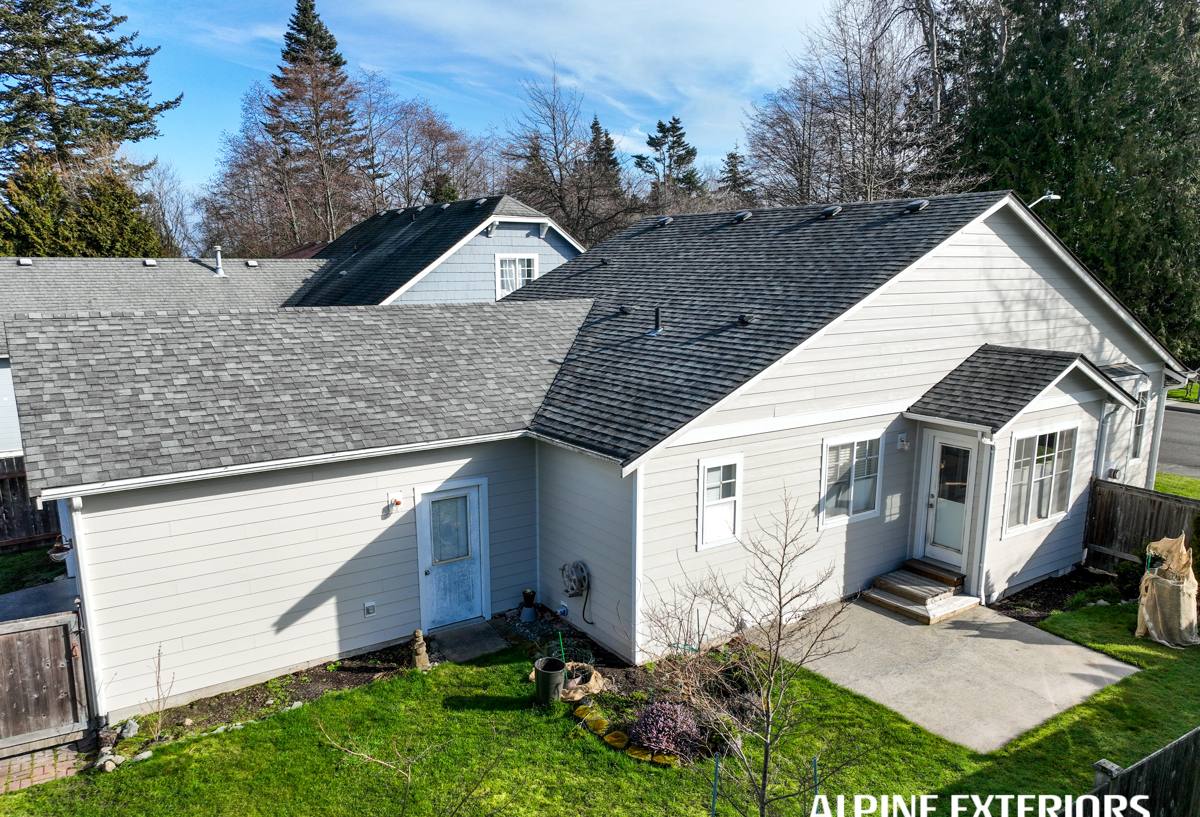
What the Stanwood Climate Does to a House
Three things define exterior wear in this area, and they compound each other rather than acting alone.
Salt Air
Proximity to Puget Sound means airborne salt settles on exterior surfaces even when there's no visible spray. Salt is corrosive to exposed metal fasteners, flashing, and hardware, and it accelerates the breakdown of coatings and finishes that aren't built to handle it. Over years, a siding or trim product with a weak factory finish will fade, chalk, or degrade faster near the water than it would a few miles inland.
Driving Rain
Storms coming off the Sound often arrive with real wind behind them, which pushes rain sideways into wall assemblies instead of letting it run straight down. That kind of wind-driven rain finds every weak seam, every under-caulked joint, and every place where flashing was skipped or done wrong. A siding system that's marginal on moisture management in a calm climate becomes a real liability under sustained wind-driven rain.
Moss Season
Skagit and Snohomish County winters are long, wet, and shaded on a lot of lots with mature trees — conditions moss loves. Moss and algae hold moisture against siding and roofing surfaces for extended periods, which is exactly the kind of prolonged dampness that causes trouble for materials that aren't dimensionally stable or that absorb water at their edges and fastener points.
Why This Adds Up to a Materials Decision
Salt air, wind-driven rain, and a long moss season each stress a house in a different way, but they all point toward the same conclusion: material selection matters more here than in a dry, sheltered inland location. This is a big part of why we install James Hardie fiber cement siding exclusively and don't offer vinyl, LP SmartSide, Cemplank, Allura, or raw wood siding as alternatives.
- Fiber cement doesn't rot, and it isn't a food source for moss or algae the way wood-based siding can be
- Hardie's ColorPlus factory finish is engineered to hold color and resist fading under UV and coastal air exposure better than field-applied paint
- Fiber cement is dimensionally stable — it doesn't swell, warp, or cup the way engineered wood products can when they take on moisture at cut edges or fastener points
- Hardie's HZ5 product line is specifically engineered for cold, wet climates, which fits the Pacific Northwest better than a generic all-climate product
We're honest that other products have real advantages in other situations — cost, weight, or ease of install, depending on the product. But for a house within reach of salt air and sustained wet weather, those trade-offs stop being worth it to us as installers, which is why we standardized on one material system rather than offering several.
How We Approach a Stanwood Siding Job
Assessment First
Before we talk about siding, we look at what's underneath it. Existing moisture damage, compromised sheathing, or years of moss buildup against the wall can hide real problems that need to be addressed before new siding goes up — installing over an unresolved moisture issue just traps it.
Flashing and Water Management
Given how much wind-driven rain this area sees, flashing details at windows, doors, roof lines, and butt joints get extra attention. This is the part of a siding install that's invisible once the job is finished but determines whether the house stays dry for the next twenty-plus years.
Fastening for Coastal Conditions
We use fastening and hardware appropriate for a salt-air environment, and we follow Hardie's published installation specifications rather than cutting corners on nailing patterns or gaps — both of which affect how the siding performs against wind and moisture over time.
Beyond Siding: Roofing, Windows, and Decks
Siding doesn't work in isolation — it's one piece of the building envelope. We also handle roofing, windows, and decks, because in a climate like this, those systems all interact.
Roofing
A roof that's shedding moss, holding moisture, or has failing flashing will eventually send water into wall assemblies regardless of how good the siding is. Roof condition and siding condition are connected problems.
Windows
Window flashing and integration with the siding plane is one of the most common failure points in any exterior. When we replace siding around existing windows, or install new siding and windows together, we make sure the two systems are properly tied in.
Decks
Outdoor living space near Puget Sound takes the same salt-air and moisture punishment as the house itself. Deck materials, fasteners, and ledger-board flashing all need to account for the same conditions we're already accounting for on the walls above.
Comparing Siding Approaches for a Coastal-Adjacent Home
| Factor | Vinyl | Wood / Engineered Wood | James Hardie Fiber Cement |
|---|---|---|---|
| Salt air resistance | Can become brittle and fade over time | Vulnerable to moisture and rot at edges | Stable, factory finish built for exposure |
| Moss/algae resistance | Not a food source, but seams and moisture can be an issue | Can support moss/algae growth and hold moisture | Not an organic food source; sheds moisture well |
| Wind-driven rain performance | Seams and panel movement can be a weak point | Dependent on coatings and joint maintenance | Rigid panel system with engineered joint details |
| Finish longevity | Factory color, can fade or chalk | Needs repainting/staining on a cycle | ColorPlus finish warrantied against fading/chipping |
| Fire resistance | Combustible | Combustible | Non-combustible |
Cost Factors for Stanwood-Area Siding Projects
Every house is different, so we don't quote firm numbers without seeing the property, but the factors that move the price on a job in this area are consistent:
- Home size and wall complexity — more corners, gables, and cutouts mean more labor
- Condition underneath — whether sheathing repair or moisture remediation is needed before new siding goes on
- Removal of existing siding — full tear-off versus working with a simpler substrate
- Trim and accessory scope — how much fascia, trim, and detail work is included alongside the field siding
- Access — waterfront lots, steep sites, or tight setbacks can affect staging and labor time
Why a Local Crew Matters
A contractor working out of a home base in Burlington sees a lot of exteriors in this specific stretch of Skagit and Snohomish County — enough to recognize the difference between normal weathering and an actual problem, and to know which details deserve extra attention on a house that sits closer to the water. That's not something a crew from outside the region picks up on a single job walk.
Being local also means we're not disappearing after the invoice is paid. Warranty service, follow-up questions, and future work on the same house are easier when the company doing them is a short drive away rather than based somewhere else entirely.
A Practical Checklist Before You Replace Siding
- Get a written scope that specifies material, brand, and product line — not just "fiber cement" or "premium siding"
- Ask what happens if moisture damage is found once old siding comes off, and how that's priced
- Confirm the contractor is a manufacturer-certified installer for whatever product they're proposing
- Ask about flashing details at windows, doors, and roof lines specifically — not just the field siding
- Understand what's covered under the manufacturer's warranty versus the installer's workmanship warranty
- Check that the estimate accounts for your home's actual exposure — a waterfront-adjacent wall isn't the same job as a sheltered inland wall
If you're weighing a siding, roofing, window, or deck project on a Stanwood-area home, we're happy to take a look and walk through what we're seeing and why. There's no pressure and no cost to get an estimate — just a straight answer about what your house needs and what it would take to do it right.