 Burlington
 Clear Lake's Climate Is Harder on Siding Than Most Homeowners Realize
Clear Lake sits in a quieter, more wooded pocket of Skagit County than the commercial strip along I-5 in Burlington, but the exterior of a house here works just as hard, if not harder. Many lots around the lake and along the surrounding rural roads carry heavy tree cover, which means less direct sun on at least one or two sides of the house year-round. Combine that with Skagit Valley's marine-influenced climate — long stretches of drizzle, driving rain off and on through fall and winter, and humidity that lingers under a tree canopy — and you get exterior siding that stays damp longer than it would on an open lot in town.
That combination is exactly what drives moss and algae growth on siding, trim, and roofing. It's also what causes wood-based and wood-composite siding products to swell, delaminate at the seams, and eventually rot from the edges in, sometimes years before a homeowner sees an obvious problem. Salt-tinged air moving up from Puget Sound and the Skagit Bay flats doesn't hit Clear Lake as hard as it hits homes right on the water, but it's part of the regional air quality here too, and it adds to the slow corrosion of fasteners and trim on lower-grade materials over time.
None of this means a house near Clear Lake is doomed to premature siding failure. It means the material and the installation have to be matched to the actual conditions the house sits in, not to a national average. That's the starting point for every conversation we have with homeowners in this area.
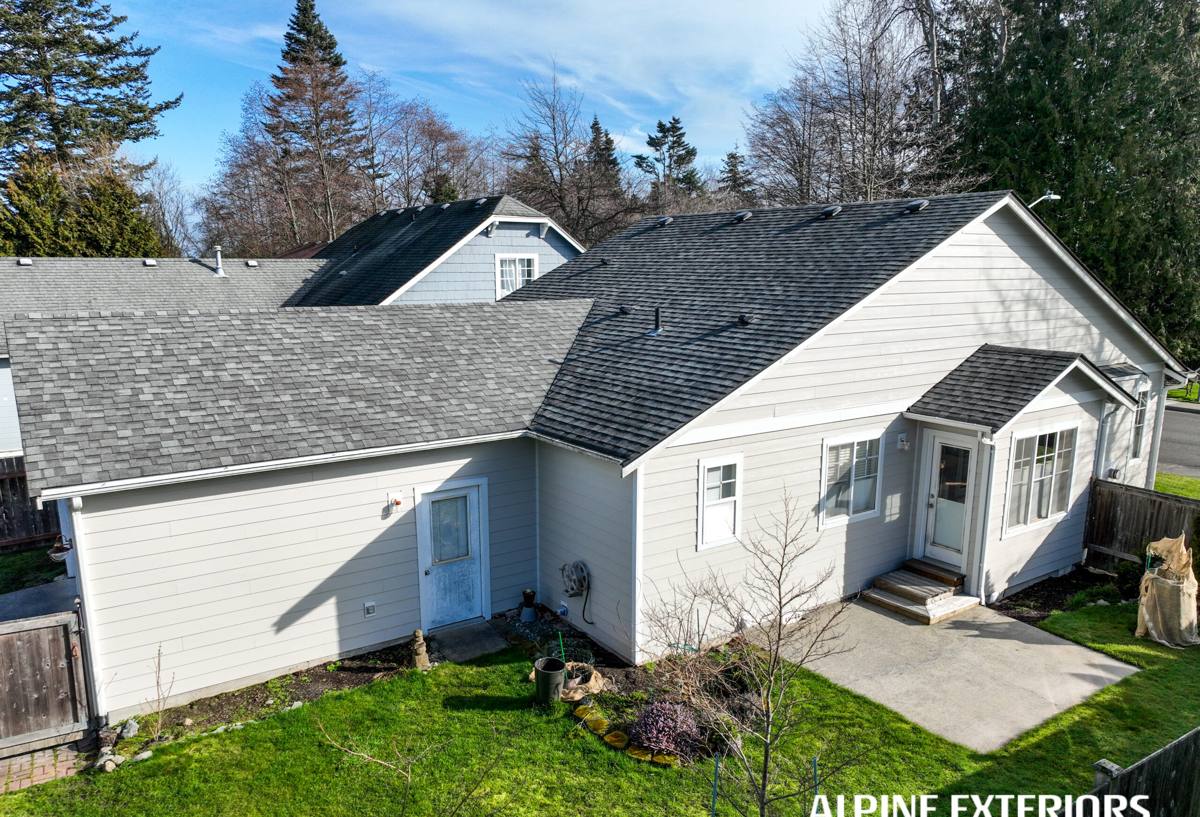
Why We Only Install James Hardie Fiber Cement
We made a deliberate decision as a company to install one siding system: James Hardie fiber cement. We don't offer vinyl, LP SmartSide, Cemplank, Allura, primed spruce, or cedar as alternatives, and that's worth explaining rather than just stating.
What Rules Out the Alternatives, Practically Speaking
Vinyl siding is affordable and low-maintenance in the sense that it doesn't need repainting, but it's a thin plastic product that can crack in cold snaps, warp near heat sources, and fade unevenly in UV exposure over the years — and it offers essentially no fire resistance. Wood-based composite products like LP SmartSide use engineered wood strand technology that performs reasonably well when installation details (caulking, flashing, edge sealing) are followed exactly, but any gap in that process gives moisture a path into the wood fiber core, and in a shaded, wet environment like parts of Clear Lake, that's a real risk. Other fiber cement brands such as Cemplank or Allura are chemically similar to Hardie, but we've standardized on one manufacturer so our crews install to one spec, one set of details, and one warranty structure — consistency that protects the homeowner as much as it simplifies our work. Primed spruce and cedar are honest, traditional materials, but they demand a repainting and caulking maintenance cycle that most homeowners underestimate until they're several years in and behind on it.
What James Hardie Gets Right
Fiber cement is cement, sand, and cellulose fiber, pressed and cured into a dense, stable board. It doesn't absorb water the way wood or wood composite does, it doesn't support combustion the way vinyl or wood siding does, and it holds its shape through temperature swings without the expansion and contraction problems that plague plastic siding. James Hardie's ColorPlus factory-applied finish is baked on and backed by its own finish warranty, so homeowners aren't relying on a field-applied paint job to hold up to Skagit Valley's damp winters. Hardie also engineers regional product lines (its HZ5 line is built for climates like ours, with wetter, colder conditions in mind) rather than selling one board nationwide.
What a Siding Project Looks Like on a Clear Lake Property
Every job starts with a walk of the exterior, not a sales pitch. On wooded or lakeside lots, we're looking specifically at:
- Which elevations get the least sun and hold moisture longest
- Existing moss or algae staining, and whether it's cosmetic or a sign of trapped moisture underneath
- Condition of the water-resistive barrier and flashing once old siding comes off — this is where a lot of hidden damage shows up
- Trim, fascia, and any areas where tree branches or gutters are dumping extra water onto the wall
- How the house's current siding has actually performed, which tells us a lot about what the next material needs to do differently
From there we scope the Hardie product and color, plan for proper rainscreen or drainage detailing where the site calls for it, and set a realistic timeline. Skagit Valley weather means we plan installation windows around drier stretches when possible, and we don't rush a job into a driving rain just to hit a date.
Beyond Siding: Roofing, Windows, and Decks
Siding is only one piece of a home's exterior envelope, and it doesn't work in isolation. We also handle roofing, windows, and decks, because a siding job done well but paired with a failing roof or leaking window flashing just moves the moisture problem somewhere else on the house.
Roofing
A roof under tree cover near Clear Lake deals with the same moss and moisture pressure siding does, often worse, since moss on a roof holds water directly against shingles and underlayment. Roof condition also directly affects siding performance at the eaves and gable ends, so we look at both together.
Windows
Old or poorly flashed windows are one of the most common sources of hidden wall moisture we find when we open up a house for new siding. Replacing siding is a natural point to also address window flashing and, where it makes sense, the windows themselves.
Decks
Outdoor living space near a lake gets used, and it gets rained on. Deck framing and ledger board attachment are common weak points where water intrudes into the structure of the house, and we build and repair decks with that in mind, not just for appearance.
Cost Factors for a Siding Project Near Clear Lake
Every house is different, but the variables below are what actually move a siding project's scope and price. We give firm numbers only after seeing the house.
| Factor | Why It Matters Here |
|---|---|
| Amount of existing siding removal and disposal | Older wood or composite siding on shaded lots often has hidden rot that adds tear-off time |
| House size and wall complexity | Dormers, multiple gables, and cut-up wall lines take more labor per square foot than a simple rectangle |
| Trim and accent work | Hardie trim boards and accent details around windows and doors add material and install time |
| Water-resistive barrier and flashing repair | Wooded, damp lots more often need flashing or sheathing repair discovered once old siding is off |
| Site access | Tree cover, slopes, and lake-adjacent lots can limit staging and equipment access, affecting labor time |
| Product line and color | Hardie's HZ5 climate-engineered line and certain ColorPlus finishes vary in cost from base products |
Why a Local Crew Matters for a House Like This
A crew that works across Skagit County regularly knows the difference between a moss stain that's purely cosmetic and one that signals trapped moisture behind the board. They know how Clear Lake's tree cover and humidity compare to an open lot in downtown Burlington or a windier property closer to the water, and they adjust flashing and drainage details accordingly rather than installing the same way on every job. That local pattern recognition is the difference between a siding job that looks good on install day and one that still looks good in ten years.
It also matters for warranty follow-through. A contractor based in the region is the one who's still around, and still reachable, if a question comes up years down the line — not a crew that moved on to another market.
Questions to Ask Before Hiring an Exterior Contractor
Whoever you hire for siding, roofing, windows, or decks, a few questions separate a careful contractor from one who's just moving fast:
- Are they licensed and insured in Washington, and will they show you proof without being asked twice?
- Do they inspect the sheathing and water-resistive barrier once old siding is removed, or just cover whatever's underneath?
- Do they install to the manufacturer's documented fastening and clearance specs, including ground clearance and flashing at every penetration?
- Can they explain, specifically, why they recommend the product they're proposing for your house and site — not just that it's what they sell?
- Do they give you a written scope before work starts, not a verbal estimate that changes once the job is underway?
If you're weighing a siding project — or want a second opinion on your roof, windows, or deck — we're happy to walk your property near Clear Lake and give you a straightforward, no-pressure estimate. There's no obligation, just an honest look at what your house actually needs.