 Burlington
 Siding in Big Lake: A Different Set of Problems Than a City Lot
Big Lake sits back from the bustle of the I-5 corridor, tucked among trees between Mount Vernon and Sedro-Woolley in Skagit County. It's a quieter setting than downtown Burlington, and that's exactly what draws people there — the lake, the tree cover, the space. But that same setting creates a specific set of exterior problems that a lot of siding crews don't think about until it's too late. Homes here spend more of the year shaded and damp than homes on an open, sunbaked lot, and that changes how fast siding, trim, and roofing wear out.
Skagit County as a whole deals with driving rain, a marine-influenced climate off Puget Sound, and a moss season that can run most of the year in shaded spots. Big Lake adds its own layer to that: dense tree canopy, lake-effect humidity, and yards where sunlight and wind rarely get a straight shot at the house to dry it out. Whatever siding goes up on a Big Lake home needs to handle sitting wet longer than siding on a more exposed lot in town.
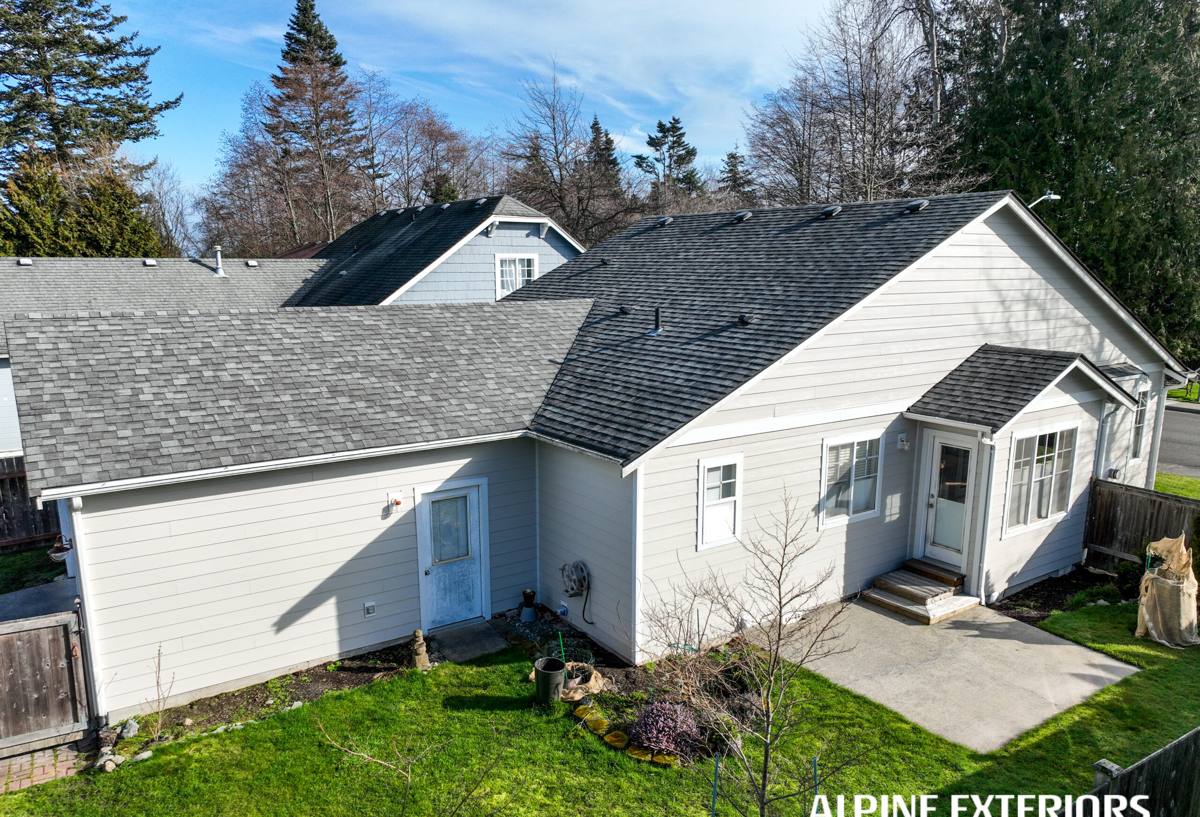
Why Trees and Water Change the Math on Siding
Shade Keeps Everything Wetter, Longer
A house with morning sun and afternoon shade dries out on a totally different schedule than one buried under fir and cedar canopy. In Big Lake's tree-heavy pockets, siding, fascia, and trim can stay damp for days after a storm passes. That's the exact condition moss, algae, and mildew need to take hold — and once a north-facing wall or a shaded gable end starts growing moss, it holds even more moisture against the wall behind it.
Lake Proximity Means More Ambient Humidity
Being close to open water — even a freshwater lake rather than saltwater — keeps ambient humidity higher than a dry inland lot. Combined with the region's driving rain events, that means siding here isn't just getting wet from above; it's living in damp air for extended stretches. Materials that swell, wick moisture, or need repainting to stay sealed struggle more in this kind of setting than they would on a drier lot elsewhere in the county.
Debris and Organic Buildup
Needles, leaves, and moss spores collect in siding laps, behind shutters, and along trim in wooded lots far more than they do on an open lot. That organic debris holds water against the wall surface and feeds the moss and mildew cycle. It's a maintenance reality of living among trees, and it's one more reason the siding material itself matters — some products tolerate that environment far better than others.
Why We Install Only James Hardie Fiber Cement
We don't offer a menu of siding brands. We install James Hardie fiber cement, full stop — no vinyl, no LP SmartSide, no Cemplank or Allura, no primed spruce or cedar. That's a deliberate standard, not a limitation of what we're capable of installing.
Fiber cement is non-combustible, which matters throughout a region where wildfire smoke and burn bans are a recurring summer conversation. It doesn't swell or rot when it stays damp under tree cover the way wood-based products can. And it holds its factory-applied ColorPlus finish for years without the repainting cycle that primed wood or field-painted products require — which matters even more on a shaded lot where a coat of paint doesn't cure as fast or last as long.
James Hardie also engineers specific product lines (their HZ5 and HZ10 designations) for different climate zones, so the plank specified for a Pacific Northwest install is built with this region's moisture and temperature swings in mind — not a one-size-fits-all product. Combined with a strong transferable warranty, it's the system we're willing to put our name behind on a Big Lake home.
What We Won't Install, and Why
| Product | What it does well | Why it's not our standard |
|---|---|---|
| Vinyl siding | Low upfront cost, low maintenance in mild climates | Can warp or crack in temperature swings; seams and moisture management aren't built for heavy tree cover and prolonged dampness |
| LP SmartSide | Engineered wood, more affordable than fiber cement | Wood-based core is more sensitive to sustained moisture exposure than cement-based siding, a real factor in shaded, damp lots |
| Cemplank / Allura | Also fiber cement, lower price point | We standardize on one manufacturer's warranty, finish system, and engineering rather than mixing brands across jobs |
| Primed spruce / cedar | Traditional look, natural material | Requires ongoing repainting and sealing to stay protected — a heavy maintenance burden in a shaded, high-moisture setting |
How a Siding Job Works for a Big Lake Property
Every property we bid gets walked in person, not estimated from a photo. On a wooded or lakeside lot, that matters even more than usual — we're checking for rot behind existing siding, moisture trapped around window and door trim, and how much of the home's exterior actually gets sun exposure versus shade through the day.
- On-site inspection of existing siding, trim, and any visible rot or moss buildup
- Moisture check on walls that see heavy shade or sit close to trees
- Removal of old siding down to the sheathing, with a look at what's underneath
- Correct weather-resistive barrier and flashing detail at every window, door, and penetration
- James Hardie plank, panel, or shingle installation per manufacturer spec — proper nailing, clearances, and caulking
- Trim and fascia work to match, since mismatched trim is one of the most common corners cut on siding jobs
Installation to manufacturer spec isn't a marketing line — it's what keeps the warranty valid and what actually keeps water out. Gaps, wrong fastener patterns, and skipped flashing details are where most siding failures start, regardless of brand.
Roofing, Windows, and Decks: One Exterior, One Crew
Siding doesn't fail in isolation. A roof that's shedding water wrong, windows that have lost their seal, or a deck ledger board rotting into the house all feed moisture into the same wall system your siding is trying to protect. Because we handle roofing, windows, and decks alongside siding, we can look at a Big Lake home as one connected exterior rather than four separate contractors each blaming the others' work.
That's especially relevant on wooded or lakeside lots, where roof valleys collect needles and debris, where window flashing takes the brunt of driving rain off the lake, and where a deck built too close to the siding line can trap moisture against the wall year-round. Addressing those together, instead of one at a time with different crews, is often what actually solves a recurring moisture problem instead of just patching the symptom.
What Drives Cost on a Big Lake Siding Job
| Factor | Why it matters here |
|---|---|
| Existing damage / rot extent | Wooded, shaded lots often hide more moisture damage behind old siding than expected |
| Home size and wall complexity | Gables, dormers, and multiple trim details add labor time regardless of material |
| Access and tree clearance | Dense tree cover can slow staging, scaffolding, and material staging on site |
| Product line and profile | Lap width, shingle-style panels, and trim details all price differently within the Hardie lineup |
| Paired projects | Bundling roofing, window, or deck work with siding can reduce total mobilization costs |
We give real numbers after walking the property, not a phone estimate. Broad ranges without seeing the actual condition of the walls underneath the old siding aren't useful to a homeowner making a real decision.
Why a Local Crew Matters for This Kind of Lot
A crew that mostly works dry, open lots in town can miss what a wooded, lake-adjacent property actually needs — more attention to trapped moisture, more care around debris and moss, and a install schedule that accounts for slower drying time between rain events. Working across Burlington and the surrounding Skagit County communities, including Big Lake, means we see this exact combination of tree cover, humidity, and driving rain often enough to plan around it rather than get surprised by it mid-job.
Local also means being reachable after the job is done — for warranty questions, for a trim detail that needs a second look, or for advice on keeping moss off a shaded wall between now and the next time the exterior needs attention.
A Simple Maintenance Checklist for Shaded, Wooded Properties
- Trim back branches and brush touching the siding at least once a year
- Clear debris from behind shutters, under trim, and along the bottom starter course
- Rinse visible moss or algae growth before it spreads across a wall section
- Check caulking at window and door trim annually, especially on shaded elevations
- Have gutters cleared regularly — overflow onto siding is one of the most common causes of localized rot
If you're dealing with moss creeping up a shaded wall, siding that's staying damp longer than it should, or you're just planning ahead for a home in Big Lake, we're glad to walk the property and give you a straight, no-pressure estimate — no phone-quote guessing, just what we actually see on your walls.