 Burlington
 Fir Island sits low in the Skagit River delta, wrapped by tidal sloughs and open farmland with almost nothing between the homes there and the weather rolling in off Skagit Bay. It's one of the more exposed pockets of our service area, and the exterior of a house out there works harder than a home tucked into a sheltered Burlington neighborhood a few miles inland. If you own or maintain a home on Fir Island, you already know the wind doesn't behave the same way it does in town, and the moisture doesn't dry off the way it does somewhere with more tree cover and higher ground.
What Fir Island's Environment Does to a House Exterior
Three things define the climate load on a Fir Island home: salt-laden air moving in off the bay and tidal flats, driving rain that comes in sideways during winter storms, and a moss season that runs long because the ground stays damp and shaded conditions persist for months. None of these are dramatic on their own, but stacked together over years they're exactly the conditions that separate exterior products that hold up from ones that don't.
Salt Air and Corrosion
Proximity to tidal water means airborne salt settles on siding, trim, fasteners, and flashing. Salt is hygroscopic — it pulls moisture out of the air and holds it against whatever surface it lands on. That's hard on paint film, hard on caulk joints, and especially hard on any fastener or trim piece that isn't corrosion-resistant. Over time it accelerates finish breakdown on products that aren't engineered for coastal or near-coastal exposure.
Driving Rain and Wind-Driven Water
Fir Island's flat, open terrain gives wind nothing to slow it down. When a winter system moves through, rain doesn't just fall — it gets pushed sideways into wall assemblies, chased into laps and seams, and forced up under trim if the flashing details aren't right. This is where installation quality matters as much as the product itself; a good material installed with poor water management will still let moisture in.
Moss, Algae, and a Long Damp Season
Low elevation, agricultural land, and marine air combine to keep humidity high for much of the year. That's a long runway for moss and algae to establish on north-facing walls, under eaves, and anywhere airflow is limited. Some siding materials resist this better than others — surface composition and finish matter more than people expect.
Why We Standardized on James Hardie Fiber Cement
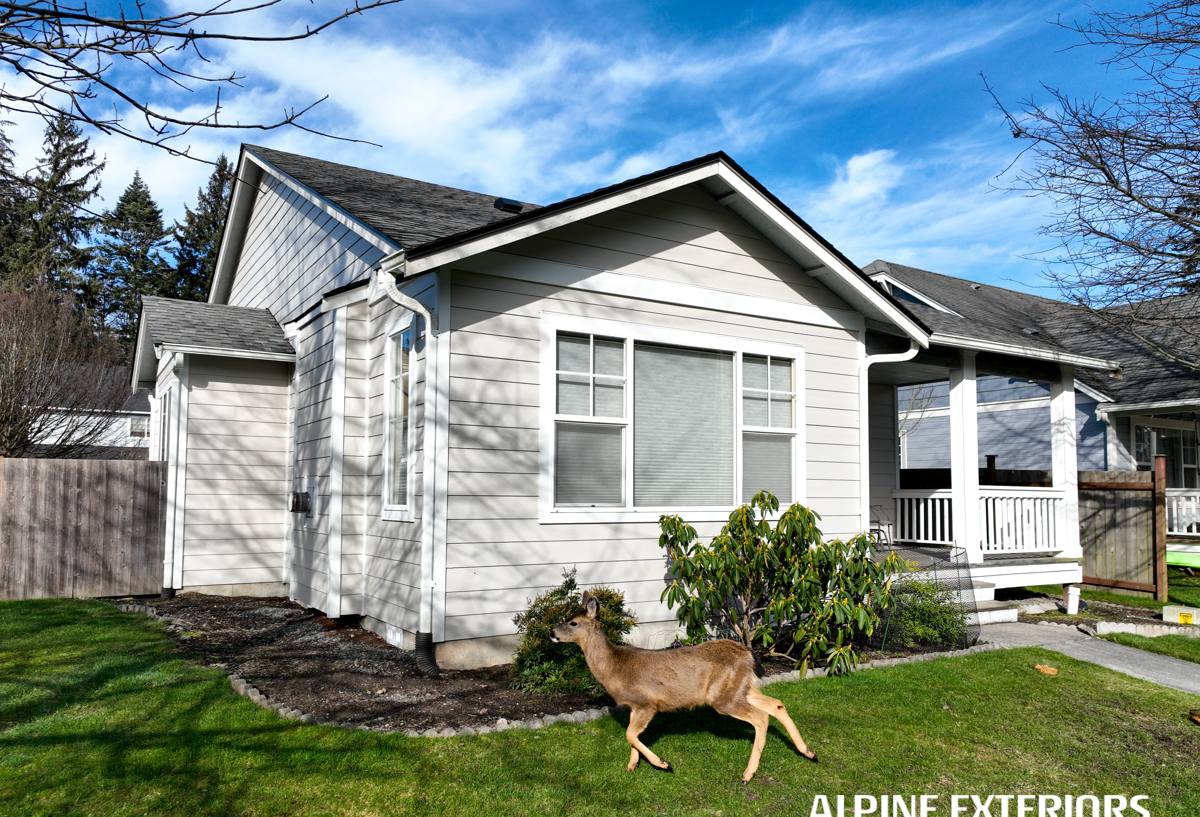
We install James Hardie fiber cement siding exclusively — not vinyl, not LP SmartSide, not primed spruce or cedar, not other fiber cement brands like Cemplank or Allura. That's a deliberate standard, not a marketing line, and it comes directly from what we see holding up (and what doesn't) on homes across Skagit County's coastal and low-lying areas, Fir Island included.
Fiber cement is a non-combustible material made from cement, sand, and cellulose fiber, engineered specifically to handle moisture cycling without warping, rotting, or delaminating the way wood-based products can. James Hardie's HZ5 product line is engineered for the exact conditions Fir Island sees most: moisture, freeze-thaw cycling, and prolonged damp exposure. The ColorPlus factory finish is baked on under controlled conditions rather than field-painted, which gives it better adhesion and more consistent coverage than a coat applied on-site — something that matters a lot when salt air is working against paint film year-round.
We don't say this to knock every alternative outright. Vinyl is inexpensive and low-maintenance in mild climates. LP SmartSide has real fans and a lower material cost. Primed wood species have a traditional look some homeowners want. But each of those comes with a trade-off that shows up faster in an environment like Fir Island's — vinyl can warp or crack in temperature swings and doesn't offer the impact resistance fiber cement does; wood-based products are more sensitive to sustained moisture exposure and need more diligent maintenance to avoid edge swelling; other fiber cement brands vary in formulation and factory finish quality. We made the call to install one product system so we can stand behind the install, the warranty, and the long-term performance without hedging.
How Our Process Works for Fir Island Homes
Because the site conditions on Fir Island are more demanding than average, we don't treat every job like a standard in-town install. Here's what that looks like in practice.
Site-Specific Assessment
Before we quote anything, we look at the home's orientation relative to prevailing wind and the tidal flats, the condition of existing trim and flashing, and any visible moss or algae staining that tells us where moisture is lingering longest. That assessment shapes the flashing and water-management plan, not just the siding selection.
Water Management First
Siding is only as good as what's behind it. On exposed sites like Fir Island, we pay close attention to weather-resistive barrier detailing, window and door flashing, and butt joint treatment on the Hardie boards themselves. Correctly lapped and sealed joints are what keep wind-driven rain from finding its way behind the cladding in the first place.
Fastener and Trim Selection
In salt-air exposure, fastener corrosion resistance isn't optional. We use fasteners and trim components rated for the exposure level of the site rather than defaulting to standard-grade hardware, because a corroding fastener eventually telegraphs through the finish and becomes a visible problem long before the siding itself fails.
Coordinated Roofing, Windows, and Decks
We handle siding, roofing, windows, and decks, which matters on a property like a Fir Island home where all four systems interact at the same transitions — roof-to-wall flashing, window-to-siding integration, deck ledger attachment. Having one crew responsible for how those meet reduces the chance of a gap where two trades' work doesn't quite line up.
Comparing Siding Options for a Coastal-Exposure Property
| Factor | James Hardie Fiber Cement | Vinyl | LP SmartSide / Wood-Based |
|---|---|---|---|
| Salt air / corrosion resistance | Engineered for coastal exposure (HZ5 line) | Doesn't corrode, but can warp/fade in UV and temperature swings | Sensitive to sustained moisture; finish and edge sealing critical |
| Wind-driven rain performance | Rigid, dense material resists water intrusion when properly installed | Can flex and gap at seams under high wind loads | Performance depends heavily on maintenance of factory seal |
| Moss / algae resistance | Factory finish resists staining better than field-applied paint | Can stain; smooth surface helps but not immune | More porous surface, generally needs more frequent cleaning |
| Fire resistance | Non-combustible | Combustible | Combustible (engineered wood) |
| Maintenance cycle | Repaint interval typically 15+ years with ColorPlus finish | Low maintenance but limited repair options if damaged | Regular inspection and re-sealing recommended |
What Fir Island Homeowners Should Watch For
Whether or not you're ready to replace your siding this year, a few warning signs are worth checking for periodically, especially on the north and west-facing walls that take the brunt of wind and moisture.
- Persistent moss or algae growth that returns quickly after cleaning
- Paint or finish that's chalking, peeling, or discoloring faster near the base of walls or under eaves
- Soft spots, especially around window trim, corner boards, or anywhere two materials meet
- Visible rust streaking from fasteners or metal trim
- Gaps opening up at butt joints or where siding meets window and door casings
- Any musty smell or interior moisture signs that could point to a wall assembly problem
None of these mean a home needs full replacement right away, but they're the kind of things worth having a local crew look at before they turn into a bigger repair.
Why a Local Crew Matters on a Site Like This
Fir Island isn't a typical suburban lot, and a crew that only works in sheltered, in-town settings can miss details that matter here — how far back to hold trim from grade given tidal influence on soil moisture, how aggressive the flashing detailing needs to be given the wind exposure, or where moss is likely to establish based on shade and airflow patterns unique to the site. Being based in Burlington means we're familiar with how Skagit County's low-lying, marine-influenced areas differ from the drier, more sheltered parts of the county, and we plan installs accordingly rather than applying a one-size-fits-all approach.
Roofing, Windows, and Decks in the Same Environment
The same salt air, wind, and moisture that affect siding choices also shape our recommendations for the rest of the exterior. Roofing materials and underlayment details matter more on an exposed site, window flashing needs to be integrated tightly with the siding water-management plan, and any deck structure benefits from corrosion-resistant fasteners and hardware given the same airborne salt exposure. When we're on a Fir Island property, we look at the whole exterior envelope together rather than treating each system in isolation.
What to Expect From an Estimate
An estimate visit for a Fir Island home usually includes a walk-around to check existing siding or trim condition, a look at flashing and water-management details where visible, and a conversation about the home's specific exposure — how close it sits to open water or tidal flats, which walls take the most weather, and what the existing moss or staining pattern tells us. From there we can put together a straightforward scope and cost range, without pressure to decide on the spot.
If you're noticing moss buildup, finish wear, or you're just planning ahead for a Fir Island property, we're happy to take a look and walk you through what we'd recommend. Reach out for a free, no-pressure estimate using the form below.