 Burlington
 One Product, One Standard
Walk through our project list in Burlington and you'll see the same siding on every job: James Hardie fiber cement. Not because it's the only thing on the market, and not because we get a kickback for saying so — we don't. We install it exclusively because after years of working on homes throughout Skagit County, it's the one product we're comfortable standing behind for the long haul. That's a narrower stance than most contractors take, and homeowners deserve to know why.
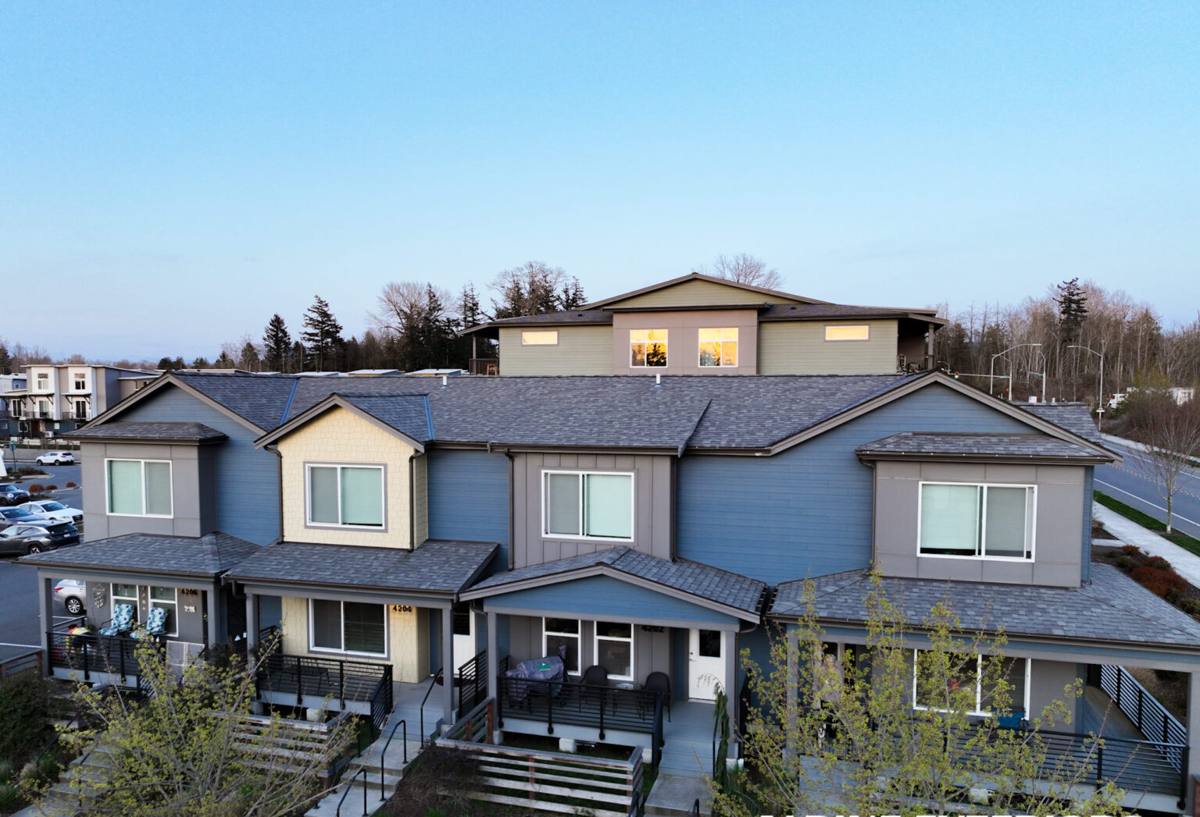
Burlington sits in a tough spot for exterior materials. You're close enough to Skagit Bay and Padilla Bay to get salt-laden air moving through on a west wind, you're in the direct path of the marine storms that roll off the Sound all winter, and the valley holds moisture longer than drier parts of the state. Add in the shade from mature trees on a lot of local properties and you get months of damp, low-light conditions that are ideal for moss and algae. Siding here doesn't just need to look good on install day — it needs to survive a climate that actively works against it.
What "Fiber Cement" Actually Is
James Hardie siding is made from a mix of Portland cement, sand, and cellulose fiber, cured into rigid boards and panels. It's not plastic, and it's not wood — it's closer to a manufactured masonry product shaped and finished to look like lap siding, shingle siding, or vertical panels. That composition is what gives it the properties that matter most in a wet coastal climate:
- It doesn't rot, because there's no wood fiber for moisture to break down
- It's non-combustible, which matters for insurance and for wildfire-adjacent risk in drier summer months
- It holds paint and factory finish far longer than wood because it doesn't expand and contract with humidity the way wood does
- It resists pest damage — no woodpeckers, no carpenter ants, no termites feeding on the siding itself
None of that makes it maintenance-free. Fiber cement still needs to be installed correctly, caulked correctly, and painted or refinished on a normal schedule if you don't choose a factory-finished product. But it removes the failure modes that cause the most expensive problems on wood and engineered wood siding.
Why This Matters More Here Than Elsewhere
A siding product that performs fine in Eastern Washington's dry climate can behave very differently in Skagit County. Driving rain here doesn't just hit siding — it gets pushed sideways and upward under eaves and around corners by wind off the water. Products that rely on a painted surface layer for water resistance are only as good as that layer's ability to stay intact, and in this climate, that layer takes a beating every winter.
Why We Don't Install LP SmartSide
LP SmartSide is engineered wood — strand board treated with resin and zinc borate, then given a factory finish. It's a legitimate product, and plenty of contractors install it well. Our objection isn't that it's a bad product on paper; it's that it's a wood-based product asking to perform in a climate that's especially hard on wood-based products.
Engineered wood siding is more forgiving of moisture than raw lumber, but it's not immune to it. If water gets behind the panel through a caulk failure, a poor flashing detail, or a fastener that wasn't sealed right, the strand board core can swell and soften. In a drier climate, an installer's occasional imperfection might never get tested by enough sustained moisture to matter. In Burlington, with months of rain and slow-drying shade, those same imperfections get tested constantly. We'd rather not build a business on hoping every seam and fastener hole stays sealed for decades.
Why We Don't Install Vinyl Siding
Vinyl is inexpensive, low-maintenance in the sense that it never needs painting, and easy to install quickly — which is exactly why it's everywhere. Our issue with it is what happens over the following twenty years, not the first two.
Vinyl is a thin plastic product that expands and contracts significantly with temperature swings, which strains fastening and can lead to buckling or gapping over time. It's also thin enough that it dents easily and fades unevenly in UV exposure, and faded vinyl can't be repainted the way fiber cement can — the color is the material, so once it fades, your only real fix is replacement. In a marine climate, salt air accelerates that UV and weathering cycle. We've also found vinyl does a poor job of holding paint or accepting the kind of trim detail that matches the older, more traditional homes common around Burlington and the rest of Skagit County.
Why We Don't Install Cemplank, Allura, or Primed Spruce
Cemplank and Allura are both fiber cement competitors to James Hardie, and structurally they're similar products — cement, sand, and cellulose. Our decision to stick with Hardie over these alternatives comes down to consistency of manufacturing, the depth and transferability of the warranty, and the ColorPlus factory finish system, which we'll get into below. When we standardize on one product, we standardize our crews' installation training, our caulking and flashing details, and our warranty conversations with homeowners around one system — which reduces the chance of a detail getting missed because a crew is switching between three different manufacturers' spec sheets.
Primed spruce is real wood siding, primed at the mill but not factory-finished. It's the most traditional option and, done right, it can look excellent. But primed wood puts the entire long-term performance of the siding in the hands of paint maintenance. In a climate where wood surfaces stay damp for extended stretches and moss takes hold on north- and shade-facing walls, primed spruce demands a repainting and caulk-inspection schedule that most homeowners don't keep up with — and once moisture gets past a failing paint film into raw wood, rot follows.
The James Hardie System We Install
ColorPlus Factory Finish
Most of what we install uses Hardie's ColorPlus finish — color baked on at the factory under controlled conditions, rather than field-painted on site after installation. That matters in a place like Burlington where a rainy forecast window can compress or compromise a field paint job. ColorPlus finishes carry their own extended finish warranty separate from the product warranty, and the color is engineered to resist fading from UV exposure, which is a real factor even in a cloudy climate — you get more direct summer sun here than the winter months suggest.
HZ5 Climate Engineering
James Hardie manufactures siding in different formulations for different climate zones, and the Pacific Northwest falls under their HZ5 line, engineered for wet, humid, freeze-thaw-capable climates. That's a meaningful distinction — it's not the same board being sold in Arizona. The HZ5 formulation is built to hold up to the moisture cycling that's routine in Skagit County winters.
Product Lines We Use
Depending on the home and the homeowner's goals, we typically work with HardiePlank lap siding for a traditional look, HardieShingle for a more textured, coastal-cottage appearance that suits a lot of the older housing stock in the area, and HardiePanel for vertical modern applications or accent sections. All three share the same core material and finish system.
Comparing the Options
| Product | Moisture Behavior | Maintenance | Fire Rating | Our Stance |
|---|---|---|---|---|
| James Hardie Fiber Cement | Does not rot; stable in wet climates | Low with ColorPlus; occasional caulk checks | Non-combustible | What we install |
| LP SmartSide (engineered wood) | Vulnerable if seals fail | Moderate; sealant inspection important | Combustible (treated) | Not installed |
| Vinyl | Doesn't rot but warps/fades over time | Low upfront, replacement-driven long term | Combustible | Not installed |
| Cemplank / Allura | Similar to Hardie | Comparable to Hardie | Non-combustible | Not installed (warranty/consistency) |
| Primed Spruce (wood) | Prone to rot without diligent upkeep | High — regular repainting required | Combustible | Not installed |
What Correct Installation Actually Involves
Even the best siding product fails if it's installed wrong, and fiber cement has its own installation requirements that differ from wood or vinyl. Getting it right in a climate like this one is non-negotiable:
- Proper clearance from grade, decks, and roof lines to keep the bottom edge of the siding out of standing water and splash-back
- Correct fastener type, spacing, and placement — Hardie specifies this closely, and getting it wrong can void the warranty
- Rain screen or drainage plane behind the siding to let any incidental moisture escape rather than sit against the wall assembly
- Properly lapped and sealed flashing at windows, doors, and roof intersections — the majority of siding failures we see start at these transitions, not on the flat wall
- Caulking only where Hardie's installation guide calls for it, with a quality sealant rated for exterior use
This is also part of why we don't spread ourselves across five different siding systems. Our crews install one product system, over and over, which means the flashing and fastening details become second nature rather than something looked up per job.
The Warranty, Honestly Explained
James Hardie's product warranty on most siding lines runs 30 years, non-prorated, and is transferable to a subsequent homeowner if the house sells — which matters for resale in a market where buyers are increasingly asking what the siding is and when it was installed. The ColorPlus finish carries its own separate finish warranty covering fade and chip resistance. Warranty coverage does depend on installation meeting Hardie's published specifications, which is another reason installation quality isn't optional — a warranty is only as good as the install behind it.
Moss, Algae, and the Realities of a Damp Climate
No siding product is moss-proof — moss and algae grow on the surface of nearly anything given enough shade and moisture, including fiber cement, vinyl, and roofing. What differs is how a surface handles cleaning. Fiber cement with a factory finish can be gently washed without damaging the substrate underneath, the way pressure can strip or crack a field-painted wood surface. Homes on shaded lots or under tree cover around Burlington will still need periodic exterior washing regardless of siding choice — that's a landscape and sun-exposure issue as much as a material one.
If you're weighing a siding replacement or a new build in Burlington and want a straight answer about what will actually hold up on your specific house, we're glad to come take a look. The estimate is free, there's no pressure, and we'll tell you plainly what we'd do and why.