 Burlington
 Why Conway Roofs Wear Differently Than Roofs Inland
Conway sits low in the Skagit River delta, close enough to the water that homes here deal with a combination most inland Skagit County properties don't: salt-laden air off the estuary, driving rain that comes in sideways during winter storms, and shade from surrounding trees and river-bottom humidity that keeps roofs damp long after a storm passes. Any one of those factors will age a roof faster than average. Together, they mean a shingle roof in Conway is working harder every single day than the same roof would be thirty miles inland.
That doesn't mean asphalt shingles are the wrong choice for Conway — they're still the most practical, cost-effective roofing option for most homes here. It means the installation details matter more. A roof put on with inland assumptions — standard underlayment, minimal ventilation, generic shingles — will show moss, granule loss, and soft spots years before it should. A roof put on with Conway's conditions in mind will hold up the way it's supposed to.
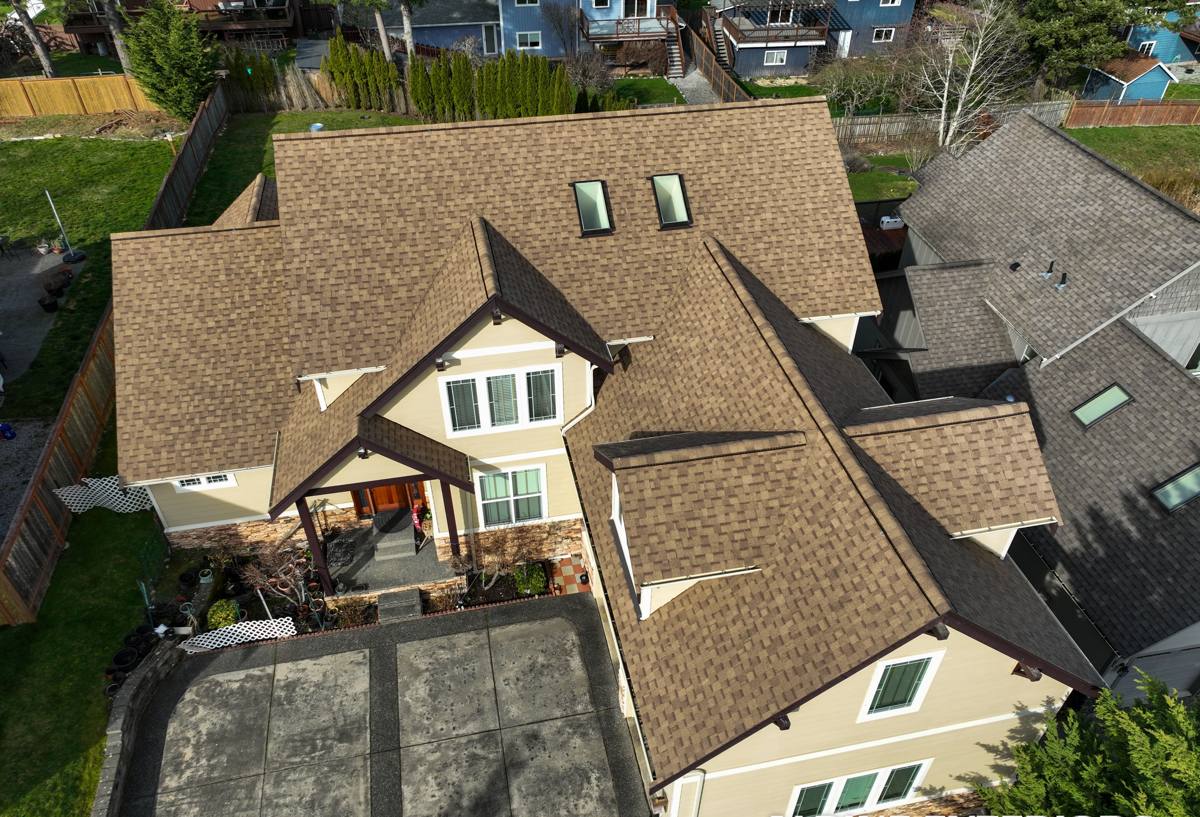
What Salt Air, Rain, and Moss Actually Do to a Roof
Salt Air
Airborne salt accelerates corrosion on any exposed metal — nail heads, flashing, drip edge, vent caps. Once corrosion starts on flashing, water finds a path underneath it long before the shingles themselves look worn. This is one of the most common causes of hidden leaks we find on Conway roofs that otherwise look fine from the ground.
Driving Rain
Wind-driven rain doesn't just fall on a roof, it pushes sideways and upward under shingle edges, around vents, and into any gap in the flashing. Roofs built for calmer weather often skimp on underlayment overlap and flashing sealant because they don't need it. In Conway, those shortcuts show up as leaks around chimneys, skylights, and valleys within a few wet seasons.
Moss and Algae
Conway's tree cover, river humidity, and long stretch of gray, damp weather from fall through spring create ideal conditions for moss and algae growth. Moss isn't just a cosmetic problem — its root structure lifts shingle edges, holds moisture against the roof deck, and speeds up granule loss. Once moss gets a foothold on a north-facing slope or a shaded section near trees, it spreads and the shingles underneath deteriorate faster than the rest of the roof.
What a Correct Asphalt Shingle Job Includes Here
A roof that's going to hold up under Skagit County conditions needs a few things done right, every time, not just on the parts that show.
- Full tear-off to the deck — layering new shingles over old traps moisture and hides deck damage that needs to be caught and repaired.
- Ice-and-water shield at eaves, valleys, and around penetrations — this self-adhering membrane is the backup layer that keeps wind-driven rain out even if a shingle tab lifts in a storm.
- Corrosion-resistant flashing — around chimneys, skylights, sidewalls, and in valleys, using materials that hold up to salt air rather than standard mill-finish metal.
- Balanced attic ventilation — intake at the eaves and exhaust at the ridge, sized correctly for the attic, so moisture doesn't condense on the underside of the deck and shorten the roof's life from the inside.
- Algae-resistant shingles on shaded or north-facing sections — copper-infused granules slow algae and moss growth on the parts of the roof that stay damp the longest.
- Correct nailing pattern — six nails per shingle in high-wind zones rather than the standard four, placed in the manufacturer's nailing strip, not high or low.
- Ridge cap and hip installation matched to the field shingle, sealed and nailed to resist wind uplift off the water.
Our Process, Start to Finish
We keep the process straightforward because a roof replacement is disruptive enough without added confusion.
- On-site inspection. We walk the roof (weather permitting) and check the attic from inside, looking at ventilation, decking condition, and any signs of moisture that wouldn't show from the ground.
- Written estimate. You get a clear scope of work and price — what's being torn off, what underlayment and flashing we're using, and why, in plain language.
- Scheduling around the weather. Conway's wet season narrows the safe installation window. We plan tear-offs for stretches of dry weather and keep material staged to move fast once we start.
- Tear-off and deck inspection. Old roofing comes off down to the deck, and we replace any damaged sheathing before anything new goes down.
- Underlayment, flashing, and shingle installation following the details above.
- Cleanup and magnetic nail sweep. We haul debris off-site and go over the property for stray nails and material.
- Final walkthrough. We go over the finished roof with you before we consider the job done.
Choosing the Right Shingle for a Conway Roof
Not every asphalt shingle is built the same, and the right choice depends on how much shade and wind exposure a particular roof gets.
| Shingle Type | Best For | Trade-Offs |
|---|---|---|
| 3-tab (standard) | Budget-focused projects, secondary structures | Shorter lifespan, less wind resistance, no algae protection unless specified |
| Architectural / dimensional | Most Conway homes — better wind rating and appearance | Higher upfront cost than 3-tab, but longer service life offsets it |
| Algae-resistant (copper-granule) | Shaded roofs, north slopes, tree-heavy lots | Small cost premium, but meaningfully slows moss and algae compared to standard granules |
| Impact-rated | Homes wanting extra durability against debris and hail | Higher material cost; sometimes offers insurance premium credit |
For most Conway properties, we recommend architectural shingles with algae-resistant granules as the baseline — the added cost is modest relative to the total job, and it directly addresses the moss and algae pressure that's specific to this area.
What Drives the Cost of a Conway Roof Replacement
| Factor | Why It Matters Here |
|---|---|
| Roof pitch and access | Steeper roofs and limited driveway access slow the job and affect safety equipment needs |
| Deck condition | Rot or soft decking found during tear-off requires replacement before shingles go down |
| Number of penetrations | Chimneys, skylights, and vents each need individual flashing work |
| Shingle grade | Standard vs. architectural vs. algae-resistant materials price differently |
| Ventilation upgrades | Adding ridge or soffit vents where none exist adds labor but pays off in roof lifespan |
| Layers to remove | Tearing off two layers of old roofing takes longer than one |
We don't quote a flat per-square rate without seeing the roof — a house with a simple gable and easy access costs meaningfully less than one with multiple valleys, dormers, and steep pitches. The estimate we give you accounts for your actual roof, not an average one.
Keeping a Conway Roof Healthy Between Installations
A well-installed roof still needs basic upkeep in this climate. A short annual routine catches problems while they're cheap to fix.
- Have moss and debris cleared from the roof surface before it builds up, especially on shaded slopes.
- Keep gutters clear so water isn't backing up under the shingle edge during heavy rain.
- Trim back tree limbs that shade sections of roof and drop needles or leaves onto it.
- Check attic ventilation isn't blocked by insulation or storage.
- Have flashing around chimneys and vents inspected every few years for corrosion or sealant failure.
- Address any granule buildup in gutters — it's an early sign of shingle wear worth a closer look.
Why a Crew That Already Works Conway Makes a Difference
Roofing here isn't identical to roofing in drier parts of Skagit County or across the county line. A crew that regularly works Conway knows which flashing details actually hold up to the salt air, how tight the dry-weather installation windows really are, and which shaded lots need algae-resistant shingles as standard rather than an upsell. That local pattern recognition is the difference between a roof that's technically up to code and one that's actually built for what this specific area throws at it.
There's also the practical side: knowing local permitting requirements, having a dump and material supply chain that doesn't add delay, and being reachable if a question comes up after the job is done. We're a Burlington-based crew, and Conway is part of our regular service area, not a special trip.
Ready for a Straight Answer on Your Roof?
If your roof is showing moss, granule loss, or you're just not sure how much life is left in it, we'll take a look and give you a clear, honest assessment — no pressure, no inflated urgency. Fill out the form below for a free estimate on your Conway asphalt shingle roofing project.