 Burlington
 Asphalt Shingle Roofing Built for Oak Harbor's Conditions
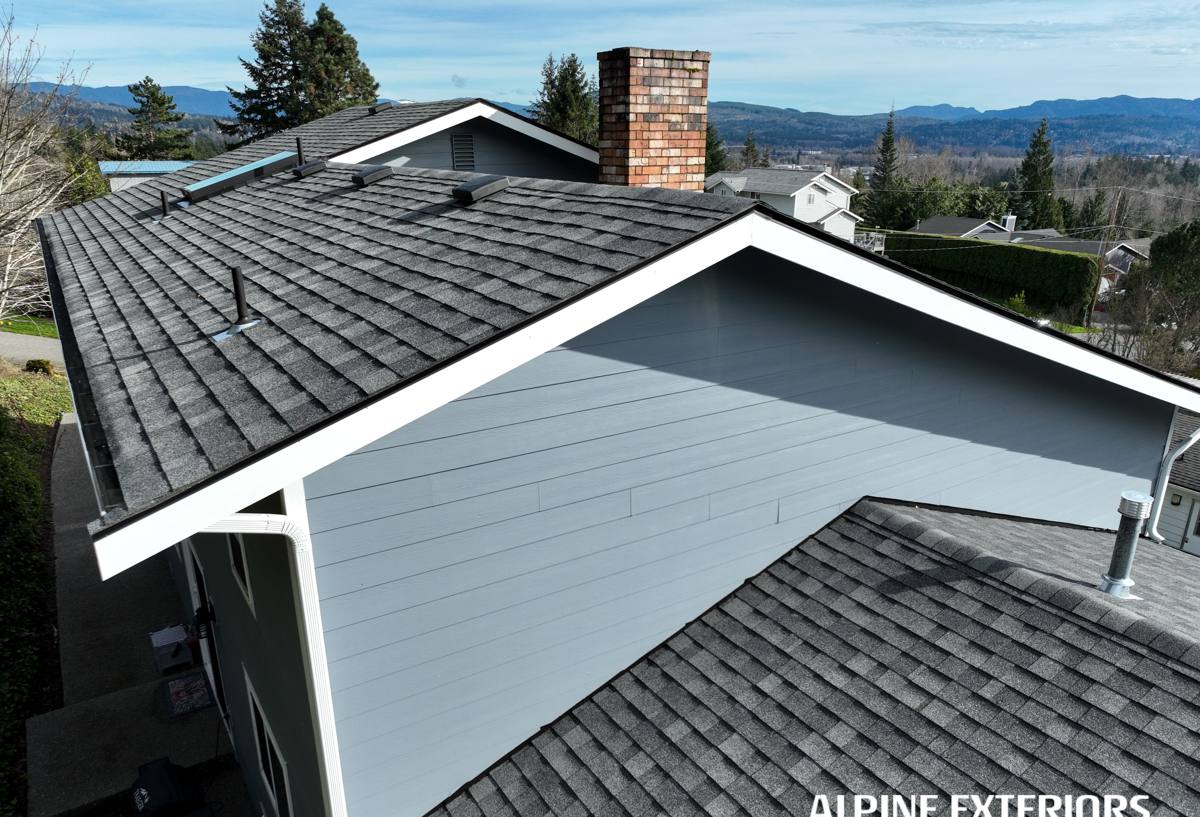
Homes in and around Oak Harbor deal with a combination of weather stresses that most inland Washington towns never see. Salt-laden air off the water accelerates corrosion on exposed metal fasteners and flashing. Driving rain, often pushed sideways by wind, finds its way into any gap in the underlayment or flashing detail. And the long, wet moss season that defines this part of Skagit County gives organic growth months at a time to take hold on north-facing slopes and shaded valleys. An asphalt shingle roof that's installed correctly for these conditions can last decades. One that's installed to a generic spec, without those local factors in mind, tends to show problems years earlier than it should.
This page covers what a correct asphalt shingle roofing job looks like for an Oak Harbor home, what to look for in materials and workmanship, and why hiring a crew that already understands this specific stretch of Skagit County's coastline matters more than it would somewhere drier and calmer.
Why the Local Climate Changes the Job
Salt Air and Metal Components
Every asphalt shingle roof depends on metal in places shingles alone can't cover: drip edge, step flashing around chimneys and walls, valley metal, and the fasteners holding everything down. In a coastal-influenced environment, standard galvanized fasteners and thin flashing stock corrode faster than they would inland. We spec corrosion-resistant fasteners and heavier-gauge flashing on homes in this area as a standard practice, not an upsell, because replacing a shingle roof over rusted-out flashing within ten years costs far more than doing it right the first time.
Wind-Driven Rain
Rain that falls straight down is fairly forgiving of small installation shortcuts. Rain that's pushed sideways by wind off the water is not. It finds its way under shingle tabs that weren't sealed properly, through nail heads that were driven at the wrong angle, and around flashing laps that were cut short to save material. Correct fastening patterns, proper shingle overlap, and sealed starter courses matter more here than in a calmer inland location.
Moss and Algae Season
Skagit County's wet season runs long, and shaded or north-facing roof sections can stay damp for weeks at a stretch. Moss doesn't just look bad — it lifts shingle edges as it grows, holds moisture against the roof deck, and works its way under tabs over time. Algae staining is mostly cosmetic but signals the same damp conditions that let moss take hold. Both are largely preventable with the right shingle choice and roof design, covered below.
What a Correct Asphalt Shingle Installation Includes
An asphalt shingle roof is a system, not a single product. Skipping or shortcutting any layer undermines the rest, no matter how good the shingle itself is.
- Deck inspection and repair — any soft, delaminated, or water-damaged sheathing gets replaced before anything goes down, not covered up.
- Ice-and-water shield at vulnerable areas — valleys, eaves, and roof-to-wall transitions get a self-adhering waterproof membrane, not just felt.
- Synthetic underlayment across the full deck for a consistent secondary water barrier.
- Drip edge and starter strip installed correctly at eaves and rakes so wind-driven rain can't get behind the first course.
- Proper nailing pattern — correct nail count, placement, and depth per shingle, matched to the manufacturer's high-wind specification.
- Step and counter-flashing at every wall, chimney, and skylight intersection, not caulk substituting for metal.
- Balanced attic ventilation — intake at the eaves and exhaust at the ridge, sized to the attic volume, so moisture doesn't condense against the deck from underneath.
Any one of these done wrong can cause a leak years down the road that looks, from the outside, like a shingle problem — when the shingle was never the issue.
Choosing a Shingle for This Environment
Not every asphalt shingle product is a good match for a coastal, moss-prone climate. The main differences that matter here are algae resistance, wind rating, and how the shingle is designed to shed water at the granule and tab level.
| Shingle Class | Typical Wind Rating | Algae Resistance | Best Fit |
|---|---|---|---|
| Standard 3-tab | Lower | Often none built in | Budget projects, low-exposure roofs |
| Architectural / laminate | Higher | Usually available with copper-infused granules | Most Oak Harbor homes — our standard recommendation |
| Impact-rated architectural | Highest | Usually available | Exposed sites, homes with a history of storm damage |
We generally recommend architectural shingles with algae-resistant granules for homes in this area. The higher wind rating handles the gusts that come with driving rain events, and the algae-resistant granules — copper or zinc-infused — slow the streaking and biological growth that plain granules can't resist in a damp climate. It costs more up front than a basic 3-tab shingle, but the difference in how the roof looks and performs after ten wet seasons is significant.
Design Choices That Reduce Moss Before It Starts
Material selection only goes so far. A few design and workmanship decisions make a bigger difference over the life of the roof:
- Keeping roof valleys and low-slope transitions properly flashed so water doesn't pool or run slowly across shaded areas.
- Trimming or recommending clearance for overhanging branches where practical, since shade and debris are what let moss establish in the first place.
- Ensuring gutters and downspouts are clear and pitched correctly, since backed-up water sitting against the eave line is one of the most common moss and rot starting points we see.
- Balanced attic ventilation, again — a deck that stays warm and dry from underneath resists moss and algae better than one with trapped moisture working against it from both sides.
Our Process for Oak Harbor Roofing Projects
Inspection and Estimate
We start with a full roof inspection — deck condition, flashing points, ventilation, and current shingle condition — and give a written estimate that lays out what's actually needed versus what's optional. No pressure, no inflated scope.
Tear-Off and Deck Assessment
Full tear-off to the deck on reroofs, so we can actually see and repair what's underneath instead of layering over a hidden problem. Any damaged sheathing gets replaced and documented before we move on.
Installation
Underlayment, flashing, and shingles go down in the order and manner described above, following manufacturer specifications for the shingle and wind rating chosen. We don't cut corners on fastener count or flashing laps to save a few hours.
Cleanup and Final Walkthrough
Magnetic sweep for stray nails, full site cleanup, and a walkthrough so you understand what was done and what to expect from the new roof going forward.
Signs an Oak Harbor Roof Needs Attention
A quick self-check from the ground can catch problems early, before they turn into a deck repair or interior leak:
- Visible moss patches, especially on north-facing or shaded slopes
- Dark streaking that doesn't wash off with normal rain
- Granules collecting in gutters or at downspout outlets
- Curling, cupping, or lifted shingle edges
- Rust staining around flashing, vents, or chimneys
- Any daylight visible through the attic at ridge or soffit vents
- Interior ceiling stains after a wind-driven rain event
Any one of these on its own isn't necessarily an emergency, but they're worth a professional look rather than waiting.
What Drives Cost on a Project Like This
| Factor | Why It Matters Here |
|---|---|
| Roof size and slope | More surface and steeper pitches mean more material and labor time |
| Deck condition | Rot or delamination found at tear-off adds repair scope |
| Shingle class chosen | Algae-resistant architectural shingles cost more than basic 3-tab |
| Flashing complexity | Multiple valleys, walls, chimneys, or skylights add labor and material |
| Ventilation upgrades | Adding or correcting intake/exhaust venting is sometimes needed alongside a reroof |
| Access and site conditions | Tree cover, steep lots, or limited staging area affect labor time |
We break these out clearly in every estimate so you can see exactly what you're paying for and where, if anything, there's room to adjust scope.
Why Local Experience Matters for This Job
A roofing crew that mostly works drier, inland areas doesn't always think about copper-granule algae resistance, corrosion-resistant flashing, or wind-driven rain detailing as a default — because they don't need to, most of the time. Working Oak Harbor and the surrounding Skagit County coastline regularly means those choices are already built into how we bid and build every job, not treated as an upsell after something fails. We know which details actually matter in this specific environment and which are marketing add-ons that don't do much here.
If you're weighing a repair versus a full reroof, or just want an honest read on how much life is left in your current shingles, we're happy to take a look. Reach out for a free, no-pressure estimate using the form below.