 Burlington
 Siding Repair in Avon: A Different Job Than Siding Repair Anywhere Else
Avon sits in the low, flat part of the Skagit River valley just outside Burlington, and that geography matters more than most homeowners realize when it comes to siding. The combination of nearby saltwater influence off Padilla Bay and the Salish Sea, frequent wind-driven rain rolling in off the water, and long stretches of overcast, damp weather creates a siding environment that's genuinely harder on exterior materials than a lot of other parts of Washington. A repair that would hold up fine in a drier inland town can fail again within a couple of years out here if it isn't done with that climate in mind.
This page is about one thing: fixing damaged, failing, or deteriorating siding on homes in and around Avon. Not a full re-side, not a generic "siding services" overview — the specific work of finding out why a section of siding failed, repairing it correctly, and making sure it doesn't fail again the same way.
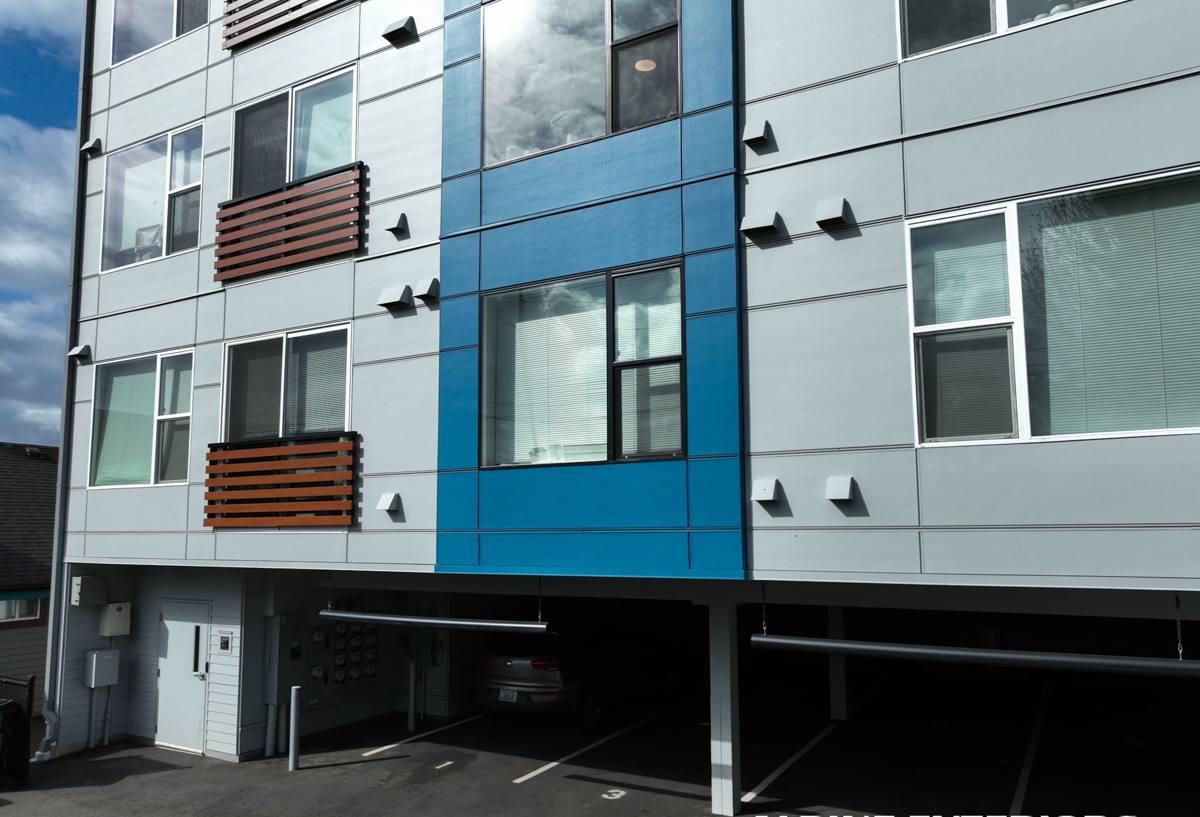
What Skagit County's Climate Actually Does to Siding
Homeowners often assume siding damage comes from one dramatic event — a storm, an impact, a leak. In practice, most of what we see in Avon is the slow, cumulative result of three climate factors working on a house year after year.
Salt Air and Coastal Exposure
Avon's proximity to Padilla Bay and the broader Salish Sea means homes here get low-level salt exposure that inland Skagit County properties don't. Salt-laden air accelerates corrosion on fasteners, flashing, and any exposed metal trim, and it can degrade certain paint and coating systems faster than manufacturers' standard weathering estimates assume. Over time this shows up as rust streaking below nail heads, chalking or fading on painted surfaces, and premature breakdown of caulking at joints.
Driving Rain and Wind-Driven Moisture
This part of Skagit County gets a lot of rain that doesn't just fall straight down — it comes in sideways during storms off the water, which pushes moisture into places a vertical rain never would: under trim, behind loose panels, into seams that were sealed correctly for calm weather but not for wind-driven exposure. Repeated wetting and drying cycles are what actually break down siding materials, fasteners, and the wall assembly behind them, more than any single storm event.
Moss, Mold, and Extended Shade Season
Long, wet, overcast stretches through fall, winter, and spring mean siding surfaces — especially north-facing walls, areas under eaves, and anything shaded by mature trees — stay damp for extended periods. That's exactly the environment moss, algae, and mildew need to establish. Beyond the cosmetic staining, moss holds moisture directly against the siding surface, which speeds up rot in wood-based products and can work into seams and fastener penetrations if left unaddressed for multiple seasons.
Signs an Avon Home Needs Siding Repair
Because so much of the damage we see is climate-driven rather than impact-driven, it often starts subtle. Here's what we tell Avon homeowners to watch for:
- Soft, spongy, or crumbling spots when you press on the siding, especially near the bottom of walls or below windows
- Visible gaps, cracks, or separation at panel seams and corner trim
- Persistent moss or dark green/black staining that keeps coming back after cleaning
- Peeling, bubbling, or chalking paint concentrated on one wall or elevation, particularly north- or west-facing
- Rust streaks running down from nail heads or metal trim pieces
- Warping, bowing, or visibly wavy panels
- Interior signs — a musty smell, discoloration on interior drywall, or peeling interior paint on an exterior wall
- Caulking that has shrunk, cracked, or pulled away from joints and trim
Any one of these on its own might be minor. Several together, or any sign paired with softness you can feel by hand, usually means moisture has already gotten past the surface and into the wall assembly.
What a Correct Siding Repair Actually Involves
Diagnosing the Cause, Not Just the Symptom
The biggest mistake in siding repair is patching the visible damage without figuring out why it happened. A cracked panel might be the result of a bad original installation, a failed flashing detail above it, or years of standing moisture from a gutter that overflows in heavy rain. If you only replace the cracked piece and leave the underlying cause in place, the new material fails on the same timeline as the old. Every repair we do starts with figuring out the actual source of the moisture or damage — not just what's visible from the street.
Matching Materials and Finish
A repair should be close to invisible once it's done. That means matching profile, reveal, and color as closely as possible, and being upfront with the homeowner when an exact match isn't realistic — older siding fades and weathers over time, and a brand-new piece next to twenty-year-old material will never be a perfect blend no matter how it's finished. We'll tell you honestly what to expect before starting, rather than after.
Sealing and Flashing Details
Most siding failures in this climate trace back to a flashing or sealant detail, not the siding material itself. Correct repair work means re-flashing where water was getting behind the wall, using appropriate sealants rated for the exposure, and making sure water has a path to shed away from the structure rather than a path to collect against it. This is the part of the job that doesn't show once it's finished — and it's the part that determines whether the repair lasts five years or twenty.
Repair or Replace? How We Help You Decide
Not every damaged section needs a full re-side, and not every homeowner who calls about a repair actually needs one — sometimes the right answer is replacement of a larger section, or in some cases, the whole elevation. Here's generally how the factors weigh out:
| Factor | Favors Repair | Favors Replacement |
|---|---|---|
| Extent of damage | Isolated to one or two areas | Spread across multiple walls or elevations |
| Underlying material condition | Rest of the siding is sound and well-adhered | Widespread softness, warping, or fastener failure elsewhere |
| Cause of the damage | One-time or localized issue (impact, one bad flashing detail) | Systemic issue — original installation defects, chronic moisture exposure |
| Age of existing siding | Relatively recent, still within expected service life | At or past its expected service life |
| Material match availability | Matching material or acceptable substitute available | Discontinued product, no reasonable match possible |
We'll walk you through where your home falls on these factors and give you a straight recommendation — including telling you when repair is genuinely the right call and a full re-side would just be spending more than necessary.
Why We Repair Toward James Hardie, Not Whatever's on the Wall
Burlington Siding installs James Hardie fiber cement exclusively, and that standard carries into our repair work too. When a repair involves replacing sections of existing siding, we use Hardie fiber cement and, where the home already has it, Hardie's factory-applied ColorPlus finish, rather than reaching for whatever generic patch material is fastest. There's a practical reason for this beyond consistency: fiber cement doesn't share the same failure patterns as wood-based, vinyl, or other engineered products in a wet, salt-influenced climate like Avon's. It doesn't absorb and swell with moisture the way wood-based composites can, and it holds up to the freeze-thaw and wet-dry cycling that's routine here.
If your existing siding is a different product entirely — vinyl, LP SmartSide, cedar, or another fiber cement brand — we'll still assess and repair honestly, and we'll tell you plainly what we recommend and why, including if that means transitioning toward Hardie during a larger repair or eventual replacement rather than perpetuating a product we don't stand behind long-term.
Our Process for Avon Repair Calls
The process is straightforward and doesn't require a hard-sell visit:
- On-site assessment. We look at the damaged area and, just as importantly, the areas around it — flashing, trim, gutters, grading, anything contributing to the moisture load on that wall.
- Honest diagnosis. We explain what caused the damage in plain terms, not just what it will cost to fix.
- Written scope and estimate. You get a clear description of the repair, the materials involved, and the price before any work starts.
- The repair itself. Removal of the damaged material, correction of the underlying cause, proper flashing and sealing, and installation of matched replacement material.
- Final walkthrough. We review the completed work with you before considering the job done.
Why a Crew That Already Works Avon Matters
Avon isn't a large area, but it has its own microclimate quirks within Skagit County — proximity to the bay, low elevation, and exposure patterns that differ from Burlington's more inland neighborhoods or the drier parts of the county further east. A repair crew that's worked houses in this specific area already knows what kind of moisture exposure to expect on a given wall orientation, has a feel for how quickly moss and salt air affect different materials locally, and isn't guessing at flashing and sealant choices based on a different climate zone's assumptions. That local pattern recognition is part of what keeps a repair from becoming a repeat call in two years.
Get a Straight Answer on Your Siding
If you're seeing soft spots, recurring moss, cracked seams, or paint failure on your Avon-area home, it's worth having someone look at it before it spreads further into the wall assembly. We offer free, no-pressure estimates — you'll get an honest read on whether you're looking at a simple repair, a larger fix, or something in between, with no obligation to move forward. Use the form below to get started.