 Burlington
 Custom Windows Built for Clear Lake's Weather
Clear Lake sits in the kind of Skagit County microclimate that's easy to underestimate until you own a house here for a few winters. The rain doesn't just fall, it drives sideways off the water and across open fields for days at a stretch. Humidity sits heavy near the lake itself, and the moss season stretches long enough that anything with a horizontal surface or a shaded north face is going to grow something green if it isn't sealed and drained correctly. Windows take the brunt of all three. A window that's a fine fit for a drier inland town can still fail here within a few years if it wasn't installed with this specific combination of moisture, wind-driven rain, and marine-influenced air in mind.
"Custom" in this context doesn't mean expensive or fancy. It means the window and the installation are matched to the actual opening, the actual wall assembly, and the actual exposure of your specific house, rather than treated as an off-the-shelf swap. That distinction matters more in Clear Lake than in a lot of neighborhoods because the housing stock here is mixed and often older, and because the weather punishes shortcuts faster than in drier parts of the state.
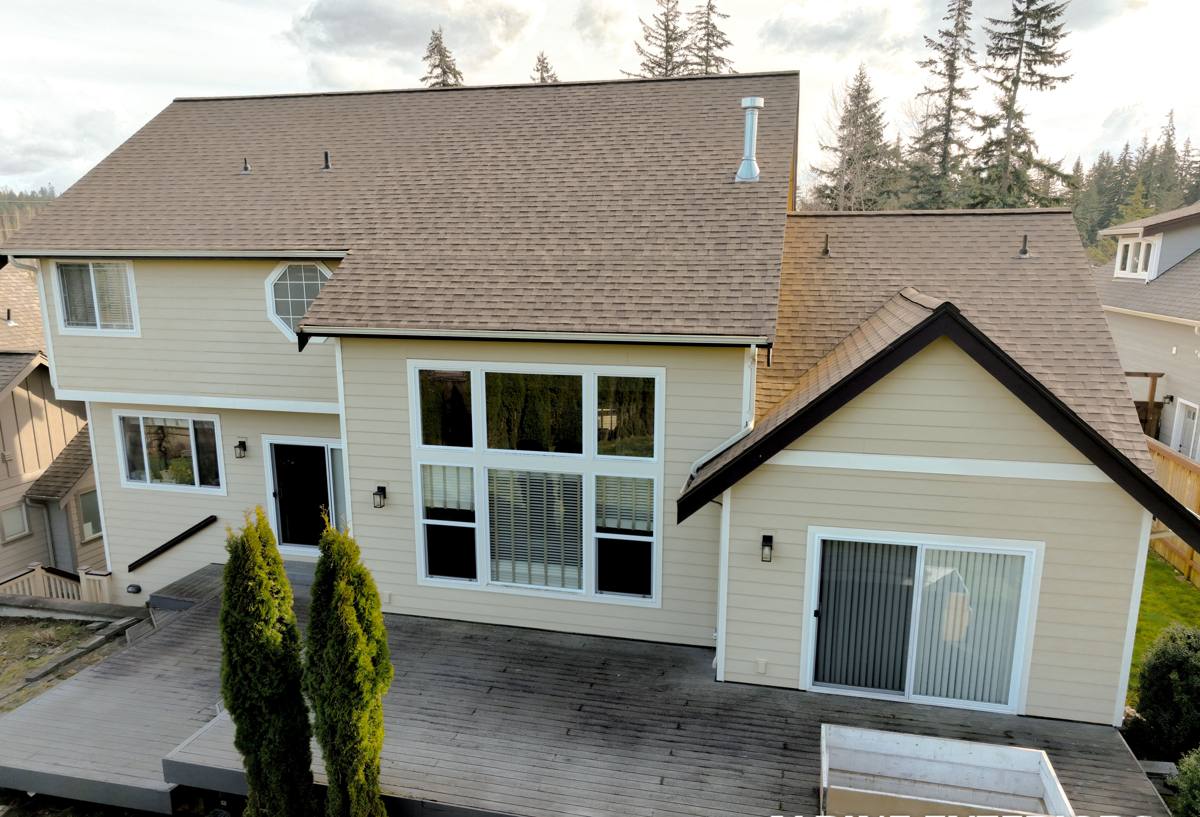
Why Off-the-Shelf Rarely Fits Around Here
A lot of homes in and around Clear Lake predate current standard window sizing. Farmhouses, older lake cabins, and additions built over the decades often have openings that are slightly out of square, slightly undersized, or slightly larger than any stock window on the market. When a contractor forces a stock-size window into a non-standard opening, the gaps get packed with extra shims, foam, and trim to hide the mismatch. That approach might look fine on installation day, but it creates weak points in the weather seal, and weak points are exactly what wind-driven rain and long wet seasons find first.
Custom-sized windows, built to the actual rough opening, eliminate that guesswork. The frame meets the wall the way it's supposed to, the flashing can be installed correctly instead of improvised around gaps, and the finished window performs the way its warranty assumes it will.
Common Situations That Call for Custom Sizing
- Older farmhouses or cabins with openings framed before standardized window sizes existed
- Additions or converted porches where the wall depth or opening size doesn't match the main house
- Homes near the lake where higher humidity has caused the original frame or opening to shift slightly over time
- Replacing a single unusual window (bay, picture, or angled) without re-siding the whole wall
- Matching a new window's sightlines to existing windows on additions or remodels
What a Correct Installation Actually Involves
The window itself is only part of the job. Most window failures we get called out to fix in this area aren't a defective unit, they're a moisture path that was never properly closed off during installation. A correct job, whether it's one window or a whole house, follows the same sequence every time:
- Careful removal of the old unit without tearing the surrounding siding or sheathing more than necessary
- Inspection of the opening for rot, soft framing, or existing moisture damage before anything new goes in
- Correct flashing sequence — sill pan first, then side flashing, then head flashing, layered so water is always directed outward and down, never trapped behind the window
- Air and moisture barrier integration, tying the window's flashing into the existing house wrap so there's no gap in the drainage plane
- Proper shimming and squaring so the sash operates smoothly and the seal is even all the way around
- Insulation of the gap between frame and rough opening with a product that stays flexible, not a rigid foam that can crack the frame as the house settles
- Interior and exterior sealing and trim, finished to match the rest of the wall
Skip or rush any one of those steps and the window can look perfect for a year or two while water quietly works its way into the wall behind it. In a climate with as much sustained wet weather as Skagit County gets, that's not a small risk — it's the single biggest cause of window-related rot we see.
Choosing a Frame Material for a Lake-Adjacent Climate
Material choice matters more here than in a dry climate, because every material has to deal with sustained humidity, occasional wind-driven rain, and a long stretch of the year where surfaces don't fully dry out between rain events. There's no single right answer for every house — it depends on your budget, your home's style, and how much upkeep you want to take on.
| Frame Material | Moisture Behavior | Maintenance | Typical Fit |
|---|---|---|---|
| Vinyl | Won't rot or corrode; handles humidity well | Low — occasional cleaning | Most homes, best value |
| Fiberglass | Very stable in moisture and temperature swings | Low | Higher-exposure walls, larger openings |
| Wood-clad | Good if the cladding and seals stay intact; interior wood is vulnerable if water gets behind the clad exterior | Higher — requires monitoring of seals and finish | Homes prioritizing a traditional wood interior look |
| Aluminum | Prone to condensation and heat transfer without a thermal break | Moderate | Limited use; we generally steer clients toward better-insulating options for this climate |
We don't push one material on every homeowner. What we do insist on is being honest about trade-offs — for example, a wood-clad frame can look great, but it demands more long-term attention in a climate this wet, and we'll tell you that upfront rather than let you find out the hard way five years in.
Signs Your Current Windows Are Losing the Fight
Windows rarely fail all at once. The warning signs show up gradually, and in Clear Lake's climate they tend to show up earlier than homeowners expect.
- Fogging or moisture between panes (a failed seal on double-pane glass)
- Soft or discolored wood trim around the frame, especially on the north or west-facing side
- Visible moss or algae growth on the sill or lower frame
- Drafts you can feel even with the window fully latched
- Windows that have become hard to open, close, or lock — often a sign the frame has shifted
- Condensation forming on the inside of the glass regularly during winter
- Paint or finish peeling near the window frame on the exterior
Any one of these on its own isn't necessarily an emergency. Several together, especially paired with soft trim, usually means moisture has already gotten behind the window and it's worth having it looked at before the damage spreads into the wall.
Our Process, Start to Finish
We keep the process straightforward because homeowners deserve to know what's happening in their house and why.
1. On-site assessment
We look at the actual opening, the wall assembly, and the exposure of each window before recommending anything. A window on a sheltered wall doesn't need the same treatment as one facing the prevailing wind and rain.
2. Measurement and material selection
We measure precisely rather than assuming stock sizing will work, and we walk you through material and glass options in plain terms — what each one costs, how it holds up here, and what upkeep it needs.
3. Installation
Removal, opening inspection, flashing, sealing, and finish work, done in the sequence outlined above — no skipped steps, no hidden shortcuts under the trim.
4. Cleanup and walkthrough
We clean up the work area and walk through the finished windows with you so you know how they operate and what to keep an eye on.
Why a Crew That Already Works Clear Lake Matters
A contractor who mostly works drier, inland areas can still do competent work, but they're often making decisions based on assumptions that don't hold up here. Flashing details that are "good enough" in a low-rain climate aren't good enough when wind-driven rain hits a wall for days on end. Sealants and caulks that are fine in moderate humidity can fail faster under Skagit County's sustained moisture and long moss season.
We work on homes throughout Burlington and the surrounding Skagit County communities, including Clear Lake, regularly enough that these conditions aren't a guess for us — they're the baseline we plan every installation around. That means the flashing sequence, the sealant choice, and the material recommendations are already calibrated to what actually holds up on a lake-adjacent, marine-influenced property, not just to what's cheapest or fastest to install.
After Installation: What Keeps Windows Performing
Even a correctly installed window benefits from a little seasonal attention in this climate.
- Rinse sills and lower frames periodically during moss season to keep growth from taking hold
- Check exterior caulking once a year for cracking or gaps, especially after a hard winter
- Keep gutters and downspouts clear so runoff isn't sheeting directly down over window heads
- Wipe down interior sills if condensation collects during cold snaps, and consider a dehumidifier in consistently damp rooms
None of this is heavy maintenance — it's the kind of five-minute-a-season attention that keeps a properly installed window performing for its full expected lifespan instead of fighting the climate from day one.
Get a Straightforward Estimate
If your windows in Clear Lake are showing any of the signs above, or you're planning ahead for a remodel or addition, we're happy to take a look and give you an honest read on what's going on — no pressure, no upsell. Fill out the form below to request a free estimate.