 Burlington
 Deck Building in La Conner's Marine Environment
La Conner sits right on the Swinomish Channel, close enough to tidal water that homes here deal with a different set of conditions than a deck built a few miles inland in Burlington. Salt-laden air moves off the channel and the bay year-round, driving rain comes in sideways off Puget Sound weather systems, and the wet, shaded stretches of the calendar give moss and algae plenty of time to take hold on any horizontal wood surface. A deck built without accounting for those three things — salt air, driving rain, and moss season — will show it within a few years, even if it looks fine on installation day.
This page covers what actually matters when building a deck for a La Conner property: how the local climate wears on decks, what materials and details hold up, what our process looks like, and why local experience changes the outcome.
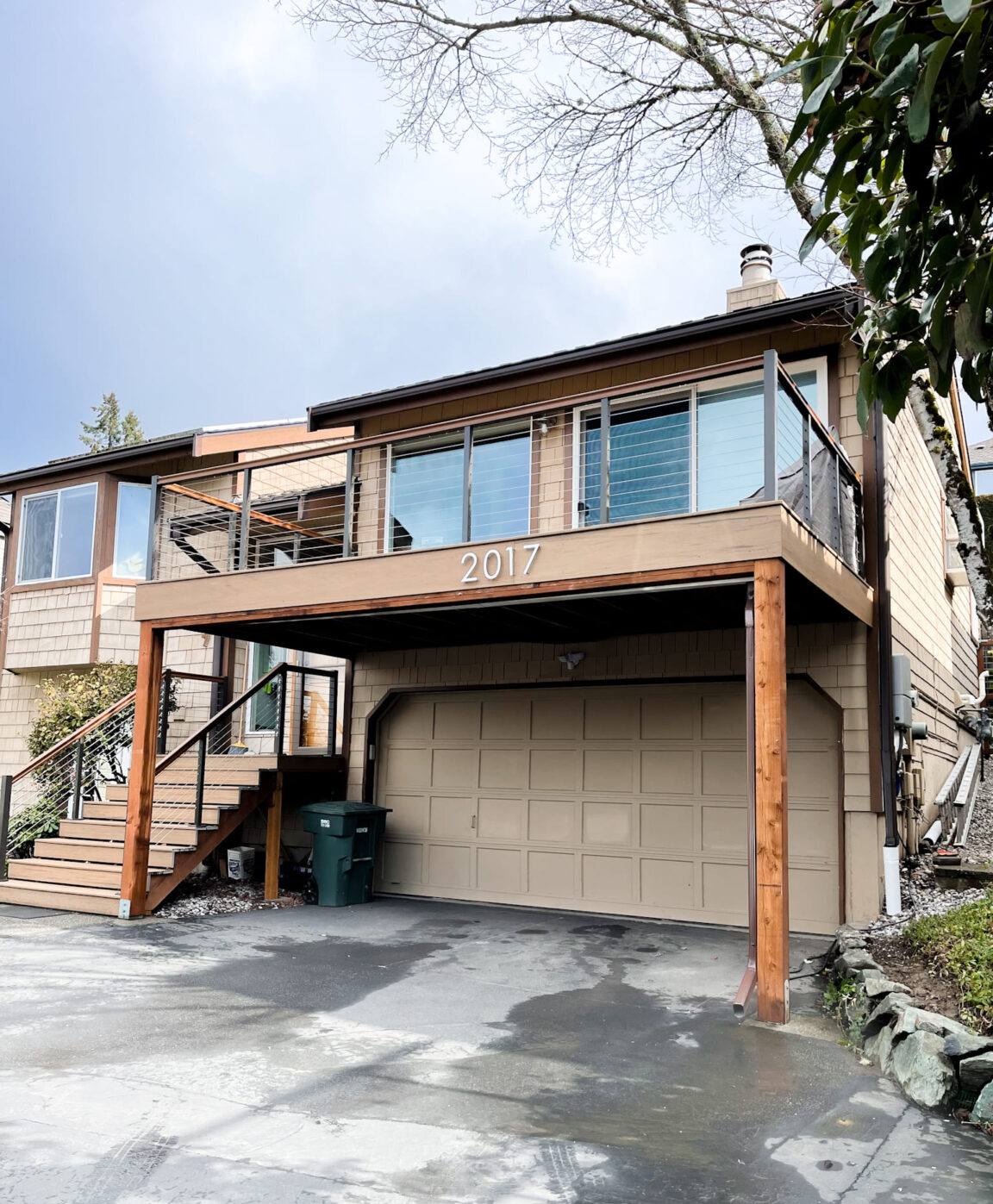
What Skagit County's Climate Does to a Deck Over Time
None of this is dramatic on its own. It's cumulative — small amounts of moisture and salt exposure, repeated for years, finding every weak point in the build.
Salt Air and Metal Fasteners
Proximity to tidal water means airborne salt reaches siding, railings, and hardware even on days without rain. Standard coated deck screws and generic galvanized brackets can start showing rust streaks and pitting well before their inland counterparts would, especially on decks facing open water or prevailing wind. Once a fastener starts corroding, it loses holding strength quietly — you don't usually see it until a board lifts or a railing post wiggles.
Moss and Algae on Horizontal Surfaces
Skagit County's wet season stretches long, and shaded or north-facing decks stay damp for days after a storm. Moss and algae need exactly that — moisture and low light — and they'll colonize decking boards, especially in board gaps and grain checks, faster than most homeowners expect. Beyond looking bad, a mossy deck surface gets slick and holds moisture against the wood or composite core, which shortens the life of whatever material is under it.
Driving Rain and Water Intrusion at the Ledger
Wind-driven rain off the water doesn't just fall on the deck surface — it gets pushed sideways into every seam, including the ledger board where the deck attaches to the house. This is the single most common failure point on decks in this region: water working behind poorly flashed ledger connections, rotting the rim joist or sheathing behind it, out of sight until there's a real problem.
Decking Material Options for La Conner Homes
There's no single "best" decking material — the right choice depends on how much upkeep a homeowner wants to do and how exposed the deck is to wind and salt. Here's how the common options actually compare in this specific climate:
| Material | Moisture / Salt Resistance | Moss & Algae Behavior | Maintenance | Typical Lifespan Here |
|---|---|---|---|---|
| Pressure-treated lumber | Good if sealed regularly; end grain and cut edges are vulnerable | Susceptible without regular cleaning and sealing | Annual cleaning, re-sealing every 1-2 years | 15-20 years with upkeep |
| Cedar | Naturally decay-resistant, but softer and needs sealing near salt air | Grows moss without airflow and periodic cleaning | Cleaning and oil/sealer every 1-2 years | 15-25 years with upkeep |
| Composite decking | Very good — doesn't absorb moisture like wood | Can still grow surface algae in shaded, damp spots; cleans off more easily than wood | Periodic washing, no sealing or staining | 25-30+ years |
| PVC decking | Excellent — fully synthetic, no wood fiber to hold moisture | Most resistant to sustained moss growth of the common options | Occasional washing | 25-30+ years |
We don't push one material on every job. A shaded, water-facing deck is a different conversation than a sunny deck tucked against a south-facing wall. What we won't do is install a decking product in a spot where its known weak points — moisture retention, poor drainage behind boards, a fastening system that traps water — line up directly with what this climate throws at it. That's a maintenance headache we'd rather steer a homeowner away from up front.
What a Correctly Built Deck Involves
The visible decking boards get all the attention, but most deck failures in this area start below the surface, in details a homeowner never sees until something goes wrong.
Ledger Board Attachment and Flashing
Where the deck meets the house, the ledger board needs proper flashing that sheds water outward, away from the rim joist and wall sheathing — not just a bead of caulk. Given how much wind-driven rain this area gets off the channel, we treat ledger flashing as non-negotiable, not an upgrade.
Footings and Drainage Considerations
Skagit County's low-lying areas, including ground near La Conner's tidal flats, can have a higher water table and heavier, slower-draining soil than you'd find further inland. Footings need to be sized and set to local frost depth and soil conditions, and the ground under the deck needs a way for water to move instead of pooling against posts and framing.
Fastener and Hardware Selection
Given the salt air, we lean toward stainless steel or heavy hot-dip galvanized fasteners and structural hardware rather than standard coated screws, particularly on decks with direct exposure to open water or prevailing wind. It costs a bit more up front and saves a homeowner from hardware failure a decade in.
Railings, Stairs, and Code Basics
Any deck attached to a home in Washington needs to meet current building code for guardrail height, baluster spacing, stair rise and run, and structural attachment — and most raised decks require a permit through the local jurisdiction before work starts. We handle that process as part of the job: pulling the right permit, building to the code that applies to the property, and scheduling inspections so nothing gets built that has to be torn out later.
Our Deck Building Process
- On-site assessment — we look at sun/shade exposure, wind direction, drainage, and how close the deck sits to the water, since all of that shapes material and detailing decisions.
- Design and material selection — we walk through the honest trade-offs of each decking option for that specific spot rather than defaulting to whatever's cheapest or trendiest.
- Permitting — we prepare and submit what's required for the jurisdiction and schedule inspections at the right points in the build.
- Framing and structural work — footings, posts, beams, joists, and ledger flashing, built to hold up to this region's moisture load.
- Decking, railing, and stairs — installed with corrosion-resistant fasteners and proper spacing for drainage and airflow underneath the boards.
- Final walkthrough — we go over care and maintenance specific to the material chosen, so there are no surprises the first wet winter.
Maintenance in a Moss-Prone Climate
Even a well-built deck needs some seasonal attention here. A short annual routine keeps most problems from starting:
- Sweep debris out of board gaps before fall rains start — trapped leaves and needles hold moisture and feed moss growth.
- Wash the deck surface at least once a year with a cleaner appropriate to the material — pressure washing wood too aggressively can damage the grain.
- Check and clear any drainage path or gap under the deck so water isn't pooling against footings or framing.
- Inspect the ledger flashing and any spot where the deck meets the house for gaps, cracked caulk, or staining.
- For wood decks, plan on re-sealing on the schedule the product calls for — skipping a cycle in this climate shows up fast.
- Look over railing posts and stair stringers for movement or soft spots, especially after a hard winter.
Why Hire a Crew That Already Works in La Conner
A deck built to a generic spec sheet, without adjusting for salt air, a higher water table, and a long wet season, tends to develop problems earlier than it should — usually the kind that are expensive to fix because they start out of sight. Crews who already build and repair decks around La Conner and the rest of Skagit County know which details actually matter here: where flashing gets skipped and shouldn't be, which fasteners hold up near the water, and how the local permitting process works. That local pattern recognition is the difference between a deck that needs real attention in five years and one that's still solid in twenty-five.
If you're planning a new deck or replacing one that's showing its age, we're happy to take a look and talk through what makes sense for your property — no pressure, no pushy sales pitch. Use the form below to request a free estimate.