 Burlington
 Deck Repair in Fir Island: Working With the Climate, Not Against It
Fir Island sits low and flat at the edge of the Skagit River delta, close enough to Skagit Bay that homes here live with marine air, wind-driven rain, and shaded, damp ground for a good part of the year. A deck built to a generic spec — the kind that would hold up fine in a drier inland town — often struggles here. Fasteners rust faster, water sits longer on flat framing, and moss gets a foothold anywhere the sun doesn't reach. Burlington Siding repairs decks on Fir Island regularly, and most of what we see traces back to the same handful of climate-driven causes.
This page covers what actually happens to decks in this part of Skagit County, what a correct repair involves, and how we decide between repairing and replacing.
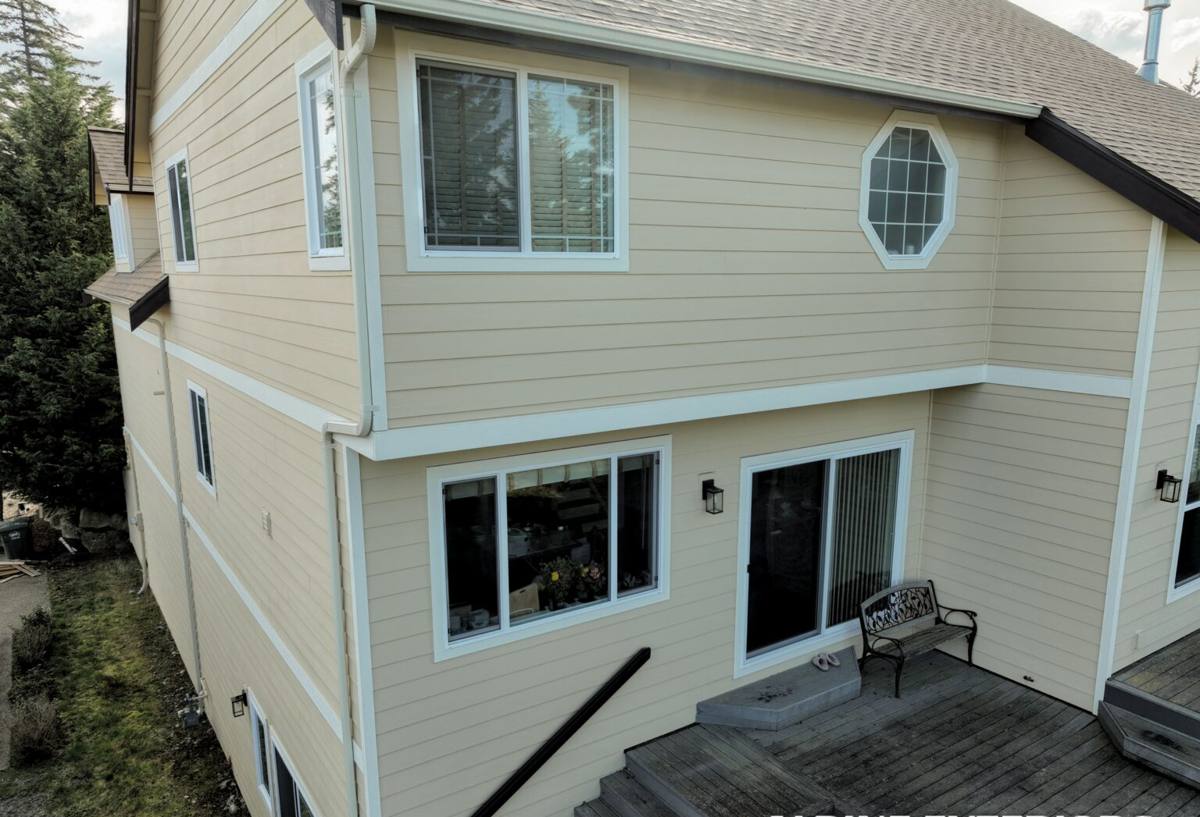
What Fir Island's Climate Does to a Deck
Salt-Tinged Marine Air
Proximity to Skagit Bay means the air carries more salt and moisture than it would further inland. That accelerates corrosion on anything metal — nails, screws, joist hangers, railing brackets. Standard galvanized fasteners that would last decades in a dry climate can start showing rust streaks and weakening within a handful of years out here. Once fasteners lose strength, the whole connection they're holding — a ledger board, a stair stringer, a post base — is only as good as the corroded hardware underneath it.
Driving Rain and Standing Water
Storms coming off the water tend to push rain sideways, not just straight down. That drives moisture up under railings, behind flashing, and into any gap around the ledger board where a deck meets the house. Because Fir Island's land is so flat, water doesn't always drain away from a deck the way it would on a sloped inland lot — it can sit on horizontal surfaces and in low spots in the framing longer than homeowners expect, which is exactly the condition wood decay needs.
A Long Moss Season
Between the rain, the humidity, and tree cover on many Fir Island properties, moss and algae have months of favorable conditions to establish themselves — often from early fall clear into spring. Moss on a deck isn't just cosmetic. It holds moisture directly against the wood or decking surface, breaks down sealants and finishes faster than plain weathering would, and makes boards genuinely slick and unsafe underfoot.
Common Deck Problems We Find on Fir Island Homes
Most repair calls fall into a predictable pattern. Before you call anyone, it's worth walking your own deck and checking for these:
- Soft or spongy spots when you press on decking boards, especially near the house or at board ends
- Rust streaks running down from screw heads, joist hangers, or railing brackets
- A visible gap or dark staining where the deck ledger board meets the siding
- Moss or green-black algae buildup, particularly on the shaded side of the deck
- Railing posts that wiggle or feel less solid than they used to
- Discoloration, splitting, or soft wood at the base of support posts
- Water that still sits on the surface an hour or more after rain stops
- Nails or screw heads that have popped up above the board surface
Any one of these on its own might be minor. Several together usually mean water has been getting into the structure for a while, not just the surface.
What a Correct Repair Actually Involves
Ledger Board and Flashing
The ledger board — where the deck bolts to the house — is the single most important connection on most decks, and it's also the one most exposed to wind-driven rain in this area. If flashing behind or above the ledger is missing, damaged, or was never installed correctly, water tracks straight into the rim joist and wall framing behind it. A repair that only replaces surface boards without checking this connection is treating a symptom, not the problem.
Fasteners and Hardware
Given how much faster standard hardware corrodes in marine air, we don't reach for whatever fastener is cheapest or easiest. Structural connections get hardware rated for the exposure they'll actually see — coated or stainless steel fasteners and connectors built to handle sustained moisture and salt exposure, not just occasional dampness. It costs a little more up front. It's also the difference between a repair that lasts and one you're paying for again in a few years.
What's Underneath, Not Just What You Can See
Decking boards can look fine on top while the joists, beams, or posts underneath are already compromised. A correct repair means getting underneath the deck to check framing, post bases, and footings — not just replacing whatever boards look worn from above. This is also where we catch moss and moisture damage before it reaches structural wood, rather than after.
Repair or Replace? How We Make That Call
Homeowners understandably want to know which way a project is going to go before we're out there. In practice, it comes down to a few honest factors:
| Factor | Repair Usually Makes Sense | Replacement Usually Makes Sense |
|---|---|---|
| Structural framing | Joists, beams, and posts are sound | Rot or corrosion has reached load-bearing framing |
| Ledger connection | Flashing and attachment are intact or easily corrected | Ledger board itself is compromised or improperly built |
| Extent of damage | Isolated to a few boards, a rail section, or fasteners | Spread across most of the deck surface or multiple systems |
| Age and material | Deck is relatively young or higher-grade material | Deck is old, undersized, or was built to a minimal spec |
| Code and safety | Current build meets safe railing/attachment standards | Deck predates current safety requirements for railings or bracing |
We'll always tell you plainly which side of that line your deck falls on, including when a repair is genuinely the right call and a full rebuild isn't necessary.
Decking Material Options for This Climate
When boards do need to be replaced, the material matters more here than it would in a drier climate. Here's how the common options hold up against salt air, standing moisture, and moss:
| Material | Moisture Behavior | Moss/Algae Resistance | Maintenance |
|---|---|---|---|
| Pressure-treated lumber | Resists rot when properly sealed and maintained | Moderate — needs periodic cleaning | Annual cleaning and resealing recommended |
| Cedar | Naturally moisture-resistant, but finish wears with marine exposure | Moderate | Refinishing every couple of years |
| Composite decking | Doesn't absorb water or rot | Better resistance, though moss can still grow on the surface | Occasional washing, no sealing or staining |
There's no single "correct" material for every situation — budget, the look you want, and how much upkeep you're willing to do all factor in. What we won't do is recommend a material or fastener spec that we know performs poorly against this specific climate just because it's the cheaper option that day.
Our Deck Repair Process
- Inspection. We check the ledger connection, framing, posts, footings, and surface — not just the parts that are visible from a walk-around.
- Honest assessment. You get a plain explanation of what's causing the problem, whether it's a repair or replacement situation, and why.
- Written estimate. Scope and cost factors laid out before any work starts — no surprises mid-job.
- Repair or rebuild. Structural work first, then decking, railings, and finish work, using hardware and materials suited to marine exposure.
- Final walkthrough. We go over the finished work with you and flag anything worth watching or maintaining going forward.
Why Hiring a Crew That Already Works Fir Island Matters
A lot of deck problems out here are climate-driven, not workmanship-driven — the original builder may have done a perfectly normal job by inland standards and still ended up with a deck that struggles against salt air and a long wet season. A crew that already does regular work in this part of Skagit County recognizes those patterns quickly: where flashing tends to fail first, which fastener specs actually hold up, and where moss establishes itself on a typical Fir Island lot. That familiarity means less time spent diagnosing and more time spent fixing the right thing the first time.
It also means someone who's easy to reach if a repair needs a follow-up look after a hard winter — not a crew that has to drive in from well outside the area every time.
Get a Free Estimate
If your deck is showing rust streaks, soft spots, heavy moss, or just feels less solid than it used to, it's worth having it looked at before those problems reach the framing underneath. Fill out the form below for a free, no-pressure estimate — we'll tell you honestly what your deck needs and what it doesn't.