 Burlington
 Why Decks in Alger Wear Out Faster Than You'd Expect
Alger sits in a stretch of Skagit County where the weather doesn't do a homeowner any favors. The combination of salt-tinged marine air drifting in off the Sound, long stretches of driving rain through fall and winter, and a moss season that can run half the year puts constant pressure on anything built outdoors. A deck here isn't just dealing with rain — it's dealing with rain that doesn't dry off quickly, tree cover that keeps surfaces shaded and damp, and air that carries just enough salt to accelerate corrosion on fasteners and hardware that would otherwise last decades.
We see the same failure pattern on deck after deck in this area: the structure looks fine from a distance, but underneath, moisture has been doing quiet damage for years. Ledger boards rot where they meet the house. Joists soften from the top down under boards that never fully dry. Fasteners rust and lose their grip. By the time it's visibly sagging or spongy underfoot, the problem has usually been building for a long time.
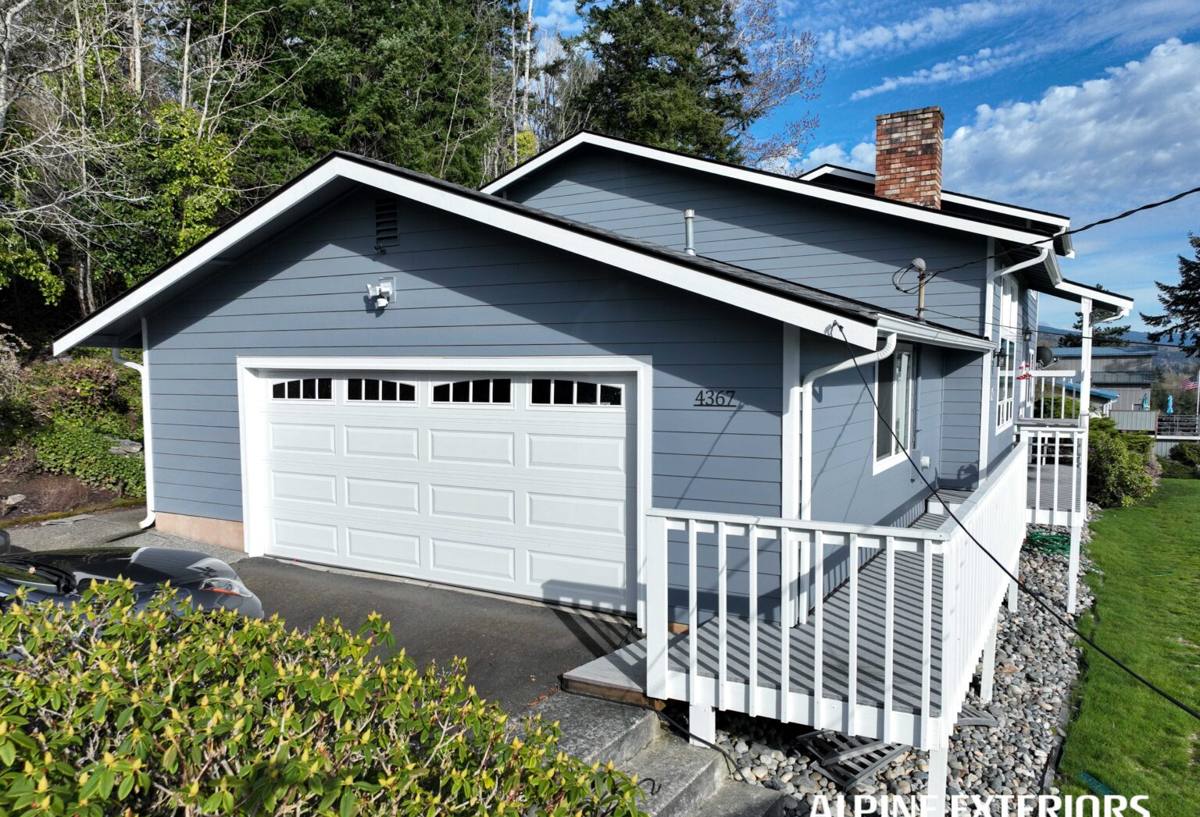
Signs an Alger Deck Needs Replacement, Not Just Repair
Not every deck problem calls for a full teardown. But there's a point where patching individual boards is throwing money at a structure that's already failing underneath. Here's how we tell the difference on a site visit.
Repair Is Usually Enough When:
- A handful of boards are cupped, splintering, or discolored but the frame underneath is solid and dry
- Railings are loose but the posts themselves aren't rotted at the base
- Fasteners are rusting and staining the wood, but the wood itself is intact
- The deck is relatively young and the issues are cosmetic or isolated
Replacement Is the Honest Answer When:
- The deck flexes, bounces, or feels soft underfoot in multiple spots
- You can push a screwdriver into the ledger board or joists with little resistance
- Moss and algae keep coming back within weeks of cleaning, which usually means the surface is staying wet longer than it should
- Support posts show rot or insect damage at ground contact
- The deck was built without proper flashing at the house connection — a common shortcut on older builds that eventually lets water into the structure
If we're not sure which category a deck falls into, we'll say so and explain what we'd need to open up or probe to find out — we're not going to talk you into a full replacement a repair could solve, and we're not going to patch something that's structurally done.
Choosing Decking Material for Alger's Conditions
Material choice matters more here than in drier parts of the state, simply because the deck spends more of the year wet. Every option below can work in Alger — the tradeoffs are about maintenance commitment, upfront cost, and how the material behaves once it's been damp for weeks at a time.
| Material | How It Handles Local Moisture | Maintenance | Typical Lifespan |
|---|---|---|---|
| Pressure-treated wood | Resists rot chemically, but surface moss and graying show up fast without upkeep | Annual cleaning, periodic staining/sealing | 15–20 years with upkeep |
| Cedar | Naturally moisture- and insect-resistant, softer surface can hold moss if shaded | Regular cleaning, sealing every 2–3 years | 15–25 years with upkeep |
| Composite decking | Doesn't rot or splinter; can still grow surface algae/moss in shaded, damp spots | Periodic washing, no sealing or staining | 25–30+ years |
| PVC decking | Fully synthetic, sheds water well, least hospitable surface for moss | Occasional washing | 25–30+ years |
We don't push one product on every job. A well-maintained cedar or treated-wood deck can look great for a long time if the owner is willing to clean and seal it on schedule. For homeowners who want to spend less time on upkeep — especially in shaded lots around Alger where moss is a bigger fight — composite or PVC usually earns its higher upfront cost back in avoided maintenance. What matters most, regardless of surface material, is what's underneath it.
What a Correct Deck Replacement Actually Involves
The Ledger Connection
This is where most deck failures start. The ledger board bolts the deck to the house, and if it isn't flashed correctly, water works its way behind it and into the house framing — invisible until there's real damage. On every replacement, we install proper flashing at this connection so water sheds away from the house rather than tracking behind the ledger.
Footings and Posts
Footings need to sit below frost depth and bear on solid ground, not on fill or organic soil that shifts when it's saturated. Posts should be rated for ground contact and set so water doesn't pool at the base — a detail that gets skipped more often than it should on older decks.
Joists and Framing
We use joist tape or a comparable moisture barrier on top of the framing before decking goes down. It's a small material cost that meaningfully slows the rot that starts where boards sit directly on wet joists — one of the most common reasons a "recently redecked" surface is hiding a rotting frame underneath.
Fasteners and Hardware
Given the salt content in the air here, we use corrosion-resistant, code-rated fasteners and structural hardware throughout. Cheaper hardware can start rusting and staining within a couple of seasons in this environment, and a rusted fastener is a weak fastener.
Drainage and Airflow
Decking gets spaced to let water drain through rather than sit on the surface, and where the structure allows it, we look for ways to keep air moving underneath. Standing moisture under a deck is what feeds moss, mildew, and slow rot — airflow is one of the cheapest defenses against all three.
Our Process, Start to Finish
1. On-Site Assessment
We walk the existing deck, check the ledger connection, probe posts and joists for soft spots, and talk through what you actually want from the new deck — size, material, railing style, budget range.
2. Straightforward Estimate
You get a written estimate that spells out material choice, scope, and price — no vague allowances that turn into surprise add-ons once we've started.
3. Permitting
Most deck replacements in unincorporated Skagit County require a building permit, especially when the structure is being rebuilt rather than just re-surfaced. We handle that paperwork so it's not on you to figure out.
4. Demo and Structural Work
Old decking, framing, and any compromised posts or footings come out. We don't build a new deck on top of an old frame we haven't verified — if the substructure is questionable, it gets rebuilt.
5. Build and Finish
Framing, flashing, decking, railings, and any stairs go in to code. We clean the site when we're done — no leftover fasteners or offcuts in the yard.
6. Walkthrough
We walk the finished deck with you, point out anything you should know about care for the specific material you chose, and answer questions before we call it done.
Permits and Structural Considerations Around Alger
Because Alger falls under unincorporated Skagit County jurisdiction, deck permitting and inspection go through the county rather than a city building department. Requirements vary based on deck height, size, and whether it's attached to the house, so we confirm what applies to your specific project before work starts rather than assuming. Skipping a required permit on a deck rebuild isn't worth the risk — it can complicate a future home sale or insurance claim if the structure was never inspected.
Living With a New Deck in Skagit County's Climate
Even the best-built deck needs some ongoing care in this climate. The goal of a correct build is to reduce that burden, not eliminate it entirely.
- Sweep leaves and debris off the surface regularly, especially in fall — trapped organic matter is what moss and algae feed on
- Rinse or wash the deck a couple of times a year to keep spores from establishing
- Check that gutters and downspouts near the deck are directing water away, not onto it
- For wood decks, keep to a sealing schedule rather than waiting until graying is obvious
- Glance underneath once a year for standing water, debris buildup, or early signs of moisture at the ledger
- Keep nearby vegetation trimmed back so sunlight and air can actually reach the deck surface
A deck that gets full sun for part of the day will always outlast one buried in permanent shade — if your lot doesn't offer much choice in that regard, material selection and drainage detailing matter even more.
Why a Crew That Already Works in Alger Makes a Difference
A lot of deck problems in this area trace back to work that was done by someone unfamiliar with how this climate treats a structure over time — flashing skipped because it "usually" doesn't matter, fasteners chosen for cost rather than corrosion resistance, footings poured without accounting for how saturated the ground gets. None of that shows up on day one. It shows up five or ten years later as the exact failures we described above.
Working regularly in and around Burlington and the surrounding Skagit County communities means we're not guessing at how a deck will hold up here — we're building to what we've already seen fail and correcting for it from the start. That's the difference between a deck that needs replacing again in fifteen years and one that doesn't.
If your deck is showing its age, or you're just not sure whether it needs a repair or a full rebuild, we're happy to take a look. Reach out for a free, no-pressure estimate using the form below — we'll give you an honest read on where your deck stands and what it would take to get it right.