 Burlington
 Avon's Weather Asks More of Your Siding Than Most Homes Ever Face
Avon sits down in the flat, low farmland along the Skagit River, just outside Burlington, close enough to Puget Sound that marine air moves up the valley on a regular basis. That combination -- salt-tinged air, wind-driven rain coming off the water, and long stretches of overcast, damp days -- is a harder environment for exterior siding than most manufacturers design for on paper. It's one thing for a siding product to survive an average American winter. It's another for it to survive a Skagit Valley winter that barely dries out between storms.
Homeowners in Avon usually notice the effects before they notice the cause: streaking and dark staining low on the wall, moss creeping up from the foundation line, paint that fails years ahead of schedule on the north and west sides of the house, or trim boards that have gone soft. None of that is inevitable. It's what happens when a siding material or an installation wasn't built for this specific mix of moisture, salt, and shade. Fiber cement done correctly is one of the few sidings that holds up to it -- but "correctly" is doing a lot of work in that sentence, and it's worth understanding what that actually means before you sign a contract.
Three separate stresses, not one
It helps to think of Avon's climate as three distinct attacks on a wall, not one generic "wet climate" problem. Driving rain tests every seam, joint, and flashing detail on the siding -- it's not just about keeping water out, it's about giving the water that gets behind the cladding somewhere to go. Salt air works more slowly, attacking fasteners, exposed cut edges, and any spot where the factory finish has been compromised. And moss and algae, which in this valley can hold on for the better part of the year in shaded, north-facing areas, keep the wall surface damp for far longer than a sunnier climate ever would -- feeding rot in anything less than a genuinely water-resistant material.
What Fiber Cement Actually Needs to Perform Here
James Hardie fiber cement is engineered to resist moisture, hold paint, and shrug off salt air far better than wood or engineered-wood siding products -- but the material itself is only half the equation. A huge share of the siding failures we get called out to inspect in this area aren't material failures at all. They're installation failures: gaps that were never sealed, flashing that was skipped to save an afternoon, or fasteners driven wrong. In a mild, dry climate those shortcuts might take a decade to show up. In Avon, they show up in two or three wet seasons.
Starter strips, clearances, and gaps that keep water moving
Correct fiber cement installation starts below the first course, with a starter strip that sets the right kick-out angle and keeps the bottom edge of the siding away from standing moisture. Every horizontal and vertical joint needs the manufacturer-specified gap and either a color-matched sealant or a flashed detail behind it -- never siding butted tight against siding, trim, or a window frame. Panels and boards need clearance off the roofline, deck surfaces, and grade so water has somewhere to drain instead of wicking up into the material. These aren't cosmetic details. They're the difference between siding that sheds the valley's rain and siding that slowly absorbs it.
Fastening and joint treatment
Fiber cement has to be fastened with the right nail or screw type, spacing, and depth -- overdriven fasteners crack the board's protective layer at the exact point water is most likely to find it, and the wrong fastener metal corrodes faster in salt-laden air. Cut edges (at windows, corners, and trim) expose raw fiber cement that isn't factory-finished, so every field cut needs to be sealed with the correct primer or sealant before it goes on the wall. Skipping this step is invisible on install day and shows up as a stain or a soft spot two winters later.
How Fiber Cement Stacks Up in Avon's Climate
Homeowners comparing siding materials for a wet, moss-prone valley are usually weighing the same handful of trade-offs. Here's how the common options actually perform against the specific stresses Avon homes face:
| Material | Moisture & rot resistance | Moss / algae resistance | Salt-air durability | Ongoing maintenance |
|---|---|---|---|---|
| Vinyl siding | Sheds surface water but seams and J-channels trap moisture behind the panel | Grows moss/algae readily in shaded, damp spots | Can become brittle and fade faster in coastal-influenced air | Low, but panels can't be repainted -- fading is permanent |
| Cedar / wood siding | Absorbs moisture; rot risk if finish isn't maintained | Highly susceptible without regular treatment | Salt accelerates finish breakdown | High -- refinishing every few years |
| Engineered wood (OSB-based) | Swells and delaminates at cut edges and joints if moisture gets in | Moderate, depends on coating | Edge and seam integrity is the weak point in salt air | Moderate to high -- edge sealing must be maintained |
| James Hardie fiber cement | Engineered to resist moisture absorption and won't rot | Dense, non-organic material resists moss/algae growth on the surface | Factory ColorPlus finish holds up well; non-combustible, salt-tolerant composition | Low -- periodic washing, no refinishing needed for years |
This is exactly why we standardized on James Hardie and don't install vinyl, LP SmartSide, or unfinished wood siding on Avon homes. It isn't that those products can't be installed well -- it's that fiber cement gives homeowners in this specific climate the best odds of a wall that still looks and performs correctly fifteen or twenty years from now, without the recurring maintenance the alternatives demand.
Our Process for Avon Installations
Every Hardie install we do in Avon follows the same sequence, adjusted for the specific house and lot:
- Site and moisture assessment. We check existing sheathing, trim, and framing for hidden water damage before anything comes off the wall -- common on lower-lying, older lots in this part of the valley.
- Tear-off and substrate repair. Damaged sheathing or framing gets replaced, not covered over.
- Weather-resistive barrier and flashing. A continuous drainage plane goes on first, with flashing integrated at every window, door, and penetration so water has a path out from behind the siding.
- Hardie installation to manufacturer spec. Correct starter strips, clearances, fastener type and spacing, and joint treatment throughout -- no shortcuts on the details that matter most in wet climates.
- ColorPlus touch-up and sealant. Cut edges and any factory-finish nicks are sealed with the matched product, not generic caulk.
- Final walk-through. We check every joint, corner, and clearance line before we call the job done.
Cost Factors for Avon Homeowners
Fiber cement pricing depends on the same handful of variables on almost every Avon project. These are broad, general factors only -- every real number should come from an actual site visit:
| Factor | Why it moves the price |
|---|---|
| Home size and wall complexity | More corners, gables, and dormers mean more cuts, trim, and labor hours |
| Existing siding removal | Tear-off of old wood, vinyl, or damaged material adds time and disposal cost |
| Sheathing or framing repair | Water damage found once the old siding is off is common on older, low-lying properties |
| Lap vs. panel product | Different Hardie profiles carry different material and labor costs |
| Trim and accessory work | Fascia, soffit, and trim replacement is often bundled with a siding project |
| Site access | Rural lots, fencing, landscaping, or tight setbacks can slow staging and installation |
Why a Crew That Already Works Avon Matters
A siding crew that regularly works this stretch of Skagit County between Burlington and Avon brings more than a truck and a nail gun to the job. They know which parts of the Avon area sit low enough that drainage and grading around the foundation need extra attention before siding even goes on. They know which jurisdiction handles permitting for a given property, since that can vary depending on whether a lot falls inside city limits or in unincorporated county land nearby. And they know how to sequence a project around this valley's weather -- getting a house dried in and weather-tight during a break in the rain instead of racing a storm system with an open wall.
That local familiarity also shows up in smaller, practical ways: knowing which older Avon-area homes were built with siding details that don't meet current moisture-management standards, or recognizing early signs of moss and rot patterns that repeat on similar homes throughout the valley. It's the difference between a crew that's installing Hardie siding for the first time in this climate and one that's already seen what does and doesn't hold up here.
Maintaining Fiber Cement Siding in a Moss-Prone Valley
Correctly installed Hardie siding needs far less upkeep than wood or vinyl, but "far less" isn't "none." A short annual routine keeps it performing the way it's designed to in this climate:
- Rinse the siding down once or twice a year, focusing on shaded, north-facing walls where moss and algae take hold first
- Keep gutters clear so overflow doesn't run down the wall face during heavy rain events
- Trim back shrubs, hedges, and tree limbs that keep siding shaded and damp longer than the rest of the house
- Check caulked joints around windows, doors, and trim yearly, and re-seal anything that's cracked or pulled away
- Look at ground-level clearance after any landscaping or mulch work -- soil or bark buildup against the bottom course traps moisture against the siding
- Address any paint or ColorPlus finish nicks promptly, since exposed fiber cement edges are the one spot genuinely vulnerable to moisture intrusion
Choosing a Hardie Line and Finish for an Avon Home
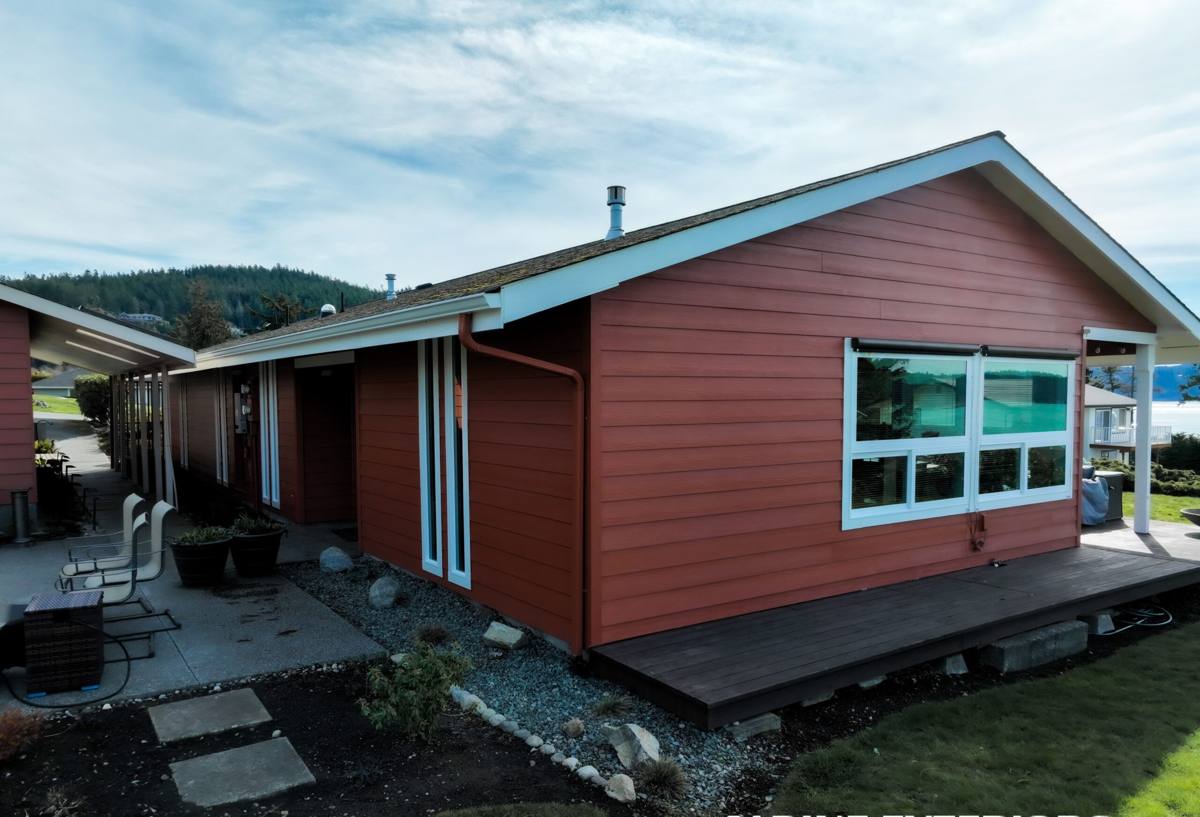
Most Avon homes we work on land on either HardiePlank lap siding for a traditional farmhouse or ranch look, or a mix of lap and panel with trim accents on more contemporary builds. Because ColorPlus finishes are baked on at the factory rather than field-applied, the color holds up to this valley's UV and moisture cycle far longer than a site-painted finish would -- which matters more here than in a drier climate, where a site-applied paint job might realistically last just as long. Color choice is largely personal preference, but muted, earth-toned palettes tend to suit the open farmland and river-valley setting many Avon properties sit in, while still holding up to fading from sun and salt air over time. Whatever line or color fits your home, the engineering underneath -- HardieZone HZ5 formulation, proper installation, and factory finish -- is what actually determines how it performs here over the next twenty years.
As a Burlington-based crew that works this part of the valley regularly, we're happy to take a look at your Avon home and walk you through what a correctly installed fiber cement system should look like for your property. The estimate is free, there's no pressure, and you'll get a straight answer about what your siding actually needs.