 Burlington
 Building a Deck That Actually Holds Up in La Conner
La Conner sits right on the Swinomish Channel, which means homes here deal with a version of coastal weather that inland Skagit County properties don't see as much of: salt-laden air off the water, wind-driven rain that gets pushed sideways under eaves and railings, and a moss season that can run from October clear through April. A deck built to a generic spec sheet will survive a few winters here. A deck built for these specific conditions will still be tight, level, and good-looking a decade or two later. That's the difference we build for.
Most of the deck problems we get called out to fix in this area aren't structural failures — they're slow water and salt damage that started small: a fastener that rusted and stained the decking around it, a ledger board that never got proper flashing, framing that stayed damp under a low deck with no airflow. None of that shows up on day one. It shows up in year three or four, and by then it's a repair job instead of a design decision.
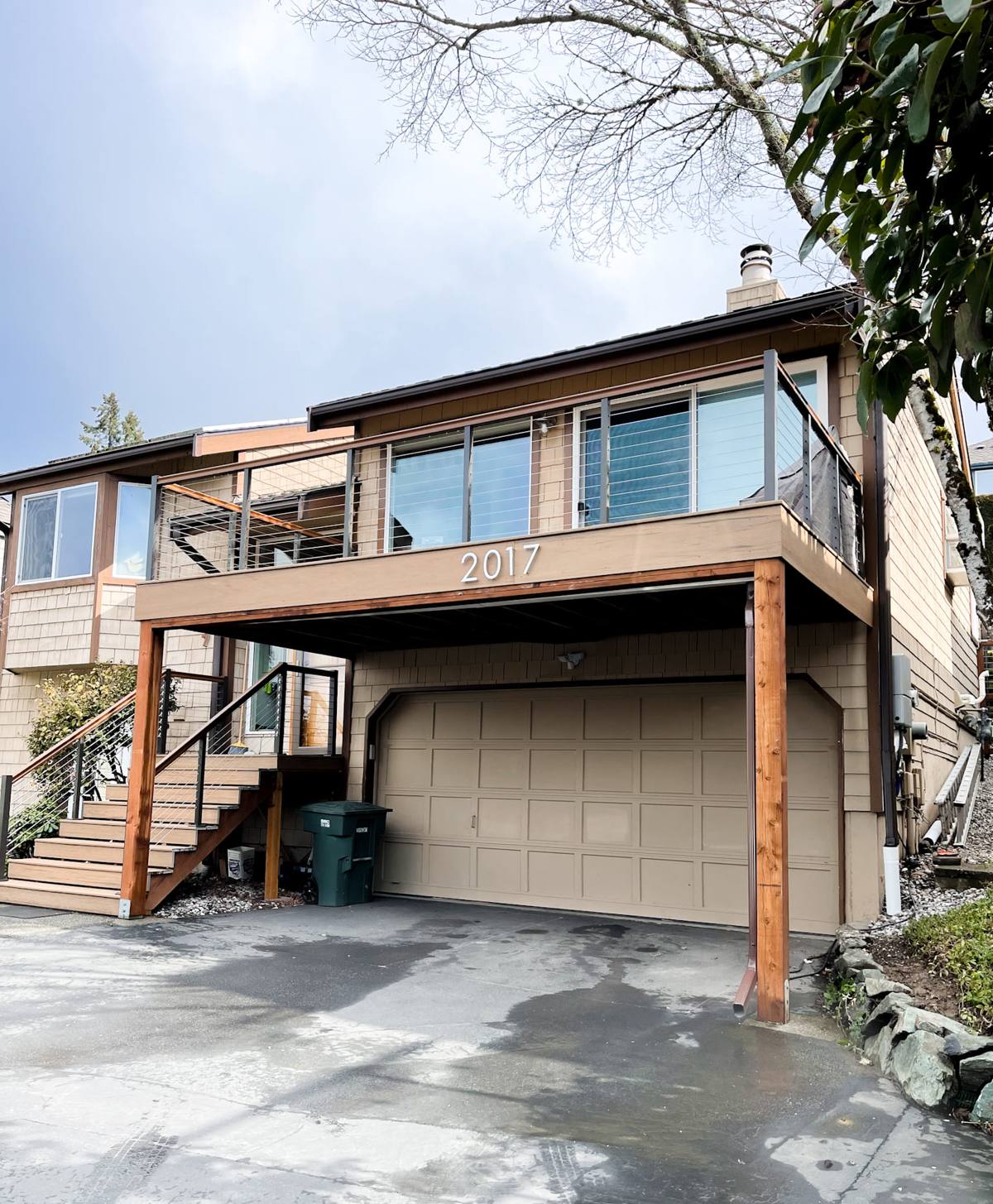
What the Coastal Environment Does to an Ordinary Deck
Salt Air and Metal Hardware
Airborne salt from the channel accelerates corrosion on anything that isn't rated for a marine or coastal environment. Standard galvanized fasteners and connectors can start showing rust streaks and pitting well before their inland equivalents do. Once a fastener corrodes, it loses holding strength and can bleed rust into the surrounding decking or siding — a cosmetic and structural problem at the same time.
Driving Rain and Water Intrusion
Wind off the water doesn't just fall straight down — it drives rain up under rail caps, into end grain, and behind ledger boards that aren't flashed correctly. Decks that back up to the house are especially vulnerable at the ledger connection, which is the single most common point of rot we find on older decks in this area.
Moss, Algae, and Shade
Skagit County's long wet season keeps deck surfaces damp for extended stretches, especially on the north or water-facing side of a house where the sun doesn't reach as often. Moss and algae take hold fastest on horizontal wood surfaces that don't dry out between rains, and a slick, mossy deck board isn't just unsightly — it's a slip hazard.
What a Correctly Built Deck Includes
A deck that's actually built for this climate isn't about one special product — it's a handful of decisions made correctly, in order, starting below the surface.
- Proper ledger flashing where the deck attaches to the house, so water sheds away from the wall instead of tracking behind the siding
- Coated or stainless fasteners and structural hardware rated for exterior and coastal exposure, not standard interior-grade galvanized
- Footings sized and set below frost depth with adequate bearing for our clay-heavy Skagit County soils
- Joist tape or a comparable barrier over framing lumber to slow moisture absorption at the top of each joist
- Airflow underneath the deck so framing can dry out between rain events instead of staying damp for weeks
- Decking material matched to sun exposure — shaded, water-facing sections often benefit from a different board than a full-sun spot on the same house
- Drainage that directs water away from the foundation, not toward it, especially on lower decks close to grade
Choosing the Right Decking Material
There's no single "best" decking material for La Conner — there's a best material for a given budget, sun exposure, and how much upkeep the homeowner actually wants to do. We walk through the honest trade-offs rather than pushing whatever's easiest to install.
| Material | Upkeep in Salt Air & Rain | Typical Lifespan | Notes |
|---|---|---|---|
| Pressure-treated wood | Needs regular sealing/staining; more prone to moss in shaded, damp spots | 10–15 years | Lowest upfront cost; most maintenance-dependent option here |
| Cedar | Natural rot resistance but still needs periodic finish; can gray and stain near salt air | 15–20 years | Good appearance, moderate maintenance |
| Composite decking | Low maintenance; occasional cleaning to keep algae/moss from taking hold in shaded areas | 25–30 years | Higher upfront cost, most consistent long-term performance |
| PVC/capped polymer | Very low maintenance; resists moisture absorption best of the group | 25–30+ years | Premium price point; best fit for full-shade or water-facing decks |
For decks that sit in shade for much of the day or face the channel directly, we usually steer homeowners toward composite or capped polymer boards, simply because they don't absorb water the way wood does — less water absorption means less freeze-thaw stress and less of a foothold for moss. For sunnier, more sheltered decks, a well-maintained wood deck can still be the right call, especially if the homeowner likes the natural look and doesn't mind refinishing it every few years.
Railings, Fasteners, and the Details That Get Skipped
Railings take the worst of the wind-driven rain because they're the first thing it hits. Post bases and baluster connections are also where we most often find corrosion on older decks, because they were built with standard-grade hardware instead of coastal-rated fasteners. We spec stainless steel or coated fasteners rated for exterior/coastal exposure on every connection point, not just the ones that are visible. It costs a little more in hardware and takes longer at install, but it's the single cheapest insurance against the rust staining and loosening connections that show up a few years in.
Post bases matter just as much. A post set directly on a concrete footing with no standoff will wick moisture up into the base of the post over time. We use raised post bases that keep wood off standing water, which matters more here than it would in a drier inland climate.
Our Process for a La Conner Deck Project
1. On-Site Assessment
We look at sun exposure, wind direction relative to the channel, existing drainage, and how close the deck will sit to grade. These factors drive our material and framing recommendations more than personal preference does.
2. Design and Material Selection
We walk through decking, railing, and hardware options with the actual trade-offs on the table — cost, maintenance, and how each option performs in this specific microclimate — rather than steering toward whatever's fastest for us to install.
3. Permitting
Deck projects in and around La Conner typically require a building permit, and depending on the lot's location relative to the shoreline or any critical areas, additional review may apply. We handle the permit application and make sure the design meets current code before work starts, so there's no surprise stop-work order mid-project.
4. Framing and Flashing
This is where a deck's long-term performance actually gets decided. Ledger flashing, joist protection, footing depth, and fastener selection all happen at this stage, and it's the stage that's invisible once the decking goes down — which is exactly why it has to be done right the first time.
5. Decking, Railing, and Final Details
Once the structure is sound, we install the decking, railing, and any stairs or accent details, then do a final walkthrough covering fastener placement, drainage, and how the specific materials used should be cared for.
Maintenance in a Climate That Doesn't Let Up
Every deck, regardless of material, needs some seasonal attention here. What changes is how much.
- Sweep debris and standing leaves off the deck surface regularly, especially in fall — trapped organic matter holds moisture and feeds moss growth
- Rinse salt residue off railings and hardware periodically if the deck faces the water directly
- Check fastener heads once a year for early rust staining, which is easier to address early than after it spreads
- Keep gutters and downspouts near the deck clear so runoff isn't dumping extra water onto or under the structure
- For wood decking, plan on resealing or restaining on the manufacturer's recommended interval — skipping a cycle in this climate shortens the board's life faster than it would inland
- Treat any moss growth promptly rather than letting it establish, since it's both a slip hazard and a moisture trap
Cost Factors to Expect
Every deck is different, but a few factors consistently move the price up or down more than anything else:
| Factor | Effect on Cost |
|---|---|
| Decking material (treated wood vs. composite vs. PVC) | Largest single line item; composite/PVC costs more upfront, less over time |
| Deck height and footing depth required | Taller decks and deeper footings mean more framing and labor |
| Railing style and material | Cable, glass, and metal railings cost more than standard wood or composite balusters |
| Site access and existing structure removal | Tear-off of an old deck or difficult site access adds labor time |
| Permitting and any shoreline/critical area review | Adds time and sometimes engineering costs depending on lot location |
Why It Matters That We Already Work This Area
We're not learning La Conner's climate on your project. We already know that a deck on the water side of a house needs different hardware than one tucked under an eave on the inland side, and we already have a working relationship with local permitting expectations. That familiarity shows up in fewer surprises — no discovering mid-project that the framing spec needs to change, no guessing at what the local building department wants to see. It's the same reason we tell homeowners to be cautious of any contractor quoting a deck without asking about sun exposure, water proximity, or existing drainage first — those questions aren't optional here, they're the whole basis for a correct design.
If you're planning a new deck or replacing one that's showing its age, we're happy to come take a look and walk you through what makes sense for your specific site. There's no cost and no pressure to move forward — just a straightforward assessment and a clear estimate, using the form below.