 Burlington
 Siding Installation Built for Mount Vernon's Skagit Valley Climate
Mount Vernon sits low in the Skagit River valley, close enough to the Sound to catch salt-laden air off the water and open enough to take the full force of driving Pacific rain for months at a time. Add the shade from mature trees along many older streets and you get a long moss season that keeps siding damp far longer than homeowners expect. None of this is unusual for Skagit County, but it does mean siding installation here has to be treated differently than a job in a dry inland climate. Product choice, water management details, and fastening all matter more when a house spends half the year wet.
We're based in Burlington and work Mount Vernon regularly, which means we're not guessing at what this valley does to a home's exterior — we're accounting for it in every install.
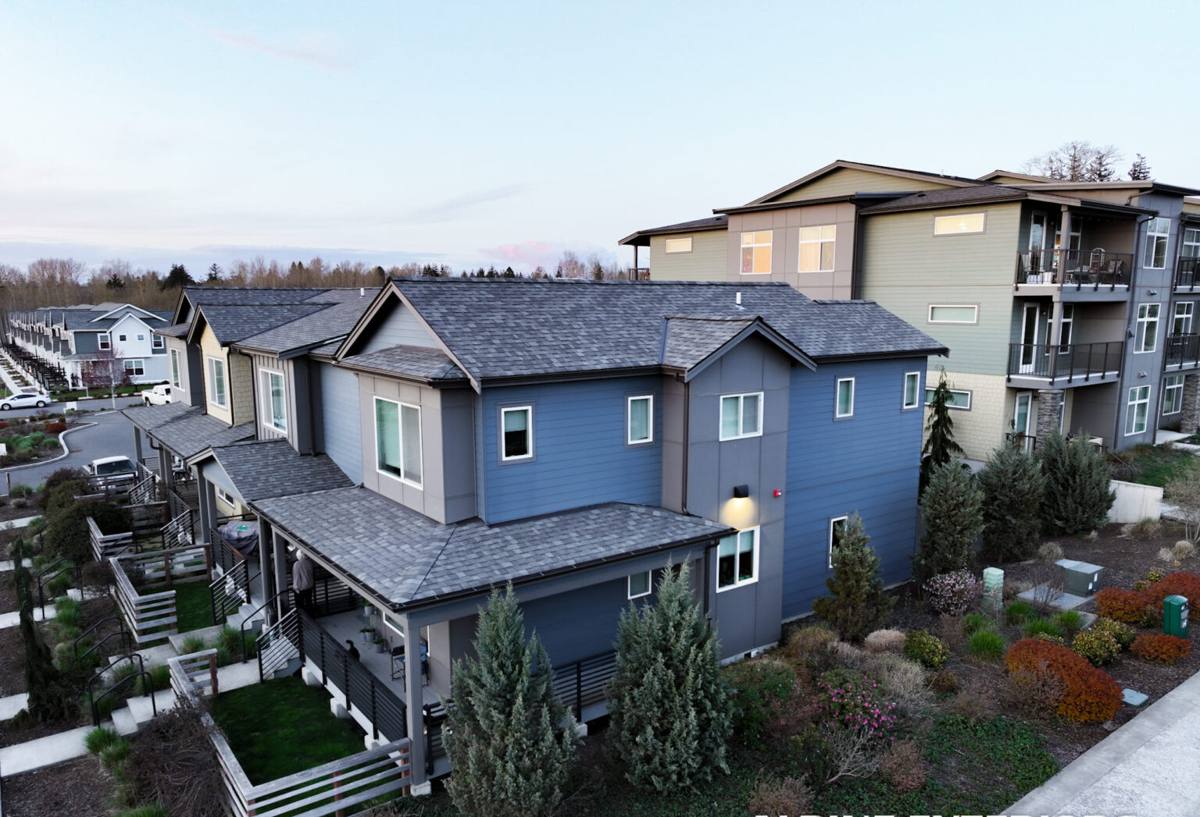
What Mount Vernon Homes Are Actually Fighting
Salt Air and Corrosion
Proximity to Puget Sound carries a fine salt content in the air that accelerates corrosion of fasteners, flashing, and trim if the wrong materials are used. Over years, this shows up as rust streaking, failed fastener heads, and premature paint failure on lower-grade products.
Driving Rain
Skagit Valley storms don't just fall straight down — wind-driven rain pushes water sideways into siding joints, laps, and penetrations. A siding system that isn't detailed for wind-driven rain will eventually let moisture behind the cladding, no matter how good the surface material looks.
Moss and Persistent Moisture
Shaded lots, mature landscaping, and our long wet season combine to keep moss and algae active on north-facing walls and anywhere airflow is restricted. Moisture sitting against siding for extended periods is one of the biggest long-term threats to wood-based and composite products that aren't engineered to resist it.
Why Product Choice Matters More Here Than Elsewhere
This is the reason we install only James Hardie fiber cement siding and don't offer vinyl, LP SmartSide, cedar, primed spruce, Cemplank, or Allura. Each of those products has legitimate uses somewhere, but in a valley climate with salt exposure, sustained rain, and heavy moss pressure, they carry trade-offs we're not willing to put on a Mount Vernon home:
- Vinyl can warp or become brittle with age and temperature swings, and it does nothing to slow moisture that gets behind it.
- Wood-based and engineered wood products need consistent maintenance to resist the swelling, rot, and moss growth that our wet season encourages.
- Cedar is a beautiful natural product but demands ongoing sealing, staining, and vigilance against moisture intrusion that most owners underestimate.
- Other fiber cement brands may perform reasonably, but we've standardized on James Hardie's HZ5 climate-engineered line and factory-applied ColorPlus finish because it's built specifically for wet, coastal-influenced Pacific Northwest conditions and backed by a strong transferable warranty.
James Hardie fiber cement is non-combustible, holds up to sustained moisture exposure without swelling or rotting, and resists the freeze-thaw and moss-related surface breakdown that shortens the life of softer materials. It's not the cheapest siding on the market, but it's the one we're willing to warranty our workmanship on for this specific climate.
What Correct Siding Installation Involves
A siding job's long-term performance is decided by what's underneath it, not just the visible plank. In Mount Vernon's climate, we treat every one of these steps as non-negotiable:
Tear-Off and Substrate Inspection
We remove the old siding down to the sheathing and inspect for hidden rot, soft spots, or prior water damage before anything new goes up. Covering a compromised substrate with new siding just hides the problem — it doesn't fix it.
Weather-Resistive Barrier
A properly lapped and sealed weather-resistive barrier is the last line of defense if wind-driven rain gets past the siding surface. Every seam, penetration, and transition gets sealed to manufacturer spec, not just stapled and left.
Flashing at Every Penetration
Windows, doors, vents, hose bibs, and any other wall penetration get proper flashing so water is directed out and down, never trapped behind the cladding. This is one of the most common places we find shortcuts on older installs.
Rainscreen Gap Where It's Called For
Depending on the wall assembly, a ventilated rainscreen gap between the barrier and the siding lets any moisture that does get through drain and dry instead of sitting against the sheathing — a meaningful advantage in a valley with our moss and rain exposure.
Fastening and Clearances
James Hardie specifies fastener type, spacing, and minimum clearance from grade, decks, and roof lines. Skipping these details voids the manufacturer warranty and is exactly the kind of shortcut that shows up as problems five or ten years later.
Caulking, Trim, and Finish Details
Correct caulking at butt joints and trim, plus factory-finished ColorPlus panels installed to keep cut edges properly sealed, keeps water out at the small details that owners never think about until they fail.
Signs a Mount Vernon Home Needs New Siding
Because of the local climate, siding problems here often show up earlier and differently than in drier regions. Watch for:
- Persistent moss or algae staining that returns quickly after cleaning, especially on shaded or north-facing walls
- Soft spots, bubbling, or visible warping in wood-based siding panels
- Rust streaking around fasteners or trim, a sign of corrosion from salt-influenced air
- Paint that's peeling or chalking faster than expected for its age
- Visible gaps at seams, corners, or trim where wind-driven rain can get behind the siding
- A musty smell or discoloration on interior walls near exterior corners — often a sign moisture has already gotten in
Our Process, Start to Finish
- On-site assessment — we walk the home, check current siding condition, sheathing access points, and note trouble spots like shaded walls or areas with a history of moisture.
- Written estimate — a clear scope covering material, labor, and any substrate repair we anticipate, so there are no surprises mid-project.
- Tear-off and substrate repair — old siding removed, any damaged sheathing replaced before moving forward.
- Weather barrier and flashing install — the moisture-management layer that does the real long-term work.
- James Hardie panel installation — installed to manufacturer fastening and clearance spec so the warranty stays intact.
- Trim, caulking, and final inspection — finish details sealed and checked before we call the job done.
- Walkthrough — we go over the finished work with the homeowner directly.
Cost Factors for a Mount Vernon Siding Project
Every home is different, but these are the main variables that move the price of a siding installation in this area. We don't publish blanket per-square-foot numbers because they mislead more than they help — your estimate will reflect your home's actual scope.
| Factor | Why It Matters Here |
|---|---|
| Substrate condition | Hidden rot from long-term moisture exposure is more common in older Skagit Valley homes and adds repair scope |
| Wall complexity | Dormers, multiple stories, and cut-up wall lines increase labor and flashing detail |
| Rainscreen requirement | Homes on shaded or moisture-prone lots often benefit from a ventilated assembly, adding a step |
| Siding profile and color | Lap width, texture, and ColorPlus color selection affect material cost |
| Trim and accessory scope | Corner boards, window trim, and fascia work are often bundled into a full re-side |
| Access and site conditions | Tight lots, landscaping, or fencing near the house can add labor time |
Why a Crew That Works Mount Vernon Regularly Matters
Siding installation is detail work, and the details that matter shift by climate. A crew that mostly works dry, low-moisture regions may not default to a rainscreen gap, may under-flash a penetration that doesn't matter much where they usually work, or may not think twice about a fastener spec that's fine inland but marginal near salt air. We're a Burlington-based crew that works Skagit County day in and day out, including Mount Vernon, so those decisions aren't an afterthought — they're just how we build.
Being local also means we're not disappearing after the invoice clears. If a warranty question comes up or you want us back out to look at something, we're a short drive away, not a call center in another state.
Maintaining Your New Siding
James Hardie fiber cement is low-maintenance compared to wood or vinyl, but "low-maintenance" isn't "no-maintenance," especially in this climate. A few basics go a long way:
- Rinse siding annually to keep moss and algae from establishing, particularly on shaded walls
- Keep gutters clean and downspouts directing water away from the foundation and siding base
- Trim back landscaping and tree limbs that keep siding shaded and damp
- Watch caulked joints and touch up if you notice cracking or separation
- Address any impact damage promptly so moisture can't get behind the panel
Get a Straightforward Estimate
If your Mount Vernon home is showing moss buildup, aging siding, or you're just planning ahead, we're happy to take a look and give you a clear, no-pressure estimate for James Hardie siding installation done right for this climate. Use the form below to get started.