 Burlington
 Window Installation Built for Mount Vernon's Weather, Not Just the Opening
Mount Vernon sits in the heart of Skagit County, close enough to Puget Sound and the Skagit River delta that the air carries a faint salt tang most of the year, and far enough into the valley that fog and standing moisture linger long after a storm passes through. That combination is hard on windows in ways that don't show up right away. A window can look fine from the curb for years while water is quietly working its way behind the trim, or while algae and moss are building up in the tracks and slowly holding moisture against the frame. Installing a window correctly here means thinking past the glass and the sash to how the whole assembly sheds water and survives a long wet season, year after year.
We work on homes throughout Mount Vernon and the surrounding Burlington area regularly, so we're not guessing at what this climate does to a window over ten or twenty years — we're replacing the ones that were installed without accounting for it.
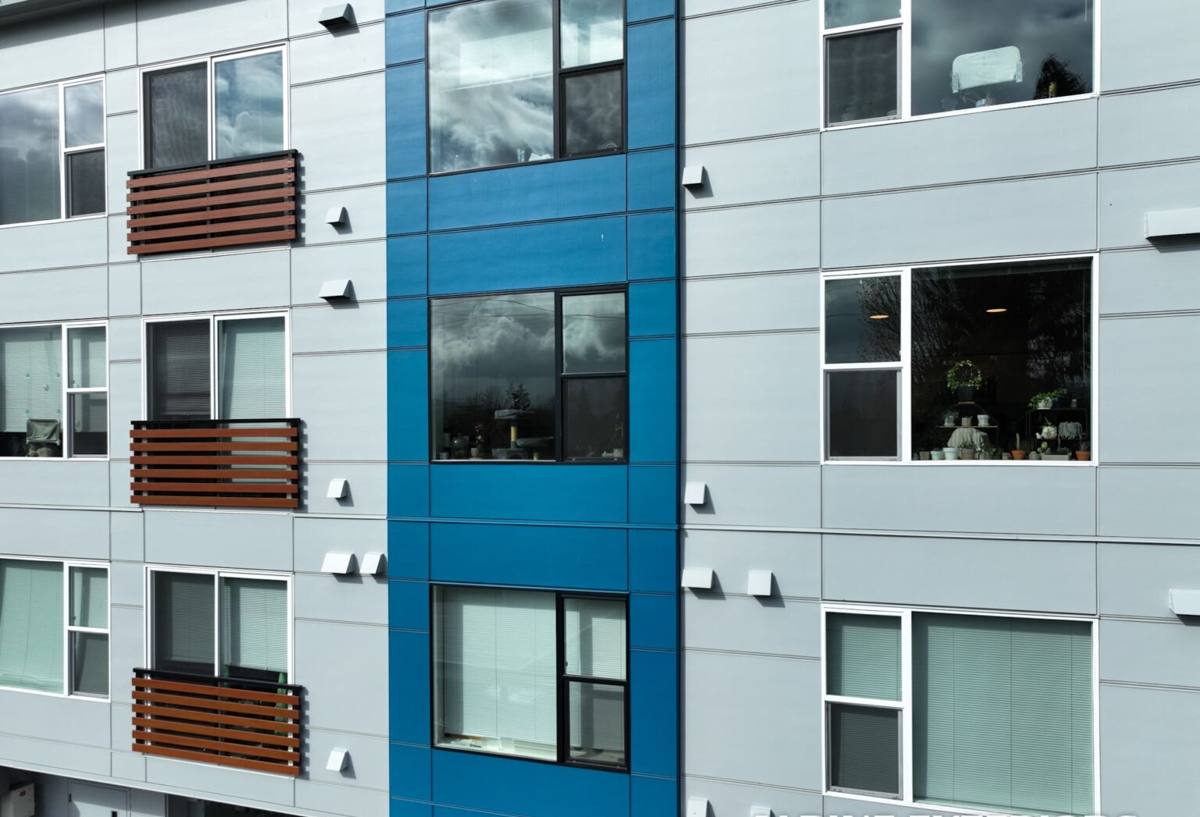
What Skagit County's Climate Actually Does to a Window
Driving Rain and Wind-Driven Moisture
Unlike a light, straight-down drizzle, driving rain gets pushed sideways into the wall by wind, which means it's testing every seam, joint, and flashing detail around a window opening — not just the glass itself. If the flashing behind the trim isn't lapped correctly, or if sealant was used as a substitute for proper flashing instead of a backup to it, water finds its way behind the window frame. Over time that shows up as soft trim, stained drywall or blistering paint on an interior sill, or a musty smell near the window that nobody can quite place.
Salt-Tinged Air and Metal Components
Skagit County's marine-influenced air carries enough salt that it accelerates corrosion on unprotected metal — hardware, screws, and older aluminum frames in particular. It's one more reason we pay attention to fastener and hardware quality on every install rather than treating that as a minor detail.
The Long Moss and Algae Season
Mount Vernon's humid, shaded, slow-drying stretches of fall through spring are exactly what moss and algae need to take hold. On windows, that growth tends to show up in the exterior tracks, weep holes, and sill returns — the low points where water is supposed to drain out but where organic buildup instead traps it. A weep hole clogged with moss debris turns a window that was designed to drain into one that holds water against the frame every time it rains.
Signs a Mount Vernon Home Needs New Windows
Not every issue means a full replacement, but these are the signs we take seriously when we're out looking at a home in this climate:
- Fogging or a permanent haze between the panes of a double-pane window (the seal has failed and the gas fill is gone)
- Visible soft or discolored wood at the sill, jamb, or exterior trim
- Windows that are hard to open, won't stay up, or don't latch tightly
- A noticeable draft near the frame even when the window is fully closed and locked
- Moss, algae, or dark staining building up in the exterior tracks or sill returns every winter
- Condensation forming on the inside of the glass regularly, especially on colder mornings
- A steady rise in heating costs that isn't explained by anything else in the home
If you're seeing two or three of these on the same window, it's usually more cost-effective to replace it than to keep patching around the underlying problem.
What a Correct Window Installation Involves Here
A window installation is judged by what you can't see once the trim goes back on. Here's what we treat as non-negotiable on every job in Mount Vernon and the broader Burlington area:
1. Assessing the Opening, Not Just Measuring It
Before we order anything, we check the condition of the rough opening — the framing, the existing flashing, and the sheathing around it — for rot or prior water damage. A new window installed into a compromised opening will fail again regardless of how good the window itself is.
2. Removing the Old Window Without Guessing at What's Behind It
Careful removal lets us see the condition of the framing and any existing housewrap or flashing before we commit to how the new window gets integrated. This is where hidden rot or past water intrusion usually gets found — and it needs to be dealt with before the new window goes in, not covered over.
3. Flashing the Opening to Shed Water, Not Just Seal It
We install flashing in the correct shingle-lap order (each layer overlapping the one below it) so that any water that gets past the exterior finish is directed back out, rather than trapped behind the window where it can't dry out. Sealant plays a supporting role here, not the primary one.
4. Setting the Window Level, Plumb, and Properly Shimmed
A window that's slightly out of square will bind, won't seal evenly against its own weatherstripping, and will wear unevenly over time. We shim and fasten according to the manufacturer's instructions so the window operates and seals the way it was engineered to.
5. Insulating the Gap Correctly
The gap between the window frame and the rough opening needs to be filled with a low-expansion foam or backer rod and sealant designed for that purpose — not packed tight with standard expanding foam, which can bow the frame and cause the sash to bind.
6. Finishing Weather-Tight, Inside and Out
Exterior trim and sealant beads are only as good as the flashing behind them, but they still matter — a clean, continuous seal at the trim keeps wind-driven rain from finding a way in around the edges.
Choosing a Window Frame for This Climate
There's no single "best" window material — the right choice depends on your budget, your home's style, and how much upkeep you want to take on. Here's how the common options hold up under Skagit County's wet, salt-tinged conditions:
| Frame Material | Upfront Cost | Moisture & Salt Resistance | Maintenance | Best For |
|---|---|---|---|---|
| Vinyl | Lower | Good — won't rot or corrode; seams are the weak point if welding quality is poor | Low | Most homeowners wanting value and low upkeep |
| Fiberglass | Higher | Excellent — very stable, resists moisture and won't corrode | Low | Owners wanting long-term durability and paintable finish |
| Wood (clad exterior) | Highest | Good on the exterior clad face; interior wood still needs protection from condensation | Moderate to high | Historic-style homes prioritizing interior wood appearance |
| Aluminum | Lower to moderate | Poor without a thermal break — conducts cold and is more vulnerable to salt-air corrosion | Moderate | Limited residential use; mainly commercial or specific architectural needs |
We're honest with clients about wood-frame windows in this climate: the exterior cladding handles the weather well, but any exposed wood on the interior side, or joints where the cladding meets glass, needs consistent attention to avoid moisture problems over time. That's not a knock on wood as a material — it's just a maintenance commitment worth going in with your eyes open about.
Energy Performance in a Mild, Wet, Heating-Dominated Climate
Mount Vernon doesn't see extreme heat or deep freezes, but it does have a long heating season and a lot of overcast, damp days. That changes which window performance numbers matter most:
- U-factor (how well the window resists heat loss) matters more here than solar heat gain, since the priority is keeping heat in through a long, mild-but-persistent heating season
- Low-E coatings help retain interior heat without needing to block much solar gain, since direct sun isn't the dominant issue most of the year
- Argon gas fills and warm-edge spacers reduce interior condensation on cold, humid mornings — a common complaint we hear from homeowners with older double-pane windows
We'll walk through the specific performance ratings that make sense for your home's orientation and exposure rather than defaulting to a one-size-fits-all recommendation.
Full-Frame Replacement vs. Working Within the Existing Frame
Many homes in Mount Vernon have older window frames that were adequate when installed but weren't detailed for the amount of wind-driven rain this area sees over a full lifecycle. When we find rot, corrosion, or flashing that was never installed correctly, we recommend a full-frame replacement — removing the old frame down to the rough opening so we can correct the flashing and framing issues at the source. When the existing frame and flashing are sound, an insert (pocket) replacement into the existing frame is a faster, less invasive option. Neither approach is automatically "better" — it depends on the condition we find once the old window comes out, and we'll show you what we're seeing before recommending one over the other.
Why Hiring a Crew That Already Works in Mount Vernon Matters
Window installation isn't regionally exotic — the physics of flashing and water management is the same everywhere. But a crew that regularly works Skagit County homes has already seen how local siding types, older flashing details, and this area's rain patterns interact over time. That means fewer surprises once a window comes out of the wall, a better sense of which upgrades are worth the money in this climate versus which ones are marketing, and a crew that isn't learning on your house. It also means we're a known, findable business in this community if a question comes up five years down the road — not a crew that worked here once and moved on.
If you're dealing with drafty, foggy, or hard-to-operate windows, or you're just planning ahead for a home in Mount Vernon or the Burlington area, we're happy to take a look and give you a straightforward, no-pressure estimate. There's a form below to get that started.