 Burlington
 Roofing in Alger Isn't the Same Job as Roofing Downtown
Alger sits in that stretch of Skagit County where the tree cover is heavier, the lots are bigger, and the weather comes off both the Sound and the surrounding hills. A new roof out here has to deal with things a roof in a tighter, more open subdivision doesn't: near-constant shade on parts of the structure, salt-tinged air drifting in off the water, and rain that doesn't just fall straight down — it drives sideways under eaves and into anything that isn't properly flashed. We've installed and repaired enough roofs in this stretch of the county to know that "install it like the spec sheet says" isn't quite enough. You have to install it for this specific piece of ground.
This page is about one job: putting a new roof on an Alger home, done right, for the conditions this area actually throws at a house.
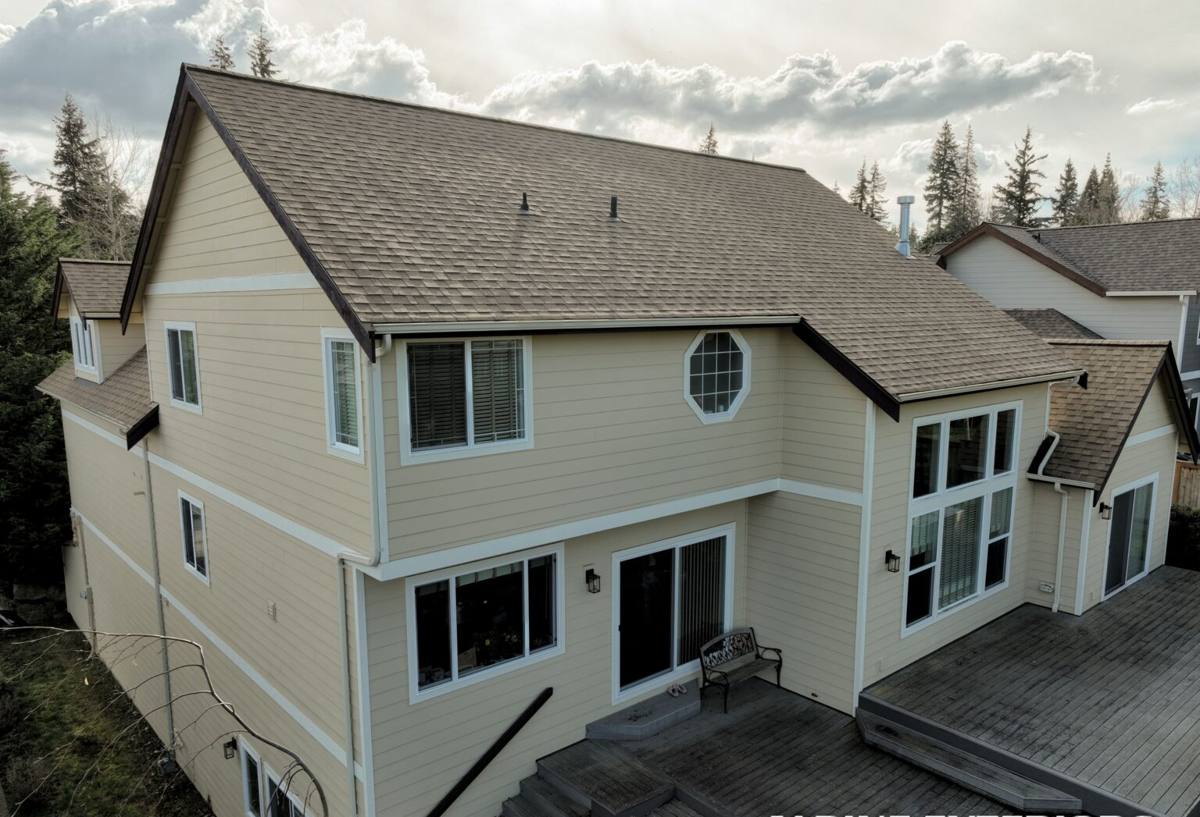
What Alger's Climate Does to a Roof Over Time
Salt Air
Homes closer to the water pick up airborne salt that accelerates corrosion on exposed metal — nail heads, flashing, gutters, and vent stacks all age faster than they would fifteen miles inland. It's not dramatic, but it's steady, and it's the kind of thing that turns a small flashing failure into a slow leak nobody notices until there's a stain on a ceiling.
Driving Rain
Skagit County gets its share of wind-driven storms, and driving rain finds every weak seam a straight-down rain would never reach — under shingle tabs, behind step flashing, around chimneys and skylights. A roof built assuming water only moves downward will eventually leak here.
A Long Moss Season
Between the tree canopy and the damp, shaded stretches typical of Alger properties, moss doesn't take a season off. It gets a running start in fall, keeps growing through winter, and is often still spreading into what other parts of the county would call dry season. Left alone, moss holds moisture against the roofing material, lifts shingle edges, and works its way under the surface layer — which shortens the life of a roof faster than almost anything else in this climate.
What a Correctly Installed New Roof Actually Includes
A lot of roof problems trace back not to bad material but to steps that got skipped or rushed during installation. On an Alger home, we treat the following as non-negotiable, not upgrades:
- Full tear-off to the decking — never a layover — so we can actually see and address what's underneath
- Deck inspection and repair of any soft, rotted, or delaminated sheathing before anything new goes down
- Ice-and-water shield at eaves, valleys, and any roof-to-wall transitions, not just where code requires the minimum
- Synthetic underlayment rated for wind-driven rain, not the lightest felt available
- Proper step flashing and counter-flashing at every chimney, skylight, and wall intersection
- Balanced intake and exhaust ventilation so moisture from inside the home doesn't get trapped in the attic
- Corrosion-resistant fasteners and flashing metal appropriate for a coastal-influenced climate
Skip any one of these and the roof might look fine for a year or two. The failures show up later, usually as a leak that's already done damage to the decking or framing underneath by the time it's visible from inside.
Choosing the Right Material for an Alger Roof
There's no single "best" roofing material — there's the best material for this house, this exposure, and this budget. Here's how the common options actually perform under Skagit County's salt air, rain, and moss pressure:
| Material | Moss Resistance | Wind-Driven Rain Performance | Typical Lifespan Here |
|---|---|---|---|
| Architectural asphalt shingle | Moderate — benefits from algae-resistant granules | Good, when properly flashed and sealed | 25–30 years |
| Standing seam metal | Very good — little for moss to grip | Excellent | 40–50+ years |
| Cedar shake | Poor without diligent maintenance | Fair — sensitive to installation detail | 20–30 years with upkeep |
| Synthetic/composite shingle | Good | Good | 30–40 years |
We install architectural asphalt shingle and metal roofing most often on Alger homes because they hold up best against the specific combination of moss pressure and driving rain this area sees. Cedar shake can still be the right call on a home built for that look, but we're upfront that it demands more regular maintenance in a shaded, damp setting — that's a maintenance trade-off worth knowing before you commit, not a reason to avoid it outright.
A Note on Moss-Resistant Shingles
Algae- and moss-resistant shingles use copper or zinc granules embedded in the surface. They're not moss-proof, but on a heavily shaded Alger lot they meaningfully slow regrowth compared to a standard shingle, and we consider them close to standard practice for properties with significant tree cover.
Ventilation: The Step That Gets Skipped Most Often
An attic that can't breathe traps warm, moist air against the underside of the roof deck. Over a wet Skagit County winter, that moisture condenses, soaks into the sheathing, and quietly rots it from the inside — completely separate from anything happening on the outside surface of the roof. Good ventilation needs both intake (usually at the soffits) and exhaust (ridge vents, or another exhaust point) working together, roughly in balance. A new roof is the best — and cheapest — time to correct ventilation that's undersized or unbalanced, because the roof deck and vents are already exposed.
How We Handle a New Roof Installation in Alger
- On-site inspection and estimate. We look at the current roof, attic ventilation, decking condition (where visible), and any trouble spots — valleys, chimneys, skylights — before quoting anything.
- Material selection. We walk through the options above against your budget, the home's exposure, and how much shade and moss pressure the roof actually deals with.
- Full tear-off. Old roofing comes off completely so the deck can be inspected, not covered up.
- Deck repair. Any soft or damaged sheathing is replaced before new roofing goes down — this is called out and priced separately if it wasn't visible at estimate time.
- Underlayment and ice-and-water shield. Installed at eaves, valleys, and vulnerable transitions, sized for this climate rather than the bare minimum.
- Roofing installation. Material goes down to manufacturer spec, with attention to nailing pattern, exposure, and sealing — the details that determine wind and rain performance.
- Flashing and ventilation. New flashing at every penetration and wall transition; ventilation corrected or upgraded as needed.
- Cleanup and final walkthrough. Magnetic sweep for nails, debris removal, and a walkthrough so you know exactly what was done and why.
What a New Roof Costs in Alger — the Real Factors
We won't quote a number without seeing the roof, but these are the factors that actually move the price on a new roof installation in this area:
| Factor | Why It Matters Here |
|---|---|
| Roof size and pitch | Larger and steeper roofs take more material and more labor time to install safely |
| Tree cover and access | Heavily wooded Alger lots can mean more setup time, tarping, and care around landscaping |
| Decking condition | Hidden rot found during tear-off requires repair before installation can continue |
| Material choice | Asphalt shingle, metal, and cedar carry different material and labor costs |
| Layers being removed | Roofs with multiple existing layers take longer to tear off and dispose of |
| Ventilation upgrades | Adding or correcting intake/exhaust venting adds modest cost but pays off in roof lifespan |
As a rough guide, a straightforward asphalt shingle replacement on an average-sized single-family home typically runs several thousand dollars into the low five figures; metal roofing and larger or more complex roofs run higher. The only way to get an honest number is a look at your specific roof.
Why It Matters That We Already Work in Alger
A crew that's worked this specific area knows things a general roofing outfit from farther away might not think to ask about: how much shade a given lot actually holds through the year, what kind of moss pressure is typical for wooded Skagit County properties versus more open ones, and how weather windows around here affect scheduling a tear-off (you don't want a roof deck exposed when a driving rain system is due in). We also know the practical side — permitting through Skagit County, working around well and septic systems that are common on larger Alger lots, and getting equipment and material staged on properties that don't always have easy road access. None of that is complicated, but it's the difference between a crew that's guessing and one that isn't.
After the Install: Keeping a New Roof Performing
A correctly installed roof still needs basic upkeep, especially in a moss-prone, tree-covered setting like Alger. A short annual routine goes a long way:
- Clear leaves and needles from valleys and gutters before fall rains set in
- Do a visual check for moss growth each spring and address it early, before it spreads
- Keep overhanging branches trimmed back to reduce shade and debris buildup on the roof
- Check attic ventilation isn't blocked by insulation or debris
- Have flashing around chimneys and skylights checked every few years, since these are the most common leak points
If you're weighing a new roof for an Alger property, we're happy to take a look and walk you through what your home actually needs — no pressure, no upsell. Use the form below to request a free estimate.