 Burlington
 Roofing in Stanwood: A Different Climate Than Most Roofers Admit
Homes around Stanwood sit close enough to the water that salt air becomes part of the maintenance equation, not just an afterthought. Add in the long stretch of wet months common across Skagit County, driving rain that comes in sideways during winter storms, and a moss season that can run nine months out of the year in shaded areas, and you get a roofing environment that's genuinely harder on materials than what a roofer working fifty miles inland deals with. A roof installed without accounting for this doesn't fail dramatically. It fails slowly, quietly, and usually in ways the homeowner doesn't notice until there's a stain on a ceiling.
This page covers what a correct new roof installation looks like specifically for Stanwood-area homes, what we actually do on the job, and why a crew that already works this part of Washington catches things a generalist might miss.
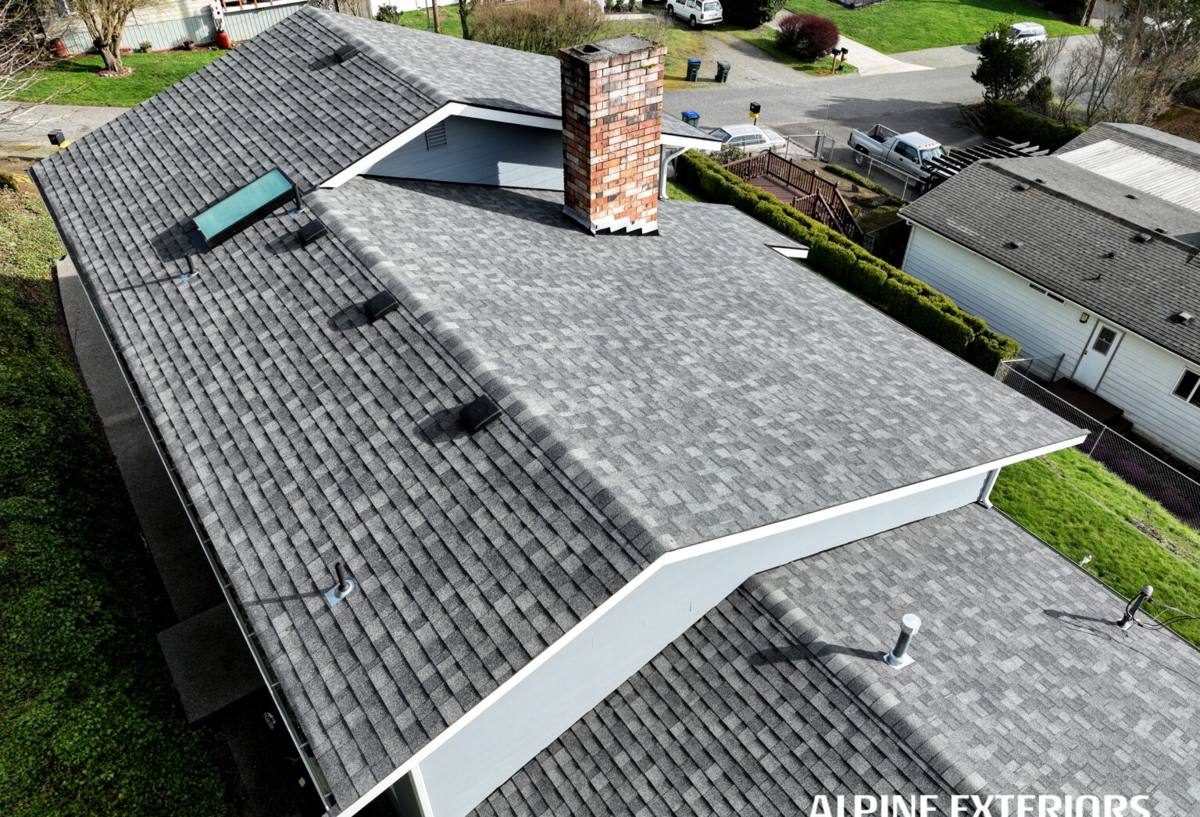
What Local Homes Actually Need From a New Roof
Salt Air and Metal Fasteners
Proximity to Puget Sound and the tidal waterways around Stanwood means airborne salt settles on roofing surfaces and hardware year-round, not just during storms. Cheap or mismatched fasteners corrode faster here than the manufacturer's general warranty language assumes. We spec fasteners and flashing metals rated for coastal exposure, because replacing a roof over corroded nail heads in eight years instead of twenty is a false economy.
Driving Rain and Wind-Driven Water
Rain that falls straight down is easy to shed. Rain that comes in at an angle, pushed by wind off the water, tests every lap, seam, and penetration on a roof. Underlayment choice, starter strip placement, and flashing detail around vents and chimneys matter more here than in drier inland climates, because wind-driven water finds the one spot that was cut a corner.
Moss, Shade, and Slow Roof Damage
Many Stanwood properties sit under mature evergreens or have north-facing slopes that stay damp and shaded for much of the year. That's ideal growing conditions for moss and algae, which hold moisture against shingles, work into laps, and shorten the life of a roof surface that would otherwise last decades. A new roof installation should plan for this reality from day one, not treat moss as a problem to deal with later.
Signs a Stanwood Home Needs a New Roof, Not Another Repair
Repairs make sense when damage is localized. A full replacement makes sense when the roof's underlying systems — decking, underlayment, ventilation — are compromised broadly enough that patching one area just shifts the problem. Common signs we see on service calls in this area:
- Granules collecting in gutters or at downspouts, especially after a windy rain
- Moss or algae streaking that comes back within months of cleaning
- Soft or spongy decking felt underfoot in the attic, particularly near valleys or eaves
- Daylight visible through the roof deck from inside the attic
- Shingles that are curling, cupping, or missing granules across large sections rather than one spot
- A roof original to the home and past 20-25 years old, regardless of visible damage
- Interior stains on ceilings or upper walls that appear after storms
If you're seeing two or more of these, it's worth a real inspection before deciding between repair and replacement.
What a Correct Roof Installation Involves
A roof is a system, not a single layer of shingles. Skipping steps to save a day of labor is where most premature failures start. Here's what should happen on every full installation, regardless of the final material:
Tear-Off and Deck Inspection
Full removal of the old roofing down to the deck, followed by an honest inspection of the sheathing. Any soft, delaminated, or water-damaged plywood or OSB gets replaced before anything new goes down. Roofing over bad decking is one of the most common shortcuts in the trade, and it guarantees problems later.
Ice and Water Shield at Vulnerable Points
Valleys, eaves, and roof-to-wall transitions get a self-adhering waterproof membrane before underlayment goes on. In a climate with sustained wind-driven rain, these are the spots where water backs up under shingles if they're under-protected.
Synthetic Underlayment
A full synthetic underlayment layer across the deck, properly lapped, gives a second line of defense if wind or ice ever gets past the primary roofing surface. This matters more here than in drier climates because of how many wet months the roof has to perform through.
Proper Flashing
Step flashing at walls, counter-flashing at chimneys, and correctly sized flashing at all penetrations (vents, skylights, plumbing stacks). Flashing failures, not shingle failures, are the most common cause of roof leaks we find on service calls.
Balanced Attic Ventilation
Intake at the eaves and exhaust at the ridge, sized to actually move air through the attic space. Poor ventilation traps moisture, which accelerates deck rot from underneath and can void material warranties. It also directly affects how fast moss and algae take hold on the roof surface above.
Correct Material Installation
Manufacturer-specified nailing patterns, exposure, and starter courses. Installation errors are the single biggest reason shingle warranties get denied, and they're invisible to a homeowner until something goes wrong.
Roofing Material Options for This Area
There's no single "best" roofing material — the right choice depends on budget, roof slope, shade exposure, and how long you plan to own the home. Here's how the common options stack up for a Stanwood property specifically:
| Material | Typical Lifespan | Moss/Algae Resistance | Best Fit |
|---|---|---|---|
| Standard asphalt shingle | 15-20 years | Low without algae-resistant granules | Budget-conscious replacements on sunnier roof faces |
| Algae-resistant (copper-granule) shingle | 20-30 years | Significantly better | Shaded or north-facing roofs, tree-heavy lots common around Stanwood |
| Architectural/laminate shingle | 25-30 years | Good with algae-resistant granules | Most full replacements — durability and appearance balance |
| Metal roofing | 40-60 years | Very good | Owners planning long-term ownership, higher upfront investment |
We don't push one material as universally superior. We'll walk your specific roof — slope, shade, sun exposure — and tell you honestly which option makes sense for your situation and budget.
Our Installation Process, Start to Finish
- On-site inspection. We walk the roof and the attic, not just look from the ground, and give you a straight answer on repair versus replacement.
- Written estimate. Material options, scope of work, and a clear price — no vague allowances that turn into surprise change orders.
- Scheduling around weather. Roofing over an open deck in a driving rain event is how decking gets ruined before the new roof ever goes on. We plan installation windows with Skagit County's weather patterns in mind.
- Tear-off and deck repair. Old roofing removed, deck inspected, any damaged sections replaced and documented.
- Ice and water shield, underlayment, and flashing installed per manufacturer spec.
- New roofing material installed with correct nailing, exposure, and ventilation tie-ins.
- Final walkthrough so you can see the completed work and ask questions before we consider the job done.
Cost Factors Worth Understanding
Roofing quotes vary widely, and the lowest number isn't always the better deal. Factors that legitimately move the price:
| Factor | Why It Matters |
|---|---|
| Roof pitch and access | Steeper or harder-to-access roofs take longer and require more safety setup |
| Deck condition | Rotted sheathing found during tear-off adds material and labor not visible from a ground inspection |
| Material selection | Standard asphalt versus algae-resistant or metal changes both material and labor cost |
| Number of penetrations | More vents, skylights, and chimneys mean more flashing work |
| Ventilation upgrades | Adding proper intake/exhaust venting where a home currently lacks it |
| Layers of existing roofing | Multiple old layers add tear-off time and disposal cost |
A quote that's dramatically lower than others is usually missing one of these line items, not finding a better deal. Ask what's included in writing.
Why Hiring a Crew That Already Works Stanwood Matters
Roofing crews that mainly work drier, inland climates sometimes under-spec underlayment or skip ice and water shield in areas that don't strictly require it by code but genuinely benefit from it given local wind and rain patterns. A crew that regularly works Stanwood and the surrounding Skagit County area already knows which roof orientations collect moss fastest, which flashing details tend to fail first in this weather, and how to schedule a tear-off around a wet forecast instead of gambling on it. That familiarity shows up in fewer callbacks and a roof that performs the way it's supposed to for its full expected lifespan, not just the first few dry summers.
Ready for a Straight Answer on Your Roof?
If your roof is showing its age, or you just want an honest opinion on whether repair or replacement makes sense for your home, we're happy to take a look. Use the form below to request a free, no-pressure estimate — we'll walk the roof, explain what we find, and give you real options.