 Burlington
 New Roof Installation Built for Oak Harbor's Weather
Oak Harbor sits close enough to the water that homes here deal with a different set of pressures than roofs further inland. Salt-laden air moves in off the water, driving rain comes in sideways during winter storms, and the shaded, damp stretches of the year give moss and algae months to get established on anything that isn't shedding water fast. A new roof installed here needs to be built with all three of those realities in mind from day one, not patched later once problems show up. As a Burlington-based crew that works this part of Skagit County regularly, we install roofs the way this climate actually demands, not the way a generic spec sheet says to.
This page covers what a correct new roof installation looks like specifically for Oak Harbor homes: the materials that hold up, the parts of the job that get skipped by crews in a hurry, and how our process works from first look to final walkthrough.
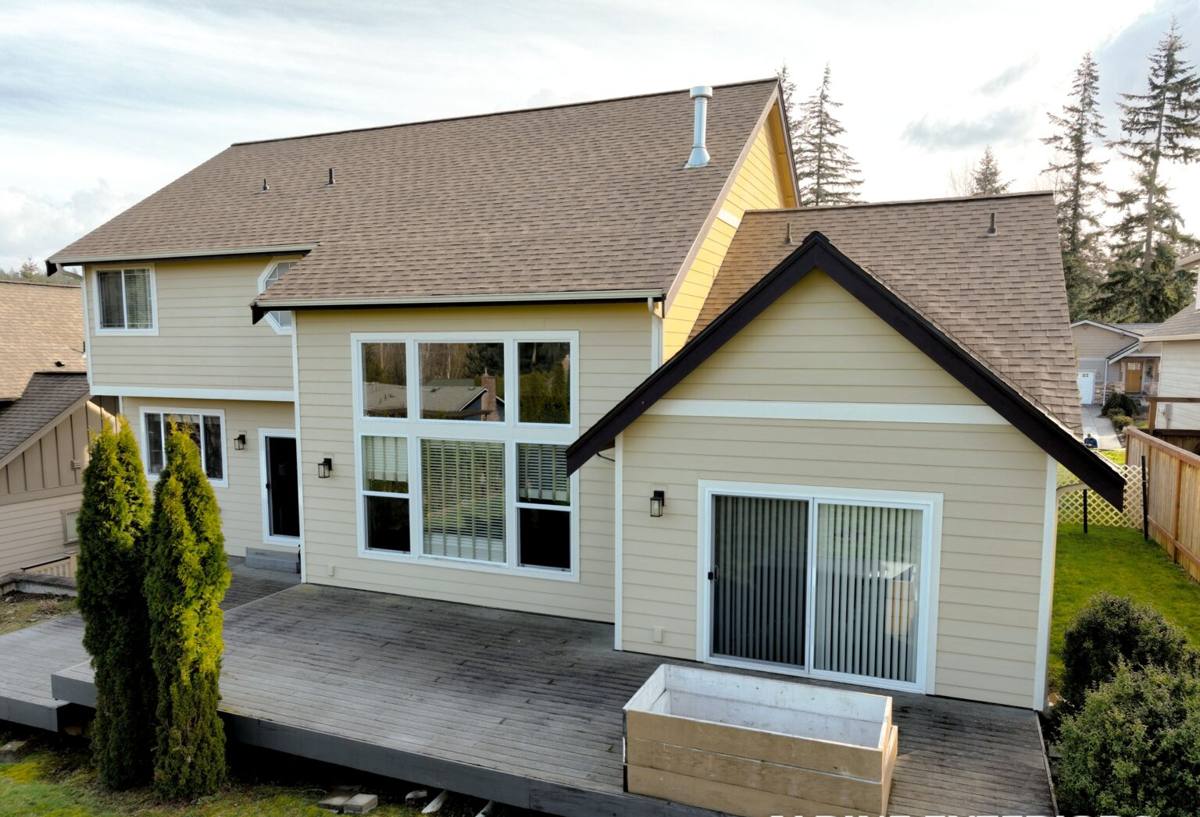
What Salt Air, Driving Rain, and Moss Actually Do to a Roof
Salt Air
Airborne salt accelerates corrosion on any exposed metal component of a roofing system — flashing, fasteners, drip edge, and vent stacks. Cheaper coated or bare metal breaks down noticeably faster in this environment than it would even fifteen or twenty miles inland. Over years, corroded flashing loses its seal at valleys, chimneys, and wall intersections, which is where the majority of roof leaks actually start.
Driving Rain
Rain that comes in at an angle behaves differently than rain falling straight down. It gets pushed up under shingle tabs, into exposed nail heads, and along roof-to-wall transitions that a calmer climate could get away with sealing loosely. A roof designed for driving rain needs more attention to underlayment coverage, fastener placement, and flashing detail at every transition — not just the field of the roof itself.
Moss Season
Skagit County's long stretch of cool, damp months gives moss and algae plenty of time to take hold, especially on north-facing slopes and shaded sections under trees. Moss doesn't just look bad — it holds moisture against the roofing material, lifts shingle edges as it grows, and can work its way under flashing over time. A roof that isn't set up to shed water and resist growth will need moss treatment and cleaning far more often than one that is.
What a Correct New Roof Installation Involves
A new roof is more than shingles nailed to plywood. The parts that actually determine whether a roof performs for its full lifespan — especially in this climate — are mostly the parts you don't see once the job is done.
Tear-Off and Deck Inspection
We remove the old roofing down to the deck rather than installing over it. This lets us actually see the plywood or OSB underneath, check for soft spots, water staining, or rot around penetrations, and replace any damaged sheathing before it's covered up. Roofing over hidden deck damage is one of the most common ways a "new roof" fails early.
Underlayment
Given how much wind-driven rain this area sees, we don't treat underlayment as an afterthought. Synthetic underlayment across the field, combined with self-adhered ice-and-water membrane at eaves, valleys, and any low-slope transitions, gives the roof a real second line of defense if wind ever drives water past the primary roofing material.
Flashing
Flashing is where most leaks originate, and it's also the first thing to suffer from salt air if the wrong material is used. We install new flashing at every valley, chimney, skylight, and wall intersection rather than reusing old pieces, and we choose metal and coatings suited to a coastal-influenced climate rather than the cheapest option available.
Ventilation
Proper intake and exhaust ventilation keeps the attic dry and temperature-regulated, which matters for shingle lifespan and for limiting the moisture that feeds moss growth from underneath. A roof can look correct from the ground and still be poorly vented, which shortens its life regardless of the materials used on top.
Fasteners and Edge Detail
We use corrosion-resistant fasteners appropriate for a salt-air environment and pay close attention to drip edge and starter course installation, since these are the details that determine whether wind-driven rain gets pushed off the roof or finds a way underneath it.
Roofing Material Considerations for Oak Harbor Homes
There's no single "best" roofing material for every home — it depends on the home's exposure, roof pitch, budget, and how much shade the roof gets. Here's how the common options compare for a home in this specific climate.
| Material | Salt Air Resistance | Moss Resistance | Maintenance | Typical Lifespan |
|---|---|---|---|---|
| Architectural asphalt shingle | Good with corrosion-resistant flashing/fasteners | Moderate; benefits from algae-resistant granules | Periodic moss/debris removal | 25-30 years |
| Standing seam metal | Very good with proper coating and fastener choice | Very good; sheds moss with steep enough pitch | Low | 40-50+ years |
| Composite/synthetic shake | Good | Good | Low to moderate | 30-50 years |
| Wood shake | Fair; more sensitive to moisture cycling | Poor without regular treatment | High | 20-30 years, shorter with neglect |
We'll talk through these trade-offs honestly during your estimate rather than pushing whatever happens to be easiest for us to install. If a homeowner wants wood shake for its look, we'll explain the added upkeep it needs in this climate so that's a decision made with full information, not a surprise two years in.
Our Installation Process
- On-site assessment. We walk the roof, check the attic where accessible, and look at ventilation, deck condition indicators, and any signs of existing moisture or moss buildup.
- Written scope and estimate. You get a clear breakdown of materials, the work involved, and pricing — no vague allowances that turn into change orders later.
- Tear-off and deck repair. Old roofing comes off, the deck is inspected, and any damaged sheathing is replaced before anything new goes down.
- Underlayment and flashing installation. Ice-and-water membrane at vulnerable areas, synthetic underlayment across the field, new flashing at every transition.
- Roofing material installation. Installed to manufacturer specification, with attention to fastener pattern, exposure, and edge detail suited to wind-driven rain.
- Ventilation check and correction. Intake and exhaust ventilation confirmed or upgraded as part of the job, not treated as a separate add-on.
- Cleanup and final walkthrough. Site cleaned, magnetic sweep for nails, and a walkthrough so you understand what was done and what to expect going forward.
Why a Crew That Already Works Oak Harbor Matters
Roofing crews that don't work this area regularly often default to standard specs that work fine in drier, calmer climates but leave gaps here — lighter-gauge flashing that corrodes faster, underlayment coverage that's technically code-minimum but not built for driving rain, or no real conversation about moss until it's already a problem. We're based in Burlington and work throughout Skagit County, including Oak Harbor, so these aren't abstract considerations for us — they're what we plan for on every roof we install in this area.
Working locally also means we're accountable locally. If something needs attention after the job is done, we're not driving in from out of the area to deal with it.
Signs Your Oak Harbor Home May Need a New Roof
- Shingles that are cupping, curling, or losing granules faster than they should
- Visible moss or dark algae streaking, especially on north-facing or shaded slopes
- Flashing around chimneys, vents, or valleys showing rust or gaps
- Daylight visible through the attic roof deck or soft spots when walking the roof
- Water stains on interior ceilings, especially after wind-driven storms
- A roof approaching or past its expected lifespan for its material type
- Granules collecting in gutters in noticeable amounts
Any one of these on its own isn't necessarily an emergency, but a few together are usually a sign it's time for a real inspection rather than another round of spot repairs.
Roof Repair vs. Full Replacement
Not every roofing problem calls for full replacement, and we won't tell you it does just to sell a bigger job. Isolated flashing failures, a small number of damaged shingles, or a single leak with a clear, contained cause can often be repaired. Full replacement makes more sense when the roofing material is broadly past its service life, when damage is spread across multiple areas, when the deck itself has widespread moisture damage, or when the cost of repeated repairs starts approaching what a new roof would cost. During your estimate, we'll give you a straight answer on which category your roof falls into.
What Affects the Cost of a New Roof
| Factor | Why It Matters |
|---|---|
| Roof size and pitch | More area and steeper pitches increase material and labor |
| Material choice | Asphalt, metal, and composite options vary significantly in material cost |
| Deck condition | Rot or soft sheathing found during tear-off adds repair scope |
| Number of penetrations | Chimneys, skylights, and vents each require additional flashing work |
| Ventilation needs | Adding or upgrading intake/exhaust vents affects labor and materials |
| Access and layout | Steep sites or limited staging area can affect labor time |
Because these factors vary house to house, we don't quote sight-unseen prices — we give you real numbers after an on-site look at your specific roof.
Get a Straight Answer About Your Roof
If you're in Oak Harbor and dealing with an aging roof, ongoing moss problems, or a leak that keeps coming back, we're happy to take a look and give you an honest read on what it actually needs. We offer free, no-pressure estimates — use the form below to get a time on the calendar.