 Burlington
 Why Anacortes Roofs Wear Differently
Anacortes sits out on Fidalgo Island, surrounded by saltwater on three sides, which means homes here take on a roofing challenge that inland Skagit County properties don't deal with in the same way. Salt-laden air corrodes exposed metal faster than it does even ten or fifteen miles inland — fasteners, flashing, vent caps, and gutter hardware all show it first. Add in the long, wet fall-to-spring stretch typical of this part of Washington, with driving rain that comes in sideways off the water during storms, and you've got a roof that's rarely given a real chance to dry out between weather events.
That constant dampness is exactly what moss and algae need to take hold. On shaded, north-facing slopes — common on the tree-lined lots around Anacortes — moss can establish itself within a couple of years of a roof going on if the material, ventilation, and maintenance plan aren't matched to the site. Once moss gets under shingle tabs, it lifts them, holds water against the deck, and accelerates rot from underneath, which is a very different failure path than simple UV wear.
None of this means an Anacortes roof is doomed to fail early. It means the replacement has to be specified and installed with the local conditions in mind from the start — not treated the same as a roof going on in a drier, more sheltered part of the state.
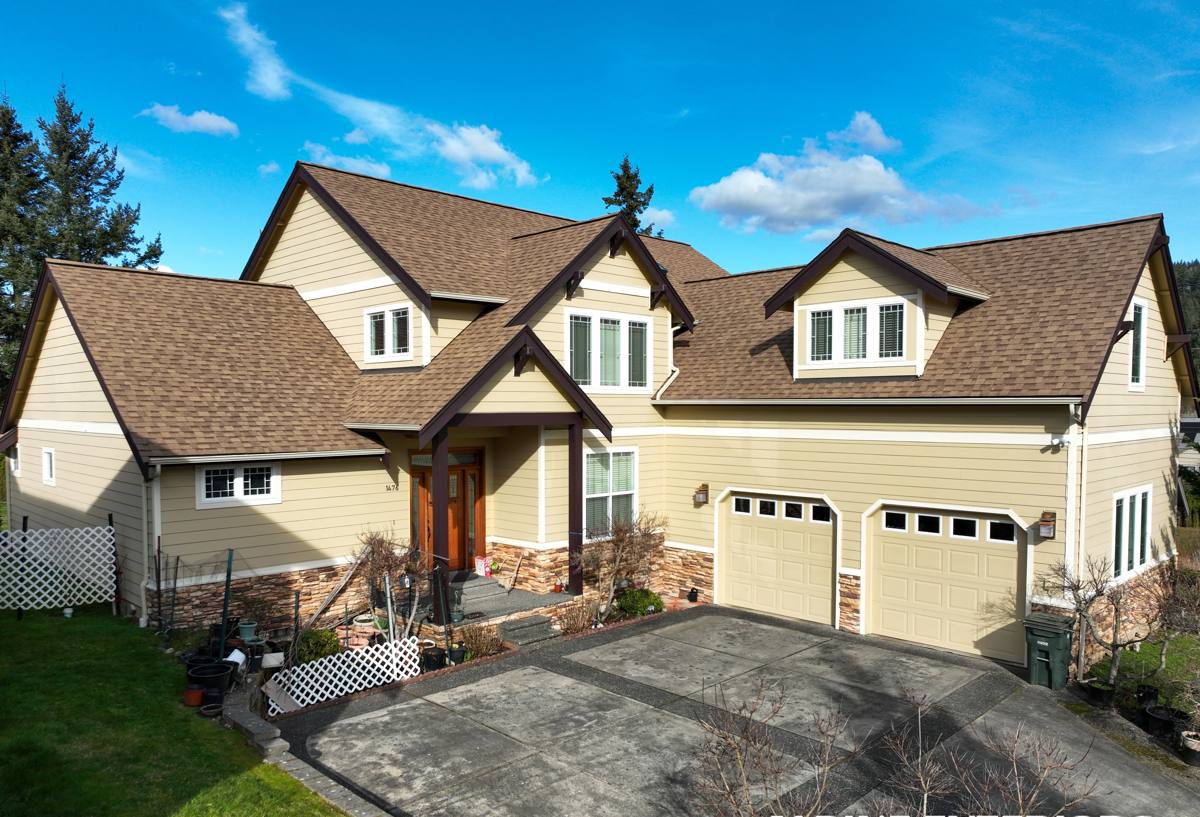
Signs a Roof Replacement Shouldn't Wait
Roofs rarely fail all at once. In a marine climate like this one, the warning signs tend to show up as a slow accumulation of small problems that add up to a bigger one. Worth a serious look if you're seeing:
- Granules collecting in gutters or at downspout outlets — a sign the shingle surface is wearing thin
- Moss or dark streaking on north- or shade-facing slopes, especially where it's returned after cleaning
- Curling, cupping, or cracked shingle tabs, particularly on older 3-tab roofs
- Soft spots or visible sagging when walking the attic or viewing the roofline from the ground
- Rusted or corroded flashing around chimneys, vents, and valleys
- Daylight visible through the roof deck from inside the attic
- Water stains on interior ceilings or exterior fascia boards
- A roof approaching or past the manufacturer's rated lifespan for its material and exposure
Any one of these on its own might just mean a repair. Several together, or a roof that's already had multiple patch repairs, usually means replacement is the more honest recommendation — repeated repairs on a roof near the end of its life rarely pencil out cheaper than doing it once, correctly.
What a Correct Roof Replacement Actually Involves
Tear-Off and Deck Inspection
A proper replacement starts with a full tear-off down to the deck — not a layover on top of existing material. That's the only way to actually see the plywood or OSB underneath and find soft, delaminated, or rotted sections before they're covered up again. In a wet climate, deck damage from long-term moisture intrusion is common enough that budgeting for some deck repair is realistic, even on a roof that looked fine from the ground.
Underlayment and Flashing
This is where a coastal roof earns its keep. We use synthetic or self-adhering underlayment sized to the exposure — self-adhering ice-and-water-type membrane in valleys, around penetrations, and along eaves where wind-driven rain is most likely to find a way in. Flashing at chimneys, walls, and roof-to-wall transitions gets rebuilt, not just resealed, and we use corrosion-resistant flashing given the salt air. This detail work is where most roof leaks actually originate, far more often than the field shingles themselves.
Ventilation
Balanced intake and exhaust ventilation keeps the attic close to outdoor temperature and humidity, which does two things: it protects the deck from moisture buildup underneath and it keeps shingles from cooking from below in the rare hot stretch. On a lot of older Skagit County homes, ventilation was undersized or blocked by insulation over the years — a replacement is the right time to correct it.
Choosing a Roofing Material for Salt Air and Moss
There's no single "best" roofing material — the right call depends on the home's exposure, roof pitch, budget, and how much upkeep the homeowner wants to take on. Here's how the common options actually compare for a property like this:
| Material | Salt Air Durability | Moss Resistance | Typical Lifespan | Maintenance |
|---|---|---|---|---|
| Architectural asphalt shingle | Good with corrosion-resistant fasteners/flashing | Moderate — algae-resistant granules help but don't eliminate it | 25–30 years | Periodic soft-wash cleaning on shaded slopes |
| 3-tab asphalt shingle | Fair | Lower — thinner profile holds less moss-resistant coating | 15–20 years | More frequent cleaning and earlier repair needs |
| Standing seam metal | Excellent when properly coated and detailed | Very good — smooth surface sheds moss more easily | 40–50+ years | Low; occasional fastener/sealant check |
| Synthetic/composite shingle | Good | Good, product-dependent | 30–50 years | Low to moderate |
For most Anacortes homes, a quality architectural shingle with algae-resistant granules and correctly detailed flashing is a solid, cost-effective choice. For homes with heavier shade, steeper pitches, or owners who want the lowest possible long-term maintenance, metal is worth the higher upfront cost. We'll walk through the honest trade-offs for your specific roof rather than pushing one product across the board — the right answer depends on your home, not a one-size-fits-all pitch.
What Drives the Cost of a Roof Replacement
Every roof is priced on its own specifics, but the same handful of factors move the number up or down on most jobs:
| Factor | Why It Matters |
|---|---|
| Roof size and number of planes | More material and more cut waste on complex rooflines |
| Pitch and accessibility | Steep or hard-to-access roofs take longer and require more safety setup |
| Deck condition | Rot or soft sheathing found at tear-off adds repair cost |
| Layers being removed | Tearing off multiple existing layers adds labor and disposal cost |
| Material selection | Asphalt, metal, and composite carry very different material costs |
| Flashing and ventilation upgrades | Correcting undersized or outdated details adds cost but prevents future leaks |
We won't quote a number over the phone without seeing the roof — anyone who does is guessing. What we can promise is a written estimate that spells out exactly what's included, so there are no surprise add-ons once tear-off starts.
How We Approach Your Roof Replacement
- On-site inspection. We walk the roof, check the attic, and look at flashing, ventilation, and deck condition — not just shingle wear from the ground.
- Written estimate. A clear scope of work with material options, so you're choosing between real alternatives rather than guessing what's included.
- Scheduling around the weather. We plan tear-off days with the forecast in mind and keep the deck protected if conditions turn while work is in progress.
- Tear-off and deck repair. Full removal, deck inspection, and any needed sheathing replacement done in the open, not covered over.
- Underlayment, flashing, and installation. Installed to the manufacturer's specification, with attention to the coastal-specific details that actually prevent leaks.
- Cleanup and walkthrough. Magnetic sweep for nails, full site cleanup, and a walkthrough so you know what was done and why.
Moss, Algae, and Long-Term Roof Care
A correctly installed roof still needs some ongoing attention in a climate this wet. Moss and algae aren't a sign of a bad install — they're a fact of life on shaded roofs anywhere near the water in western Washington. What matters is staying ahead of it:
- Keep gutters clear so water isn't sitting against the eaves and fascia
- Trim back overhanging branches to reduce shade and debris buildup on the roof
- Have moss soft-washed off (not pressure-washed, which can strip granules) before it works under shingle tabs
- Check flashing and sealant at penetrations every couple of years, especially after a hard winter
- Address small leaks or lifted shingles promptly rather than waiting for the next dry stretch
A little maintenance goes a long way toward getting the full rated lifespan out of whatever material you choose.
Why a Crew That Already Works Anacortes Matters
Roofing crews that mostly work drier, inland areas sometimes underspec underlayment or skip the extra flashing detail that a marine climate actually requires — not out of carelessness, but because it's not the standard they're used to. Working Anacortes and the rest of Skagit County regularly means we've seen how salt air and driving rain actually affect roofs over years, not just at installation, and we build the job accordingly from the first estimate.
Being based in Burlington also means we're a short drive away if a warranty question or a storm-related concern comes up after the job is done — not a crew that has to be scheduled weeks out from somewhere across the state.
If your Anacortes roof is showing its age or you just want an honest read on how much life it has left, we're glad to come take a look. The estimate is free, there's no pressure attached to it, and you'll get a straight answer either way — use the form below to get started.