 Burlington
 Why Samish Island Decks Wear Out Faster Than Inland Ones
A deck built in a sheltered inland yard and a deck built out on Samish Island are not living the same life, even if they were built from the same set of plans. Samish Island sits out in the open water and wind off Samish Bay and Padilla Bay, which means homes there catch salt-laden air, sustained wind, and driving rain that inland Burlington properties simply don't see as often. Add in the long Pacific Northwest moss season, and you've got a deck that's under attack from three directions at once: corrosion, moisture, and organic growth. None of that means a deck on Samish Island is doomed — it just means it needs to be built and repaired with those conditions in mind, not with a generic approach that works fine forty-five minutes inland.
Salt Air and Metal Fasteners
Salt air speeds up corrosion on anything metal — nails, screws, joist hangers, bolts, and railing hardware all take the hit. Standard electro-galvanized fasteners that would last decades in a dry inland yard can start showing rust streaks and pitting in a fraction of that time near the water. Once a fastener corrodes, it loses holding strength, and the wood around it starts to swell, split, and stain. This is one of the most common repair calls we get on the island — decking that looks structurally fine but is held together by fasteners that are quietly failing underneath.
Standing Water and Wood Rot
Driving rain off the water finds its way into places a light inland drizzle never would — end grain, ledger board connections, under railing posts, and anywhere flashing was skipped or installed poorly. Wood doesn't need to be constantly soaked to rot; it just needs to stay damp longer than it can dry out. On an exposed site with regular wind-driven rain, that drying window shrinks, which is why rot tends to show up earlier and spread faster on waterfront and near-waterfront decks than on sheltered ones.
Moss and the Long Wet Season
Skagit County's wet season runs long, and a horizontal wood or composite surface in the shade is exactly where moss and algae like to set up. Beyond making a deck slippery, moss holds moisture directly against the decking surface for months at a time, which accelerates rot in wood decking and can stain and degrade composite boards. A deck that gets moss every winter and isn't cleaned off is aging faster than the calendar suggests.
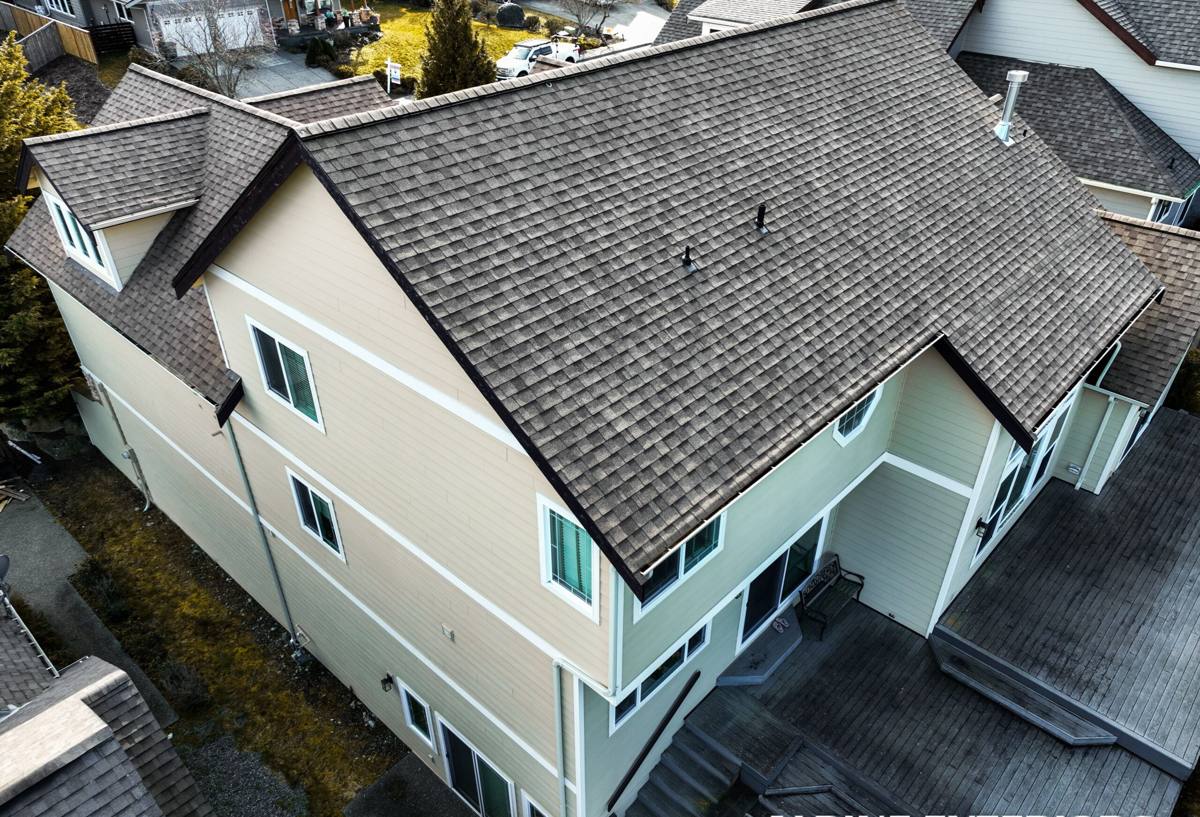
Warning Signs Worth Calling About
Most deck problems don't show up as a dramatic collapse — they show up as small signals that get ignored until they're expensive. Here's what we tell Samish Island homeowners to watch for between our visits:
- Soft, spongy, or bouncy spots when you walk across the decking
- Rust streaks bleeding out from screw heads or nail holes
- Gaps opening up where the ledger board meets the house
- Railings or posts that wiggle more than they used to
- Persistent moss or dark staining that keeps coming back after cleaning
- Cupping, splitting, or delamination in individual boards
- A musty smell coming from underneath the deck
- Stair stringers that flex or feel less solid than the rest of the deck
Any one of these on its own isn't necessarily an emergency, but on an exposed site like Samish Island they tend to move faster than homeowners expect. Catching them early is almost always the difference between a repair and a rebuild.
What a Correct Deck Repair Actually Involves
A repair that just swaps out a few obviously rotten boards and calls it done is a repair that's going to fail again — often at the same spot. A correct repair treats the deck as a system: structure, water management, fasteners, and surface all have to work together.
Ledger Board and Flashing
The ledger board — where the deck attaches to the house — is the single most important connection on the entire structure, and it's also the most common place we find hidden rot. If flashing behind the ledger is missing, damaged, or was never installed correctly, water gets channeled directly into the house framing instead of away from it. Any real ledger repair means checking and correcting the flashing, not just replacing the board and reattaching it the same way.
Framing and Structural Members
Joists, beams, and posts that show soft spots or rot need to be sistered, reinforced, or replaced — never just covered over with new decking on top. We check ground contact points too, since posts and footings on damp Skagit County soil are prone to rot right at grade, an area that's easy to miss from a quick visual inspection.
Fasteners and Hardware
Given how hard salt air is on metal, we don't reuse corroded fasteners or hardware during a repair, and we don't cut corners on the replacements either. Mixing incompatible metals — for example, the wrong fastener in a treated-lumber connector — creates a galvanic reaction that speeds up corrosion instead of slowing it down, so matching the right fastener and hardware grade to the wood and the environment matters as much as the carpentry.
Decking Boards and Surface
Individual board replacement only makes sense when the structure underneath is sound. If we're replacing boards, we match spacing and fastening patterns to allow for proper drainage and airflow, since tight, poorly ventilated decking is exactly what traps moisture and invites moss.
Repair or Replace? How We Help You Decide
Not every deck problem calls for a full rebuild, and not every deck is worth patching. We look at the extent of the damage, the age and condition of the structure, and how the deck was originally built before recommending either path.
| Factor | Repair Often Makes Sense | Replacement Often Makes Sense |
|---|---|---|
| Structural framing | Isolated soft spots in a few joists or the ledger | Widespread rot through most of the framing |
| Decking surface | A handful of damaged or worn boards | Most boards are cupped, split, or delaminating |
| Age of the deck | Relatively young, well-built structure with a localized issue | Older deck nearing the end of its practical life |
| Fasteners and hardware | Corrosion limited to a section that can be reworked | Corrosion widespread across the whole structure |
| Cost over time | Targeted repair costs a fraction of a rebuild | Repeated repairs are starting to add up to rebuild-level cost |
As a rough guide, targeted repairs — a ledger and flashing fix, a section of reframed joists, a batch of new decking boards — often land in the low thousands of dollars depending on scope. A full deck replacement is a bigger investment, but it also resets the clock and lets us build in the corrosion- and moisture-resistant details this location calls for from the start. We'll walk the deck with you and give you a straight answer on which side of that line yours falls on.
Our Process, Start to Finish
- We walk the full deck and check underneath it, not just the walking surface, including the ledger connection and post bases
- We identify which problems are cosmetic and which are structural, and explain the difference in plain terms
- We give you a clear scope and price before any work starts — no guessing after the fact
- We handle the repair in the right order: structure and flashing first, fasteners and hardware next, surface last
- We clean up the site and walk you through what we did and what to watch for going forward
Materials We Choose and Why
For framing repairs, we use pressure-treated lumber rated for ground contact where it's needed, since anything less doesn't hold up against the moisture this site sees. For decking surfaces, homeowners generally choose between wood — cedar or treated lumber — and composite decking, and each has real trade-offs worth understanding rather than a one-size-fits-all answer. Wood decking is easier and cheaper to repair board by board, but it needs more regular maintenance to fend off moss and moisture in a climate like this. Composite decking resists rot and doesn't need staining, but it's a different repair process if it's ever damaged, and it still needs to be kept clean of moss and debris since organic growth doesn't care what the surface is made of. For fasteners and hardware, we favor corrosion-resistant options suited to a marine-influenced environment rather than the standard-grade hardware that's fine forty-five minutes inland — it costs a bit more up front and saves you from redoing the same repair in a few years.
Keeping Moss and Moisture in Check Between Repairs
A repaired deck still needs upkeep, especially on an exposed site. A few habits go a long way:
- Sweep leaves and debris off the deck regularly through fall and winter so they can't trap moisture against the boards
- Clean moss and algae off horizontal surfaces before it has a chance to establish, rather than after it's thick
- Check that gaps between boards stay clear so water can drain instead of pooling
- Keep an eye on the ledger board area each season, since that's where hidden problems tend to start
- Have the deck looked at every couple of years even if nothing looks obviously wrong — small issues are far cheaper to fix early
Why Hiring a Crew That Already Works Samish Island Matters
A deck repair company that mostly works dry, sheltered, inland lots doesn't run into salt air corrosion, wind-driven rain intrusion, or a moss season this long on a regular basis — so those problems don't shape how they build or price a repair. We work Skagit County broadly, including Samish Island and the exposed stretches around it, so we're not guessing at what this environment does to a deck over time; we've already seen it happen and fixed it. That familiarity also means a faster, more accurate assessment when you call — we're not starting from zero on what this location does to wood, metal, and fasteners.
If you've noticed soft boards, rust streaks, a shaky railing, or moss that won't quit, it's worth having someone take a real look before it turns into a bigger repair. We offer free, no-pressure estimates for Samish Island deck repairs — fill out the form below and we'll get back to you to take a look.