 Burlington
 Anacortes Siding Has to Work Harder Than Siding Almost Anywhere Else in Skagit County
Anacortes sits at the edge of the Salish Sea, surrounded by Rosario Strait, Guemes Channel, and Fidalgo Bay. That waterfront setting is part of what makes the area beautiful, and it's also exactly why siding here takes more abuse than siding on a house twenty minutes inland in Burlington or Mount Vernon. Homes in Anacortes deal with salt-laden air moving off the water, wind-driven rain that gets pushed sideways into wall assemblies, and a moss and mildew season that can stretch for most of the year in shaded, north-facing spots. Any siding installed here needs to be chosen and installed with those three things in mind from day one, not treated as an afterthought.
This page is specifically about siding installation for homes in and around Anacortes. It's not a general overview of siding — it's what we've learned from installing on homes that face marine exposure directly, and why our approach here looks a little different from a straightforward inland installation.
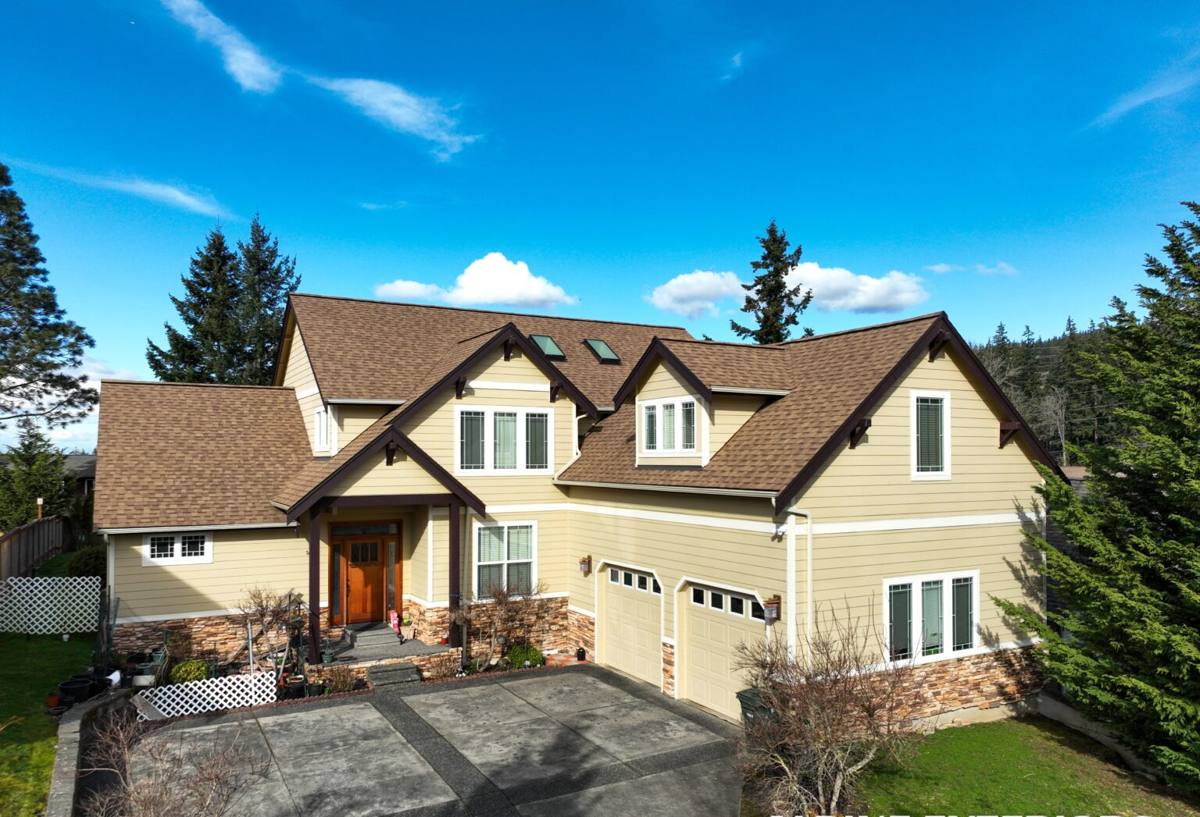
What Salt Air, Rain, and Moss Actually Do to a Wall System
Salt Air
Airborne salt is corrosive to exposed metal fasteners, flashing, and trim hardware. Over years, it accelerates rust and pitting on anything that isn't rated for coastal exposure. It also settles into porous or poorly sealed siding surfaces, which can contribute to premature finish breakdown, especially on the ocean- and channel-facing sides of a home.
Driving Rain
Skagit County gets a lot of rain in general, but homes closer to the water catch it at an angle more often, driven by wind coming off the Strait. That means water gets pushed up under laps, into seams, and around penetrations far more aggressively than on a sheltered inland lot. A siding system that relies on a "good enough" gap or a bead of caulk to keep water out will fail here faster than it would twenty minutes east.
Moss and Mildew
Anacortes has plenty of shaded, north- and west-facing walls that stay damp for long stretches, especially under mature trees or close to the water where humidity lingers. Moss and mildew don't just look bad — sustained moisture against a wall surface is what eventually finds its way into seams, fastener holes, and any spot where the siding's protective finish has started to break down.
Why We Install Only James Hardie Fiber Cement Siding
We made the decision years ago to install one siding system, and we stand behind that decision on every job, including the ones closest to the water. James Hardie fiber cement is non-combustible, dimensionally stable, and engineered specifically for climates like ours through its HardieZone HZ5 product line, which is built for the Pacific Northwest's freeze-thaw cycles and sustained moisture exposure. The factory-applied ColorPlus finish is baked on under controlled conditions, which gives it more consistent coverage and better resistance to fading and moisture intrusion than a field-applied coat.
We don't install LP SmartSide, vinyl, Cemplank, Allura, or bare wood siding like primed spruce or cedar. Each of those products has legitimate uses and real strengths — this isn't about calling them junk. It's that we've chosen to specialize in one system, install it correctly every time, and stand behind it with a warranty and a process we control from start to finish. In a marine climate like Anacortes, that consistency matters more, not less.
Siding Materials in a Coastal Skagit County Climate: How They Compare
| Factor | James Hardie Fiber Cement | Vinyl | Untreated Wood (cedar, primed spruce) |
|---|---|---|---|
| Moisture behavior | Dimensionally stable, engineered HZ5 line for wet/coastal climates | Can warp or buckle with heat and cold cycling | Absorbs moisture, prone to rot without diligent upkeep |
| Salt air resistance | Factory finish holds up well to marine exposure | Finish can chalk and become brittle over time | Finish breaks down faster; wood is exposed sooner |
| Moss/mildew resistance | Non-porous surface resists moss anchoring | Seams and panel laps can trap moisture | Porous surface, a common moss host |
| Fire resistance | Non-combustible core material | Combustible, can melt or deform near heat | Combustible |
| Maintenance | Periodic wash and repaint on the cycle you choose | Low upkeep but limited repair options if damaged | Regular sealing/painting required to prevent rot |
What Correct Installation Actually Involves in a Marine Environment
Fiber cement siding is only as good as the installation behind it. In a location like Anacortes, a handful of details matter more than they would on a sheltered inland lot, and skipping them is where premature failures come from.
Weather-Resistive Barrier and Flashing
Every wall gets a properly lapped weather-resistive barrier, and every window, door, and penetration gets flashed to shed water downward and outward, never into the wall cavity. On a home taking direct wind-driven rain off the water, sloppy flashing work is the single most common source of hidden moisture problems.
Clearances and Gaps
Hardie siding needs proper clearance from grade, roofing, decks, and any horizontal surface where water and debris can collect against the bottom edge. We also maintain manufacturer-specified gaps at butt joints and around trim so the material can move without trapping moisture.
Fastening
We use corrosion-resistant fasteners driven to the manufacturer's specified pattern and depth — not overdriven, not underdriven. In a salt-air environment, fastener quality isn't optional; the wrong hardware corrodes and stains the siding face long before the siding itself would need attention.
Caulking and Sealant
Sealant is used where Hardie's installation guidelines call for it, not as a substitute for correct flashing and lap technique. Caulk is a detail, not a strategy.
A Practical Checklist for What Should Happen on Your Job
- Existing siding and sheathing inspected for hidden rot or moisture damage before new material goes up
- Weather-resistive barrier installed and properly lapped, shingle-style, top over bottom
- Flashing installed at every window, door, and penetration point
- Correct clearance maintained from grade, roofing, and decks
- Manufacturer-specified fastener type, spacing, and depth followed throughout
- Butt joints and trim gaps set to allow for material movement
- Finished job walked with the homeowner before we consider it complete
Our Process, Start to Finish
We start with an on-site look at the home, not a phone estimate, because wind exposure, shading, and existing wall condition vary block to block in Anacortes depending on how close a home sits to the water and which direction it faces. From there we walk through product options within the Hardie lineup — plank profiles, panel systems, and color choices — based on the home's exposure and your preferences. Once the scope is set, we handle removal of the old siding, inspection and repair of the sheathing underneath if needed, correct barrier and flashing installation, and then the Hardie siding itself, followed by trim and a final walkthrough.
We don't skip the sheathing inspection step to save time. On a coastal home, what's happening behind the old siding is often more important to the long-term result than the new siding itself.
Moss Season and Long-Term Maintenance
Skagit County's wet season runs long, and shaded walls in Anacortes can stay damp for months at a stretch. Hardie's non-porous fiber cement surface doesn't give moss the same foothold that wood grain or vinyl seams can, but no siding is entirely moss-proof if a wall never gets sun or airflow. We'll flag any spots on your home where moss or mildew are more likely to become a recurring issue, and talk through realistic upkeep — usually an occasional gentle wash — rather than pretending any product needs zero maintenance.
Why Local Experience in Anacortes Specifically Matters
A crew that has worked walls facing directly into Rosario Strait understands things a general contractor coming from further inland might not: which elevations of a given lot take the worst of the wind-driven rain, how much clearance really matters near a bluff or waterfront-facing wall, and where moss tends to establish itself fastest on homes with heavy tree cover. That local pattern recognition doesn't replace following manufacturer specs — it's what tells us where to pay extra attention on your specific home before a problem ever shows up.
We also know the permitting and inspection expectations for exterior work in the Anacortes and greater Skagit County area, which keeps your project moving instead of stalling on paperwork.
What This Means for Your Home
If you're planning a siding project on an Anacortes home, the material matters, but the installation details matter just as much — arguably more, given what this climate throws at a wall year-round. James Hardie fiber cement, installed to spec with attention to the flashing, clearances, and fastening details that a marine environment demands, is what we believe holds up best here, and it's the only system we put our name behind.
If you'd like to talk through what your home needs, we're happy to take a look and put together a free, no-pressure estimate — just fill out the form below.