 Burlington
 Why Edison Homes Wear Out Their Siding Differently
Edison sits in one of the more exposed pockets of Skagit County — open to marine air moving in off the water, wrapped in farmland with almost nothing to break the wind, and soaked by the same driving rain that hits the rest of the Skagit Valley for months at a stretch. That combination is harder on exterior siding than most homeowners realize. Salt-laden air corrodes fasteners and finishes faster than dry inland air does. Wind-driven rain doesn't just wet the siding surface — it pushes moisture sideways into seams, laps, and trim joints that were never designed to handle water hitting them at an angle. And because Edison rarely gets the kind of dry, sunny stretch that lets a house fully dry out, moss and algae get a long runway to establish themselves and stay.
None of this means Edison homes are doomed to constant siding trouble. It means siding repair here has to account for conditions that a lot of generic advice — written for drier, calmer climates — simply doesn't address. A repair that just patches the visible damage and ignores how the water got in, or what will keep it out next winter, is a repair that fails again in a season or two.
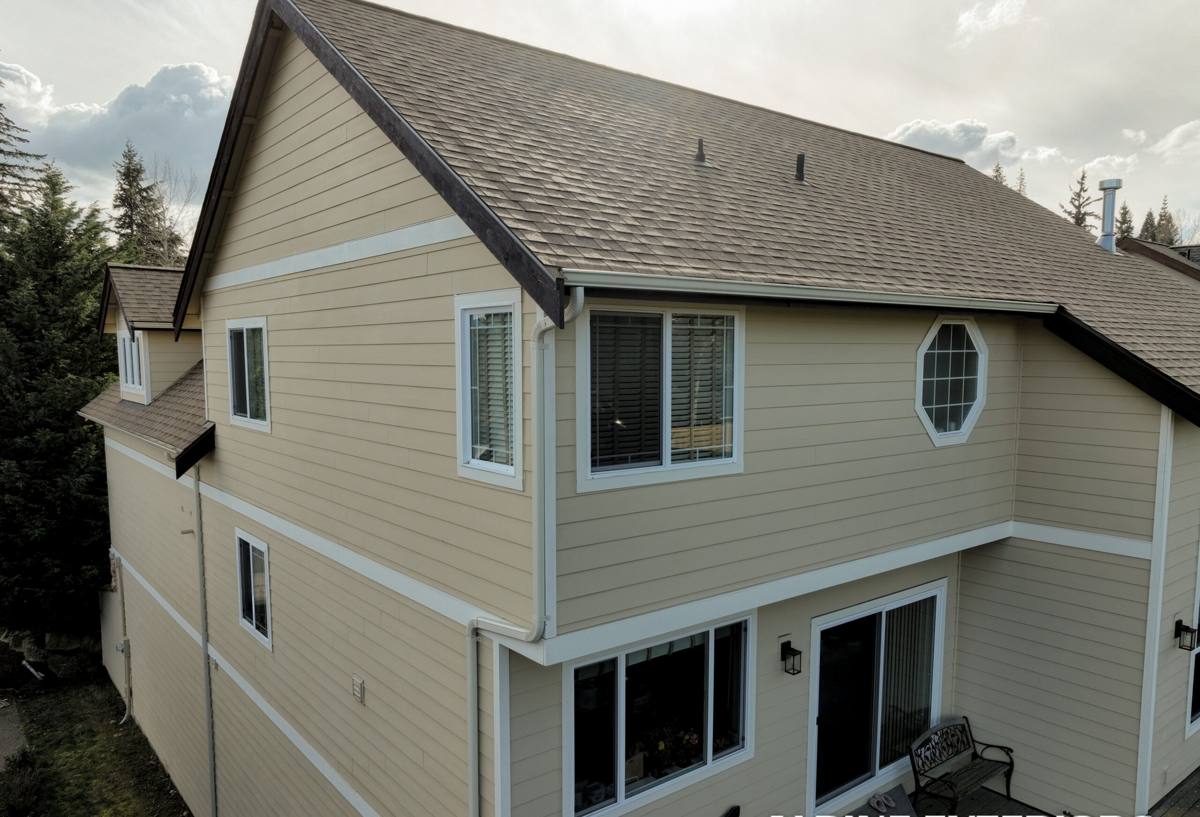
What Skagit County's Climate Actually Does to Siding
Salt Air and Fastener Corrosion
Homes closer to open water and tidal flats deal with airborne salt that settles on every exterior surface, including fasteners. Uncoated or poorly coated nails and screws corrode faster in this environment, and a corroding fastener eventually loosens or stains the siding around it — often the first visible sign that something underneath needs attention.
Driving Rain and Water Intrusion
Rain that falls straight down is relatively easy for siding to shed. Rain that's pushed sideways by wind — which is the norm for a lot of Skagit Valley weather — finds its way behind poorly lapped boards, undersized or missing flashing, and caulked joints that were never meant to be a primary water barrier. Once water gets behind the siding, it can sit against the sheathing for weeks without ever showing on the surface.
Moss, Algae, and a Long Wet Season
Skagit County's moss season isn't a few weeks — it's most of the year on north-facing walls, shaded elevations, and anywhere siding stays damp longer than it dries. Moss and algae growth aren't just cosmetic. Left to build up, they hold moisture against the siding surface and, on the wrong material, can accelerate breakdown of the substrate underneath.
Common Signs an Edison Home Needs Siding Repair
Most siding problems give warning signs well before they become structural. Homeowners in Edison should watch for:
- Soft, spongy, or bulging spots when you press on the siding, especially near the bottom courses or below windows
- Visible gaps or separation at butt joints, corners, or where siding meets trim
- Rust streaking or stained trails running down from fastener heads
- Persistent dark staining, moss, or algae that comes back quickly after cleaning
- Paint or finish that's peeling, chalking, or bubbling in patches rather than evenly across a wall
- Warping, cupping, or visible cracking in individual boards or panels
- Interior signs — musty smell, discolored drywall, or peeling interior paint on an exterior wall
Any one of these on its own might be minor. Several showing up in the same area, especially on a wall that faces the prevailing wind and rain, usually means water has been getting behind the siding for a while.
What a Correct Siding Repair Actually Involves
A repair that only replaces the damaged board and moves on is treating the symptom, not the cause. Done right, a siding repair in a climate like Edison's has a few non-negotiable steps.
Find Out Why the Damage Happened
Before anything gets replaced, the damaged area needs to be opened up enough to see what's underneath. That means checking the house wrap or building paper, the flashing at any window, door, or penetration nearby, and the condition of the sheathing itself. If the sheathing is soft or delaminating, patching the siding over it just hides a bigger problem.
Fix the Water Path, Not Just the Symptom
If water got in because of a flashing gap, a failed kick-out flashing, or a seam that was never properly lapped, that detail gets corrected as part of the repair — not left in place under new siding. This is the step that determines whether a repair lasts five years or fifteen.
Match Material, Profile, and Finish
Replacement pieces need to match the existing siding's profile, exposure, and finish closely enough that the repair doesn't stand out as a patch. On factory-finished fiber cement, that means using the same product line and color rather than a close approximation that will visibly weather differently over time.
Reseal and Reflash Correctly
Fastener patterns, caulk joints, and flashing all get reinstalled to the manufacturer's actual specifications — not just "close enough." This is where a lot of quick patch jobs cut corners, and it's usually why the same spot fails again.
Why We Repair Exclusively With James Hardie Fiber Cement
We don't install or repair with LP SmartSide, vinyl, Cemplank, Allura, or unfinished cedar or spruce siding. That's not a marketing position — it's a standard we hold because of what those products ask of a homeowner over the long run, and what we've found actually holds up in a wet, salt-exposed, moss-prone climate like Edison's.
James Hardie fiber cement is non-combustible, dimensionally stable in wet-dry cycling, and available in HZ product lines specifically engineered for regions like the Pacific Northwest, where sustained moisture exposure is the norm rather than the exception. The ColorPlus factory finish is baked on under controlled conditions rather than field-applied, which matters directly for repair work: a ColorPlus-matched replacement board holds its color and sheen far more consistently over time than a field-painted patch on other materials. James Hardie also backs its products with a strong, transferable warranty, which carries real weight for repair work — replacement sections done to spec stay under coverage rather than becoming an orphaned patch with no backing.
When we repair Hardie siding, we're not guessing at compatibility. We know the product lines, the fastening requirements, and how the factory finish behaves in this climate, because it's the only system we install.
Repair or Replace? How to Think About It
Not every damaged section needs a full re-side, and not every problem is fixable with a patch. The right call depends on how much of the house is affected and what's driving the damage.
| Factor | Leans Toward Repair | Leans Toward Replacement |
|---|---|---|
| Extent of damage | Isolated to one or two areas | Recurring across multiple walls or elevations |
| Underlying sheathing | Sound once opened up | Soft, delaminated, or rotted in several spots |
| Age of existing siding | Installed within roughly the last 10-15 years | Original siding is at or past its expected service life |
| Cause of failure | A single flashing or fastener defect | Systemic issues in the original installation |
| Product currently installed | James Hardie fiber cement in good general condition | A product prone to recurring moisture or maintenance issues |
An honest inspection should tell you which column your house falls into. If a contractor recommends a full replacement before actually opening up the damaged area to look, that's worth a second opinion.
Our Siding Repair Process for Edison Homes
- Inspection. We walk the exterior, identify every affected area — not just the one you called about — and check for related issues nearby, like flashing at windows or corners.
- Diagnosis. We open up the damaged section enough to see the sheathing and water path underneath before proposing a fix.
- Repair plan. You get a clear explanation of what caused the damage, what needs to be replaced, and what it will cost — before work starts.
- Repair work. Damaged material comes out, the water path gets corrected, and matching James Hardie material goes back in to spec.
- Cleanup and check. We clear debris, check the repair for fit and finish, and confirm fasteners, caulking, and flashing are all correct.
We don't upsell a full re-side when a targeted repair will genuinely hold. We also won't tell you a patch will work if what we find underneath says otherwise.
Why It Matters That We Already Work in Edison
Siding failures in Edison tend to follow patterns tied to exposure — which walls take the worst of the wind-driven rain, which north-facing sections stay damp longest, where salt air does the most damage to fasteners and finishes. A crew that's already worked homes in this specific area recognizes those patterns quickly instead of treating every job as a blank slate. That local familiarity, paired with a single-product focus on James Hardie, means fewer surprises: we're not learning a new material's quirks on your house, and we're not guessing at how this climate treats it — we already know.
Burlington-based and working throughout Skagit County, we also understand what a Skagit County repair schedule actually looks like — how many dry-enough days a project realistically has in a given month, and why timing matters for getting caulk and finishes to cure properly rather than fighting rain the whole way through.
Keeping Repaired Siding Ahead of Moss Season
A correct repair gives your siding a fresh start, but Edison's climate doesn't stop working on it once the crew leaves. A few habits keep repaired areas — and the rest of the house — in good shape longer:
- Keep gutters clear so overflow doesn't run down and pool against siding seams
- Trim back vegetation and tree cover that keeps shaded walls from drying out between rains
- Rinse visible moss and algae buildup before it gets thick enough to hold moisture against the surface
- Walk the exterior once or twice a year and press on any area that looks discolored or slightly bulged
- Address small fastener rust or caulk cracking early, before water has a chance to get behind the siding
If you're noticing early signs of trouble on your Edison home, or you already know there's a section that's been bothering you, we're happy to take a look and give you a straight answer — no pressure, no upsell. Reach out for a free estimate using the form below.