 Burlington
 Storm Damage Roof Repair for Lyman Homes
Lyman sits along the Skagit River corridor east of Burlington, in a stretch of Skagit County where the roofs take a different kind of beating than a roof in town. Homes here tend to sit closer to tree lines, on larger wooded lots, with more exposure to river-valley wind funneling and more shade cover that keeps roofs wet longer after every storm. When a system rolls through with sustained wind and driving rain, the damage it leaves behind on a rural or semi-rural roof often looks different from what we'd find on a tract home in Burlington proper — more debris impact, more wind-lift at exposed edges, more damage hiding under moss that was already working against the roof before the storm even hit.
This page is specifically about storm damage repair for the Lyman area — what we typically find, how we assess it, and what a correct repair looks like once the wind has died down and the immediate cleanup is done.
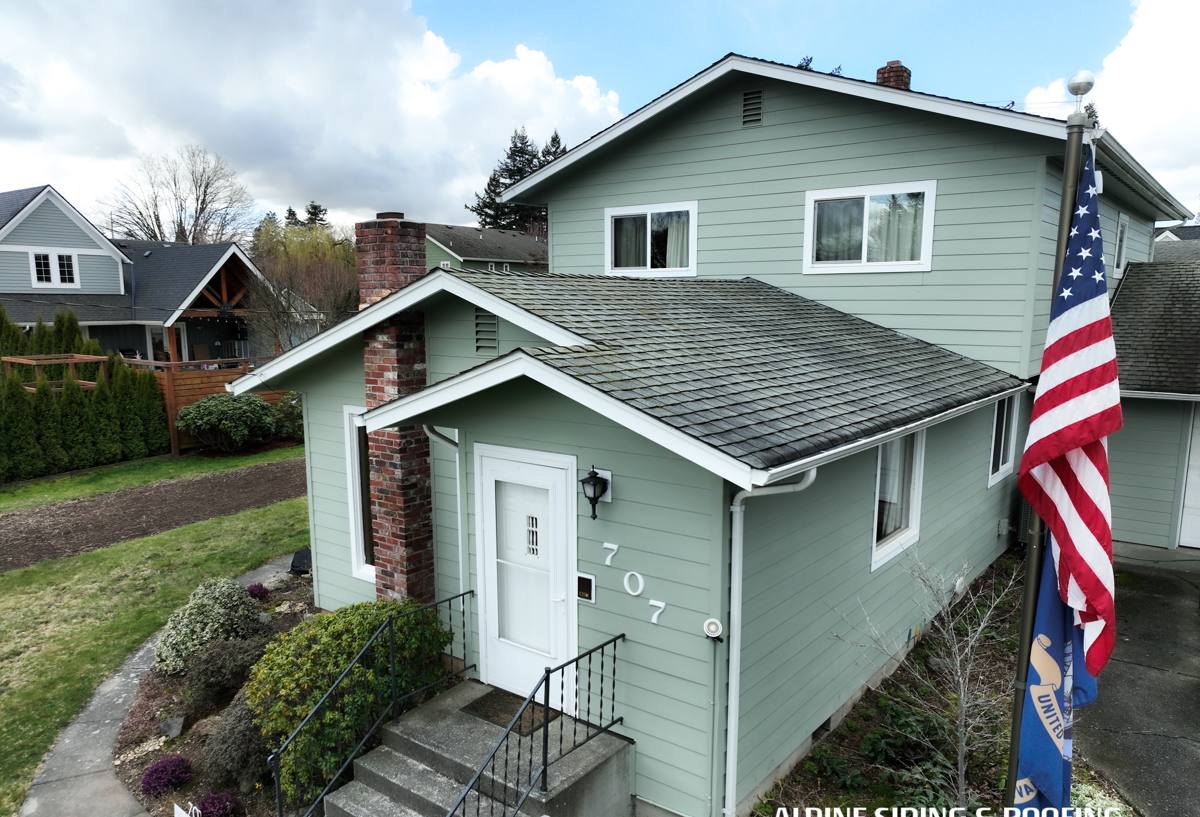
What Skagit County Weather Does to a Roof Over Time
Skagit County's climate is mild compared to most of the country, but "mild" doesn't mean easy on a roof. Three things matter most for a property in the Lyman area:
- Salt air off Puget Sound and the Sound-influenced weather systems that move through the valley accelerates corrosion on exposed metal — flashing, fasteners, gutter hangers, and vent boots age faster here than in a drier inland climate.
- Driving rain during fall and winter storms doesn't just fall straight down — wind-driven rain gets pushed sideways and upward under shingle edges, around chimney flashing, and into any gap that a calm-weather rain would never reach.
- A long moss season, often eight months or more in shaded, tree-covered lots like many in Lyman, keeps roof surfaces damp and holds moisture against shingles and sheathing long after a storm has passed, which is exactly the condition that turns a minor storm ding into a slow leak.
None of these show up as dramatic damage right after a storm. They show up as the reason a roof that "looked fine" starts leaking two winters later, once storm-loosened shingles finally give way under continued moss growth and repeated wetting.
Common Storm Damage We Find on Lyman Roofs
Wind and Gust Damage
Wind funneling through the Skagit Valley can hit roof edges, ridge caps, and any shingle that was already lifted or aging harder than the field of the roof. Look for shingles that are cracked, creased, torn, or simply gone, especially along the ridge, at rake edges, and around any roof-to-wall transition. Wind rarely damages a roof evenly — it tends to concentrate damage on the windward slope and at edges where uplift is strongest.
Tree and Debris Damage
Larger, more wooded lots mean more exposure to falling limbs, needles, cones, and occasionally whole branches during high-wind events. Debris impact can crack shingles, dent metal flashing, or punch through underlayment in a way that isn't obvious from the ground. Even where nothing punctured through, accumulated debris in valleys and gutters after a storm holds water against the roof deck and speeds up rot if it isn't cleared.
Moss-Weakened Roofs During Storms
A roof with heavy moss buildup going into a storm is already compromised — moss lifts shingle edges, holds moisture against the granule surface, and adds weight. That's often the roof that takes the worst wind damage, because the shingles were already loosened before the storm arrived. Storm damage and moss damage frequently show up together on the same roof, and treating one without addressing the other is a short-term fix.
What a Correct Storm Repair Actually Involves
A rushed storm repair — a few replacement shingles and a tube of roofing cement — can look fine from the driveway and still leak the following winter. A correct repair starts with stopping further water intrusion, then works through a real inspection before anything gets permanently fixed.
Emergency Stabilization
If a storm has left active leaking or exposed decking, the first priority is a temporary tarp or dry-in to stop water from reaching the interior and insulation. This buys time to do the repair right instead of rushing it.
Full Roof Inspection, Not Just the Obvious Spot
Wind and debris damage is rarely limited to the one spot that's visibly leaking. We check the whole roof plane, flashing points, vents, and valleys — because storm damage that isn't found now is next storm's emergency call.
Repair vs. Replace
Not every storm-damaged roof needs full replacement, but not every roof should be patched either. The honest answer depends on the roof's age, how widespread the damage is, and what condition the roof was in before the storm hit.
| Factor | Points Toward Repair | Points Toward Replacement |
|---|---|---|
| Roof age | Under 10-12 years, otherwise sound | Nearing or past typical shingle lifespan |
| Damage spread | Isolated to one slope or area | Scattered across multiple slopes |
| Pre-storm condition | Roof was in good shape before the storm | Already showing heavy moss, curling, or granule loss |
| Underlying deck | Sheathing dry and solid | Soft spots, rot, or water staining found |
| Shingle match | Matching shingles still available | Discontinued or badly weathered mismatch |
Our Process From Call to Completion
- You call or send photos of visible damage, and we schedule a roof inspection — often within a day or two of a storm event when call volume allows.
- We inspect the full roof, not just the reported damage area, and document what we find.
- We give you a straight assessment: repair, partial replacement, or full replacement, with the reasoning behind it.
- If you're filing an insurance claim, we provide documentation you can hand to your adjuster.
- We schedule the repair around Skagit County's weather windows — storm repair work often has to work around the next system moving through, and we plan for that rather than pretending it isn't a factor.
- Work is completed, debris is cleared, and we walk the repair with you before calling it done.
Storm Claims and Insurance
Most homeowners insurance policies cover sudden storm damage — wind, falling limbs, impact damage — differently than they cover gradual wear like moss deterioration or age-related shingle failure. That distinction matters, because an adjuster is going to want to know whether damage was storm-caused or simply an old roof that finally failed. We document damage the way an adjuster needs to see it: clear photos, a description of the likely cause, and an honest separation between what the storm did and what was pre-existing wear. We're not a public adjuster and won't promise a claim outcome, but we'll give you documentation that reflects what we actually found on your roof.
Cost Factors for Storm Repair
| Factor | Why It Matters |
|---|---|
| Extent of damage | A handful of shingles is a very different job than a full slope |
| Roof pitch and access | Steeper roofs and limited access (common on wooded Lyman lots) add labor time |
| Deck condition | Rotted sheathing found under damaged shingles adds material and labor |
| Shingle availability | Matching an older roof's shingle color/style can affect cost and lead time |
| Flashing and vent work | Storm-damaged flashing often needs replacement, not just resealing |
We give a written estimate before any repair work starts, and we'll tell you plainly if a repair isn't the right call for your roof's condition — we'd rather lose a small repair job than sell you a patch on a roof that needs more.
Why a Crew That Already Works Lyman Matters
Storm repair isn't just a technical job, it's a logistics one. A crew that already works the Lyman and greater Burlington area knows the terrain — the longer driveways, the tree cover that means a ladder setup takes longer, the way wind tends to move through this part of the valley and which roof slopes usually take the worst of it. That familiarity means faster, more accurate assessments and fewer surprises once work starts. It also means we're not guessing at what "normal" wear looks like on a roof out here versus storm damage — we see enough Skagit County roofs in a given moss season to know the difference.
What to Check After a Storm
- Missing, cracked, or curled shingles, especially along ridges and edges
- Dented or displaced metal flashing around chimneys, vents, and roof-to-wall joints
- Granules collecting in gutters or at downspout outlets
- Water stains or damp spots on interior ceilings, especially near exterior walls
- Debris piled in valleys or against the roof-to-wall transition
- Sagging or soft-feeling areas when viewed from the attic, if accessible
- Gutters pulled loose or overflowing due to debris blockage
If you're seeing any of this after a storm, it's worth getting a roof looked at before the next system moves through — a small repair now is almost always cheaper and less disruptive than the same damage after a second or third storm makes it worse. We offer free, no-pressure estimates for storm damage roof repair in Lyman and the surrounding Burlington area — fill out the form below and we'll get a look at your roof.