 Burlington
 Alger Decks Take a Different Kind of Beating
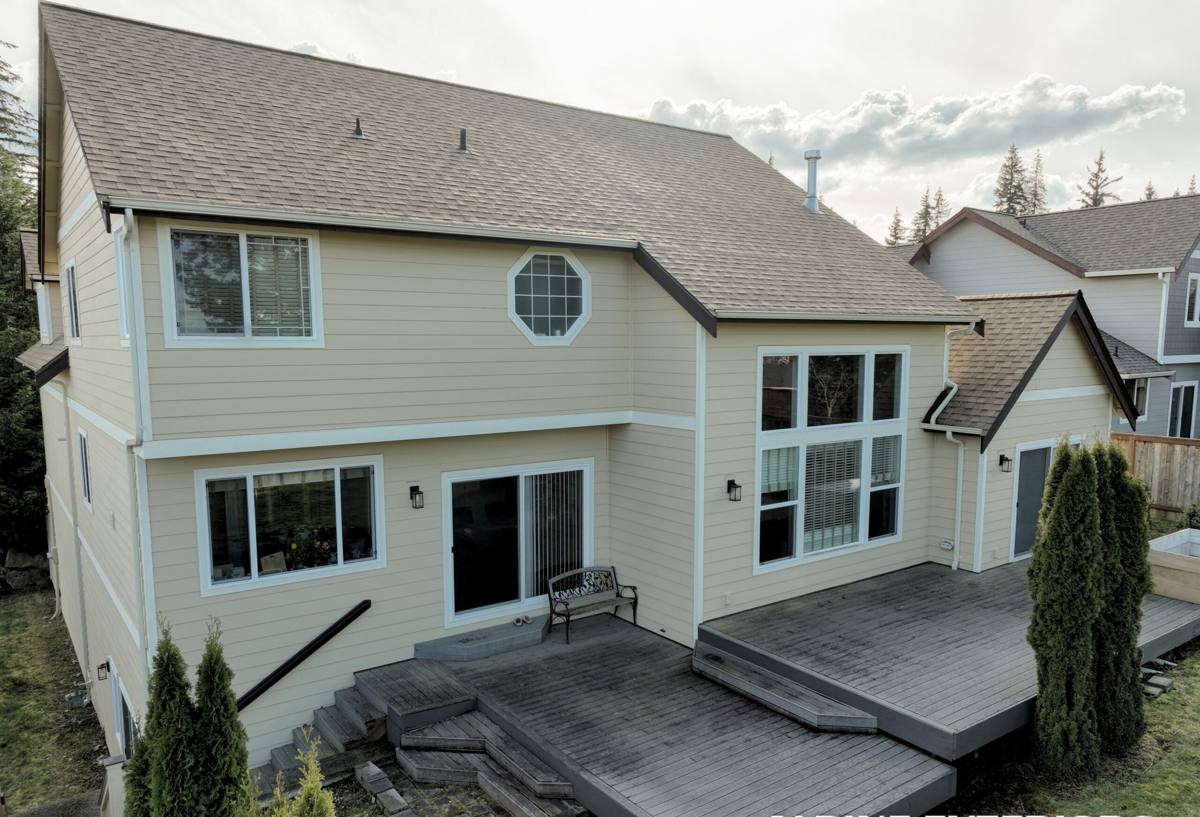
Alger sits in that stretch of Skagit County where Puget Sound air, low-lying moisture, and heavy tree cover all meet. If you own a deck out here, you already know it doesn't age the way a deck in a drier climate does. Salt-tinged air corrodes hardware faster than inland fasteners were ever rated for. Driving rain off the Sound finds its way under flashing and around post bases. And the long moss season — often six or more months of the year in this part of Washington — turns any north-facing or shaded deck surface into a slick, moisture-holding mat if it isn't kept clear.
None of that means your deck is doomed. It means a repair has to account for what's actually happening in Alger's climate, not just patch what's visible on top. We work decks in this specific corner of Skagit County regularly, and the failure patterns repeat: hidden ledger rot, corroded fasteners, and moss-driven surface decay that hides real structural problems underneath.
Signs an Alger Deck Needs Repair, Not Full Replacement
Most decks don't need to be torn out. They need the parts that actually failed addressed correctly, and the rest left alone. Here's what we look for before recommending anything:
- Soft or spongy spots when you walk the deck boards, especially near the house or in shaded corners
- Rust streaking around joist hangers, bolts, or screw heads
- Green or black staining that doesn't wash off — a sign moss and algae have been sitting long enough to hold moisture against the wood
- Gaps opening up where the deck meets the house (ledger board pulling away)
- Railings or posts that flex or wiggle more than they used to
- Standing water or slow drainage after a normal Skagit County rain
If the framing and ledger are sound and the damage is limited to boards, fasteners, or railings, a repair is almost always the right call — both for cost and because it doesn't disturb structure that's still doing its job.
What a Correct Repair Actually Involves
Structure First, Surface Second
A repair that only replaces the boards you can see is a repair that doesn't last in this climate. We start underneath — checking the ledger board attachment to the house, the condition of the joists, and the post bases, since those are the spots where rot and rust start out of sight and spread upward into boards that still look fine from above.
Ledger Board and Framing
The ledger — where the deck attaches to the house — takes the most water exposure of any structural component, especially without proper flashing. If we find soft wood or corrosion here, this gets fixed before anything cosmetic happens, because it's the connection holding the whole deck to your home.
Decking Boards and Fasteners
Individual board replacement only works well when the fasteners go in correctly the first time. In salt air, standard fasteners corrode faster than their rated lifespan suggests, which is why hardware selection matters as much as the boards themselves.
Railings and Guards
Railings take constant hand contact and lean-on stress, so any looseness at the post connection gets addressed structurally, not just tightened and left. A railing that looks fine but is loose at the base is a safety issue, not a cosmetic one.
Repair vs. Replace: What Actually Drives the Decision
| Factor | Points Toward Repair | Points Toward Replacement |
|---|---|---|
| Ledger & framing condition | Solid, dry, properly attached | Widespread rot or hanger corrosion |
| Age of deck | Under 15-20 years, built to a decent original standard | Original construction was undersized or poorly detailed |
| Damage pattern | Isolated boards, fasteners, or railing sections | Damage spread across most of the surface and structure |
| Moss/moisture history | Caught early, surface-level staining | Long-term moisture trapped under boards for years |
| Footprint or design changes wanted | No — keeping current layout | Yes — wanting a different size or layout anyway |
We'll tell you honestly which side of this table your deck falls on. There's no benefit to us talking a homeowner into a full replacement when a repair will hold up fine — and no benefit to patching something that's going to need the same repair again next moss season.
Materials: What Holds Up in This Climate and What Doesn't
Alger's mix of salt air and prolonged damp weather changes which materials make sense for a repair, and it's worth being upfront about the trade-offs rather than just defaulting to whatever's cheapest.
- Pressure-treated lumber — affordable and structurally solid for framing, but requires consistent maintenance (cleaning, sealing) to keep moss and moisture from taking hold on exposed surfaces.
- Cedar — naturally more rot-resistant and a good match for repairs on an existing cedar deck, though it still needs periodic sealing in this climate to perform at its best.
- Composite decking — low-maintenance and doesn't rot, which is appealing here, but it's a different look and feel than wood, has its own installation requirements around spacing and fastening, and comes with manufacturer-specific warranty terms worth reading closely before mixing it into an otherwise wood deck.
- Fasteners and hardware — this is where we're most particular. Standard galvanized hardware can underperform in salt-air exposure faster than homeowners expect, so we match fastener grade to the site rather than defaulting to the cheapest option.
Our standard for a repair is that the fix should outlast the next few moss seasons without needing to be revisited — that means matching materials to what the specific deck and its exposure actually call for, not a one-size-fits-all approach.
Our Process for an Alger Deck Repair
- On-site assessment. We walk the full deck, check underneath where accessible, and inspect the ledger, framing, and hardware — not just the visible boards.
- Honest scope. You get a clear breakdown of what actually needs repair versus what's cosmetic preference, so you're not paying to fix things that don't need it.
- Structural work first. Any ledger, framing, or post-base issues get corrected before board or rail work begins.
- Surface repair. Damaged boards, railings, and fasteners are replaced with materials suited to Skagit County's moisture and salt-air exposure.
- Final walkthrough. We check the repaired deck for level, secure railings, and proper drainage before we consider the job done.
Keeping the Repair from Needing a Repeat
A good repair job can be undone in a few years by moss and standing water if nobody's keeping up with basic maintenance. This is especially true in Alger, where shade and tree cover extend the moss season well past what you'd see in a more open, sun-exposed part of Skagit County. A simple seasonal routine goes a long way:
- Clear leaves and debris from between boards before fall rains set in
- Sweep or brush off moss growth as soon as it appears — don't let it establish over winter
- Check that gaps between boards are clear enough for water to drain through, not pool on top
- Inspect railings and post connections once a year for any new looseness
- Reseal wood decking on the manufacturer or installer's recommended schedule, not just when it looks faded
Why a Crew That Already Works Alger Matters
Deck repair done right depends on recognizing what's normal wear versus what's a sign of a bigger problem underneath — and that judgment gets sharper the more decks you've actually worked on in this exact climate. A crew that regularly works Alger and the surrounding Burlington area already knows how fast moss reestablishes here, which fastener choices hold up against the salt air coming off the Sound, and where water tends to collect on decks built to older, less flashing-conscious standards. That's not something you can fully judge from a single visit — it comes from repeat exposure to how this specific area's weather treats a deck over years, not just one season.
It also means less guesswork for you. You're not explaining your area's climate to a crew that mostly works somewhere drier — we already know what driving rain and a long moss season do to a deck out here, and we scope the repair accordingly from the first visit.
Get an Honest Look at Your Deck
If your Alger deck has soft spots, rusted hardware, stubborn moss, or railings that don't feel as solid as they used to, we're glad to come take a look. We'll give you a straightforward read on what needs repair, what can wait, and what it'll cost — no pressure either way. Use the form below to request a free estimate.