 Burlington
 Why Alger Is a Different Job Than a Siding Crew Expects
Alger sits back in the trees off I-5, a few miles inland from Samish Bay, in the stretch of Skagit County where the forest canopy is thick and the lots run larger and shadier than in town. That setting is part of why people live there, and it's also exactly why siding fails faster here than it does on an open, sun-exposed lot in Burlington or Mount Vernon. Tree cover blocks the afternoon sun that would otherwise dry a wall down after a storm. Add in salt-laden air drifting off the bay, driving rain that comes in sideways during winter systems, and a moss season that can run eight or nine months out of the year, and you have a wall assembly that spends a lot more time damp than dry.
None of that makes fiber cement siding a bad fit for Alger — it makes it the right fit, if it's installed correctly for these conditions. The material itself resists moisture damage far better than wood-based products. The problem homeowners run into is installation that doesn't account for the site: no rainscreen gap behind the siding, clearance details ignored, or trim and flashing installed the same way you'd install them on a dry, open lot two counties away. The siding survives; the wall behind it doesn't.
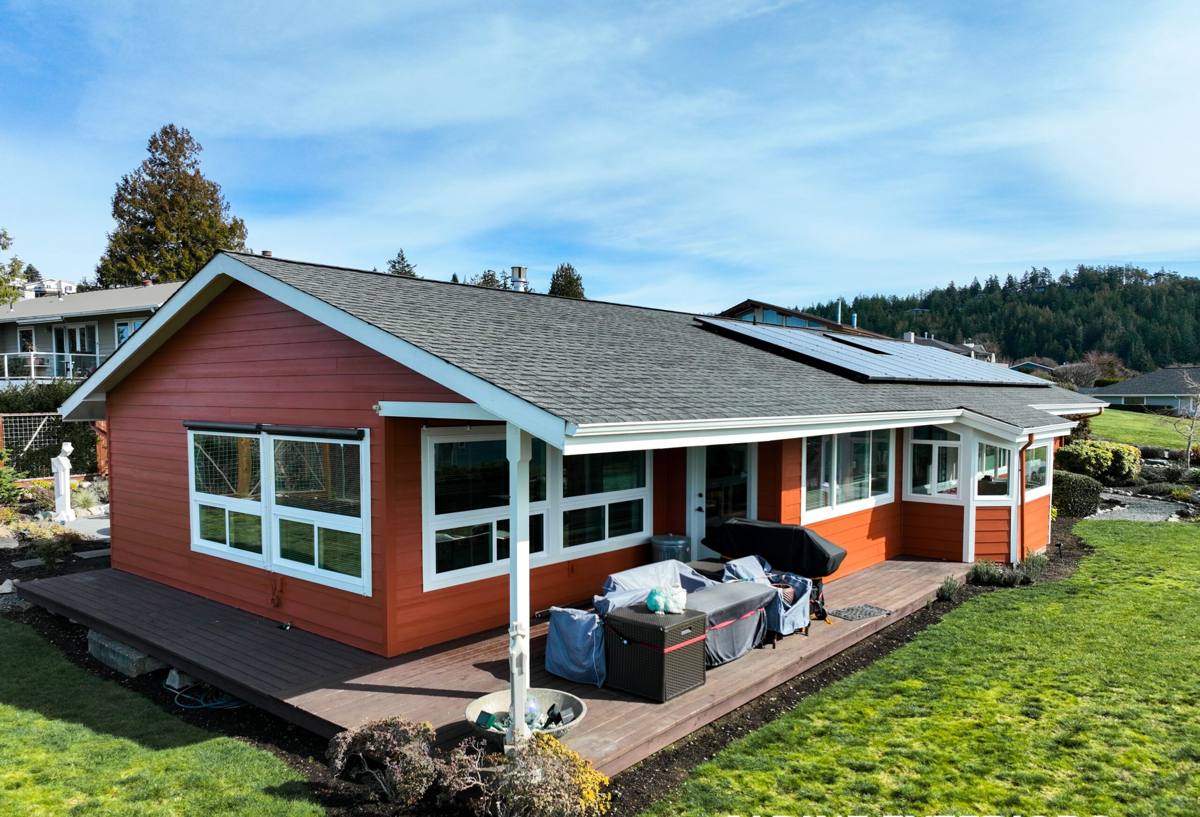
What a Shaded, Damp Lot Does to a Wall Over Time
On a typical Alger property, the north and west-facing walls are usually the ones that stay wet the longest — shaded most of the day, hit hardest by wind-driven rain, and slowest to dry between storms. Over years, that shows up as:
- Moss and algae staining that starts at the bottom courses and works its way up
- Soft or delaminating trim where water has been sitting against end grain
- Paint failure or caulk cracking well ahead of its expected life
- Sheathing or framing damage hidden behind siding that looked fine from the yard
When we tear off old siding on an Alger home, the shaded sides tell a different story than the sun-exposed sides almost every time — even on the same house, same age, same original material. That's the pattern a crew unfamiliar with this specific microclimate won't necessarily know to look for, and it's exactly why we check every elevation separately during the estimate rather than pricing the whole house off a single quick walk-around.
Why We Install Only James Hardie Fiber Cement
We don't install vinyl, LP SmartSide, primed wood, or other fiber cement brands — only James Hardie. In a climate like Alger's, that's not a brand preference, it's a practical one. James Hardie engineers its HardiePlank and HardiePanel products by climate zone, and the Pacific Northwest falls into their HZ5 category — the formulation built for the wettest, coldest parts of the country, as opposed to the HZ10 version sold in milder, drier regions. That distinction matters on a lot that stays damp for most of the year.
The other piece is the factory-applied ColorPlus finish. Because the color is baked on at the factory rather than field-applied, it holds up to years of damp shade without the fading, chalking, or peeling that field-painted siding shows first — and it gives moss and mildew less to grip onto than a porous, repeatedly repainted surface. Combined with a fiber cement core that doesn't rot, swell, or feed organic growth the way wood-based siding can, it's the product we're willing to put our name behind on the shaded, moisture-heavy properties that make up a lot of Alger.
What Correct Installation Actually Requires Here
Ventilation behind the siding
A rainscreen gap — a drainage plane between the weather-resistive barrier and the back of the siding — lets any moisture that gets past the cladding drain and dry instead of sitting against the wall. On a sun-baked lot this is good practice. On a shaded Alger lot with a long wet season, it's close to mandatory if you want the siding to perform for its full service life.
Clearance and flashing
Hardie's install specs call for minimum clearances from grade, roofing, decks, and other horizontal surfaces, plus proper flashing at every window, door, and horizontal trim transition. On wooded lots where landscaping and grade tend to creep up over the years, we pay close attention to these clearances at install so the siding isn't sitting in a moisture trap five years down the road.
Fastening and joints
Fiber cement needs the correct fastener type, spacing, and embedment depth — over-driven or under-driven nails are one of the most common causes of early failure. Butt joints get flashed or shimmed per spec rather than just caulked, since caulk alone is a maintenance item, not a permanent seal.
Cut edges and trim
Any field-cut edge gets sealed before installation, and trim boards get the same clearance and flashing attention as the field siding. It's a small step that's easy to skip and one of the first places moisture gets in if it's missed.
Our Process on an Alger Project
- On-site assessment — we walk every elevation, not just the front of the house, and look specifically for staining, soft spots, and past moisture patterns that point to trouble under the existing siding.
- Tear-off and inspection — once the old siding is off, we check sheathing and framing before anything new goes up. Damaged sheathing gets repaired or replaced; it's not something we cover over.
- Drainage plane and rainscreen — weather-resistive barrier and ventilation gap installed to spec, with extra attention on the shaded elevations that stay wet longest.
- Hardie installation — HardiePlank, HardiePanel, and HardieTrim installed to manufacturer clearance, fastening, and flashing requirements.
- Detail work — window and door flashing, joint treatment, and trim sealing, done the same way on every elevation regardless of which side is easiest to reach.
- Walkthrough — we go over the finished job with the homeowner before we consider it done.
What Drives Cost on a Job Like This
Every Alger property is a little different, but these are the factors that generally move the price up or down on a fiber cement re-side:
| Cost Factor | Why It Matters |
|---|---|
| Home size and wall area | More square footage means more material and labor, straightforwardly |
| Condition of existing sheathing | Moisture damage found during tear-off adds repair scope before new siding can go on |
| Site access | Wooded, sloped, or tight-access lots take longer to stage material and equipment |
| Trim and detail complexity | Multiple gables, dormers, and window trim add labor beyond flat wall area |
| Siding profile and accent panels | Mixing HardiePlank lap siding with HardiePanel vertical accents adds material and layout time |
| Number of stories and elevations | Second-story and hard-to-reach walls require more staging and time |
We price these individually rather than quoting a flat per-square-foot number sight unseen, because on a shaded, wooded lot the sheathing condition and access can matter as much as the square footage.
Living With Moss and Algae After the Install
Fiber cement doesn't feed moss and algae the way wood siding does, but on a lot as shaded as most of Alger, some surface growth on north-facing walls over time is realistic to expect — it's a function of the site, not a defect in the material. A little routine attention keeps it from becoming a bigger issue:
- Keep gutters and downspouts clear so water isn't sheeting down the wall face
- Trim back branches and brush that keep a wall in permanent shade where practical
- Rinse siding periodically with a garden hose or low-pressure wash — avoid high-pressure washing, which can force water behind joints and trim
- Check caulking at trim and joints once a year and have any cracked sections redone
- Note any staining pattern that shows up in the same spot every year — it usually points to a drainage or airflow issue worth having looked at
Why It Matters That We Already Work This Area
Being based in Burlington means Alger isn't a special trip for us — it's part of the territory we already know. We know which elevations on a shaded lot are going to need the most attention, we're familiar with Skagit County's permitting for exterior work, and we're close enough to come back quickly if a question comes up after the job is done. A crew unfamiliar with the salt air, driving rain, and long wet season here can still install fiber cement siding — but they're guessing at details that a crew who works this ground regularly already knows to get right the first time.
If you're dealing with moss-stained, failing, or aging siding on an Alger property, we're happy to take a look and give you a straightforward, no-pressure estimate on what a correct James Hardie fiber cement install would involve for your specific house.