 Burlington
 Alger Sits in a Tough Spot for a Roof
Alger doesn't get talked about much outside of Skagit County, but if you live out here between Burlington and Bellingham, you already know what your roof is up against. Most lots in and around Alger carry heavy tree cover — fir, cedar, and alder crowding right up to the house — which means shade, dropped needles, and damp air that doesn't burn off until well into the afternoon on a lot of days. Add in the driving rain that comes through this stretch of Skagit County most of the fall, winter, and spring, and the salt-tinged air that drifts inland off the Sound and the bay country to the west, and you've got three separate things working against an asphalt shingle roof at the same time.
None of that is a reason to panic. It's a reason to be specific about what a roof needs to hold up here, instead of installing whatever's standard for a drier, more open part of the state. Metal roofing, done correctly, handles this combination better than most other roofing materials — but "done correctly" is doing a lot of work in that sentence, and it's worth understanding what that actually means before you sign anything.
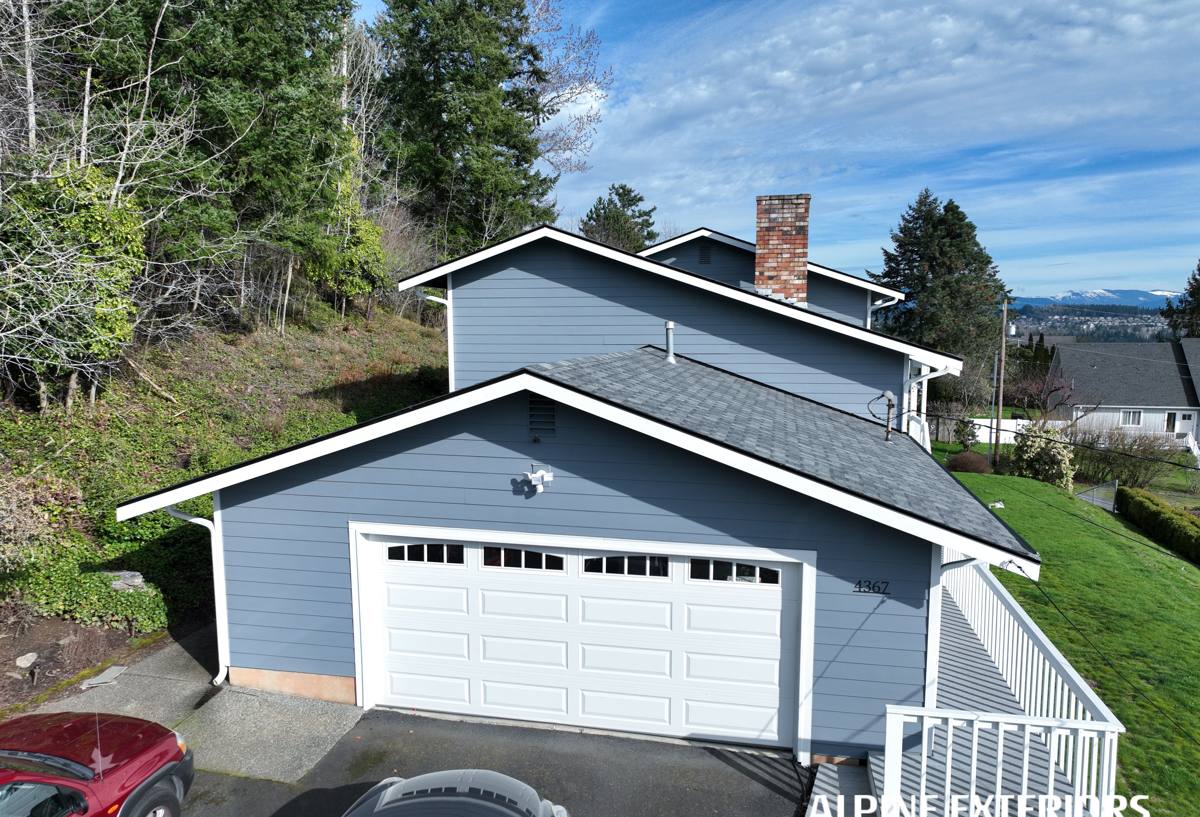
What Alger's Climate Actually Does to a Roof
Moss and the Shade Problem
Moss doesn't grow because a roof is old or poorly built — it grows because a surface stays damp long enough for spores to take hold. Under heavy tree canopy, roof sections that don't get direct sun for most of the day can stay wet for days after a storm passes. On asphalt shingles, that moss works its way under the granule layer and starts lifting shingles at the edges. On a metal roof with the right panel profile and finish, moss has almost nothing to grip, and what does try to grow washes off in the next hard rain instead of anchoring in.
Driving Rain and Wind-Driven Water
Skagit County rain is rarely gentle. It tends to come sideways, pushed by wind off the water, which means water gets driven up under laps, around penetrations, and into any gap that a calmer climate's install standards might get away with. This is where fastener pattern, panel overlap, and flashing detail matter more than the metal itself. A correctly lapped and flashed metal roof sheds wind-driven rain; a roof where the installer rushed the details will leak in exactly the spots you'd expect — chimneys, skylights, valleys, and wall-to-roof transitions.
Salt Air and Slow Corrosion
Air carrying salt off the Sound and the bay country to the west reaches homes throughout this part of Skagit County, Alger included, especially on windier days. It's not the same exposure a beachfront home gets, but it's enough over 10-20 years to matter for uncoated or poorly coated metal. The fix isn't avoiding metal roofing — it's choosing a coating system and fastener metal rated for it, which is a spec question, not a guessing game.
What a Correct Metal Roof Install Includes Out Here
A metal roof is only as good as what's underneath it and how it's fastened down. For Alger homes specifically, we pay close attention to a few things that get skipped on cheaper installs:
Underlayment and Moisture Barrier
Given how long roof decking can stay damp under tree cover, we use a high-temp synthetic underlayment rated for extended exposure, with self-adhered membrane at eaves, valleys, and any low-slope transition where water tends to sit longer before draining. This is the layer that protects your decking if wind ever drives water past the metal panels themselves — it's cheap insurance against the most expensive kind of damage.
Fasteners and Flashing
Exposed-fastener panels need the right screw type and washer for coastal-influenced air, and they need to be torqued correctly — overdriven screws crush the washer seal, underdriven ones leak. Flashing around chimneys, vents, and wall intersections gets custom-bent and properly lapped rather than caulked over gaps, which is the shortcut that causes most of the leak calls we get on other contractors' work.
Panel Profile and Finish
Standing seam panels with concealed fasteners shed water and debris better than exposed-fastener panels and hold up longer where moss and needle litter are a constant issue, though they cost more upfront. Either way, the paint or coating system matters more than the base metal — a PVDF (Kynar-type) finish resists fading and holds up to salt-influenced air far better than a basic polyester coating.
Comparing Metal Roofing Options for a Home Like Yours
| Option | Best For | Trade-Offs in This Climate |
|---|---|---|
| Standing seam, steel, PVDF finish | Long-term, low-maintenance ownership | Higher upfront cost; excellent moss and moisture resistance |
| Exposed-fastener steel panels | Budget-conscious projects, outbuildings, simpler rooflines | Fasteners need periodic inspection; slightly more seams for water to test |
| Aluminum panels | Homes with heavier coastal air influence | Doesn't rust even if coating is scratched; costs more than steel |
| Stone-coated steel | Homeowners wanting a shingle or shake look with metal durability | More installation steps; good moss resistance once properly fastened |
There's no universally "best" pick here — it depends on your roofline, your budget, and how long you plan to own the home. We'll walk through this table against your actual roof, not a sales script, during the estimate.
How Our Process Works
We keep this straightforward because roofing doesn't need to be mysterious:
- On-site assessment. We look at your existing roof, decking condition, tree cover, and drainage patterns — the same factors that determine how your current roof failed or is aging.
- Written estimate with real options. You get a breakdown of panel type, underlayment spec, and flashing plan in writing, not a verbal ballpark.
- Tear-off and deck check. We don't install over rotten or moisture-damaged decking — if we find it, you'll know before we cover it up, not after.
- Underlayment, flashing, and panel installation. Done in the sequence and to the spec discussed upfront, with attention to every penetration and transition.
- Final walkthrough and cleanup. We check seams, fasteners, and flashing with you before we consider the job finished, and we haul away the old material and job-site debris.
Maintenance That Actually Matters Here
Metal roofing needs far less upkeep than shingles, but "less" isn't "none," especially with the tree cover common around Alger. A few habits go a long way:
- Clear needle and leaf buildup from valleys and gutters at least twice a year — trapped debris holds moisture against the panel edges even on metal.
- Do a visual check after major windstorms for lifted flashing or debris strikes, particularly near tall trees.
- Keep overhanging limbs trimmed back where practical — less shade means faster drying and less moss pressure overall.
- Have fastener heads and sealant at penetrations checked every few years, even though metal roofs don't need the annual attention shingles do.
- Don't pressure-wash the roof — it can drive water under laps and strip factory coatings; a soft brush and hose is enough for moss or debris removal.
Why Hiring a Crew That Already Works This Area Matters
A roofing crew that mostly works drier, more open parts of Washington will spec a roof the way they always do, because that's what's worked for them elsewhere. That's not negligence — it's just a mismatch with what Alger's shaded, damp, wind-exposed lots actually need. We work throughout Burlington and the surrounding Skagit County communities, including Alger, regularly enough that we're not guessing at underlayment specs or flashing details for this kind of setting — we're applying what we already know holds up here.
That local familiarity also means faster response if something needs a look after a storm, and a crew that isn't learning the quirks of tree-heavy, wind-driven-rain properties for the first time on your roof.
Common Issues We Find on Existing Alger Roofs
When we're called out to look at an aging or leaking roof in this area, a handful of problems show up again and again:
- Moss-lifted shingles at the north-facing or shaded sections of the roof, where sun exposure is lowest.
- Undersized or missing kick-out flashing where a roof meets a wall, letting water track down into siding.
- Valleys clogged with needle debris that force water sideways under the shingle or panel edge instead of down the valley.
- Fastener corrosion on older exposed-fastener metal roofs that were installed with the wrong screw type for this air.
Any of these are worth a look even if your roof isn't due for full replacement — catching them early is a lot cheaper than the water damage they eventually cause.
Getting an Honest Look at Your Roof
If you're weighing a metal roof for a home in or around Alger, the right next step is having someone walk the roof and give you a straight read on condition, options, and real cost — not a pressure pitch. We offer free, no-obligation estimates, and we'll tell you plainly if your current roof has a few good years left rather than push a replacement you don't need yet. Use the form below to get a free estimate scheduled.