 Burlington
 Siding Replacement for Blanchard, Washington Homes
Blanchard sits in a stretch of Skagit County where the weather doesn't split neatly into "wet season" and "dry season" — it's mostly just wet, with a few dry weeks scattered in between. The community's location near the county line, tucked between farmland and the wooded foothills close to Samish Bay, means homes here take on a specific mix of punishment: salt-tinged air drifting in off the water, driving rain that comes in sideways during winter storms, and a moss season that can run eight or nine months out of the year on north-facing walls. Siding here isn't decorative. It's the single biggest thing standing between your framing and a slow, expensive rot problem.
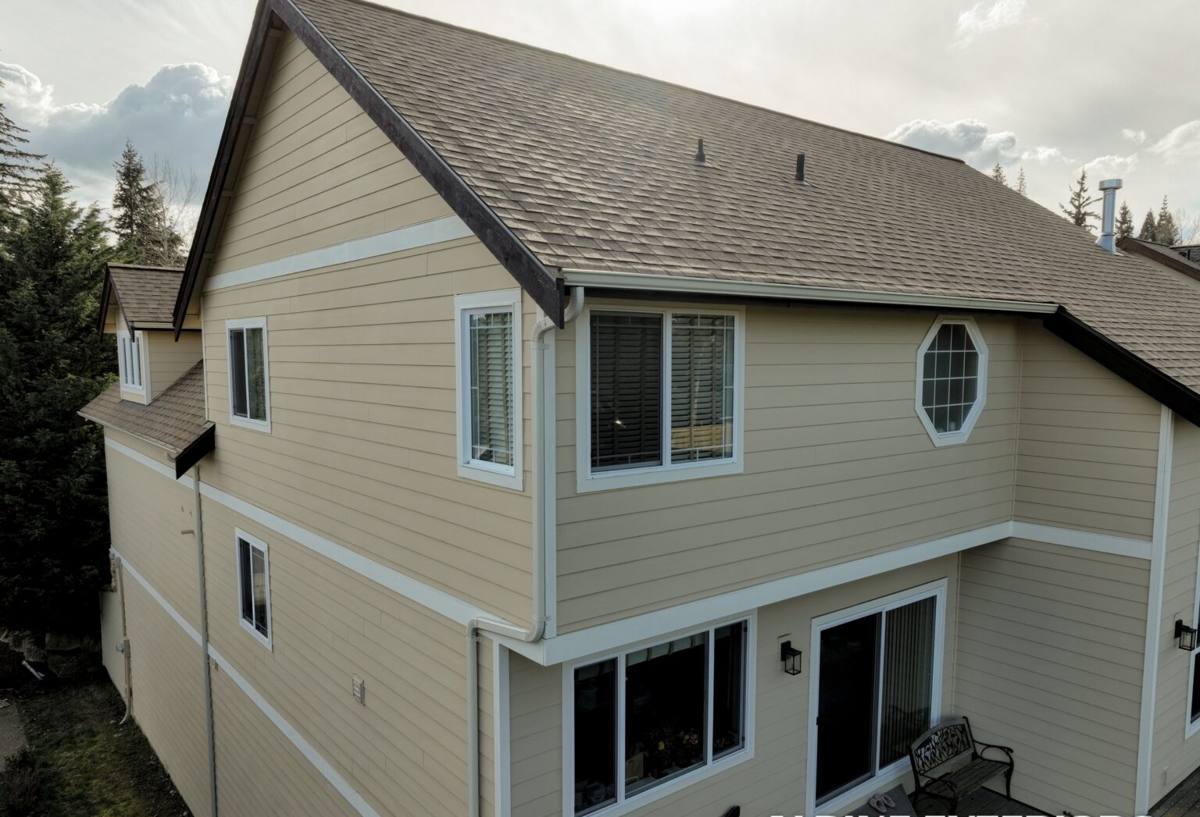
This page is about one job, done right, in one area: full siding replacement for Blanchard homes. Not a patch, not a re-side over old problems — a proper tear-off and replacement using a product system built for exactly this climate.
What Salt Air, Driving Rain, and Moss Actually Do to Siding
Salt Air
Proximity to Samish Bay and the broader Puget Sound means airborne salt is a real factor for Blanchard homes, especially on the sides of a house that face open water or prevailing wind. Salt accelerates corrosion on fasteners, trim flashing, and any exposed metal, and it speeds up the breakdown of finishes that aren't formulated to resist it. Paint film that would last a normal cycle inland often chalks and fades faster out here.
Driving Rain
Skagit County storms don't just fall straight down — wind pushes rain horizontally into wall assemblies, forcing water into every gap, seam, and fastener hole that isn't properly sealed or lapped. A siding system with weak water management will let moisture behind the cladding long before the surface shows any obvious damage.
Moss and Sustained Moisture
Shaded, north- and west-facing walls in this part of the county stay damp for long stretches. Moss and algae take hold on any surface that holds moisture at the surface, and on organic or absorbent siding materials that moisture doesn't just sit on top — it gets pulled in. Over years, that's what turns into soft trim, swollen panel edges, and paint that won't hold.
Signs a Blanchard Home Needs Full Replacement, Not Repair
Not every siding problem calls for tearing the whole wall off. But there's a point where patching stops making sense — where the cost and effort of spot repairs starts rivaling a full replacement that would last decades longer. Watch for:
- Soft or spongy spots when you press on siding, especially near the bottom courses and around window trim
- Paint that keeps failing within a couple of years no matter how well it's applied
- Visible gaps, cupping, or warping in panels, especially on sun- and rain-exposed elevations
- Moss or algae that returns almost immediately after cleaning
- Siding older than its expected service life, particularly older wood, hardboard, or budget composite products
- Interior signs — musty smell, staining on interior walls near exterior corners, or bubbling paint inside near window openings
If you're seeing two or more of these at once, that's usually a sign the water management behind the siding has already failed, not just the surface finish.
What a Correct Siding Replacement Involves
Siding replacement is not simply pulling off old panels and nailing up new ones. Done correctly, it's a full rebuild of the water-management system on your exterior walls. That includes:
Tear-Off and Sheathing Inspection
Removing existing siding down to the sheathing lets us actually see what's happening underneath — rot, past water intrusion, insulation issues, or framing damage that's been hidden for years. Any compromised sheathing or framing gets repaired before anything new goes on; siding over a damaged wall just locks the problem in.
Weather-Resistive Barrier
A new, correctly lapped weather-resistive barrier goes down before any siding. In a climate with as much driving rain as Blanchard sees, this layer — and how carefully it's integrated with flashing — matters as much as the siding itself.
Flashing at Every Penetration
Windows, doors, hose bibs, vents, light fixtures — every penetration through the wall plane needs proper flashing so water is directed out and down, never trapped behind the cladding. This is the step that gets rushed on cheap jobs and is usually where failures start.
Rainscreen or Furring Where It Counts
On walls that see heavy, sustained moisture — common on Blanchard's shaded and water-facing elevations — a ventilated gap behind the siding lets any moisture that does get in dry out instead of sitting against the wall. It's a detail that costs a little more up front and prevents years of hidden damage.
The Siding Itself, Installed to Spec
Correct fastener type and spacing, correct clearances above grade, decks, and roof lines, correct caulking at joints — and a factory finish that's actually rated for this climate rather than a field-applied paint job that starts failing in year two or three.
Why We Only Install James Hardie Fiber Cement
We don't install vinyl, LP SmartSide, primed wood, or cedar, and that's a deliberate standard, not a limitation of what we're capable of doing. Every one of those products has a real, honest use case somewhere — but in a climate like Blanchard's, with salt air, sustained rain exposure, and long moss seasons, they carry trade-offs we're not willing to put our name behind:
- Vinyl expands and contracts with temperature swings, can warp or crack in impact, and its color is baked into thin material that fades over time with no way to refinish it short of replacement.
- LP SmartSide and other wood-strand products are engineered wood — meaning they're still organic material at the core, and organic material with a moisture problem eventually softens, swells, or delaminates, especially on the damp, shaded walls common out here.
- Primed spruce and cedar require an ongoing paint and maintenance cycle that most homeowners don't keep up with, and once moisture gets past the finish, wood siding rots from the inside out.
James Hardie fiber cement is non-combustible, dimensionally stable across temperature and moisture swings, and available with a factory-applied ColorPlus finish that's baked on and warrantied against fading and chipping — not painted on-site and left to weather. Hardie also engineers specific product lines (HZ5, HZ10) for different climate zones, so the plank going on a Blanchard wall is formulated for a wet Pacific Northwest climate, not a generic national spec. It's the one product system we've found that consistently holds up to what this specific stretch of Skagit County throws at a house year after year.
Our Process for a Blanchard Siding Replacement
- On-site assessment — we walk the exterior, check for soft spots and existing damage, and look at how the house is currently handling water at grade, windows, and roof lines.
- Written scope and estimate — a clear breakdown of what's being replaced, what products are used, and what the water-management details look like, so there's no ambiguity before work starts.
- Tear-off and structural check — old siding comes off, sheathing and framing get inspected, and any needed repairs happen before the new assembly goes on.
- Water-resistive barrier, flashing, and rainscreen installation — the parts of the job that don't show once the siding is up, but determine whether it lasts.
- James Hardie installation to manufacturer spec — correct fastening, clearances, and joint treatment.
- Final walkthrough — we go over the finished exterior with you before calling the job done.
Cost Factors for Siding Replacement
Every home is different, but the same handful of factors drive most of the cost variation on a Blanchard project:
| Factor | Why It Matters |
|---|---|
| Home size and wall complexity | More square footage, corners, and roof lines mean more material and labor |
| Extent of hidden damage | Rotten sheathing or framing found during tear-off adds repair scope |
| Siding profile chosen | Lap width, panel style, and trim details affect material cost |
| Rainscreen/furring detail | Adds labor but improves long-term moisture performance on exposed walls |
| Trim and accessory scope | Window trim, fascia, and soffit work done alongside siding changes total cost |
| Access and site conditions | Steep grades, tight lot lines, or multi-story walls affect labor time |
We give a written, itemized estimate up front so you know exactly what's driving the number — no vague lump-sum quotes.
Why Hiring a Crew That Already Works Blanchard Matters
Blanchard is small enough that it doesn't get the attention a bigger Skagit County town does, and that means some contractors treat it as a drive-by add-on to a job somewhere else. A crew that's already worked in the area understands the specific exposure conditions on this stretch — how much wind-driven rain a given elevation typically sees, how long north-facing walls stay damp, and how corrosive the salt air is on fasteners and flashing left unprotected. That local knowledge shows up in small decisions: where to add extra flashing, which walls need a rainscreen most, how tight to run clearances at grade. It's the difference between a siding job that looks right for a year and one that actually performs for the next thirty.
After Replacement: What Blanchard Homeowners Should Keep Up With
- Rinse siding annually to remove salt residue and organic buildup, especially on water- and shade-facing walls
- Keep gutters clear so overflow doesn't run down the siding face
- Trim back vegetation that keeps a wall shaded and damp longer than it needs to be
- Recaulk trim joints if you ever notice separation — small gaps are easy to fix before they let water in
- Watch for any soft spots near grade, decks, or roof-to-wall transitions and address them early
A correctly installed Hardie system needs far less babysitting than wood or vinyl, but no siding is entirely maintenance-free in this climate — a little attention each year keeps it performing for the long haul.
If your Blanchard home is showing signs of siding failure, or you just want an honest read on what shape your exterior is really in, we're happy to take a look. The estimate is free, there's no pressure, and you'll get a straight answer about what your home actually needs — fill out the form below to get started.