 Burlington
 Roof Replacement Built for Alger's Climate
Alger sits close enough to Samish Bay and the Salish Sea that homes here deal with a combination most inland Skagit County properties don't: salt-laden air moving in off the water, long stretches of driving rain through fall and winter, and shaded, damp conditions that keep moss and moisture active on roofs for most of the year. A roof that would hold up fine in a drier part of the county can wear out early here if it wasn't built with these conditions in mind. When we replace a roof in Alger, we're not just swapping old shingles for new ones — we're accounting for the salt air, the rain volume, and the moss pressure specific to this stretch of Burlington's surrounding area.
That combination matters more than most homeowners realize until they're dealing with the results: rusted fasteners, moss lifting shingles at the edges, or moisture finding its way into the deck through a roof that looked fine from the ground. A correct replacement addresses all three from the start.
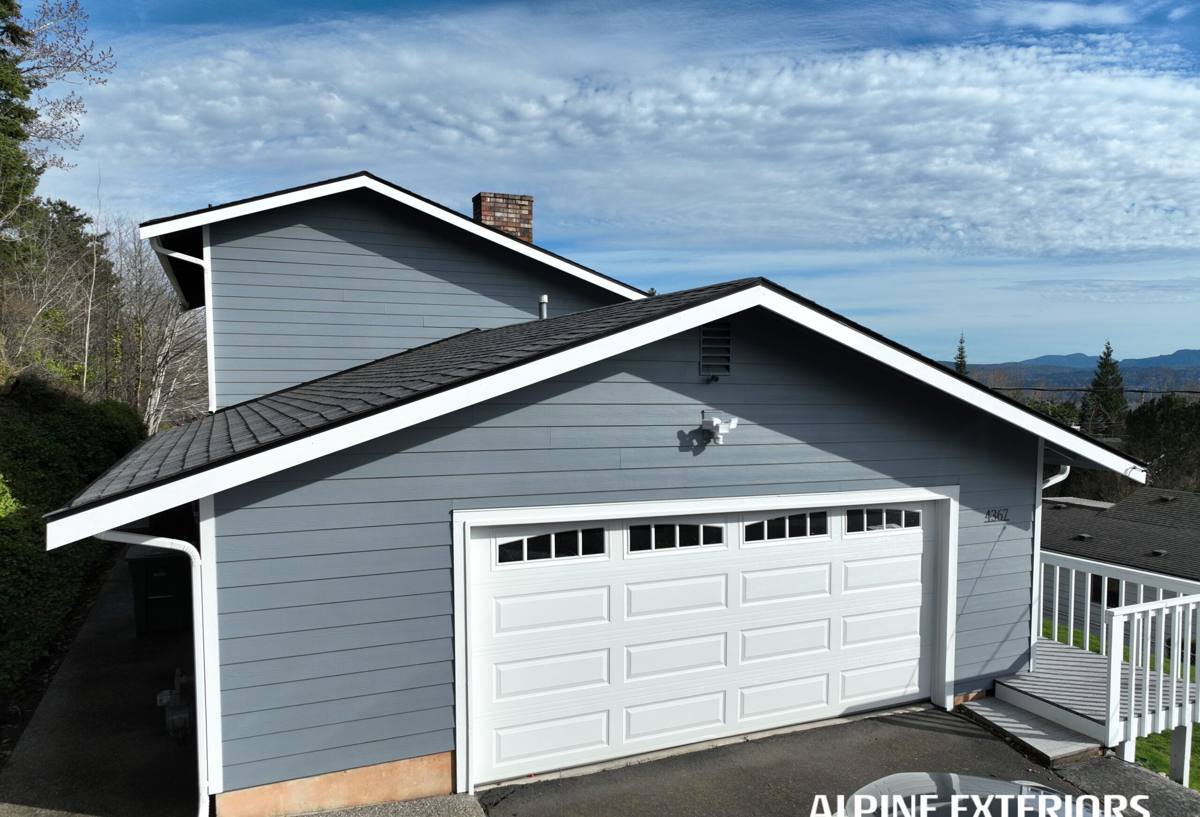
Why Alger's Conditions Are Tougher on Roofs
Salt Air and Metal Components
Proximity to Samish Bay means airborne salt reaches roofs and metal components more than it would ten or fifteen miles inland. Standard fasteners, flashing, and hardware corrode faster under that exposure. Over years, corroded fasteners lose their grip, flashing seams weaken, and small leaks start where you'd least expect them — not from a dramatic storm, but from slow material fatigue.
Driving Rain and Wind-Driven Moisture
Skagit County gets its share of steady, wind-driven rain, and Alger's more exposed positioning relative to open water can mean rain hits roofs at an angle rather than straight down. That matters for underlayment choice and flashing detail at valleys, ridges, and penetrations — a roof designed for calm, vertical rainfall will let water in where one built for driving rain won't.
Extended Moss Season
Shade from mature trees, cool temperatures, and near-constant moisture through fall, winter, and spring add up to a moss season that runs longer here than in drier parts of Washington. Moss isn't just a cosmetic problem — it holds moisture against the roofing material, works its way under shingle edges, and can lift them enough to let water underneath over time.
Signs an Alger Roof Needs Replacing, Not Just Repair
- Granule loss showing bare asphalt on shingles, especially on slopes that get the most rain exposure
- Moss buildup that keeps returning within months of cleaning, even after treatment
- Rust staining or visible corrosion around flashing, vents, or metal fasteners
- Curling, cupping, or cracked shingles, particularly on south- and west-facing slopes
- Soft spots in the decking felt when walking the roof, a sign moisture has reached the sheathing
- Daylight visible through the attic at roof boards, or damp insulation below the roof deck
- A roof approaching or past 20-25 years old (asphalt) with no major upgrades since installation
A repair can buy time for isolated damage, but once moisture has reached the decking or multiple areas of the roof are failing at once, patching individual spots usually costs more over a few years than doing the replacement correctly once.
What a Correct Roof Replacement Involves
Replacing a roof properly in Alger's conditions is a sequence, and skipping steps is exactly how homeowners end up with a "new" roof that leaks within a few years.
Tear-Off and Deck Inspection
We remove the old roofing down to the deck rather than layering over it. This is the only way to actually see the condition of the sheathing — soft, delaminated, or water-stained decking has to be replaced before anything new goes down, or the new roof is being installed over a compromised base.
Underlayment Suited to the Rain Load
Given the volume and angle of rain Alger sees, we use underlayment products built for high-moisture, wind-driven conditions rather than a bare-minimum synthetic felt. In vulnerable areas — eaves, valleys, and low-slope sections — we add ice-and-water shield-style membrane as extra insurance against wind-driven rain finding a way under the roofing material.
Flashing and Fastener Choices
Because salt air accelerates corrosion, we favor flashing and fastener materials with better corrosion resistance for homes in this area, and we pay close attention to flashing details at chimneys, skylights, valleys, and wall intersections — the spots where most roof leaks actually originate, salt air or not.
Ventilation Review
A roof replacement is the right time to check attic ventilation. Poor airflow traps moisture under the roof deck, which speeds up rot and gives moss and mildew a head start from the inside. We check intake and exhaust balance and recommend corrections when the existing setup is inadequate — Skagit County's damp climate makes this more important than in drier regions.
Moss-Resistant Detailing
Where it fits the home and budget, we discuss options like zinc or copper strips near the ridge, which help suppress moss regrowth over time, along with roofing materials that shed moisture and debris more readily on shaded slopes.
Roofing Material Options for Alger Homes
| Material | How It Handles Salt Air & Moss | Typical Lifespan | Trade-Offs |
|---|---|---|---|
| Architectural asphalt shingles | Good with proper fasteners and flashing; needs periodic moss treatment | 25-30 years | Most affordable; moss and algae streaking need occasional cleaning |
| Standing seam metal | Sheds moisture and moss well; requires corrosion-resistant fasteners near the coast | 40-60 years | Higher upfront cost; installation sensitivity means it needs an experienced crew |
| Composite/synthetic shingles | Resists moisture absorption; moss gets less foothold than on wood | 30-50 years | Mid-to-higher cost; product and warranty quality varies by manufacturer |
| Cedar shake | Attractive but holds moisture and feeds moss growth without diligent maintenance | 20-30 years with upkeep | Highest maintenance burden in this climate; we're honest that it's a tougher fit for shaded, damp lots |
We don't push one material on every home. The right choice depends on the roof's slope, how much shade the property gets, and how much ongoing maintenance the homeowner wants to take on. We'll walk through the honest trade-offs for your specific roof rather than defaulting to whatever's easiest to install.
Our Process for an Alger Roof Replacement
- On-site inspection: We walk the roof and attic, check the deck condition, ventilation, and existing flashing, and note anything specific to the property's exposure to wind, shade, and moisture.
- Written estimate: You get a clear scope of work and pricing — no surprise add-ons once tear-off starts unless we find deck damage that wasn't visible beforehand, which we'll show you before proceeding.
- Material selection: We go over options suited to your roof's slope and sun/shade exposure, with honest pros and cons for each.
- Tear-off and deck repair: Old roofing comes off, the deck gets inspected and repaired where needed.
- Underlayment and flashing installation: Moisture barriers and flashing go in with attention to the wind-driven rain this area sees.
- New roofing installation: Installed to manufacturer specification, with fastener and flashing choices suited to salt air exposure.
- Final walkthrough: We review the finished roof with you, confirm ventilation and cleanup, and answer any maintenance questions.
What Roof Replacement Typically Costs
Costs vary based on roof size, pitch, current layer count, decking condition, and material choice — anyone quoting a firm number before seeing your roof is guessing. In general terms, asphalt shingle replacements tend to run at the lower end of the cost range, composite and synthetic materials sit in the middle, and standing seam metal or premium systems run higher upfront but stretch the replacement cycle out much longer. We'll give you real numbers after seeing the roof, not before.
Factors That Move the Price
- Roof size and number of stories (steeper, taller roofs require more safety setup and labor time)
- Number of existing layers to tear off
- Condition of the decking underneath — hidden rot adds material and labor
- Roof complexity: valleys, dormers, skylights, and chimneys all add flashing work
- Material choice, from standard asphalt up through metal or composite systems
- Ventilation corrections, if the current attic airflow is inadequate
Maintaining a New Roof in Alger's Climate
A properly installed roof still benefits from upkeep in this environment. We recommend periodic moss removal (done carefully to avoid damaging shingles), keeping gutters clear so water doesn't back up under roof edges during heavy rain, and a visual check after major windstorms for lifted shingles or displaced flashing. None of this requires an annual service contract — just paying attention a couple of times a year, especially heading into and coming out of the wet season.
Why Hire a Crew That Already Works in Alger
A roofing crew that regularly works Skagit County properties near the water already knows which fastener and flashing upgrades are worth the extra cost here, how local shade patterns affect moss growth on a given roof orientation, and how driving rain off the bay behaves differently than rain falling straight down. That local pattern recognition shows up in the details — the flashing choice at a valley, the underlayment used at the eaves — that separate a roof replacement that lasts from one that needs attention again in a few years. We've done this work throughout Burlington and the surrounding Skagit County communities, including areas like Alger with their specific exposure to salt air and coastal weather, and we bring that experience to every estimate.
If your roof is showing wear, or you just want an honest read on whether repair or full replacement makes more sense for your home, we're glad to take a look. Reach out for a free, no-pressure estimate using the form below.