 Burlington
 Board & Batten Built for Anacortes' Marine Climate
Board and batten has become one of the most requested looks on homes around Anacortes, and it's easy to see why. The strong vertical lines read as clean and modern on newer builds, but the style also has deep roots in Pacific Northwest farmhouse and coastal architecture, so it sits comfortably on older homes too. What most homeowners don't realize until they start pricing the job is that board and batten is not a look you can bolt onto any material and expect to hold up. On a marine-exposed property near Anacortes, the material and the installation details matter more than the style itself.
Anacortes sits right up against saltwater, and that changes what siding has to deal with compared to a home twenty miles inland in Burlington or Sedro-Woolley. Salt-laden air, near-constant humidity swings, and a long moss season put steady pressure on any exterior material. Board and batten's vertical battens create dozens of extra seams and shadow lines compared to lap siding, and every one of those seams is a place where moisture, salt, and organic growth can get a foothold if the job isn't done right.
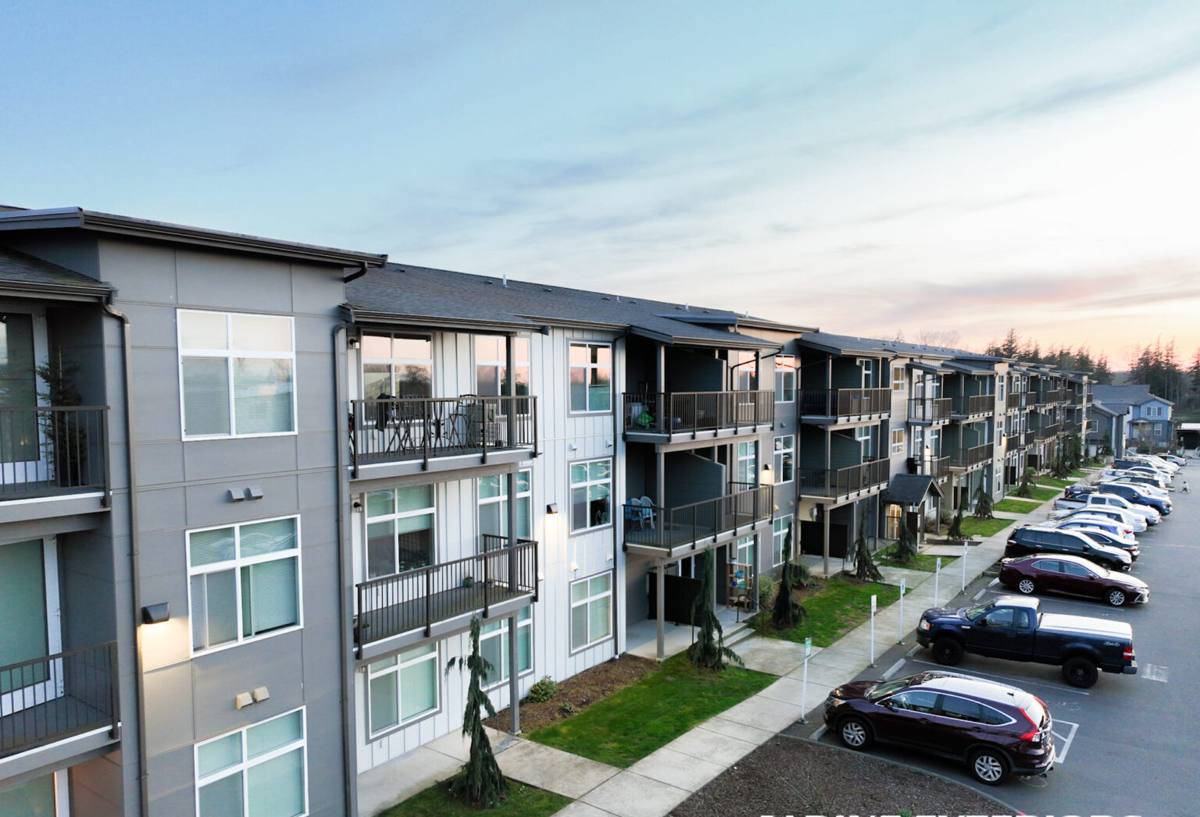
What Anacortes Homes Are Actually Up Against
Skagit County's coastal edge doesn't get the driving rain of a Gulf Coast hurricane, but it gets something arguably harder on siding: months of low-intensity moisture combined with wind off the water. That combination keeps exterior walls damp longer than homes further inland, and it's the reason moss and algae streaking shows up so reliably on north- and west-facing walls near Anacortes.
Salt Air
Airborne salt accelerates corrosion on anything metal — fasteners, flashing, trim caps — and it can degrade paint films faster than a typical inland finish is designed to handle. A siding product and finish system that wasn't engineered with coastal exposure in mind will show fading, chalking, or fastener staining years before it should.
Driving Rain and Wind-Driven Moisture
Wind off the water doesn't just drop rain straight down — it pushes it sideways into wall assemblies, which means every joint, seam, and batten edge on a board and batten wall is a potential entry point if it isn't detailed correctly.
Moss and Organic Growth
Long, mild, damp seasons are ideal conditions for moss, lichen, and algae. Once growth gets established in a seam or behind a batten, it holds moisture against the substrate and accelerates whatever damage the moisture would have caused on its own.
What a Correct Board & Batten Installation Involves
Board and batten looks simple from the curb — vertical boards with a narrower strip covering each seam — but the assembly behind that look is what actually determines whether it lasts. This is where a lot of installations fail, not because the material was wrong, but because the details underneath were rushed.
- A drainage plane behind the siding. A weather-resistive barrier and, on most jobs, a rain screen gap so any water that gets past the surface can drain and the wall can dry instead of trapping moisture.
- Correct batten spacing and fastening. Battens need consistent reveal and fastening patterns that hold through wind exposure without over-driving fasteners into the panel.
- Panel clearance at the bottom. Siding that terminates too close to grade, a deck, or a roofline wicks moisture and holds it against the panel edge — a common failure point on coastal homes.
- Flashed penetrations. Every window, door, light fixture, and hose bib penetration needs proper flashing and sealant detailing, not just caulk over the gap.
- Factory-finished panels, not field-painted seams. A factory finish holds color and resists the coastal weathering cycle far better than a field-applied coat, especially at cut edges that get properly sealed.
Why We Install Board & Batten Only in James Hardie Fiber Cement
We standardized on James Hardie fiber cement for every siding job we do, board and batten included, and that decision matters even more on a coastal-influenced job like this one. Fiber cement is non-combustible, dimensionally stable, and doesn't absorb and release moisture the way wood-based products do — which is exactly the failure mode that salt air and long damp seasons expose fastest.
For board and batten specifically, we use Hardie panel and batten components engineered to work as a system: consistent thickness, factory-primed or ColorPlus-finished surfaces, and installation specs written around real-world moisture exposure rather than a generic climate assumption. In HZ5 configuration, the product line is engineered for the cold, wet, marine-influenced conditions common to western Washington, which is the right specification for anything built within reach of Anacortes' salt air.
ColorPlus Finish
ColorPlus is a factory-applied, baked-on finish rather than field-applied paint. It resists fading and chalking better than site-applied coatings and it means the color on a batten edge matches the field of the panel, which keeps a board and batten wall looking uniform instead of showing touch-up lines a few years in.
A Transferable, Manufacturer-Backed Warranty
James Hardie backs its siding with a strong product warranty, and it's transferable if the home sells — which matters on a style like board and batten where a homeowner has invested in a distinct architectural look and wants that investment protected, not just for themselves but for resale.
Comparing Board & Batten Materials
Homeowners researching board and batten usually come across several material options. Here's an honest look at how they tend to perform in a coastal, moss-prone Skagit County climate when compared to the fiber cement system we install.
| Material | Salt Air / Moisture Behavior | Moss & Algae Susceptibility | Maintenance Burden |
|---|---|---|---|
| James Hardie fiber cement (HZ5) | Dimensionally stable, doesn't swell or rot from moisture cycling | Low, especially with factory finish | Occasional wash; no repainting cycle |
| Cedar / primed wood | Absorbs and releases moisture; prone to swelling, checking, and rot at end grain | Higher, especially in shaded, damp areas | Regular refinishing and moisture monitoring |
| Engineered wood siding | Wood-based core is moisture-sensitive at cut edges and panel joints | Moderate if edges aren't sealed and maintained | Edge sealing and periodic inspection |
| Vinyl-style board and batten | Doesn't rot, but can warp or fade with UV and temperature swings | Low to moderate; growth can develop behind panels | Low, but limited repair options if damaged |
Every one of these materials can be installed reasonably well. The trade-offs are why we made a standard rather than picking case by case: fiber cement is the one that lines up best with what a coastal Skagit County wall assembly actually experiences year-round, without asking the homeowner to manage a maintenance schedule to keep it looking right.
Our Process for an Anacortes Board & Batten Job
Because we work in and around Anacortes regularly, we already know what to check before a crew shows up with material.
- On-site assessment. We look at wall orientation relative to weather exposure, existing moisture damage, current cladding condition, and drainage around the foundation before quoting anything.
- Detailing plan. We map out batten layout, panel clearances, and flashing details specific to that home's rooflines, windows, and grade conditions — not a generic template.
- Removal and substrate check. Old siding comes off and we inspect sheathing for hidden moisture damage before anything new goes up, which is common to find on older coastal homes.
- Weather-resistive barrier and drainage plane. This step is what protects the wall assembly long after the finish is installed and is not a place to cut corners.
- Panel and batten installation. Installed to Hardie's fastening and clearance specifications, with consistent batten spacing and proper terminations at grade, trim, and rooflines.
- Final detailing and walkthrough. Caulking, touch-up, and a walkthrough so the homeowner understands what maintenance — if any — the job actually needs going forward.
Maintenance in a Salt-Air, Moss-Prone Climate
Even the right material benefits from a little attention. Here's what we recommend to homeowners in the Anacortes area:
- Rinse siding annually, focusing on north- and west-facing walls where moss and algae take hold first.
- Trim back vegetation and tree cover that keeps walls shaded and slow to dry.
- Keep gutters clear so water isn't sheeting down the wall face during heavy rain.
- Inspect caulking around windows, doors, and penetrations every couple of years and have gaps resealed promptly.
- Watch for any staining at fastener heads or panel bottoms, which can signal a drainage issue worth checking early.
Why It Matters to Hire a Crew That Already Works Anacortes
Board and batten forgives fewer mistakes than lap siding because there are more seams, more battens, and more places where a rushed detail shows up later as a moisture problem. A crew that regularly works Anacortes and the surrounding Skagit County coastline already understands the exposure differences between a sheltered inland wall in Burlington and an open, water-facing wall near Anacortes — and adjusts the detailing accordingly instead of treating every job the same. That familiarity, paired with a single-material standard we can install correctly every time, is what keeps a board and batten job looking right for decades instead of needing rework in five years.
If you're considering board and batten siding for a home in or around Anacortes, we're happy to walk the property, talk through what your specific exposure calls for, and put together a straightforward, no-pressure estimate.