 Burlington
 Why Anacortes Roofs Wear Differently Than Roofs Inland
Anacortes sits right up against the water on Fidalgo Island, and that location changes what a roof has to survive. Homes just a few miles inland in Skagit County deal with plenty of rain, but they don't get the same steady dose of salt-laden air coming off the Sound, the wind-driven rain that hits roof edges and valleys sideways, or the deep tree shade that keeps north-facing slopes damp for weeks at a time. A roof built for a dry inland lot doesn't automatically hold up the same way two miles from saltwater.
Three things drive almost every roofing problem we see in Anacortes: corrosion of exposed metal from salt air, water intrusion at valleys and edges from driving rain, and moss or algae growth that thrives in the long wet, shaded season this part of Washington gets from fall through spring. A correct new roof installation here accounts for all three from day one, not as a repair after the fact.
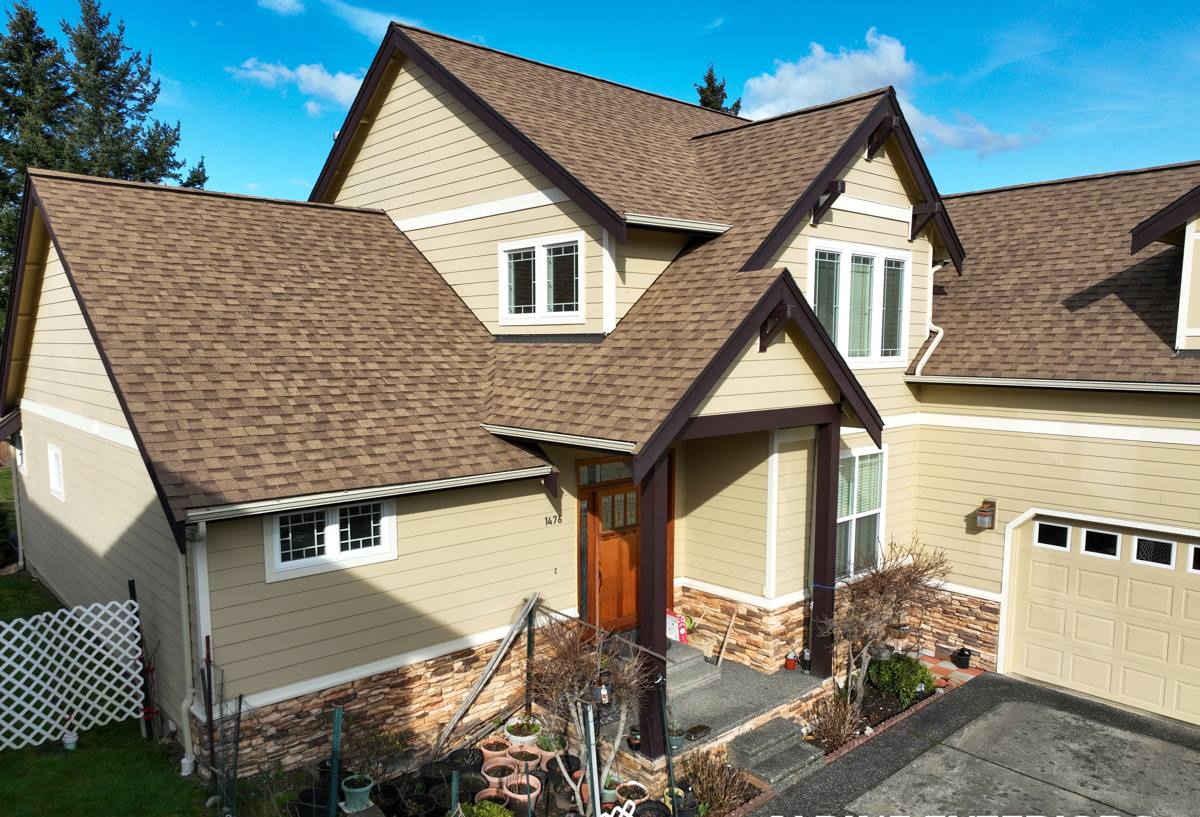
What "Correct" Actually Means for a Coastal Skagit County Roof
Fasteners and Flashing That Won't Corrode
Standard electro-galvanized nails and flashing can start showing rust streaks within a few years this close to saltwater. We spec corrosion-resistant fasteners and flashing metals for Anacortes jobs as a baseline, not an upgrade. This matters most at roof-to-wall flashing, chimney flashing, and any exposed metal edge where salt air has direct contact.
Underlayment That Handles Driving Rain
Wind off the water pushes rain sideways into roof valleys, eaves, and low-slope transitions in a way calmer inland sites don't experience as often. We install self-adhering waterproof underlayment at valleys, eaves, and any vulnerable transition, with synthetic underlayment across the rest of the deck. This is a code-driven decision in Washington's climate zone, not something we treat as optional.
Ventilation That Fights Moss, Not Just Heat
Most homeowners think roof ventilation is about summer heat. In Anacortes, it's just as much about keeping the underside of the roof deck dry through a long wet season, which directly affects how fast moss and algae take hold on the surface above. Balanced intake and exhaust ventilation keeps moisture from getting trapped against the deck, which extends the life of whatever material sits on top.
Choosing a Roofing Material for This Climate
There's no single "best" roofing material for every Anacortes home — it depends on the roof's exposure, slope, tree cover, and your budget. Here's how the common options actually perform under salt air, driving rain, and moss pressure:
| Material | Salt Air Durability | Moss Resistance | Typical Lifespan | Maintenance Burden |
|---|---|---|---|---|
| Architectural asphalt shingle | Good with proper flashing metals | Moderate — benefits from zinc/copper strips | 25–30 years | Low to moderate |
| Standing seam metal | Very good with coated, marine-rated panels | High — sheds moss naturally | 40–50+ years | Low |
| Synthetic/composite shingle | Good | Moderate to high depending on product | 30–50 years | Low to moderate |
| Wood shake | Requires ongoing treatment near salt air | Low without regular maintenance | 20–30 years with upkeep | High |
Architectural asphalt shingles from established manufacturers remain the most common choice on Anacortes homes because they balance cost, appearance, and performance well when installed with the right underlayment and flashing details. Metal is a strong option for homes with heavy shade or a lot of moss history, since moss has a much harder time gripping a smooth metal surface. We don't push one material on every home — we'll tell you honestly which one fits your roof's exposure and your budget.
Our New Roof Installation Process
- Inspection and estimate. We walk the roof, check the deck condition where accessible, look at ventilation and flashing points, and note anything specific to the home's exposure to wind and shade.
- Tear-off. Old material comes off down to the deck so we can actually see what's underneath — this is where hidden moisture damage from years of moss or trapped water usually shows up.
- Deck repair. Any soft, rotted, or delaminated sheathing gets replaced before anything new goes down. Installing new roofing over a compromised deck just hides a problem, it doesn't fix it.
- Underlayment. Self-adhering waterproof membrane at valleys and eaves, synthetic underlayment across the field, sized and lapped for the pitch and exposure of your specific roof.
- Flashing. New flashing at all penetrations, walls, valleys, and chimneys using corrosion-resistant metal — this is the single most common point of failure on coastal roofs, so we don't reuse old flashing.
- Material installation. Shingles, panels, or your chosen material installed to manufacturer spec, which is what keeps the product warranty valid.
- Ventilation tie-in. Intake and exhaust ventilation connected and balanced so the roof system works as designed, not just individually installed parts.
- Cleanup and walk-through. Site cleared of debris and old material, magnetic sweep for nails, and a final walk-through so you understand what was done and why.
Moss, Algae, and the Long Wet Season
Moss isn't just cosmetic — it holds moisture against the roof surface and can work under shingle edges over time, which shortens the life of any roofing material. Anacortes' combination of marine humidity, shade from mature trees, and a wet season that runs much of the year makes moss pressure higher than in drier parts of Skagit County. A new roof installation is the right time to build in prevention, since some of it is far easier to do during installation than after.
- Zinc or copper control strips near the ridge, which release trace metal ions that inhibit moss growth as rain washes over them
- Full removal of old moss and debris from the deck before anything new is installed, so growth doesn't start again from what's left behind
- Proper attic and roof ventilation to keep the deck dry from underneath, not just the surface from above
- Keeping gutters and valleys clear so water doesn't sit and create the damp conditions moss needs to establish
- Trimming back overhanging branches where practical, since shade and leaf litter are two of moss's biggest allies
Cost Factors for a New Roof in Anacortes
We won't quote a number without seeing the roof, since size, pitch, access, and condition all matter — but these are the factors that actually move the price, in rough order of impact:
| Factor | Why It Matters | Relative Cost Impact |
|---|---|---|
| Roof size and pitch | More material and more difficult, slower work on steep slopes | High |
| Number of tear-off layers | Multiple existing layers take longer to remove and dispose of | Medium to High |
| Deck condition | Rotted or soft sheathing needs replacement before installation | Variable |
| Material choice | Asphalt, metal, and synthetic products have different material costs | Medium to High |
| Flashing and ventilation complexity | More valleys, chimneys, and penetrations mean more detail work | Medium |
| Site access | Steep lots, limited driveway access, or tree cover slow staging and cleanup | Low to Medium |
The honest answer is that a proper roof here costs more than the cheapest bid you'll see, because corrosion-resistant flashing, correct underlayment at valleys and eaves, and full deck inspection aren't optional line items in this climate — they're what keeps the roof from failing early. We'd rather explain that upfront than let you find out the hard way.
Permits, Codes, and What Protects You
Roof replacement in Skagit County requires a permit in most jurisdictions, and Washington's building code sets minimum requirements for underlayment, especially waterproof membrane at eaves and valleys, given how much of the state deals with sustained wet weather. We pull the required permits and install to code as a baseline, not an extra.
Manufacturer warranties on shingles and other roofing materials also depend on correct installation — improper nailing patterns, missing ice-and-water shield, or incorrect ventilation can void coverage even if the material itself is fine. Installing to spec is what keeps that warranty valid if you ever need it.
Why a Crew That Already Works Anacortes Matters
A contractor who mostly works drier, inland jobs can still install a roof — but they may not default to corrosion-resistant flashing, may not think about moss prevention during installation, or may not have a feel for how wind off the water affects shingle exposure and edge details. None of that shows up as a problem on installation day. It shows up two or three years later as a leak at a valley or premature rust streaking at a flashing joint.
We work Anacortes and the rest of Skagit County regularly, so the details that matter here — salt-air-rated metal, moss prevention built into the install, underlayment sized for driving rain — are just how we build every roof in this area, not a special request.
Questions Worth Asking Any Roofer Before You Hire
- What underlayment do you use at valleys and eaves, and is it self-adhering waterproof membrane?
- What flashing material do you use, and is it rated for coastal or marine exposure?
- Do you inspect and replace deck sheathing as needed, or install over whatever is already there?
- Will you build in moss prevention (control strips, ventilation) during the install, or only offer it as a later add-on?
- Are you pulling the required permit, and does your install meet manufacturer spec for the warranty?
If your roof is due for replacement, aging out of its warranty, or showing moss and moisture problems that keep coming back, we're glad to take a look. We offer a free, no-pressure estimate — walk the roof with us, ask us anything on this page, and get a straight answer about what your home actually needs. Just fill out the form below to get started.