 Burlington
 Anacortes Homes Face a Tougher Climate Than Most of Skagit County
Anacortes sits out on Fidalgo Island, with saltwater on nearly every side and weather rolling straight in off Rosario Strait and the wider Puget Sound. That's a meaningfully different exposure than what siding deals with a few miles inland in Burlington or elsewhere in Skagit County. Salt-laden air accelerates corrosion on fasteners, flashing, and trim. Wind-driven rain doesn't just fall straight down — it gets pushed sideways into laps, corners, and butt joints that would stay dry in a calmer climate. And the long, wet, often-shaded stretch of the year that we call moss season here in Western Washington gives moss and algae months to take hold on north-facing walls and anywhere tree cover keeps siding from drying out between storms.
None of that means siding on an Anacortes home is doomed to fail early. It means the margin for error in the original installation, and in any repair, is smaller. A patch that would hold up fine in a drier, more sheltered spot can fail within a season or two out here if it doesn't account for how water actually moves across this siding in this climate.
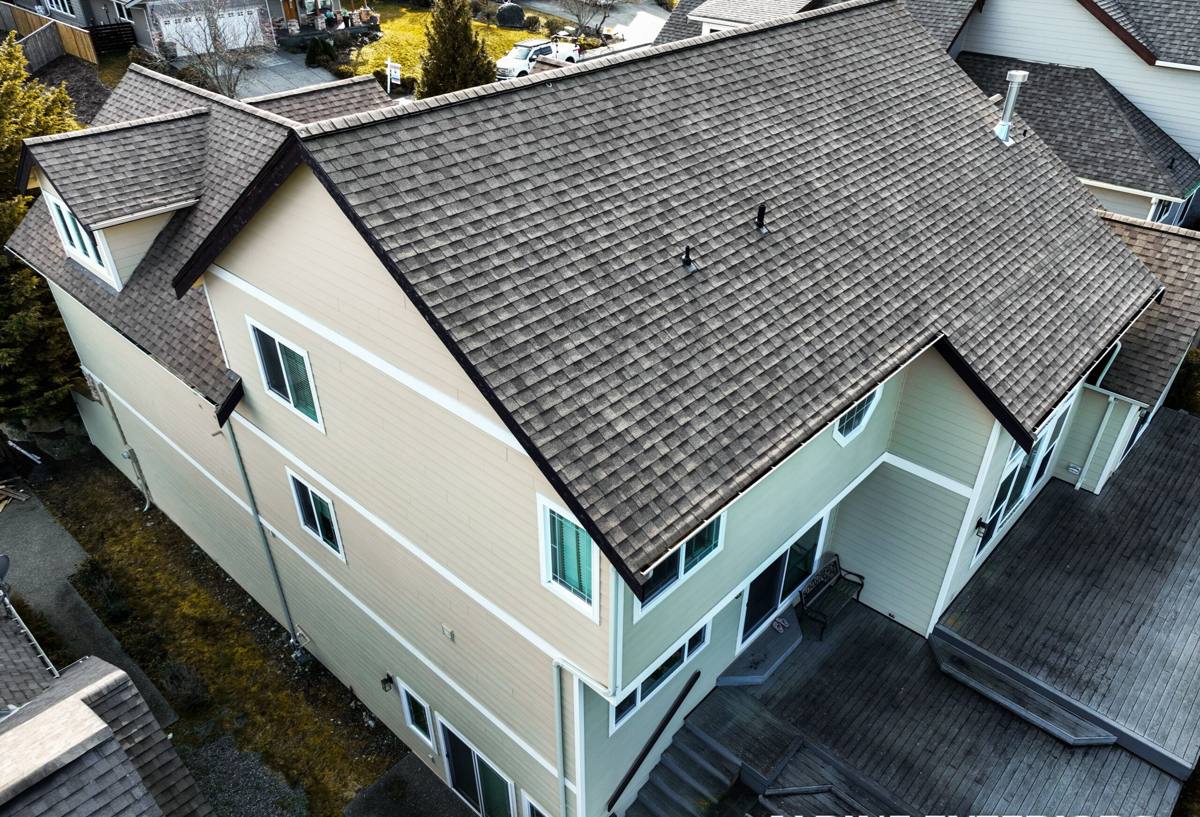
Signs Your Anacortes Home Needs Siding Repair
Most siding problems don't announce themselves as an emergency. They show up as small, easy-to-dismiss details first. Catching them early is the difference between a straightforward repair and a much bigger project once moisture has had time to work its way into the wall assembly.
- Cracked, split, or buckled boards or panels, especially near corners and window trim
- Soft or spongy spots when you press on the siding by hand
- Persistent moss, algae, or black streaking that keeps coming back after cleaning
- Paint that's peeling, bubbling, or failing in the same spots year after year
- Visible gaps opening up at seams, trim boards, or where siding meets windows and doors
- Staining or discoloration on interior walls near exterior corners, which often points to moisture already behind the siding
- Nail heads popping, rust streaks below fasteners, or trim that's pulling away from the wall
If you're seeing more than one of these at once, especially on a wall that faces the water or sits in shade for most of the day, it's worth having someone look at more than just the spot that's bothering you.
What a Correct Siding Repair Actually Involves
A repair that just replaces the damaged board and calls it done can leave the actual problem in place. The visible damage is usually a symptom — the real question is why water got in, or why moisture is staying trapped, at that spot in the first place. A correct repair starts with figuring that out before anything gets cut or patched.
That means pulling back the damaged section far enough to see what's underneath: the water-resistive barrier, the flashing at windows, doors, and penetrations, and the condition of the sheathing behind it. On coastal homes like those in Anacortes, we also pay close attention to fastener condition, since salt air corrodes exposed metal faster than it does a few miles inland. If the underlying moisture barrier or flashing is compromised, patching the siding alone just buys a little time before the same spot fails again.
Repair vs. Replacement: Knowing Where the Line Is
Not every problem needs a full section replaced, and not every problem should be treated as a spot repair. As a general rule, an isolated area of damage with sound material around it and no sign of ongoing moisture intrusion is a good candidate for a targeted repair. Widespread soft spots, siding that's failing in the same pattern across a whole wall, or moisture damage that's clearly been active for a while are signs that a larger section — sometimes a full wall — needs to come off so the problem can actually be fixed rather than covered over. An honest contractor will tell you which situation you're in rather than defaulting to whichever option is more profitable for them.
How Different Siding Materials Hold Up to Repair in a Marine Climate
What your home is currently sided with changes what a repair looks like, and how long that repair is likely to last in Anacortes conditions specifically.
| Material | How Salt Air, Rain, and Moss Affect It | What This Means for Repairs |
|---|---|---|
| Cedar or other wood siding | Absorbs moisture readily; prone to rot, checking, and moss growth in shaded, wet areas | Repairs need to match grain and finish closely, and surrounding wood is often already compromised nearby |
| Vinyl siding | Doesn't rot, but can crack in cold snaps and fade or chalk under UV and salt exposure; traps moisture behind it if not installed with proper drainage gaps | Color-matching older, sun-faded panels is difficult; hidden moisture behind vinyl often isn't found until damage is advanced |
| Engineered wood (LP SmartSide and similar) | More moisture-resistant than solid wood, but any breach in the factory coating exposes the wood-strand core to swelling and edge deterioration | Repairs must fully seal cut edges and fastener points, or the same failure point tends to recur |
| James Hardie fiber cement | Non-combustible and dimensionally stable; doesn't absorb and swell like wood-based products, and its factory ColorPlus finish resists the fading that salt air and UV cause | When replacement is needed, panels and trim are widely available and match cleanly, and the material itself isn't the weak point in the wall assembly |
We repair whatever siding is currently on your home — that's a separate job from what we recommend when a section is far enough gone that replacement, not repair, is the honest answer. When that point is reached, we install James Hardie fiber cement exclusively. It's the product we've found holds up best to this specific climate over the long run, which matters more here than it does in a drier part of the state.
Our Siding Repair Process for Anacortes Homes
- Inspection. We look at the full elevation, not just the spot you called about, including corners, trim, and any areas hidden by landscaping or shade.
- Moisture assessment. Moisture readings and visual checks behind the affected siding tell us whether this is a surface issue or something that's been developing for a while.
- Diagnosis. We identify the actual entry point or failure cause — flashing, a caulk joint, a grade issue, or wear from years of exposure — rather than treating the symptom alone.
- Material matching. We source siding and trim that matches your existing material, profile, and finish as closely as possible, so the repair doesn't stand out.
- Correct detailing. Flashing, house wrap, and sealant get repaired or replaced to spec, not just tucked back into place.
- Final check and cleanup. We confirm the repair is weathertight and leave the site clean.
Why Hiring a Crew That Already Works in Anacortes Matters
Skagit County isn't uniform when it comes to how weather treats a house. A home a few blocks from the water on Fidalgo Island deals with salt exposure and wind patterns that a home further inland, closer to Burlington, simply doesn't see. A crew that regularly works in Anacortes has a feel for which walls tend to fail first, how much moss buildup is normal versus a sign of a drainage problem, and how coastal wind drives rain into places a generic repair approach might miss. That local pattern recognition shortens the diagnosis step and helps avoid a repair that looks right on install day but fails again after the next wet season.
What Affects the Cost of a Siding Repair
Costs vary by home and by damage, but a few factors consistently drive whether a repair is straightforward or more involved.
| Factor | Why It Matters |
|---|---|
| Extent of moisture damage | Damage that's stayed hidden longest usually extends further into the wall than what's visible from outside |
| Material match availability | Discontinued colors, profiles, or older product lines can require more custom matching work |
| Accessibility | Second-story walls, tight side yards, or areas near landscaping take more time to access safely |
| Underlying flashing or barrier condition | If the water-resistive barrier or flashing needs repair too, that adds labor beyond the visible siding itself |
| Scope: spot repair vs. section replacement | A single board is a different job than an entire wall, and the line between the two isn't always obvious until we open it up |
We'll always explain which of these factors apply to your specific situation before any work starts, so there aren't surprises once the job is underway.
Protecting Your Repair Long-Term in a Salt-Air, Moss-Prone Climate
A good repair should last, but a little maintenance afterward goes a long way in this climate. Keep gutters and downspouts clear so water isn't sheeting down the wall face. Trim back vegetation that's keeping any section of siding shaded and damp longer than the rest of the house. Have moss and algae growth treated before it spreads rather than after, since established growth holds moisture against the surface. And it's worth a quick visual check each fall, before the wet season sets in, for any caulk joints or trim edges that have opened up over the summer.
If you're dealing with damaged, aging, or moss-covered siding on your Anacortes home, we're happy to take a look and give you a straight answer about whether it needs a repair, a section replaced, or nothing at all yet. Reach out for a free, no-pressure estimate using the form below.