 Burlington
 Why Decks in Avon Wear Out Faster Than Homeowners Expect
Avon sits low in the Skagit Valley, close enough to Skagit Bay and Puget Sound that homes here deal with a steady mix of salt-tinged air, driving rain off the water, and a moss season that can run from October clear into May. That combination is hard on a deck in ways that don't show up right away. Salt air accelerates corrosion on fasteners and metal connectors. Driving rain finds every gap in flashing and pushes water sideways into places it was never meant to go. And moss doesn't just make a deck slippery — it holds moisture against the wood surface for months at a time, which is exactly the condition that breeds rot.
A deck built to a generic spec, or built once and never revisited, tends to fail from the inside out here. The surface boards can look fine while the framing underneath, the ledger connection, or the footings are already compromised. That's the gap we focus on closing when we replace a deck in this area — not just swapping old boards for new ones, but rebuilding the parts of the structure that actually take the abuse.
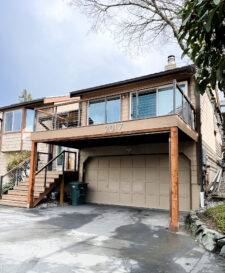
Signs Your Avon Deck Needs Replacing, Not Just Repairing
Repair makes sense when the problem is isolated — a few bad boards, a loose railing baluster. Replacement is the honest answer when the issues are structural or widespread. Before we recommend a full rebuild, we look for a specific set of warning signs:
- Soft, spongy, or springy spots when you walk across the deck, especially near the house
- Visible gaps, dark staining, or separation where the deck meets the house (the ledger board)
- Rusted, bleeding, or corroded fasteners and metal hardware
- Wood that's gone gray and fibrous, or that a screwdriver sinks into easily
- Persistent green or black growth on the decking surface that returns within weeks of cleaning
- Posts or footings that have shifted, heaved, or show cracking at ground level
- Noticeable sway or bounce under normal foot traffic
- A deck older than 15-20 years that has never had the substructure inspected
If you're seeing two or more of these, especially anything involving the ledger board or footings, patching individual boards is usually just delaying a more expensive repair later.
What a Correct Deck Replacement Actually Involves
The Ledger Connection
The ledger board — where the deck attaches to the house — is the single most common failure point we find on older decks in this climate. Driving rain blown sideways against the house wall works its way behind an improperly flashed ledger, and once moisture gets trapped there, the rim joist and sheathing behind it can rot for years before anyone notices. A correct replacement means removing the old ledger entirely, inspecting and repairing the framing behind it, and installing proper flashing — typically a metal drip cap over the top of the ledger and a waterproof membrane behind it — so water is directed away from the house instead of into it.
Footings and Posts
Skagit County's soil can hold water longer than homeowners expect, particularly in low-lying areas near the river. Footings need to be sized and set to the correct depth for our frost line and soil conditions, not just poured to whatever depth the old ones happened to be. Where the ground is soft or the site has drainage issues, we'll talk through options like larger footing pads or helical piers rather than just re-using an undersized footing because it's already there.
Framing and Fasteners
Joists, beams, and posts get upgraded to correctly rated, corrosion-resistant hardware — this matters more here than in a dry inland climate, because standard fasteners corrode faster with the salt content in coastal air. We also install joist tape or flashing on top of every joist, which is a small step that makes a real difference in how long the frame lasts, since it keeps water from sitting in the screw holes where new decking is fastened down.
Decking Surface and Drainage
Board spacing, direction, and ventilation underneath the deck all affect how fast it dries out after our long wet stretches. A deck built tight to the ground with poor airflow underneath will hold moisture and grow moss regardless of what decking material sits on top. Part of a correct rebuild is making sure the structure itself is designed to shed water and dry out, not just choosing a nicer board.
Choosing a Decking Material for This Climate
There's no single "best" decking material — it depends on how much maintenance you want to take on and what you're willing to spend up front versus over time. Here's how the common options actually compare for a wet, moss-prone, salt-air environment like Avon:
| Material | Moisture & Moss Resistance | Maintenance | Typical Lifespan |
|---|---|---|---|
| Pressure-treated lumber | Fair — needs sealing to perform well | Annual cleaning and re-sealing recommended | 10-15 years |
| Cedar | Good natural resistance, but surface still needs upkeep | Regular cleaning, periodic staining/sealing | 15-20 years |
| Composite decking | Very good — doesn't absorb water like wood | Occasional washing, no sealing or staining | 25-30 years |
| PVC decking | Excellent — fully synthetic, won't rot or feed mold | Occasional washing | 25-30+ years |
We're honest with clients that pressure-treated lumber isn't a bad choice — it's the lowest upfront cost and looks great when new — but in this climate it does require someone willing to clean and reseal it on a schedule. If that upkeep isn't realistic for your household, composite or PVC decking costs more initially but removes the moss-and-rot maintenance cycle almost entirely, which is often the deciding factor for homeowners who've already dealt with one rotted deck.
Permits and Code Requirements in This Area
Most deck replacements of any real size in unincorporated Skagit County or within Burlington city limits require a building permit, and for good reason — the permit process checks exactly the things that fail first in this climate: footing depth, ledger attachment, and guardrail and stair safety. Depending on your deck's height and location, requirements can touch on:
- Guardrail height and baluster spacing on any deck raised above a certain height
- Stair rise, run, and handrail requirements
- Proper ledger attachment method (lag bolts or through-bolts, not just nails)
- Footing size and depth appropriate to the load and soil conditions
- Setbacks from property lines, depending on your lot
We handle the permit application and inspection scheduling as part of the job — it's a normal part of a legitimate deck replacement, not an extra hurdle, and it protects you if you ever sell the house and a buyer's inspector looks at the deck closely.
Our Deck Replacement Process, Start to Finish
- On-site assessment — we inspect the ledger connection, framing, posts, and footings, not just the surface boards, and tell you honestly whether repair or full replacement makes sense.
- Design and material selection — we walk through decking options, railing style, and layout based on how you actually use the space and what maintenance level fits your household.
- Permit filing — we submit the permit application and prepare for the required inspections.
- Demolition — the old deck comes out down to the ledger and posts, with the framing and house connection inspected once it's exposed.
- Structural rebuild — new or repaired footings, posts, framing, flashing, and ledger attachment go in to current code.
- Decking and railing installation — boards, fascia, stairs, and railings are installed with attention to spacing and drainage.
- Final inspection and walkthrough — the local inspector signs off, and we walk the finished deck with you before calling the job done.
How long this takes depends heavily on the scope — a straightforward ground-level deck replacement might run under two weeks, while a larger elevated deck with new footings and stairs takes longer, especially if wet weather slows the framing and concrete stages.
What Actually Drives the Cost of a Deck Replacement
Every deck is different, but the same handful of factors determine most of the price difference between jobs. Rather than quote a number that won't apply to your situation, here's what to expect will move the estimate up or down:
| Cost Factor | Why It Matters |
|---|---|
| Size and elevation | A raised deck needs taller posts, more bracing, and often a stair system |
| Footing condition | Reusable footings cost far less than footings that need to be dug and repoured |
| Ledger and framing condition | Rot found behind the old ledger or rim joist adds repair scope once we open it up |
| Decking material | Pressure-treated is the lowest upfront cost; composite and PVC cost more but need less upkeep |
| Railing style | Basic wood railing costs less than cable, glass panel, or composite railing systems |
| Site access | Tight side yards or difficult material access can add labor time |
We give a written estimate after seeing the deck in person, including what we expect to find once the old structure comes off — and we flag anything that could change the price (like hidden ledger rot) before we do the work, not after.
Why a Crew That Already Works This Area Matters
A deck built to a spec that works fine in a drier part of the state can fail early here. Crews who work regularly in Skagit County know to flash a ledger for wind-driven rain rather than just a vertical downpour, know which decking finishes actually resist moss growth instead of just claiming to, and know what the local building department will and won't sign off on for footings in low-lying, moisture-retentive soil. That local repetition is what keeps a rebuild from becoming a five-year fix instead of a twenty-year one. We work throughout Burlington and the surrounding Skagit County communities, including Avon, and we bring that same local knowledge to every deck we replace here.
Keeping Your New Deck Ahead of the Weather
A well-built deck still needs a little seasonal attention in this climate. Clearing leaves and debris out of gaps between boards before the fall rains keeps water moving through instead of pooling. A yearly rinse — plain water and a stiff brush, or a mild deck cleaner for wood surfaces — knocks back moss before it gets established. If you went with pressure-treated lumber or cedar, plan on resealing every one to two years; composite and PVC owners can skip that step entirely. Checking railing connections and stair fasteners once a year for corrosion is worth the ten minutes it takes, especially given how much salt is in the air blowing off the Sound.
If your deck is showing its age, or you just want an honest opinion on whether it's a repair or a replacement, we're happy to take a look. Fill out the form below for a free, no-pressure estimate — we'll walk the deck with you, explain what we find, and give you a clear picture of what it would take to get it right.