 Burlington
 Why Blanchard Homes Need Siding Built for This Exact Climate
Blanchard sits in a stretch of Skagit County where three weather factors combine in a way that most siding products were never engineered to handle at once: salt-laden air drifting in off the surrounding waters, long stretches of driving, wind-pushed rain, and a moss season that can run for the better part of the year in shaded, tree-lined lots. Any one of those on its own is manageable. Together, they accelerate almost every failure mode a wall covering can have — corrosion at fasteners and trim, moisture intrusion behind panels, and a green-black film that traps damp against the surface long after a storm has passed.
Homes in this pocket of the county tend to sit close to mature fir and cedar cover, which keeps siding shaded and slow to dry after rain. Combine that with wind direction off the water and you get siding that's wet more often, dries slower, and collects organic growth faster than the same house would ten or fifteen miles inland. That's the backdrop for every recommendation on this page — it's not generic advice, it's what actually holds up in Blanchard conditions.
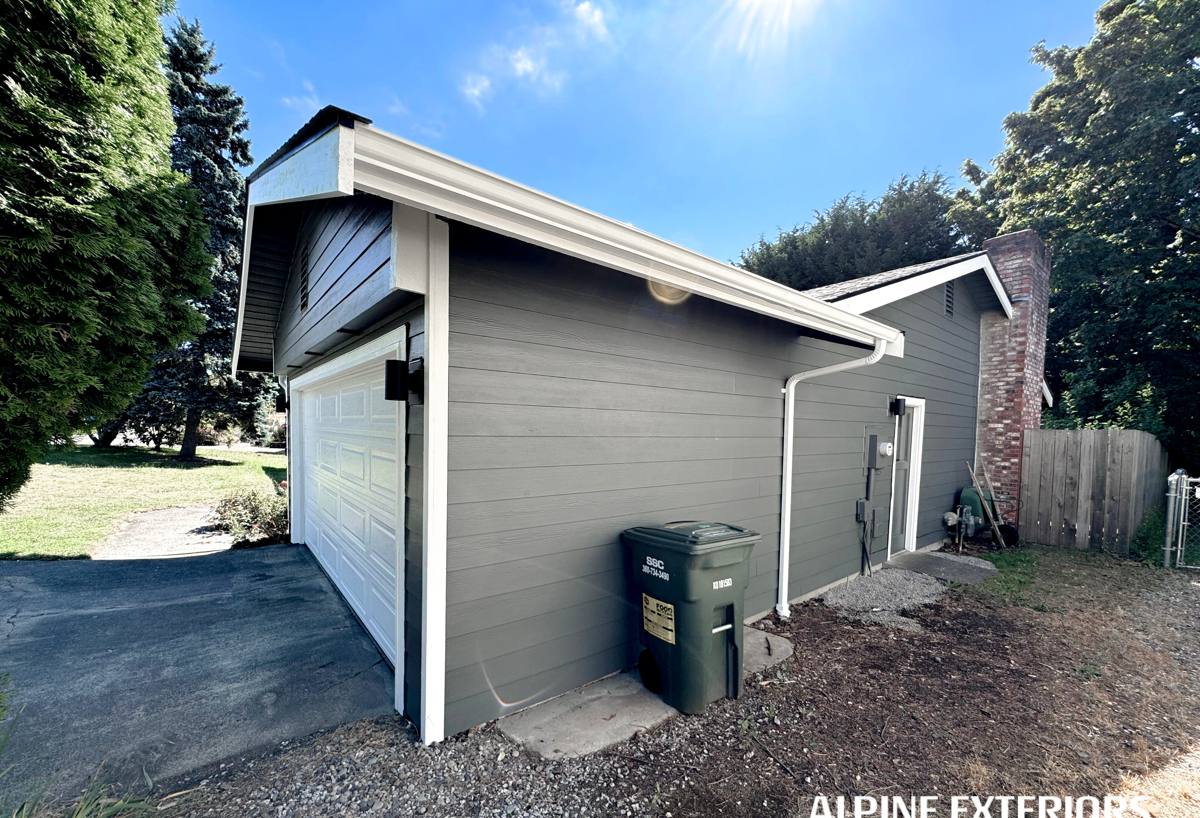
What "Correct" Fiber Cement Installation Actually Requires Here
Fiber cement siding is only as good as its installation. The material itself resists moisture, fire, and pests, but a sloppy install can undermine all of that in a climate like this one. A correct job in Blanchard means paying close attention to details that matter less in drier regions.
Flashing and Water Path
Every horizontal joint, window head, and butt seam needs a clear path for water to keep moving down and out — never trapped behind the panel. In a driving-rain climate, wind can push water sideways and upward under poorly lapped flashing, so the flashing details at windows, doors, and roof-to-wall intersections get extra attention rather than a quick pass.
Fastener Choice and Placement
Salt air corrodes the wrong fastener over a handful of years, and a corroding nail head under a factory finish eventually shows as a rust stain or a loose panel. Correct installation means corrosion-resistant fasteners driven per the manufacturer's placement and spacing specs — not just "close enough."
Gaps, Clearances, and Ventilation
Fiber cement needs a small gap where it meets trim, decking, roofing, and other siding — enough for expansion and for water to escape rather than wick upward. Panels installed tight against grade or against horizontal surfaces are one of the most common causes of early moisture damage we see on re-sides in this area.
Caulk and Sealant Discipline
Sealant belongs at specific joints, not everywhere. Over-caulking traps moisture in exactly the spots it needs to escape; under-caulking leaves an open path for wind-driven rain. Getting this balance right is a judgment call that comes from doing the work locally, not from a generic checklist.
Why This Company Installs Only James Hardie Fiber Cement
We don't install vinyl, LP SmartSide, primed wood, cedar, or other fiber cement brands. That's a deliberate standard, not a matter of availability. In a climate that punishes moisture mistakes, we've found that consistency in one well-engineered product system — installed the same correct way every time — produces fewer callbacks and longer-lasting results than switching between materials based on price point.
James Hardie's fiber cement is non-combustible, dimensionally stable in wet-dry cycling, and comes with a factory-applied ColorPlus finish that's baked on rather than field-painted. That finish matters directly here: a factory finish resists the fading and moss-staining that a field-applied paint job gives up to faster, and it carries a real, transferable warranty backing it. Products that rely on site-applied primer and paint put the long-term performance in the hands of whoever painted the job that week — we'd rather not gamble a homeowner's siding on that.
James Hardie Product Lines Suited to This Region
Hardie engineers its siding by climate zone (labeled HZ), which matters more here than in drier parts of the country. Homes in the Skagit County/Pacific Northwest zone should be installed with the HZ10 formulation, engineered specifically for high-moisture, wet-climate performance rather than the hot, dry-climate version sold elsewhere in the country.
| Product Line | Best Use | Why It Fits Blanchard |
|---|---|---|
| HardiePlank Lap Siding | Most common wall application | Traditional profile, wide color range, proven track record in wet coastal climates |
| HardieShingle | Accent gables, dormers | Cedar-shake look without the moisture upkeep of real cedar shingle |
| HardiePanel | Modern vertical siding, accent walls | Clean lines for contemporary Blanchard builds and additions |
| HardieTrim | Corners, fascia, window/door trim | Matches the plank's moisture resistance at the most vulnerable joints |
Color selection also plays a practical role beyond looks. Darker ColorPlus tones show less visible moss shadowing between cleanings than very light, flat colors on heavily shaded elevations — worth discussing during your estimate if your lot sits under heavy tree cover.
How Our Blanchard Installation Process Works
- On-site assessment: We look at sun exposure, tree cover, drainage, and the current siding's failure points before quoting anything.
- Tear-off and sheathing check: Old siding comes off and we inspect the sheathing and house wrap underneath for hidden rot or moisture damage before covering anything back up.
- Weather barrier and flashing: A correctly lapped weather-resistive barrier and flashing package goes in first — this is the layer that does the real waterproofing work.
- HZ10 Hardie installation: Panels, fasteners, and gaps installed to manufacturer spec, not shortcuts.
- Trim, caulk, and final inspection: Sealant placed only where it belongs, followed by a walk-through before we call the job done.
What Fiber Cement Siding Costs to Install in Blanchard
Every home is different, but the factors that move the price on a Blanchard project are consistent. This is a general guide, not a quote — actual numbers depend on your home's size, condition, and access.
| Cost Factor | Why It Matters Here |
|---|---|
| Removal of old siding | Homes with wood or vinyl siding often reveal hidden moisture damage from years of exposure to driving rain |
| Sheathing/framing repair | Common on older Blanchard homes where past siding trapped moisture against the wall |
| Siding profile and trim complexity | Multiple gables, dormers, and trim details take more labor and material than a simple rectangular elevation |
| Color and finish selection | Custom ColorPlus tones and accent shingle work add cost over a standard plank package |
| Site access | Wooded or sloped lots common in this area can require more staging and labor time |
Maintaining Fiber Cement Siding Through a Skagit County Moss Season
One of the real advantages of correctly installed Hardie siding is how little upkeep it needs compared to wood or vinyl — but "little" isn't "none," especially here. A short annual routine keeps it performing the way it's supposed to.
- Rinse shaded, moss-prone elevations with a garden hose and soft brush once a year — avoid high-pressure washing, which can force water behind panels or joints
- Trim back vegetation and tree limbs that keep siding shaded and slow to dry
- Check caulking at windows, doors, and trim joints annually for cracking or separation
- Look at fastener heads and trim corners for any sign of rust bleed or staining
- Clear gutters and downspouts before the fall rains so water isn't overflowing directly onto siding runs
Why a Crew That Already Works in Blanchard Makes a Difference
A contractor who's done this work in the area already knows which elevations in this part of Skagit County take the worst of the wind-driven rain, which lots hold moss longer because of tree cover, and how local building department expectations run for weather-resistive barriers and flashing details. That local pattern recognition is the difference between a crew following a generic install guide and one that's actually accounting for how a Blanchard house behaves through a wet winter.
It also matters for something less visible: knowing which details on a previous Blanchard install held up and which needed a second look years later. That kind of feedback loop only exists when a contractor keeps working the same area over time, rather than treating every job as a one-off.
Ready for a Straight Answer on Your Siding
If your Blanchard home's siding is showing moss staining, soft spots, or peeling paint, it's worth getting a straightforward, no-pressure look before winter rains set in again. We'll walk your home's exterior, point out what we actually see, and give you a clear estimate for correctly installed James Hardie siding — no obligation attached.