 Burlington
 Roof Replacement in Blanchard: Built for What This Spot Actually Sees
Blanchard sits in a stretch of Skagit County that takes weather from two directions at once. It's close enough to Samish Bay and the broader Puget Sound system to pick up salt-laden marine air on a regular basis, and it sits right up against the wooded base of Chuckanut Mountain, where tree cover keeps roof planes shaded and damp long after the rest of the valley has dried out. Add in the driving rain that comes through with most Pacific storm fronts here, and you've got three separate stresses working on a roof at the same time, year-round.
None of that means a roof in Blanchard is doomed to fail early. It means the roof has to be built and installed with those specific conditions in mind, not treated like a generic install that would work fine in a drier, more open part of the state. This page walks through what Blanchard's climate actually does to a roof, what a correct replacement looks like in response, and how we run that job from first inspection to final cleanup.
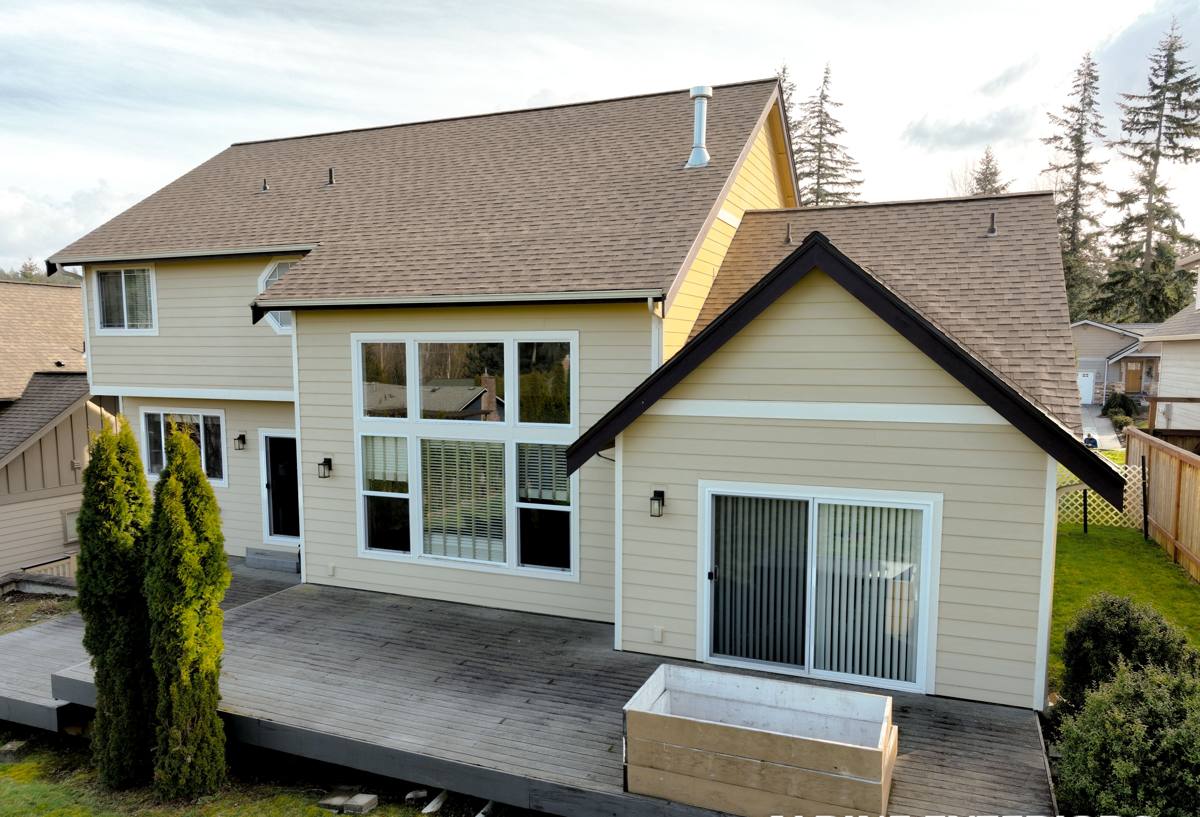
What Salt Air, Driving Rain, and Moss Actually Do to a Roof
Each of these three conditions attacks a roof in a different way, and together they compound faster than any one of them would on its own.
Salt Air
Marine air moving inland off Samish Bay carries fine salt particulate that settles on exposed metal — flashing, fasteners, vent caps, gutter hardware — and speeds up corrosion well beyond what the same materials would see further inland. A fastener that would hold for decades in a dry inland climate can start rusting through in a fraction of that time here if it isn't rated for coastal exposure. Corroded fasteners don't just look bad; they lose their grip on shingles and flashing, which is exactly how small leaks start.
Driving Rain
Rain in this part of Skagit County rarely falls straight down for long stretches. Storm fronts push it sideways, which forces water up and under shingle tabs, into flashing laps, and along any seam that wasn't sealed as part of a full system rather than caulked on afterward. A roof that would shed water fine under calm, vertical rainfall can still leak under wind-driven conditions if the underlayment and flashing weren't built to account for it.
A Long Moss Season
Blanchard's proximity to Chuckanut Mountain means real tree cover on a lot of properties, and shaded, north-facing roof planes here stay damp far longer into the year than sun-exposed roofs elsewhere in the county. Moss doesn't just sit on the surface — it holds moisture against shingles and roof decking, works its way under shingle edges as it grows, and can lift tabs enough to let water underneath. Left unaddressed over several seasons, it shortens a roof's effective service life well below its rated years.
Signs a Blanchard Home Needs a Roof Replacement, Not Just a Repair
Not every roof problem calls for a full replacement, but in this climate, deferred small problems tend to compound into bigger ones faster than homeowners expect. These are the signs worth taking seriously:
- Granule loss visible in gutters or downspouts, especially after a wind or rain event
- Shingles that are curling, cracking, or lifting at the edges rather than lying flat
- Persistent moss or algae streaking that keeps coming back after cleaning
- Daylight visible through the roof deck from inside the attic
- Water stains on interior ceilings or upper walls, particularly near valleys or chimneys
- Rusted or visibly corroded flashing, vent boots, or fasteners
- A roof that's approaching or past the expected lifespan of its material, especially if the original install quality is unknown
- Multiple past repairs in the same area that keep recurring
Any one of these on its own might point to a targeted repair. Several of them together, or a roof that's already past its expected service life, usually means the underlying system has aged out and patching it further is just delaying a bigger cost.
Roofing Materials That Hold Up in Blanchard Conditions
Material choice matters here more than in a milder, drier climate, because the gap between a product that's rated for coastal, wet-climate exposure and one that isn't shows up faster in Blanchard than it would elsewhere.
| Material | Typical Lifespan | Fit for Blanchard Conditions |
|---|---|---|
| 3-Tab Asphalt Shingles | 15-20 years | Lowest upfront cost, but a thinner profile and lower wind rating make it a weaker match for a wooded, wind-exposed lot near the mountain |
| Architectural Shingles | 25-30 years | Heavier construction and stronger wind resistance; the practical default for most homes in this area |
| Algae-Resistant Architectural Shingles | 25-30 years | Copper- or zinc-infused granules resist the moss and algae growth that shaded, tree-covered roofs here are especially prone to |
| Standing Seam Metal | 40-50+ years | Sheds moisture and moss fastest of any common option; higher upfront cost, worth considering on steep or heavily shaded roof planes |
For most Blanchard homes, algae-resistant architectural shingles offer the best balance of upfront cost and long-term performance, particularly on lots with meaningful tree cover. Metal earns a look on roofs that stay shaded most of the day or that have struggled with recurring moss problems under a shingle roof in the past.
What a Correct Roof Replacement Actually Involves
A roof replacement is a system, not a single product laid down over the old one. Skipping steps in this process is exactly how a roof that looks fine on install day starts leaking two or three winters later.
Full Tear-Off and Deck Inspection
We remove the existing roofing material down to the deck on every replacement rather than layering new shingles over old. That's the only way to find rot, soft spots, or hidden moisture damage that's been developing quietly underneath — a real risk on shaded, moss-prone roofs where trapped moisture can work into the decking without ever showing up as a visible leak until it's advanced.
Underlayment Built for Wind-Driven Rain
Synthetic or self-adhered underlayment gives the deck a real secondary water barrier, which matters directly in a climate where rain is routinely pushed sideways rather than falling straight down. Ice-and-water shield membrane goes down at eaves, valleys, and other high-risk transitions, adding another layer of protection exactly where wind-driven water is most likely to find a way in.
Flashing at Every Transition
Valleys, chimneys, skylights, and roof-to-wall intersections are where most roof leaks actually start, not in the open field of shingles. Correctly installed flashing is lapped and integrated with the underlayment as part of the water-shedding system, not caulked over as an afterthought once the shingles are already down. Given the salt exposure here, we use corrosion-resistant flashing metal and fasteners rated for coastal conditions rather than standard-grade hardware.
Fastening to Manufacturer Specification
Nail pattern, count, and placement follow the manufacturer's specification for the exact product going down, not a faster shortcut method. That's what keeps shingles locked down under wind load instead of lifting at the edges over time — a real concern on lots that catch direct wind funneling off the mountain or across open ground near the bay.
Ventilation That Keeps the Deck Dry Year-Round
Balanced intake and exhaust ventilation keeps the underside of the roof deck dry, which matters as much as anything happening on the outside of the roof. Poor attic airflow traps moisture against the deck from below, accelerating wood rot and feeding moss growth from underneath at the same time weather is working against the roof from above.
Cost Factors Worth Understanding Before You Compare Bids
Two estimates for the same Blanchard roof can land thousands of dollars apart, and the gap is almost always real differences in scope rather than one contractor padding the number.
| Factor | What It Affects |
|---|---|
| Tear-off vs. layover | Whether hidden deck damage gets found and repaired before new roofing goes down |
| Underlayment grade | How well the roof resists wind-driven rain getting under shingle or seam edges |
| Material and wind rating | Expected lifespan and performance on an exposed or heavily shaded roof |
| Flashing scope and metal grade | How thoroughly valleys, chimneys, and wall transitions are protected, and how well that flashing resists salt-air corrosion |
| Ventilation upgrades | Long-term moisture control and how long the new roof actually lasts |
| Roof pitch, height, and tree access | Labor time, staging, and safety requirements specific to wooded, sloped Blanchard lots |
A written estimate that itemizes these components separately tells you far more than a single lump-sum number. It's worth asking any contractor bidding your roof to walk through exactly what's included at each line, especially on flashing and underlayment, before comparing two prices side by side.
How Our Process Works
We keep the process straightforward because a job this size on your home deserves clear communication at every stage, not surprises partway through.
- In-person inspection: We walk the roof and attic ourselves rather than estimating from a photo or satellite image, and document what we actually find, including tree cover, shading patterns, and existing moss or algae growth specific to the property.
- Written, itemized estimate: You get a line-by-line breakdown of material, underlayment, flashing, and ventilation scope, so you know exactly what's included and can compare it against other bids on equal footing.
- Scheduling around the weather: We plan tear-off and dry-in around realistic weather windows for this part of Skagit County, since an exposed deck sitting under an unexpected storm is a risk we plan to avoid rather than react to.
- Tear-off, deck repair, and system install: Full removal of the old roof, repair of any deck damage found underneath, and installation of underlayment, flashing, roofing material, and ventilation as a complete system.
- Final walkthrough and cleanup: We walk the finished roof with you, confirm flashing and ventilation details, and clear the site of old material and debris, including a magnetic sweep for stray fasteners.
Why Hiring a Crew That Already Works Blanchard Matters
A roofing crew that's replaced roofs elsewhere in the state but hasn't worked this specific stretch of Skagit County is starting from a generic playbook. A crew that already works Blanchard regularly knows which roof planes on a given lot are going to stay shaded and damp longest through the year, which fastener and flashing grades actually hold up against sustained salt exposure this close to the bay, and how wind funnels differently off Chuckanut Mountain than it does on open, flat terrain elsewhere in the county. That local pattern recognition shows up in decisions made before the crew ever gets on the roof — which underlayment grade to spec, where to add extra flashing attention, and which material tier actually makes sense for a specific lot's tree cover and sun exposure.
It also matters for permitting and inspection familiarity, since local jurisdictions and inspectors have their own expectations that an out-of-area crew has to learn on the fly. A crew already working this area has typically already built that relationship and knows what documentation and scheduling a job needs to move smoothly.
Maintaining a New Roof in a Wet, Shaded Climate
A correctly installed roof still benefits from some routine attention in a climate like Blanchard's. Keeping gutters and downspouts clear prevents water from backing up under the lowest course of roofing during heavy rain. Trimming back overhanging branches reduces both debris buildup and the shade that keeps moss taking hold. And a periodic visual check for granule loss, lifted shingles, or moss regrowth catches small issues while they're still a simple fix rather than letting them develop into a leak. None of this replaces a correct initial install, but it extends the life of one considerably.
If your Blanchard home's roof is showing its age, or you just want an honest read on what condition it's actually in, we're happy to take a look. The estimate is free, there's no pressure attached to it, and you'll get a straight answer about whether you're looking at a repair, a replacement, or a few more years of useful life left — just fill out the form below to get started.