 Burlington
 Building a Deck That Can Actually Handle Clear Lake's Climate
A deck around Clear Lake lives a different life than one built on an open, sunny lot in town. Between the tree cover, the water nearby, and the general dampness that settles into Skagit County for much of the year, an outdoor structure here deals with more standing moisture, more shade, and a longer stretch of green, slick growth on its surface than most homeowners expect when they start planning. Add in the driving rain that blows through this part of Washington several months a year, and you've got conditions that will expose a shortcut in construction faster than almost anywhere else in the region.
None of that means you can't have a great deck here — it means the deck has to be built with this specific environment in mind from the design stage forward, not treated like a generic backyard project. That's the difference between a deck that still looks and feels solid in ten years and one that's soft, stained, or wobbly in three.
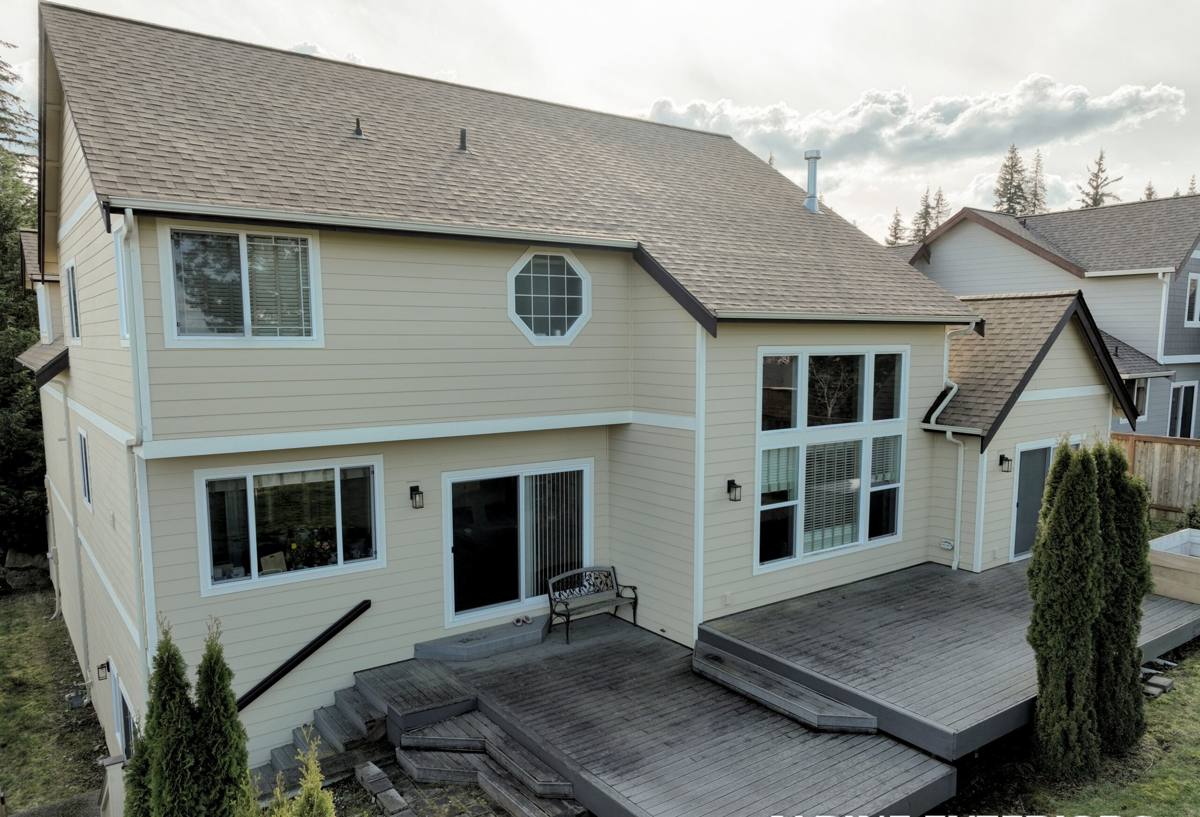
What a Deck Near the Lake Is Really Up Against
Three things drive almost every deck problem we see in this area, and they compound each other:
- Shade and airflow. Mature trees around lake properties block sun that would otherwise dry a deck surface after rain. Less sun and less air movement means boards, especially on the north or east side of a house, stay damp far longer than the same boards would in an open yard.
- Moisture-laden air. Like the rest of Skagit County, the Clear Lake area sits under a marine-influenced climate pulling damp air off Puget Sound much of the year. Combined with proximity to the lake itself, that means higher ambient humidity, more condensation on cool mornings, and slower drying overall.
- A long moss and algae season. Moss doesn't just grow on roofs here. Any horizontal wood or composite surface that stays shaded and damp long enough will grow it too, and once it takes hold on a deck it becomes a slip hazard as much as a cosmetic one.
A deck that's built without accounting for these three things will develop the same complaints on a predictable timeline: soft or splitting boards where water sits, rust streaks around fasteners, green film on shaded sections, and a substructure that's rotting quietly underneath a surface that still looks fine from the top.
Choosing the Right Decking Material for a Shaded, Damp Lot
Material choice matters more here than it does on a dry, sun-exposed property. There's no single "best" decking material for every home — it depends on how much sun the deck gets, how much upkeep you're willing to do, and your budget. Here's how the common options actually perform in a Clear Lake setting:
| Material | How it handles shade & moisture | Maintenance | Typical lifespan |
|---|---|---|---|
| Pressure-treated fir/pine | Prone to holding moisture and greening up in shaded spots without regular cleaning | Annual cleaning, periodic sealing | 15–20 years with upkeep |
| Cedar | Naturally more rot- and insect-resistant, but still needs sealing to keep water out and moss off | Cleaning and re-sealing every 1–2 years | 15–25 years with upkeep |
| Capped composite | Doesn't absorb moisture like wood, but shaded sections still need periodic washing to prevent surface film | Occasional washing, no sealing | 25–30+ years |
| PVC decking | Fully moisture-resistant core; best option for consistently shaded or damp areas near the lake | Low — occasional washing | 30+ years |
We don't push one product on every job. If you like the look and feel of real wood and are willing to stay on top of cleaning and sealing, cedar is a legitimate choice even in a shaded yard. But if the deck sits mostly under tree cover or on the shaded side of the house, we'll usually steer you toward a capped composite or PVC board, simply because it holds up with far less maintenance in exactly the conditions that cause the most trouble here.
A note on "budget" wood decking
Untreated or minimally treated lumber sold as a low-cost option tends to be the worst fit for this climate specifically. It has the least moisture resistance of any common decking material, and in a shaded, damp spot near the lake it can start cupping or checking well before a homeowner expects to be doing repairs. We're honest about that trade-off up front rather than letting a lower material cost turn into a bigger bill in a few years.
Framing, Footings, and the Details Most Decks Skip
The parts of a deck nobody sees are usually the parts that fail first in a climate like this. A deck can have beautiful boards on top and still be in trouble underneath if the framing wasn't handled correctly for the conditions.
- Footings sized and set to local frost depth — undersized or shallow footings shift over time as the ground around the lake saturates and dries through the seasons.
- Ledger board flashing — where the deck attaches to the house is the single most common point of hidden rot on any deck in a wet climate. Proper flashing keeps water from working its way behind the ledger and into the house's structure, not just off the deck surface.
- Joist protection — capping or taping the tops of joists before decking goes down keeps water from soaking into end grain and rotting framing from the inside, invisible from above until it's a real problem.
- Gapping and airflow under the deck — proper spacing between boards and adequate clearance underneath lets air move and moisture escape instead of getting trapped, which matters even more in a shaded yard than a sunny one.
These aren't upgrades — they're the baseline for a deck that's going to hold up under Skagit County's rain and humidity for decades instead of one that looks fine for the first few summers and then starts showing problems.
Railings and Hardware That Won't Rust or Work Loose
Damp air is hard on fasteners and hardware, and a deck near the lake sees more of it than most. Standard hardware that isn't rated for exterior, high-moisture use will corrode and stain the wood around it, sometimes within a year or two. We use coated or stainless fasteners and hidden fastener systems suited to this climate, along with connectors and brackets rated for exterior exposure rather than general-purpose hardware.
Railings deserve the same attention. Beyond meeting current residential building code for height and baluster spacing, railing posts need to be anchored into framing that can actually hold up to years of damp-dry cycling without the posts loosening — a common complaint we hear about decks that weren't built with this climate in mind.
Our Process for a Clear Lake Deck Project
- On-site walkthrough. We look at sun exposure, tree cover, drainage patterns, and how the deck will tie into your house before recommending any material or design.
- Design and material selection. We talk through the trade-offs honestly — what fits your budget, your maintenance tolerance, and the specific shade and moisture conditions of your lot.
- Permitting. We handle the permit process for the project, which keeps the build on the right side of code from footings to railings.
- Construction. Footings, framing, flashing, and decking are installed in that order, with the moisture-management details built in rather than added as an afterthought.
- Final walkthrough. We go over the finished deck together, including what maintenance it will need and roughly how often, so there are no surprises.
Keeping a Clear Lake Deck Looking Good Through Moss Season
Even a well-built deck needs some seasonal attention in this climate — the goal is to make that upkeep light and predictable rather than a recurring repair bill. A simple annual routine goes a long way:
- Sweep leaves and debris off the deck regularly in fall, especially in shaded corners where they trap moisture against the boards.
- Rinse or gently scrub visible moss and algae film as soon as it appears rather than letting it establish — it's far easier to remove early.
- Check that gaps between boards stay clear of debris so water and air can keep moving underneath.
- Inspect fasteners and railing connections once a year for any rust streaking or looseness.
- Re-seal wood decking on the schedule appropriate to that species — don't wait until it's visibly graying or absorbing water.
- Confirm gutters and downspouts near the deck are directing roof runoff away from it, not onto it.
None of this is heavy work, but skipping it is exactly how a well-built deck starts to look tired ahead of schedule in a climate this damp.
Why Local Experience in Clear Lake Actually Matters
A contractor who mostly works drier, sunnier parts of the county can build a technically sound deck and still get the material and drainage choices wrong for a shaded lot near the water. Knowing how a particular neighborhood's tree cover, lake humidity, and drainage tend to behave through a Skagit County winter isn't something you get from a spec sheet — it comes from having built and maintained decks in that exact setting. We've worked on homes throughout the Clear Lake area and the broader Burlington region, and that local, hands-on experience shapes every recommendation we make, from footing depth to which decking material actually holds up under your specific trees.
It also means we're familiar with the county's permitting process and typical inspection expectations for this area, which keeps projects moving without avoidable delays.
What This Typically Costs
Deck pricing depends heavily on size, material, height off the ground, and how much site work is involved, so any number without seeing your property is a rough guide at best. As a general sense of range, most custom deck projects in this area run from the mid four figures for a smaller, simple wood deck up into the low-to-mid five figures for larger composite or PVC decks with railings and multiple levels. We'll give you an exact, itemized number once we've seen the site and talked through materials.
If you're planning a deck for a Clear Lake property and want a straightforward, honest look at what it'll take, we're happy to walk the site with you and put together a free, no-pressure estimate — no obligation, just a clear picture of your options.