 Burlington
 Why Skagit County's Climate Is Hard on Decking in Avon
Avon sits on low, flat farmland in the Skagit River flood plain just outside Burlington, and that geography shapes everything about how a deck needs to be built here. The ground stays wetter longer than it does on higher, better-drained lots. Add in the moist air that moves off Skagit Bay and Puget Sound, months of driving rain from fall through spring, and a moss and algae season that can run nine or ten months out of the year, and you have a climate that is genuinely tough on exterior wood surfaces.
Traditional lumber decking in this environment absorbs moisture through end grain and fastener holes, swells and shrinks with the seasons, and grows moss and mildew in any spot that doesn't get direct sun or airflow. Salt-laden air adds another layer of stress, accelerating corrosion on hardware and fasteners that aren't rated for coastal-adjacent exposure. None of this is unique to any one property in Avon — it's the baseline every deck here has to be built to handle.
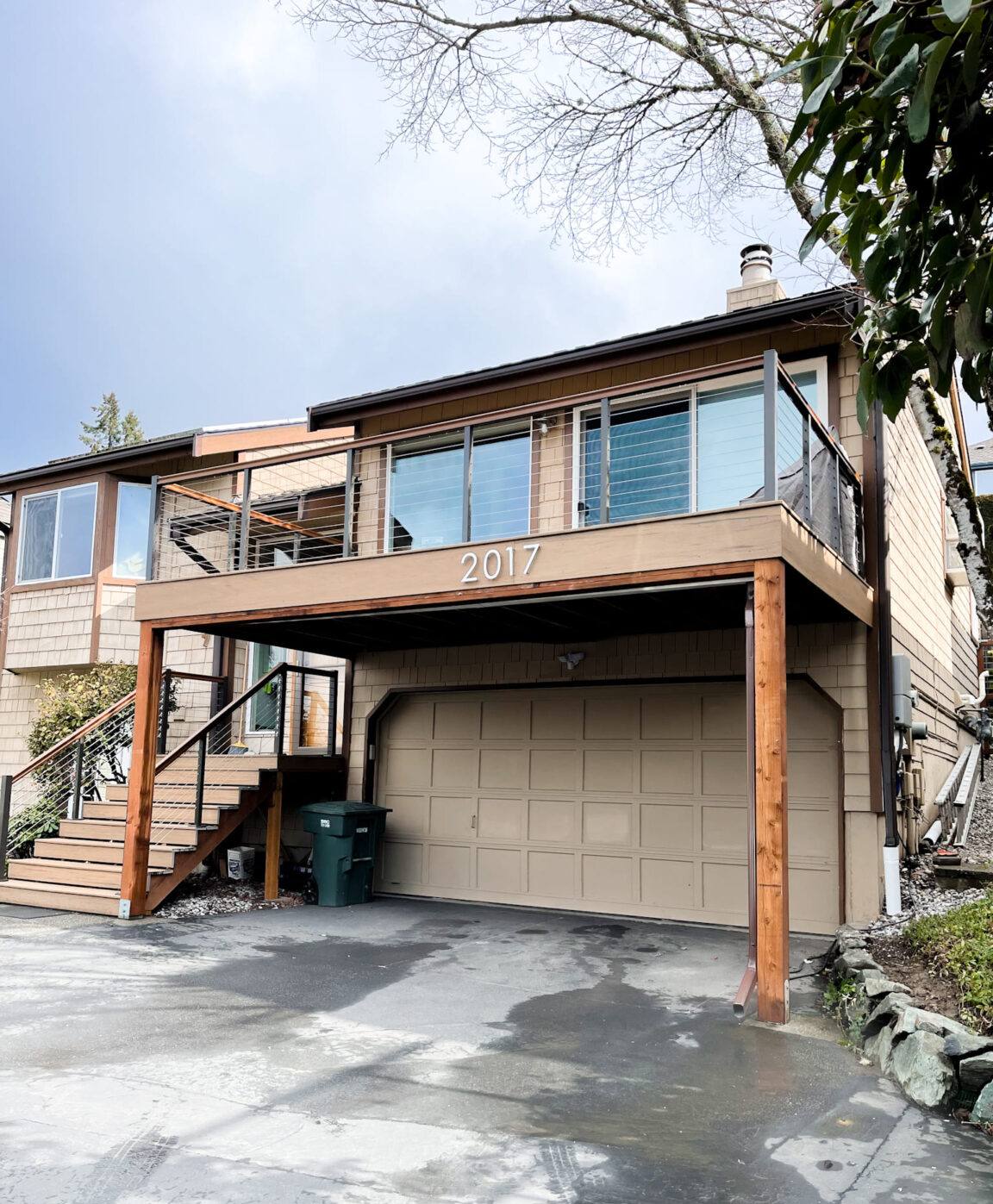
What a Deck in Avon Actually Needs to Hold Up
Composite decking earns its keep in this climate, but only when it's paired with the right substructure and detailing underneath it. The board itself is only part of the equation. A deck that holds up in Avon needs:
- Framing and fasteners rated for constantly damp, occasionally saline air — not standard interior-grade hardware
- Ventilation and airflow beneath the deck so trapped moisture can escape instead of sitting against joists
- A ledger connection to the house that's flashed correctly, since this is the single most common point of hidden water damage on any deck
- Board spacing and drainage that account for months of steady rain, not just occasional showers
- Surface texture and color that won't turn slick with moss and algae growth between cleanings
Composite decking, when installed correctly, addresses most of these on the surface level — it doesn't rot, splinter, or need annual staining. But composite boards are still installed over a wood or metal frame, and that frame is where most deck failures in this region actually start. A beautiful composite deck over a poorly ventilated, unflashed frame will still fail early; it just hides the problem longer than wood would, which is exactly why the substructure work matters as much as the decking itself.
Composite Decking Options We Install
Capped Composite
Most of what we install in the Burlington area is capped composite decking — a wood-plastic composite core wrapped in a protective polymer shell. The cap is what does the real work in this climate: it resists moisture absorption, blocks UV fading, and keeps mold and mildew from taking hold the way it does on the exposed wood fibers of older, uncapped composite products. Capped composite is the middle ground between budget composite and full PVC, and for most Avon homes it's the right balance of cost, appearance, and long-term performance.
Cellular PVC
For decks that sit low to the ground, stay shaded most of the day, or are especially exposed to standing moisture, cellular PVC decking is worth considering. It contains no wood fiber at all, so it has effectively zero risk of moisture-driven rot or mold growth in the board itself. It costs more than capped composite and the color range tends to be more limited, but in a spot where drainage is genuinely difficult, it's the more conservative choice.
We don't install uncapped composite or the lowest-tier composite products on homes in this area. They cost less up front, but the exposed wood fiber in the core absorbs moisture readily in a climate this wet, and that leads to swelling, staining, and premature failure well before the warranty period is up. It's a maintenance and longevity trade-off we'd rather not put a homeowner into.
| Material | Moisture Resistance | Maintenance | Typical Lifespan |
|---|---|---|---|
| Pressure-treated wood | Fair — needs sealing | Annual cleaning & staining | 10–15 years |
| Capped composite | Very good | Periodic wash-down | 25–30+ years |
| Cellular PVC | Excellent | Periodic wash-down | 25–30+ years |
| Uncapped composite | Poor to fair | Frequent cleaning | 10–15 years |
What a Correct Composite Deck Installation Involves
Substructure & Framing
We build the frame with hardware rated for damp, coastal-adjacent exposure — hot-dip galvanized or stainless fasteners and connectors, not the mill-standard hardware that shows up in big-box framing kits. Joist spacing is set to the composite manufacturer's spec, which is usually tighter than what's required for solid wood decking, because composite boards flex differently under load and heat.
Ledger Board & Flashing
Where the deck attaches to the house, the ledger board gets proper flashing and a water-resistant barrier behind it. This is the detail that gets skipped most often on lower-cost deck jobs, and it's the one most likely to cause hidden rot inside a wall long after the deck itself looks fine. In a climate that sees this much annual rainfall, we treat ledger flashing as non-negotiable, not optional upgrade.
Fastening, Spacing & Airflow
Composite boards get installed with hidden fastener systems that allow for proper expansion gaps and keep the surface free of exposed screw heads that can trap water and grime. We also make sure there's real airflow underneath the finished deck — enough clearance and, where the site allows it, vented skirting — so moisture that does get underneath can dry out instead of sitting against the frame indefinitely.
Our Process, Start to Finish
- On-site assessment of the existing deck or build area, including ground moisture, drainage direction, and sun/shade exposure
- Product recommendation based on that assessment — not a one-size-fits-all pitch
- Written estimate covering material, substructure work, and any permit requirements through Skagit County
- Permit filing where required, framing and substructure work, then composite board installation
- Final walkthrough, site cleanup, and a look at maintenance basics specific to the product installed
Most residential deck projects in this area run a few days to a couple of weeks depending on size, whether the existing substructure can be reused, and weather windows — we schedule around the wetter stretches of the year rather than fighting them.
Why Hiring a Crew That Already Works in Avon Matters
A lot of deck problems in this area trace back to crews building to a generic spec instead of a Skagit County one. A contractor who hasn't worked this ground before might not think twice about standard fastener hardware, might skip vented skirting because it's not required in a drier climate, or might not budget extra time for the rain delays that are just normal here from October through May.
Working in and around Burlington and Avon regularly means we already know the local building department's permit process, we know which framing details actually matter on this flood-plain ground versus higher, drier lots elsewhere in the county, and we're not guessing at material choices — we've seen how different composite lines actually hold up after a few wet seasons on homes nearby. That local track record is worth more than a lower bid from a crew unfamiliar with the area.
Living With Composite Decking in Skagit County's Climate
Composite decking is genuinely low-maintenance compared to wood, but "low-maintenance" doesn't mean "no maintenance" — especially with a moss season as long as ours. A little routine care keeps a composite deck looking and performing the way it should for decades.
- Rinse or sweep debris off the deck regularly — trapped leaves and pollen hold moisture against the surface and feed algae growth
- Wash the surface a couple of times a year with a soft-bristle brush and a cleaner made for composite decking, not a harsh degreaser or bleach solution
- Keep gutters and downspouts near the deck clear so runoff isn't dumping directly onto the surface or substructure
- Check that gaps between boards stay clear of compacted debris, since that's what allows water to drain through instead of pooling
- Inspect the ledger connection and any visible framing once a year for early signs of moisture intrusion
- Avoid pressure-washing at close range or high pressure, which can damage the cap layer on composite boards over time
What Drives the Cost of a Composite Deck in Avon
Every deck project is a little different, but the same handful of factors drive the price on most jobs we quote in this area.
| Cost Factor | Why It Matters |
|---|---|
| Deck size & shape | More square footage and complex angles mean more material and labor |
| Substructure condition | Reusing a sound existing frame costs far less than a full rebuild |
| Composite tier | Entry-level, mid-grade, and premium composite lines carry different price points and warranty coverage |
| Railing system | Composite, aluminum, and cable railing all price differently and affect overall labor time |
| Elevation & stairs | Raised decks and multi-level designs add framing, footings, and stair complexity |
| Site access | Tight lots or limited equipment access can add labor time |
We don't quote sight-unseen for exactly this reason — ground condition, existing framing, and site access vary enough from property to property in this area that an honest number requires a look at the actual site first.
If you're thinking about a new deck or replacing an aging one in Avon, we're happy to come take a look and walk through what makes sense for your property and budget. There's no pressure and no cost to get an estimate — just a straight answer about what your deck needs and what it will take to build it right.