 Burlington
 Building Decks for Conway's Low, Wet Ground
Conway sits down in the Skagit River delta, south of Burlington, where the land is flat, the water table sits close to the surface, and the air carries a steady dose of moisture off the river bottoms and nearby saltwater. That combination is hard on any outdoor structure, but it is especially hard on decks, because a deck's substructure — the posts, footings, and framing underneath the boards you walk on — sits right where ground moisture, standing water after heavy rain, and constant shade from surrounding trees do the most damage. A deck built the way it might be built in a drier part of the state does not hold up the same way here.
We build decks for homeowners in Conway and the surrounding Burlington and Skagit County area, and this page is about that one job done right for this one kind of ground and climate — not a generic overview of decks in general.
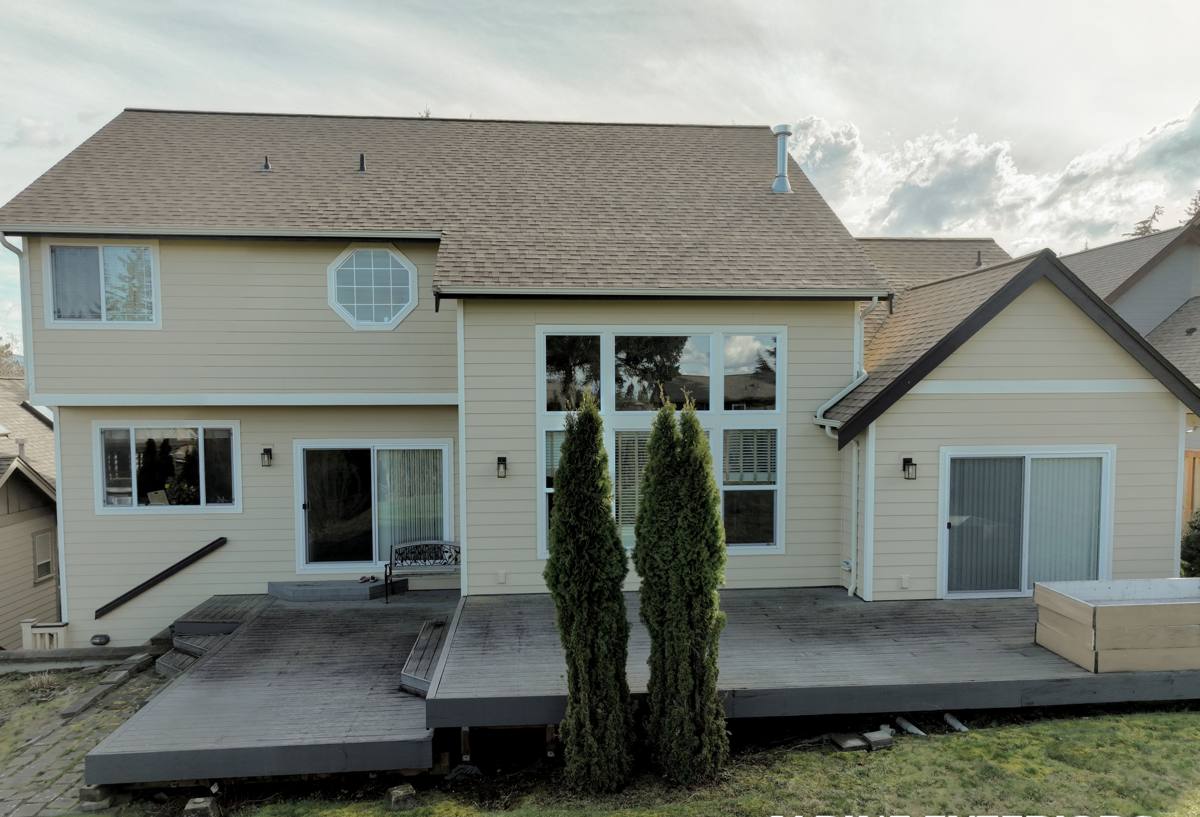
What Conway's Climate Actually Does to a Deck
Three things drive most of the deck problems we see out here, and they all connect back to the regional climate:
- Long wet seasons. Skagit County gets extended stretches of steady rain, not just occasional downpours. Wood and framing hardware that stays damp for weeks at a time deteriorates faster than the same materials would in a climate with more drying time between storms.
- Low, poorly draining ground. Because Conway sits in the delta, soil in a lot of yards drains slowly. Footings and post bases that would be fine on a well-drained hillside can sit in damp soil for much of the year if they aren't set and protected correctly.
- Moss and algae season. Shade, moisture, and mild temperatures give moss a long runway to establish on decking, stairs, and railings. Beyond looking bad, wet moss on a walking surface is a real slip hazard, and moss that's allowed to sit traps moisture against the wood underneath it.
None of this means a deck can't hold up well in Conway — it just means the details that don't matter much in a dry climate matter a great deal here.
What Correct Deck Building Looks Like in This Ground
Footings and Posts
In low-lying, damp soil, footing depth and drainage around the footing matter more than in drier ground. We set footings below frost depth per code, but we also pay attention to how water moves around and away from each footing so posts aren't sitting in a pocket of standing moisture through the winter. Post bases that hold the post up off the concrete — rather than embedding the wood directly — keep the end grain of the post out of standing water, which is one of the most common failure points we see on older decks in this area.
Ledger Attachment
Where a deck attaches to the house, the ledger board and its flashing are doing the most important waterproofing work on the whole structure. A poorly flashed ledger lets water track behind the siding and into the house framing, which turns a deck problem into a much bigger and more expensive repair. We flash ledger connections so water sheds away from the house, not into it, and we use fasteners rated for the pressure-treated lumber and moisture exposure involved.
Fasteners and Hardware
Standard uncoated or lightly coated fasteners corrode faster in a climate this wet, especially in ground contact or near-ground applications. We use hot-dip galvanized or stainless hardware rated for the lumber and exposure, and we match connectors, screws, and structural fasteners so the whole system corrodes at the same slow rate instead of the weakest piece failing early.
Decking Material Options for Conway Homes
There's no single "best" decking material — the right choice depends on budget, how much upkeep you want to do, and how much shade and moisture your specific site sees. Here's an honest comparison of the main options we install:
| Material | Moisture Behavior | Moss/Algae Resistance | Upkeep |
|---|---|---|---|
| Pressure-treated wood | Good if sealed and maintained; absorbs water if coating is neglected | Needs regular cleaning in shaded, wet spots | Annual cleaning and re-sealing recommended |
| Cedar | Naturally moisture- and rot-resistant, but still a wood product | Moderate — still needs cleaning in shade | Periodic sealing to hold color and resist checking |
| Composite decking | Does not absorb water or rot the way wood does | Better resistance, but can still grow surface algae in constant shade/moisture | Occasional washing; no sealing or staining |
| PVC/capped decking | Fully sealed surface, minimal moisture absorption | Best resistance of the common options | Lowest — periodic washing only |
In a climate like Conway's, composite and capped PVC decking generally give homeowners the least maintenance over the deck's life, since they aren't feeding moisture into the board the way wood does. Wood decking can still be the right call — it costs less up front and has a look many homeowners want — but it needs a real maintenance commitment to hold up through repeated wet seasons.
Framing Lumber, Regardless of Decking Choice
Whatever decking surface you choose, the framing underneath should be pressure-treated lumber rated for ground contact where applicable, with cut ends field-treated before they're covered. This is one of the most commonly skipped steps on lower-end deck jobs, and it's one of the first places rot shows up five or ten years later.
Railings, Stairs, and Code
Railings and stairs are where deck failures become safety failures, not just cosmetic ones. Skagit County follows the same structural and safety requirements as the rest of the state for guard height, baluster spacing, and stair rise/run — we build to those standards as a baseline, not an upgrade. In a moss-prone climate, stair treads and railing caps deserve extra attention, since a slick, mossy step is one of the more preventable hazards around a home. We factor drainage and material choice for these high-contact surfaces specifically, not just the main deck field.
Our Process, Start to Finish
- On-site look at your specific ground. We look at drainage, shade patterns, existing structure (if replacing a deck), and how the new deck ties into the house.
- Straightforward proposal. You get a clear scope and price — what materials, what size, what's included — before any work starts.
- Permitting and footing layout. We handle the permit process and lay out footings to match your soil and drainage conditions, not a one-size-fits-all plan.
- Framing and ledger work. This is where the moisture-management details above get built in — flashing, fastener choice, post base selection.
- Decking, railing, and stairs. Installed to the material manufacturer's specifications, since improper spacing or fastening is a common cause of early decking failure regardless of material.
- Final walkthrough. We go over the finished deck with you, including what maintenance (if any) the material you chose will need going forward.
Maintenance Through Moss Season
A well-built deck in Conway still needs some seasonal attention, because no material is entirely immune to a climate this wet and shaded. A simple checklist we give homeowners:
- Sweep leaves and debris off the deck surface regularly in fall — trapped organic material holds moisture and feeds moss growth.
- Wash the deck surface at least once a year with a deck-safe cleaner, more often in heavily shaded areas.
- Check that gaps between boards haven't filled with debris, which blocks drainage and airflow underneath.
- Inspect fasteners and railing connections annually for corrosion or looseness.
- Re-seal wood decking on the schedule the product calls for — don't wait until it looks dry and gray.
- Keep an eye on the area where the deck meets the house for any signs of water staining or soft wood.
Why a Crew That Already Works Conway Matters
Deck-building code and technique don't change from town to town, but ground conditions and climate exposure do. A crew that regularly works around Burlington and the Skagit River delta already knows how the soil in this area drains, how much shade and moss pressure to expect on a given lot orientation, and which material and hardware choices actually hold up here versus what looks fine on paper. That local pattern recognition is the difference between a deck that needs real repair work in eight years and one that's still solid in twenty-five.
Questions to Ask Before You Hire a Deck Builder
- Are your footings set below frost depth and designed for this property's drainage, or is it a standard template?
- What fastener and hardware grade are you using, and is it rated for ground-contact or coastal-influenced exposure?
- How is the ledger board flashed where it meets the house?
- What's the manufacturer's installation spec for the decking material we chose, and will you follow it exactly?
- Are you pulling the required permit, and will the work pass inspection?
- What maintenance will this deck need from me, realistically, given our shade and moisture?
If you're planning a new deck or replacing an aging one in Conway, we're happy to take a look at your property and walk you through honest options for your budget and site conditions. There's no pressure and no obligation — just fill out the form below for a free estimate.