 Burlington
 Windows Built for Life on Big Lake
Homes around Big Lake sit in a different microclimate than a house in downtown Burlington a few miles away. The water moderates temperatures but also holds moisture in the air longer through the morning, and the tree cover ringing the lake keeps roofs, siding, and window trim shaded and damp well after a storm has passed. Add in the marine-influenced weather that moves through Skagit County most of the year — driving rain that comes in sideways during a southwesterly blow, long stretches of gray humidity, and a moss season that can run from October into May — and you've got a set of conditions that will find every weak point in a window system. Old aluminum-frame or original single-pane wood windows from a home's original build era are usually the first thing to show it: fogged glass, drafts you can feel with your hand, sashes that stick from swollen wood, or sills that have started to soften.
Replacing those windows with a properly installed, energy-efficient system does two things at once. It cuts the amount of heat you're losing through the glass and frame all winter, and it seals up the gaps that let moist lake-effect air work its way into your wall cavities. Both matter here. A window that's rated well for a dry climate but installed without attention to local wind-driven rain will still leak. We build every job around both halves of that problem.
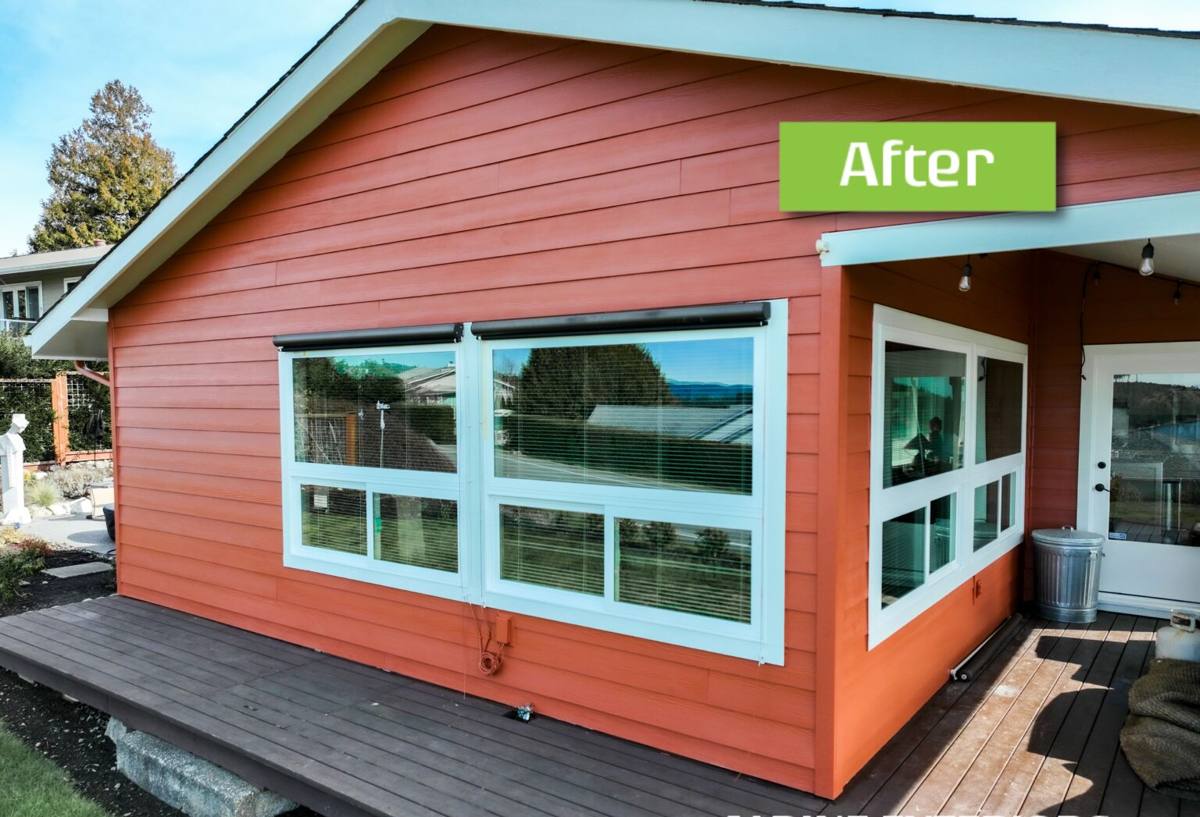
What "Energy-Efficient" Actually Means for a Skagit County Home
Energy efficiency in a window isn't one number. It's a combination of glass technology, frame material, and how well the whole unit is sealed into the rough opening. For a Big Lake home, the priorities are a little different than they'd be for a house on the dry side of the state:
- Low U-factor — measures how much heat escapes through the window. Lower is better for our cool, wet winters where the heating season runs long.
- Moderate-to-low Solar Heat Gain Coefficient (SHGC) — controls how much solar heat passes through the glass. Homes with lake-facing western or southern exposure benefit from glass that keeps rooms from overheating on the handful of bright days we do get, without sacrificing winter warmth.
- Argon or krypton gas fill — the inert gas between panes slows heat transfer. It's a small line item that pays for itself over the life of the window.
- Warm-edge spacer systems — the material separating the panes at the edge of the glass. In a humid climate, a poor spacer is where seal failure and interior fogging usually start first.
- Weatherstripping and multi-point locking hardware — this is what actually stops the driving rain and wind we get off the lake and out of the valley from finding its way in around the sash.
None of this is exotic. It's standard technology from the manufacturers we work with. The difference between a window that performs for fifteen years near Big Lake and one that fails early almost always comes down to installation, not the glass package.
Why Installation Matters More Here Than in Drier Climates
A window is only as good as the seal around it. In a dry inland climate, a mediocre installation might go unnoticed for years. Around Big Lake, with sustained moisture and driving rain loading the exterior wall, any gap in flashing or sealant becomes an entry point for water fairly quickly. We've seen homes where the window unit itself was fine but water had been getting behind the trim for years, rotting sheathing that nobody could see until the siding came off. That's the real cost of a rushed install, and it's the reason we spend as much time on flashing and sealing as we do on setting the window itself.
Signs Your Big Lake Home's Windows Are Underperforming
Most homeowners don't think about their windows until something is obviously wrong. A few signs worth acting on sooner rather than later:
- Condensation or fog trapped between the panes — the seal has failed and the insulating gas is gone.
- Visible moss or dark streaking on the exterior sill or trim, especially on north- and west-facing walls that stay shaded and damp longest.
- A noticeable draft near the frame on a windy day, even with the window latched.
- Wood trim or sashes that feel soft, or paint that's bubbling and peeling from moisture underneath rather than age alone.
- Rooms near large window areas that are noticeably colder in winter or run up condensation on the interior glass overnight.
- Higher-than-expected heating bills relative to the size of the home, with no other obvious cause.
Any one of these on its own isn't necessarily an emergency, but a house showing two or three of them is usually past the point where caulk and weatherstripping fixes will hold.
Choosing Frame Material for a Damp, Wooded Setting
Frame material is where a lot of the long-term maintenance decision gets made, and it's worth getting right the first time.
| Frame Type | How It Handles Big Lake Conditions | Maintenance |
|---|---|---|
| Vinyl | Won't rot or corrode; performs well in sustained damp and shade. Our most common recommendation for full-home replacements here. | Low — occasional cleaning |
| Fiberglass | Excellent dimensional stability in temperature and moisture swings; holds paint well if a custom color is wanted. | Low |
| Wood-clad | Attractive interior wood look with an exterior clad shell; the clad layer needs to be fully intact or moisture can reach the wood core underneath. | Moderate — watch cladding seams |
| Bare wood | Traditional look but the most vulnerable to the moss-season moisture and shade around lake-adjacent lots without diligent upkeep. | High — regular repainting/sealing |
| Aluminum | Conducts heat and cold directly, which works against the energy-efficiency goal and tends to sweat/condense in our humidity. | Low, but poor thermal performance |
We don't push one brand or material for every home. A wooded, shaded lot on the lake's north side calls for a different maintenance conversation than an open, sun-exposed lot facing the water. We'll walk your home's specific exposure with you before recommending a frame.
Our Installation Process
1. On-Site Assessment
We start at your home, not over the phone. We check existing frame condition, look for signs of past water intrusion around each opening, measure for accurate sizing, and talk through which rooms matter most for comfort and which face the worst of the weather.
2. Product Selection
Based on that walk-through, we recommend glass packages and frame materials suited to each elevation of your home — a lake-facing wall taking direct wind-driven rain doesn't necessarily need the same spec as a sheltered, tree-shaded side.
3. Removal and Opening Prep
Old windows come out carefully to protect interior finishes and siding. We inspect the rough opening and sill for any hidden rot or moisture damage before anything new goes in — this is the step that gets skipped on a rushed job, and it's the one that matters most in our climate.
4. Flashing and Weatherproofing
Proper flashing tape and sealant sequencing around the opening is what actually keeps driving rain out over the long run, independent of how good the window itself is. We follow manufacturer-specified installation methods, not shortcuts.
5. Setting, Sealing, and Finish Work
The window is set level and plumb, insulated around the frame, sealed, and trimmed out to match your home's existing finish inside and out.
6. Final Walkthrough
We operate every window with you before we consider the job done — smooth operation, tight seal, and a clean job site when we leave.
Cost Factors for a Big Lake Window Project
Every home is different, but a few factors consistently move the price up or down:
| Factor | Effect on Cost |
|---|---|
| Number of openings replaced | Larger whole-home projects typically lower the per-window cost versus a handful of one-off replacements. |
| Frame material chosen | Vinyl is generally the most budget-friendly; fiberglass and wood-clad run higher. |
| Window size and configuration | Large picture windows, bays, or custom shapes cost more than standard double-hungs or sliders. |
| Existing opening condition | Hidden rot or framing damage found during removal adds repair cost before the new window can go in. |
| Access and site conditions | Second-story or hard-to-reach openings around tree-lined lake lots can add labor time. |
We give straightforward, itemized estimates so you know exactly what's driving the number — no vague lump sums.
Why Hire a Crew That Already Works Around Big Lake
A crew that's replaced windows across other homes in this specific area already understands the moisture patterns particular to the lake — which walls take the worst weathering, how shade from mature trees keeps some sides of a house damp far longer after rain than others, and how the moss season affects sills and trim differently here than it does on more exposed, open lots elsewhere in Skagit County. That local pattern recognition shows up in small decisions during installation: where to pay extra attention to flashing, which sealants hold up best in sustained shade and dampness, and what maintenance to flag for the homeowner up front. It's not something you can fully get from a manufacturer's install manual alone — it comes from having done the work on comparable homes nearby.
A Quick Pre-Estimate Checklist
Before we come out, it helps to have a general sense of what you're dealing with. Walk your home's exterior and note:
- Which windows fog, stick, or feel drafty
- Any visible moss, staining, or soft trim around sills and frames
- Rooms that feel noticeably colder or draftier than the rest of the house
- Whether you want to replace all windows at once or prioritize the worst-performing ones first
- Any preference on frame color or interior finish
You don't need answers to all of it — we'll work through the details together on-site.
Get a Free, No-Pressure Estimate
If your Big Lake home's windows are drafty, fogged, or showing signs of moisture damage, it's worth having them looked at before another wet Skagit County winter puts more stress on the frames. Fill out the form below for a free estimate — we'll come take a look, answer your questions honestly, and give you a clear, itemized quote with no pressure to commit on the spot.