 Burlington
 Why Conway Roofs Take a Different Kind of Beating
Conway sits low in the Skagit River delta, close enough to the water that homes here deal with a combination of weather stresses that a roof twenty miles inland simply doesn't face. Salt-tinged air off the estuary works on metal flashing, fasteners, and gutter hardware year-round. Driving rain off the Sound doesn't just fall straight down — it gets pushed sideways under wind, finding every marginal seam, lap, and nail hole a roof has. And because this part of Skagit County stays damp and shaded for long stretches of the year, moss and moisture-loving growth get a head start every fall and don't let go until well into spring. None of this means a roof in Conway is doomed to fail early. It means the repair work has to be done with those specific stresses in mind, not treated like a generic patch job.
We work roofs throughout the Burlington area, and Conway roofs consistently show a particular pattern of wear: moss buildup on north-facing slopes, flashing corrosion around chimneys and roof-wall intersections, and slow leaks that started as wind-driven water intrusion rather than a single dramatic failure. Repairing that correctly means understanding the cause, not just covering the symptom.
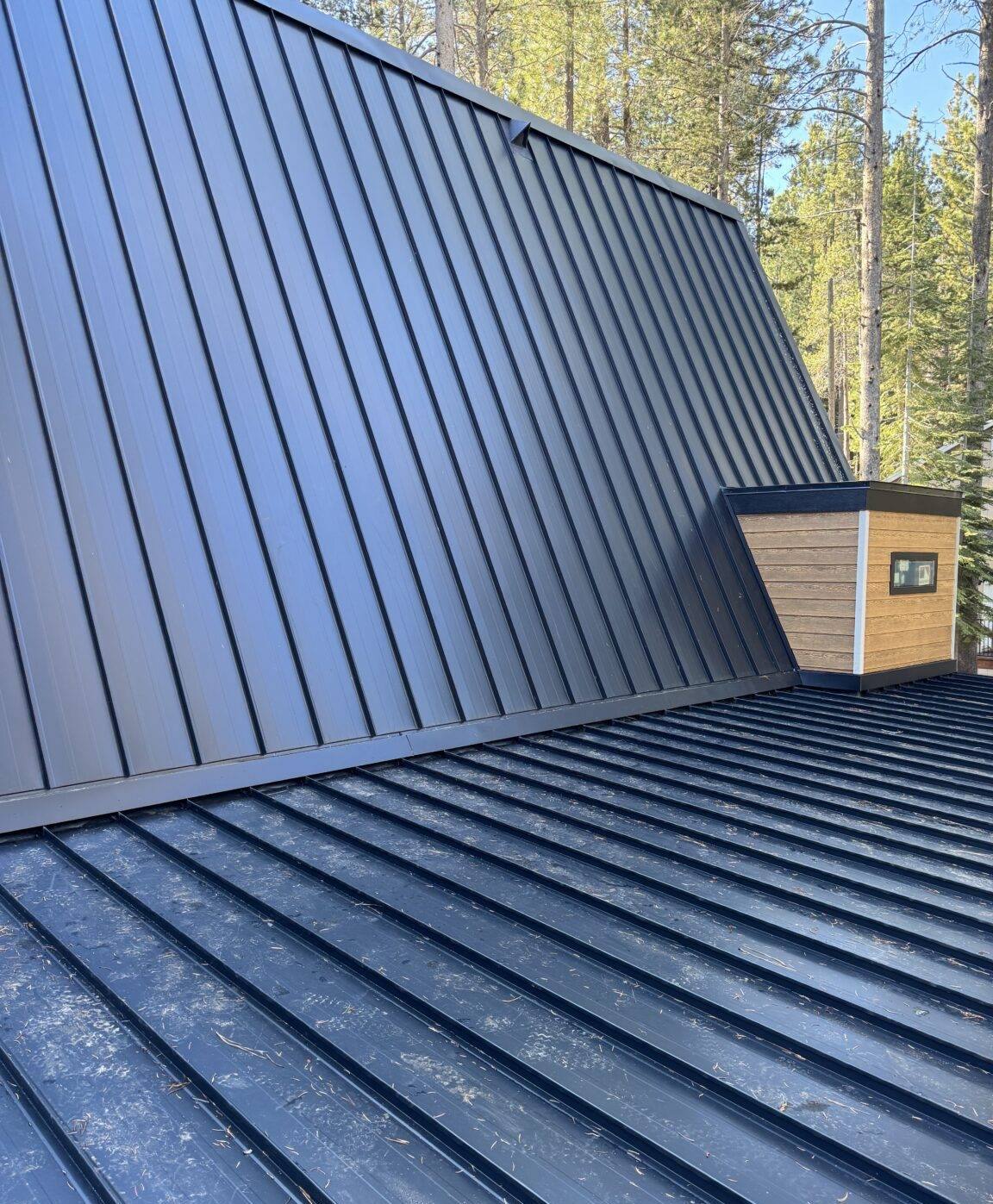
Common Roof Problems We See in Conway
Most of the repair calls we get in this specific area fall into a handful of categories. Recognizing which one you're dealing with helps you describe the problem accurately and avoid paying for the wrong fix.
Moss and Organic Growth
Moss doesn't just look bad. It holds moisture directly against roofing material, works its rhizoids under shingle tabs and shakes, and can lift edges enough to let wind-driven rain get underneath. Left alone through a full moss season, it accelerates granule loss on composition shingles and speeds up rot on wood roofing.
Flashing and Fastener Corrosion
Flashing around chimneys, skylights, vents, and roof-to-wall transitions is where most real leaks start — almost never in the open field of the roof. In a salt-air environment, uncoated or lower-grade fasteners and thin flashing metal corrode faster than they would further inland, and a pinhole in a corroded flashing seam is enough to feed a slow leak for months before it shows up as a stain on a ceiling.
Wind-Driven Rain Intrusion
Because storms here often bring sideways rain, water can be pushed uphill under shingles or siding-to-roof junctions in ways that gravity-only assumptions don't account for. A repair that only addresses the visible gap and ignores the wind-driven path will often fail again in the next storm.
Gutter and Drainage Overflow
Moss, needles, and organic debris collect in gutters faster in this climate than in drier parts of the state. When gutters back up, water sheets down behind fascia and siding instead of draining away, which shows up looking like a roof leak even when the roofing itself is sound.
What a Correct Roof Repair Actually Involves
A repair is only as good as the diagnosis behind it. Here's what we consider the right way to approach a roof repair on a home in this area.
Diagnosis Before Anything Gets Touched
We trace the actual water path, not just the spot where a stain appeared inside the house. Water can travel several feet along rafters or sheathing before it drips somewhere visible, so the repair location and the leak's true origin are often not the same spot.
Removing Damaged Material the Right Way
Damaged decking, saturated underlayment, and compromised shingles get removed back to solid material — not just shingled over. Covering a soft spot instead of replacing it just delays a bigger repair and hides a structural problem.
Flashing Detail Done Properly
Any repair that touches a flashing point gets rebuilt with correct step flashing, counterflashing, or kickout flashing as the situation calls for — lapped in the right order so water sheds over each layer instead of behind it. This is the detail that separates a repair that lasts from one that leaks again in a year.
Matching Materials and Weathering
Where possible, we match existing shingle type, profile, and color so a repair doesn't stand out as an obvious patch, and we use materials rated for the same exposure conditions as the rest of the roof.
Repair or Replace? How We Help You Decide
Not every roof problem needs a full replacement, and not every leak can be fixed with a small patch. These are the factors that actually drive that decision:
| Factor | Leans Toward Repair | Leans Toward Replacement |
|---|---|---|
| Age of roofing material | Under roughly two-thirds of expected lifespan | Near or past expected lifespan for the material |
| Extent of damage | Localized to one section, flashing point, or slope | Spread across multiple slopes or the whole roof |
| Decking condition | Solid, dry sheathing under the damaged area | Soft, delaminated, or rotted sheathing found |
| Moss/algae coverage | Surface growth, shingles still intact underneath | Growth has lifted tabs or degraded granule layer widely |
| History of repairs | First or second repair on this roof | Repeated patch jobs in the same areas |
We'll walk the roof, tell you honestly which column your situation falls into, and never push a full replacement when a proper repair will genuinely hold up.
Our Process, From Call to Finished Repair
- Inspection: We get on the roof (or use a camera pole where pitch or safety requires it) and look at decking, flashing, ventilation, and the full extent of moss or wear — not just the spot you called about.
- Honest estimate: You get a clear explanation of what's actually wrong, what a proper fix requires, and a written price before any work starts.
- Scheduling around the weather: Roof repair work needs a dry window to be done correctly. We schedule with realistic Skagit County weather patterns in mind rather than rushing a repair into a wet forecast.
- The repair itself: Damaged material removed, decking checked and replaced where needed, flashing rebuilt correctly, new material matched and installed, and the surrounding area cleaned and treated for moss where appropriate.
- Cleanup and walk-through: Debris and old material hauled off, work area cleaned, and we walk you through exactly what was done and why.
Moss and Debris: The Maintenance Piece Homeowners Can Control
A good repair lasts a lot longer with some basic upkeep between visits. Given how long the moss season runs in this part of the county, a little regular attention goes a long way toward avoiding another repair call next year.
- Keep overhanging branches trimmed back to reduce shade and debris buildup on north-facing slopes.
- Clear gutters and downspouts at least twice a year, more often if the roof sits under trees.
- Have visible moss treated before it spreads across a full slope, not after it's lifted shingle edges.
- Check flashing around chimneys and vents visually after major windstorms.
- Avoid pressure-washing a roof directly — it can drive water under shingles and strip protective granules.
- Address small leaks as soon as they appear rather than waiting through a wet season.
Materials and Roofing Systems We Work With in This Climate
The right repair material depends on what's already on the roof and how that material actually behaves in salt air and sustained moisture.
| Roofing Type | How It Handles This Climate | Maintenance Consideration |
|---|---|---|
| Composition (asphalt) shingle | Reliable and widely used; moss and algae resistance varies by shingle grade | Benefits from periodic moss treatment and gutter maintenance |
| Metal roofing | Sheds wind-driven rain well; fasteners and cut edges need corrosion-resistant coatings near the water | Watch fastener condition over time in salt-air exposure |
| Cedar shake/shingle | Traditional look, but sustained dampness and shade accelerate moss and decay | Requires more frequent moss and moisture upkeep than other options |
We're upfront about trade-offs rather than steering every job toward one product. A material that performs beautifully in a dry climate can be a maintenance headache a few miles from tidal water, and that's a conversation worth having honestly before a repair is done.
Roof and Siding: Why the Two Systems Have to Work Together
A significant share of the "roof leaks" we're called out for in Conway actually originate at the point where the roof meets a wall — a step-flashing detail, a kickout flashing at the bottom of a roof-wall intersection, or a siding-to-roof transition that wasn't sealed correctly. Because we work on both roofing and siding, we look at that intersection as one system rather than two separate trades pointing fingers at each other. A roofer who never touches siding can rebuild flashing correctly and still leave a gap where the siding overlaps it; a siding crew that doesn't understand roofing can caulk over a flashing problem instead of fixing it. Repairing that junction properly means understanding how both systems are supposed to shed water together.
Why Hiring a Crew That Already Works in Conway Matters
Roofing crews that mostly work drier inland areas sometimes underestimate how much moss and salt-air corrosion matter here, or how much a repair needs to account for wind-driven rain rather than straight-down rainfall. A crew that regularly works Burlington, Conway, and the surrounding Skagit County lowlands already knows which flashing details fail first in this environment, which materials hold up, and how to schedule work around realistic weather windows instead of guessing. That local pattern recognition is the difference between a repair that's still holding in five years and one that's back on the schedule next winter.
If you're dealing with a leak, visible moss damage, or just want an honest read on what your roof actually needs, we're glad to take a look. Reach out for a free, no-pressure estimate using the form below — we'll tell you straight what we find and what it would take to fix it right.