 Burlington
 Building a Deck That Can Actually Handle Big Lake's Climate
Big Lake sits inland from the saltwater bays that define so much of Skagit County, but the weather doesn't care about that distinction. The same marine air that rolls in off the Sound pushes up the valley, and it arrives here as heavy, sustained rain, high humidity off the lake itself, and long stretches of gray, damp weather that can run from October into May. Add in the tree cover that makes so many Big Lake properties shady and green, and you've got near-ideal growing conditions for moss and mildew on any horizontal wood surface — including a deck.
A deck built for a dry climate, or built cheaply anywhere, does not hold up here. We've replaced enough soft, spongy, moss-covered decking around this area to know exactly which shortcuts cause the most damage, and we build every custom deck to account for what this specific location does to lumber, fasteners, and footings over time.
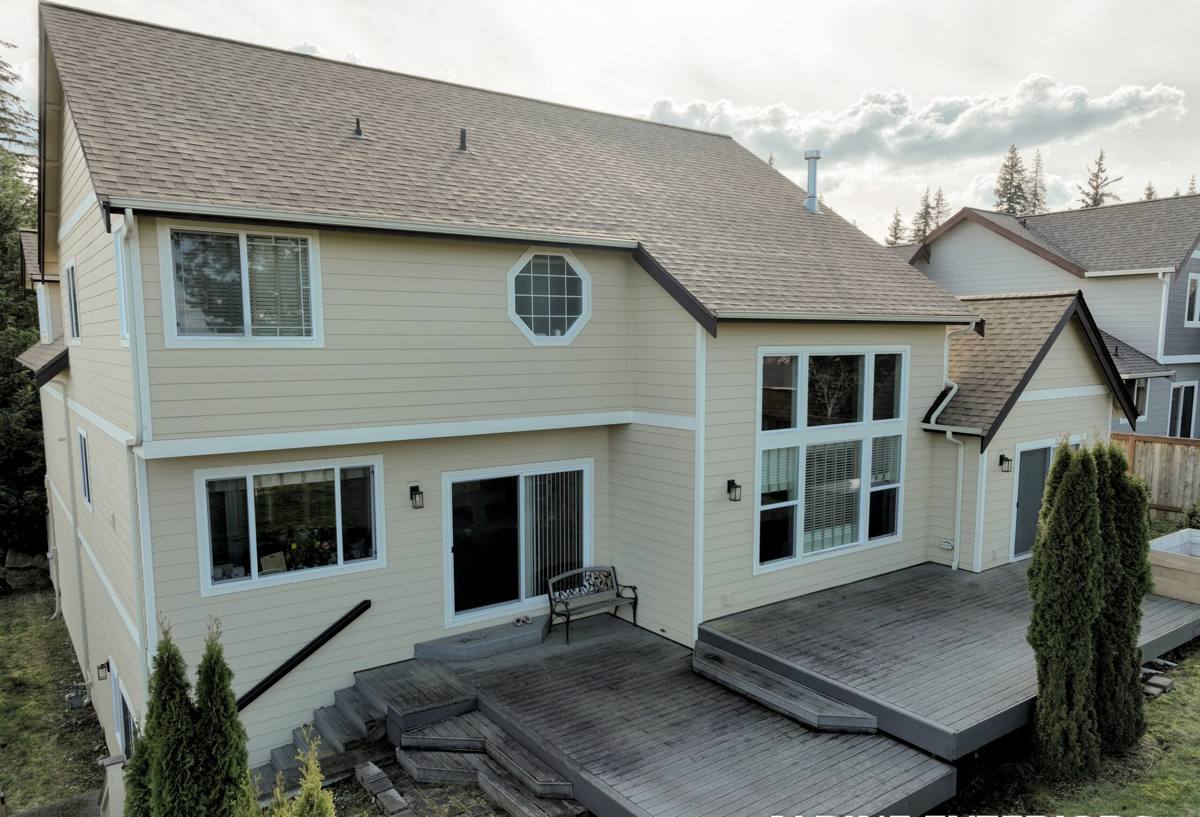
What Big Lake's Weather and Ground Do to a Deck Over Time
Lake Humidity and a Higher Water Table
Properties close to Big Lake often deal with soil that stays damp longer into the season than lots further from the water. That matters for footings — post holes that don't get poured deep enough or don't account for local drainage can settle or heave over a few winters, which is how you end up with a deck that develops a noticeable lean or squeak years after it was built.
Moss From Shade and Standing Moisture
Mature evergreens and the general tree cover around Big Lake keep a lot of deck surfaces shaded most of the day. Shade plus moisture plus organic debris (needles, leaves, pollen) is exactly what moss needs to establish. Once moss gets a foothold on decking, it holds even more moisture against the wood, which accelerates rot underneath the surface long before it's visible from the top.
Driving Rain and Freeze-Thaw Cycles
Skagit County doesn't get the deep freezes of the mountains or the interior, but it does get enough freeze-thaw swings each winter to matter. Water that's soaked into end grain, fastener holes, or a poorly flashed ledger board expands when it freezes, which widens cracks and loosens connections a little more each year. Combined with wind-driven rain that gets under railings and around post bases, this is a slow, cumulative process — the damage rarely shows up in year one, but it shows up.
Choosing the Right Decking Material for This Climate
There's no single "best" decking material — the right choice depends on your budget, how much maintenance you're willing to do, and how much shade the deck gets. Here's how the common options actually perform in a climate like Big Lake's:
| Material | Moisture/Moss Resistance | Maintenance | Typical Lifespan Here |
|---|---|---|---|
| Pressure-treated lumber | Good if detailed correctly; end grain and cut edges need re-sealing | Annual cleaning, periodic staining/sealing | 15-20 years with upkeep |
| Cedar | Naturally rot- and insect-resistant, but still needs sealing in shaded/damp areas | Regular cleaning, sealing every 1-3 years | 15-25 years with upkeep |
| Composite (capped) | Very good — doesn't absorb water the way wood does, but can still grow moss film on top if never cleaned | Occasional washing, no staining/sealing | 25-30+ years |
| Uncapped composite (older style) | Fair — can absorb moisture at cut edges and swell over time | Low, but not maintenance-free | Varies widely, often less than capped composite |
For heavily shaded Big Lake lots, we usually steer homeowners toward capped composite or a well-detailed cedar deck. Pressure-treated lumber is still a solid, budget-friendly choice — it just needs an honest maintenance commitment from the owner, because in a wet, shady yard it will not take care of itself.
What's Underneath Matters More Than What's On Top
A deck's surface material gets all the attention, but the framing, fasteners, and flashing underneath are what actually determine whether it lasts. This is where we see the most corner-cutting on older decks around Big Lake, and it's where we spend the most care.
- Ledger board flashing: where the deck attaches to the house has to be flashed correctly so water is directed out and away, not trapped behind the siding — a poorly flashed ledger is one of the most common causes of hidden rot we find on tear-outs.
- Footings sized for local soil: footings poured to the correct depth and diameter for the load and for ground conditions near the lake, not just the code minimum for drier soil elsewhere in the county.
- Corrosion-resistant fasteners and hardware: hot-dip galvanized or stainless connectors and screws, matched to the type of lumber used, so you don't get the black staining and fastener failure that comes from mismatched hardware in a damp climate.
- Joist tape or protective flashing on top of framing: a strip of self-adhering flashing over the joists keeps standing water off the wood where deck boards are fastened down, which is one of the cheapest things you can do to add years of life to the frame.
- Proper airflow underneath: decks built low to the ground or boxed in without ventilation trap moisture and encourage rot and mold in the framing — something we plan for at the design stage, not after the fact.
Keeping Moss and Rot From Taking Over
Even the right materials, built well, still need a few things done correctly to actually shed water and resist moss in a climate like this:
- Deck boards spaced with a consistent gap so water drains through instead of pooling on the surface
- A slight slope away from the house built into the framing, not relied on after the fact
- Boards run to avoid trapping debris where they meet posts, rails, or the house
- Enough clearance from overhanging trees and shrubs to reduce shade and leaf litter where it's practical to do so
- A realistic cleaning schedule — even a low-maintenance composite deck benefits from a wash-down once or twice a year in a climate this damp
None of this is complicated, but it has to be planned into the build. Retrofitting drainage or airflow onto a deck that was built without it is far more expensive than getting it right the first time.
Permits and Site Considerations Near Big Lake
Because Big Lake is a shoreline, decks built close to the water — or that qualify as new structures rather than straightforward repairs — can be subject to Skagit County permitting and setback requirements beyond what applies to a typical backyard deck elsewhere in Burlington. The specifics depend on your lot, your distance from the lake, and the scope of the project, so we don't guess at them. Part of our process on any Big Lake job is confirming what permitting actually applies to your property before we finalize a design, rather than finding out partway through construction.
How We Build a Custom Deck, Start to Finish
Our process is the same whether it's a simple ground-level deck or a larger multi-level build, because the steps that prevent problems don't change:
- On-site walkthrough: we look at your home's attachment point, the grade, drainage, tree cover, and sun exposure specific to your lot — Big Lake properties vary a lot from one side of the lake to the other.
- Design and material selection: we talk through decking material, layout, railings, and any permitting that applies, with honest cost and maintenance trade-offs for each option.
- Permitting: we confirm what's required for your specific property and handle the paperwork rather than leaving you to figure out county requirements on your own.
- Framing and structural work: footings, ledger flashing, joists, and hardware built to hold up to the moisture and soil conditions specific to this area, not just to a generic code minimum.
- Decking, railing, and finish work: installed with the gaps, slope, and detailing that let the deck actually shed water and resist moss once it's in use.
- Final walkthrough: we go over basic care — cleaning, sealing schedule if applicable, and what to watch for — so you know how to protect the investment going forward.
Why Hiring a Crew That Already Works in Big Lake Matters
A deck built to a generic set of plans, by a crew that doesn't build regularly in this specific climate, is exactly how you end up with the moss-covered, soft-boarded, prematurely failing decks we get called out to replace. Knowing how water actually moves across a shaded Big Lake lot, which fastener and flashing combinations hold up to this level of humidity, and what Skagit County expects for permitting near the shoreline isn't something you get from a manual — it's something you get from doing the work here, repeatedly, and paying attention to what comes back years later needing repair.
We're a Burlington-based crew that works this area regularly, and we build every custom deck with this climate in mind from the first conversation, not as an afterthought.
Questions Worth Asking Before You Build
- What decking material fits your budget, your shade level, and how much upkeep you actually want to do?
- Does your lot's proximity to Big Lake mean permitting or setback rules apply to your project?
- Is your existing deck (if you have one) showing soft spots, moss buildup, or a lean that suggests the framing or footings underneath are already compromised?
- How will the new deck handle drainage and airflow underneath, especially if it's shaded most of the day?
- What hardware and fasteners will be used, and are they rated for a wet, humid climate?
If you're planning a new deck or replacing one that's past its prime, we're happy to walk your property, talk through what makes sense for your specific spot on Big Lake, and put together a straightforward estimate — no pressure, no obligation. The form below is the easiest way to get that conversation started.