 Burlington
 Building Decks That Hold Up in Lyman's Wet, Wooded Climate
Lyman sits in the Skagit River valley, tucked among trees and hillsides that keep the air damp for most of the year. A deck built here has to deal with more than just rain — it has to shed constant moisture, resist rot where wood meets the ground, and stand up to a moss season that can stretch from October well into spring. Add in the salt-tinged marine air that moves up through the Skagit County lowlands from Puget Sound, and you've got a combination that ages an incorrectly built deck fast: soft boards, rusted fasteners, slick surfaces, and structural rot hiding under a deck that still looks fine from the top.
We build and repair decks throughout the Burlington and Skagit County area, and Lyman jobs come with their own set of habits we've learned to plan around — more tree cover, more standing moisture, more organic debris landing on the deck surface than you'd see on an open lot closer to town. This page covers what that actually means for material choice, framing, and long-term care.
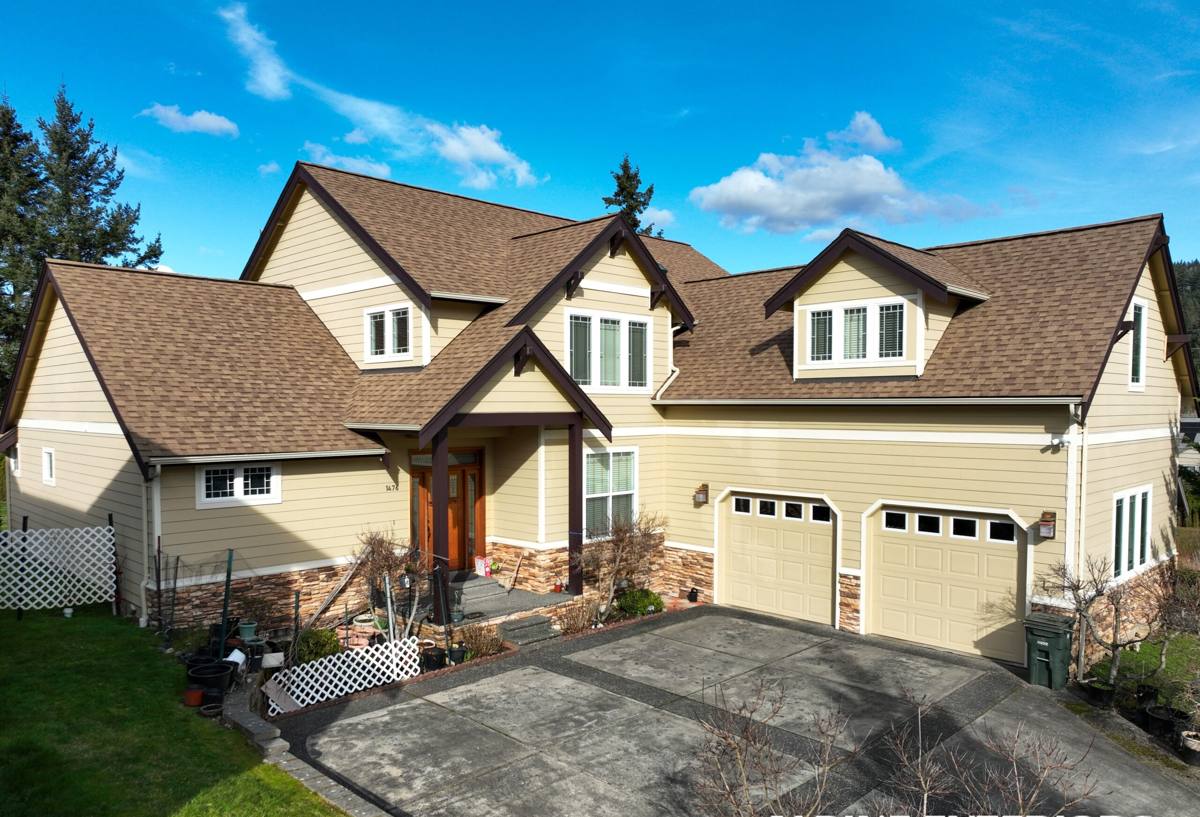
What This Climate Does to an Outdoor Deck Over Time
Constant moisture at ground level
Wood posts, beams, and joists that sit close to grade in a shaded, wooded lot rarely get a chance to dry out between rain events. That's where rot starts — not on the visible decking, but in framing members that are hard to inspect once the deck is finished. A deck built without enough ground clearance, without proper flashing, or with untreated cut ends is setting up a rot problem that won't show itself for a few years, by which point it's a structural repair instead of a maintenance item.
Moss, algae, and slick surfaces
Shaded decking that stays damp grows moss and algae, and it grows faster here than in drier parts of the state. Beyond looking bad, a mossy deck surface is a fall hazard, and moss holds moisture against the board itself, which accelerates decay in real wood decking and can stain composite surfaces if it's left to build up season after season.
Corrosion from moisture and marine air
Standard fasteners and hardware corrode faster in a climate that's damp most of the year and gets occasional salt-laden air off the Sound. Rust streaks on decking, failed screws, and corroded joist hangers are common signs of a deck built with the wrong grade of hardware for this region.
Choosing the Right Decking Material for a Lyman Property
There's no single "best" decking material — the right choice depends on your budget, how much upkeep you're willing to do, and how much sun or shade the deck actually gets. Here's how the common options hold up in this specific climate:
| Material | How it handles this climate | Maintenance | Typical lifespan |
|---|---|---|---|
| Pressure-treated wood | Good rot resistance when properly sealed and detailed; needs ground clearance and good drainage | Annual cleaning, re-sealing every 1-3 years | 15-25 years with upkeep |
| Cedar | Naturally rot- and insect-resistant, but softer and more prone to surface wear in constant damp shade | Regular cleaning and periodic sealing to keep color and prevent graying | 15-20 years with upkeep |
| Composite / capped composite | Doesn't rot; resists moss staining better than wood but still needs periodic cleaning in shaded spots | Occasional washing, no sealing or staining | 25-30+ years, manufacturer-dependent |
| PVC decking | Fully synthetic, handles constant moisture well; can feel less "natural" underfoot | Low — mostly washing | 25-30+ years |
On heavily shaded Lyman lots, we lean toward steering homeowners away from bare untreated wood for the decking surface itself, simply because the moss and moisture cycle is harder on it here than in a sunnier yard. That's a maintenance and moisture-behavior call, not a knock on wood as a material — a well-detailed wood deck with the right sealer schedule still holds up fine, it just asks more of the owner over time.
What's Underneath Matters More Than What's On Top
A deck's surface material gets all the attention, but the framing underneath is what determines whether the deck is still safe in fifteen years. In this climate, that means:
Footings set to the right depth
Footings need to bear below the frost line and on solid, undisturbed soil — not just poured on top of loose fill. On sites with poor drainage or heavier clay soils, which show up in parts of the Skagit valley, we adjust footing size and depth so the structure isn't sitting in standing water after a heavy rain.
Ledger flashing done correctly
The ledger board — where the deck attaches to the house — is the single most common point of failure on decks in wet climates. Without proper flashing that directs water away from the house's wall assembly, water gets trapped behind the ledger and rots both the deck framing and the house's sheathing behind it. This is a step that can't be shortcut, and it's one of the first things we check on any deck repair or rebuild.
Joist protection and hardware
Joist tape or a comparable moisture barrier on top of the framing keeps water from soaking into end grain and fastener holes — the two spots where rot starts fastest. We use corrosion-resistant, coated or stainless fasteners and connectors throughout, since standard hardware simply doesn't hold up as long in a climate this damp.
Spacing and airflow
Decking boards need consistent gaps for drainage, and framing needs enough clearance underneath for air to move. A deck built tight to the ground or with boards packed too close together traps moisture instead of shedding it, which is exactly the wrong setup for a shaded, high-rainfall lot.
Permits and Code Basics for Decks in This Area
Most decks above a certain height off grade require a building permit, guardrails at a set minimum height, and stairs built to code if the deck isn't at ground level. Footing depth, beam and joist sizing, and attachment to the house are all reviewed against the adopted building code, and requirements can vary depending on your specific parcel and whether you're inside city limits or unincorporated Skagit County. We handle the permitting and inspection process as part of the job — including pulling the right permit for your jurisdiction and building to the span and footing tables that apply to your deck's size and load — so you're not left guessing whether what's in your yard is actually up to code.
How We Build a Deck, Start to Finish
- On-site assessment. We look at drainage, sun/shade exposure, soil conditions, and how the deck will tie into the house before recommending materials.
- Design and material selection. We walk through the material options above against your budget and how much maintenance you actually want to do.
- Permitting. We prepare and submit what's needed for your jurisdiction and schedule required inspections.
- Footings and framing. Footings poured to proper depth and bearing, framing built with corrosion-resistant hardware and moisture barriers at every ledger and joist.
- Decking, railing, and stairs. Installed with correct spacing, fastening, and flashing details for long-term drainage.
- Final walkthrough. We go over care and maintenance specific to the material you chose and this climate.
Keeping a Lyman-Area Deck Looking Good for Years
Whatever material you choose, a little seasonal attention goes a long way in this climate. A basic yearly routine:
- Sweep off leaves, needles, and organic debris regularly — this is what feeds moss growth on a shaded deck
- Clean the surface at least once a year with a deck cleaner appropriate to your material (avoid pressure washing wood too aggressively, which tears up the grain)
- Reseal or restain wood decking on the schedule your product calls for, typically every 1-3 years
- Check and clear gaps between boards so water keeps draining instead of pooling
- Look underneath once a year for signs of moisture staining, soft spots, or corrosion on hardware
- Keep gutters and downspouts near the deck clear so roof runoff isn't dumping extra water onto or under the structure
Why Hire a Crew That Already Works Lyman
A deck built to a generic spec sheet can pass inspection and still perform poorly here if the crew isn't accounting for how much moisture this area holds onto compared to a drier, more open site. Knowing to size footings for local soil conditions, detail flashing for constant damp, and pick hardware that won't corrode in a few seasons comes from actually building in Skagit County conditions — not from a one-size-fits-all approach. We're a Burlington-based crew that works this area regularly, and we build decks the same way whether the site gets full sun or sits shaded most of the day under trees.
If you're planning a new deck or need an honest look at one that's showing its age, we'll come out, walk the site, and give you a straightforward, no-pressure estimate — just fill out the form below to get started.