 Burlington
 Blanchard Decks Face a Different Kind of Wear
Blanchard sits at the base of Blanchard Mountain, close enough to Samish Bay that salt-laden air reaches most yards, and shaded enough by second-growth timber that decks rarely get a full day of direct sun. That combination of salt air, driving rain off the water, and deep shade is harder on a deck than the weather most of Skagit County deals with. We've repaired enough decks in this pocket of the county to know the failure patterns are consistent: fastener corrosion, moss-driven rot, and ledger board problems that started small and got expensive because nobody looked at them for a few years.
This page covers deck repair specifically for Blanchard homes, not a generic overview. If you're a few miles away in Burlington proper or Bow, most of this still applies, but the shade and salt exposure here push the timeline up.
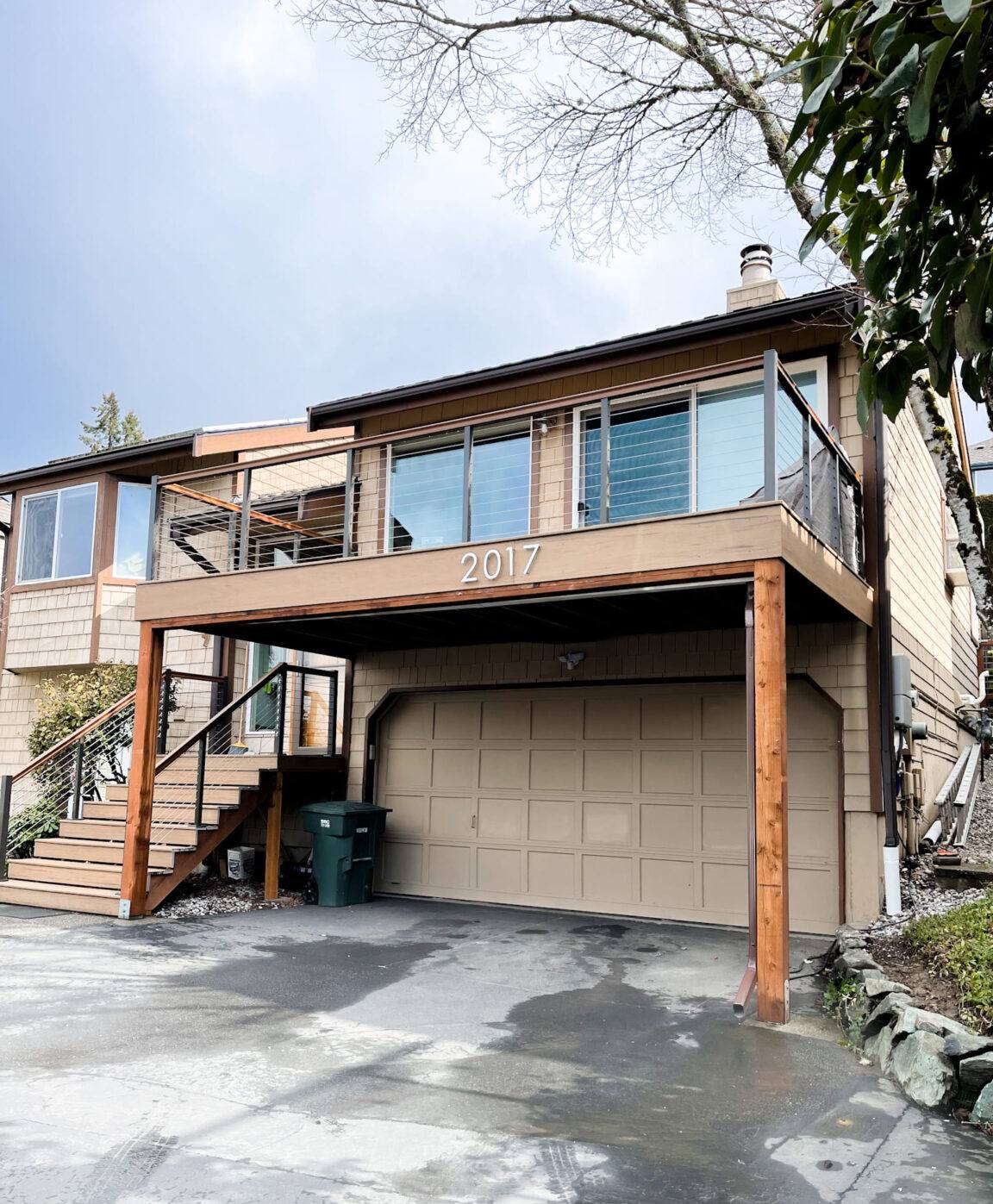
Why the Local Climate Is Harder on a Deck
Salt Air and Metal Fasteners
Homes closer to Samish Bay pick up airborne salt that settles on every exposed surface, including deck fasteners. Standard zinc-coated screws and nails that would last a decade further inland can start rusting and weeping stains into the wood in half that time this close to the water. Once a fastener corrodes it loses holding strength before it ever looks like a problem, which is why a deck can feel solid right up until it isn't.
Moss, Shade, and Trapped Moisture
Blanchard's tree cover means many decks stay damp long after a storm passes. Moss and algae take hold on boards, railings, and especially the shaded north or east side of a structure, and once established they hold water against the wood surface around the clock. That constant dampness is what actually causes rot, not the rain itself, but rain that never gets a real chance to dry.
Driving Rain and Ledger Board Exposure
Storms moving in off the water tend to drive rain sideways into the house-side ledger board, the single most important structural connection on any deck. Ledger boards without proper flashing take on water year after year, and because that board is bolted directly into the house framing, rot there is a structural issue, not a cosmetic one.
Signs Your Blanchard Deck Needs Repair
Some of these are obvious; others hide until you go looking for them. Walk your deck and check for:
- Soft, spongy, or springy spots underfoot, especially near the house or stairs
- Rust streaks bleeding out from screw heads or joist hangers
- Green or black growth that comes back within weeks of cleaning
- Gaps opening up between the ledger board and the house siding
- Railings or posts that wiggle when you push on them
- Stair stringers that flex or feel uneven underfoot
- Standing water that takes more than a day to dry after rain
- Boards that have cupped, split, or pulled away from their fasteners
Any one of these on its own might be a minor fix. Several at once, or anything involving the ledger board or support posts, means it's time for a real inspection before someone gets hurt.
What a Correct Deck Repair Actually Involves
Ledger Board and Flashing
If the ledger board shows any rot, we don't patch around it. We cut back to solid wood, correct the flashing so water sheds away from the house instead of behind the board, and re-bolt the connection to code. This is the one part of a deck repair we won't shortcut, because a failed ledger connection is how decks collapse.
Framing, Posts, and Fasteners
Joists and posts get checked with a probe, not just a visual look, because surface wood can look fine while the core underneath is soft. Any compromised framing gets sistered or replaced, and every fastener that goes back in is rated for exterior, corrosion-prone use rather than the cheapest box screw available.
Decking Boards and Railings
Individual boards that are cupped, splintering, or rotted get pulled and replaced rather than flipped over or shimmed. Railings and guardrails get the same structural attention as the frame. A railing that looks fine but was never lagged into solid blocking is a liability, not a repair waiting to happen.
Repair or Replace? What Actually Drives That Decision
Not every deck problem in Blanchard needs a full rebuild, and we won't sell you one if a targeted repair solves it. Here's how we weigh it:
| Factor | Repair Usually Makes Sense | Replacement Usually Makes Sense |
|---|---|---|
| Ledger board condition | Solid wood, isolated rot at one section | Rot runs the length of the board or into the rim joist |
| Framing | Most joists sound, one or two need sistering | Widespread soft or rotted joists throughout |
| Posts and footings | Footings intact, posts sound | Undersized footings or posts not meeting current code |
| Decking surface | Scattered bad boards, rest are solid | Most boards cupped, split, or moss-stained beyond cleaning |
| Age and history | Deck is under 15-20 years old, well-built originally | Deck has already been patched repeatedly over the years |
When we're not sure which side of that line a deck falls on, we say so, and we show you what we found instead of just handing you a number.
Our Deck Repair Process
- On-site inspection — we probe the ledger board, joists, posts, and decking rather than eyeballing it from a distance, and check the flashing and drainage path behind the ledger.
- Written scope — you get a clear list of what's failing, what we recommend fixing now, and what can reasonably wait, with pricing tied to the actual scope of work.
- Repair, in order — structural work happens first: ledger, framing, and posts, then decking and railings on top of a sound frame.
- Moisture management — we correct the flashing and drainage details that caused the damage in the first place, not just replace the wood that failed.
- Final walkthrough — we check that railings are solid, stairs are even, and the deck is genuinely safe to use before we call the job finished.
Permits and Code in Skagit County
Structural deck repair, meaning anything touching the ledger board, framing, footings, or guardrails, often falls under permit requirements, while like-for-like board replacement usually doesn't. Requirements can vary depending on the scope of work and your specific property, so we'll tell you plainly whether your project needs a permit and handle that paperwork rather than leaving you to sort it out with the county yourself. Skipping a required permit on structural work isn't worth the risk; it can complicate insurance claims and resale down the line.
Timing the Work Around Our Rainy Season
Deck repair in Blanchard goes faster and holds up better when it's scheduled around the weather instead of against it. Lumber needs to dry properly before it's sealed or painted, and flashing adhesives need a dry surface to bond correctly, so late spring through early fall is the window that gives a repair the best chance to be done right the first time. Winter repairs aren't impossible, and we'll take on urgent structural issues, like a failing ledger board or a soft stair stringer, any time of year rather than let a safety problem sit through a wet Skagit County winter. For anything that isn't urgent, we'll often recommend waiting for a drier stretch so the materials can cure the way they're supposed to.
Materials That Hold Up in This Climate
What goes back into a Blanchard deck matters as much as the workmanship. We use fasteners rated for coastal or high-moisture exposure, stainless steel or heavy hot-dip galvanized, rather than the standard-grade coated screws that start rusting within a few seasons this close to the bay. Flashing at the ledger is self-adhering membrane, not just building paper or a bead of caulk, because caulk alone fails long before the wood underneath it does.
On decking material itself, we'll give you an honest read on wood versus composite for your specific situation. Wood costs less up front and repairs easily board by board, but it needs regular cleaning and sealing to fight moss on a shaded lot like most of Blanchard's. Composite costs more initially and resists moss better, but it still needs the same attention to drainage and airflow underneath it. Composite laid over a poorly ventilated frame will trap moisture just as badly as wood does. Neither material fixes a bad structure underneath it, which is why we focus on the frame first regardless of what ends up on top.
Keeping Your Deck in Shape After the Repair
A repaired deck in Blanchard still lives in the same climate that caused the original damage, so a little seasonal attention goes a long way toward protecting the work:
- Sweep leaves and debris off the deck surface before fall rains set in, especially in shaded corners
- Clean moss and algae off boards and railings at least once a year, more often on north-facing sections
- Keep gutters and downspouts clear so roof runoff isn't dumping extra water onto the deck
- Check the area around the ledger board for gaps or staining once a year
- Re-seal or re-stain wood decking on a regular schedule, not just when it starts looking faded
- Trim back overhanging branches where you can, to let more light and air reach the deck surface
Why Hire a Crew That Already Works in Blanchard
A contractor who mostly works drier, sunnier parts of the county can still frame a deck well and still underestimate how fast moss comes back on a shaded Blanchard lot, or under-spec fasteners because salt air isn't part of their normal routine. We work this stretch of Skagit County regularly enough to know which side of a deck typically rots first, which flashing details actually hold up here, and how to sequence a repair around the rainy season instead of fighting it the whole way through. That local pattern recognition is the real difference between a repair that lasts and one you're calling someone back for in three years.
If your deck in Blanchard has soft spots, rust stains, stubborn moss, or a railing that doesn't feel as solid as it used to, we'll come take an honest look. The estimate is free, there's no pressure to sign anything on the spot, and you'll get a plain explanation of what we find. Use the form below to get started.