 Burlington
 Why Deck Repair in Lyman Isn't a Generic Job
Lyman sits up the Skagit River valley, surrounded by farmland and forested foothills, in a quieter and more shaded corner of Skagit County than the coastal towns closer to Puget Sound. That setting is easy on the eyes and hard on a deck. Mature trees hold shade over a lot for much of the day, valley humidity lingers longer after a storm than it does in more open, wind-exposed parts of the county, and a long wet season gives moss and rot plenty of time to work before a deck ever gets a real chance to dry out. None of that shows up overnight. It shows up as a board that's gone soft, a railing that flexes a little more than it used to, or a green film across the decking that keeps coming back no matter how often it's scrubbed off.
Deck repair done right in Lyman starts with telling apart what's cosmetic from what's structural, because those two problems get fixed differently and confusing them either wastes money on unnecessary rebuilding or leaves a real safety issue sitting under a coat of fresh stain. This page covers what actually goes wrong with decks in this part of the valley, what a correct repair job involves, and why hiring a crew that already works Lyman regularly — instead of one learning the local conditions on your project — makes a real difference in how long the repair lasts.
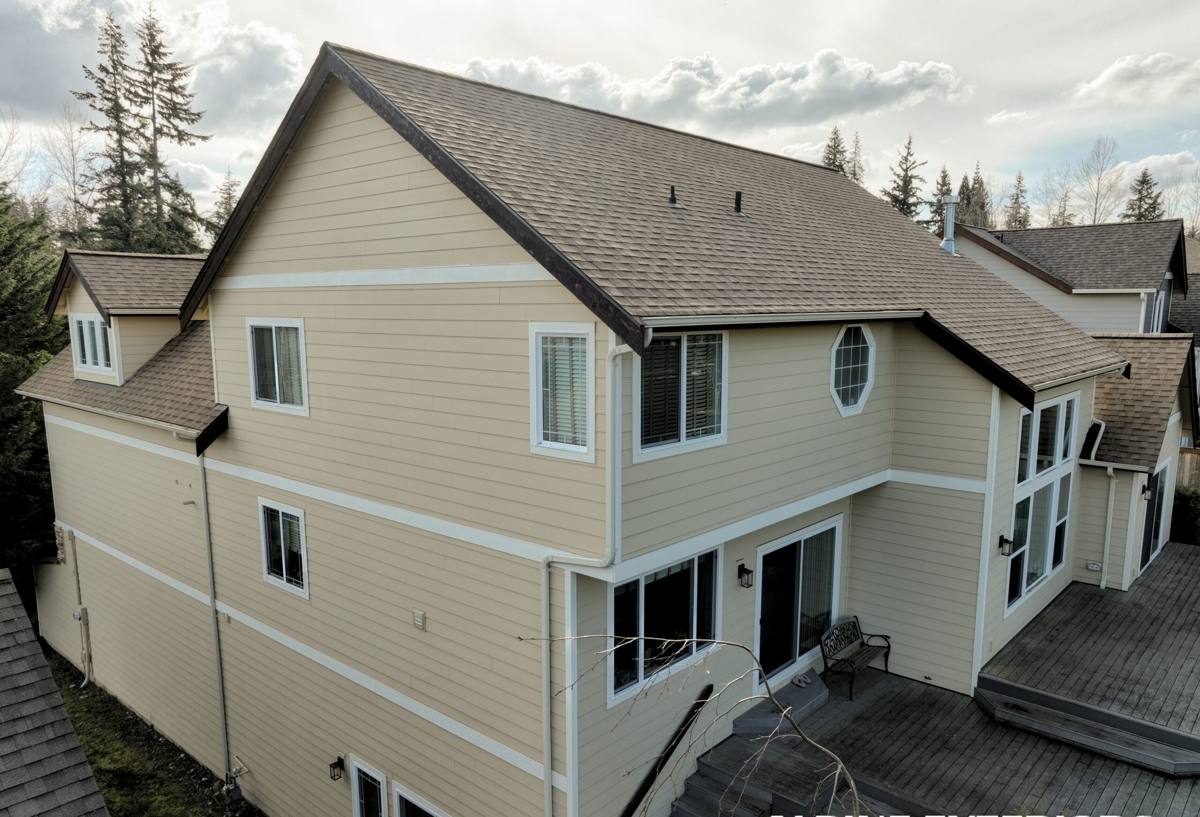
What Actually Damages Decks in a Shaded River Valley
Moss and Trapped Moisture
Horizontal surfaces hold water longer than walls do, and a deck is nothing but horizontal surfaces. Between shade from surrounding trees and a valley climate that doesn't offer many hard dry stretches, moss and mildew get a long growing season on decking boards, especially anywhere sun doesn't reach directly through the day. Once moss establishes on a board's surface, it holds moisture against the wood or composite cap underneath, which is exactly the condition that leads to rot in wood decking and, over time, surface degradation in lower-grade composite products.
Driving Rain and Water That Doesn't Just Fall Straight Down
Pacific storm fronts push rain sideways as often as they drop it straight down, and a deck takes that water from angles a roof never has to deal with. Water gets driven under railings, into the gap where decking meets the house, and into fastener holes and board end grain — the places most decking products are least protected. Over a full wet season, that's a lot of repeated exposure at exactly the joints and connections a deck depends on structurally.
Salt Air's Reach, Even This Far Inland
Coastal parts of Skagit County deal with salt-laden air directly off Puget Sound, which accelerates corrosion in exposed fasteners and hardware. Lyman, being further up the valley, sees less of that direct exposure than the coastal towns. But it isn't zero, and the broader regional climate — persistent moisture, mild year-round temperatures, and a wet season that runs long — still calls for corrosion-resistant hardware rather than whatever fastener happened to be on hand. Standard-grade screws and hangers that would hold up fine in a dry inland climate corrode faster here than most homeowners expect.
Freeze-Thaw Cycling on Slow-Drying Wood
Skagit County gets enough cold snaps for freeze-thaw cycling to matter, and a deck that stays damp longer because of shade and valley humidity is exactly the kind of surface where that cycling does the most damage. Water that's soaked into wood grain, a hairline crack, or a fastener hole expands when it freezes and works the damage wider each time it happens. It's a slow process, which is part of why it's often further along than it looks by the time someone notices.
Cosmetic Wear vs. Structural Problems
Not every issue on an aging deck calls for the same response, and telling the difference correctly is the actual job of a good repair estimate.
| Symptom | Usually Cosmetic | Often Structural |
|---|---|---|
| Green or black staining that keeps returning | Yes — surface moss and mildew | Only if the board underneath is also soft |
| Grayed, weathered wood surface | Yes — normal weathering | Only if boards are also splitting or spongy |
| Squeaking or slight bounce underfoot | Sometimes — loose board fasteners | Often — loosened joists or hangers below |
| Railing that flexes or wiggles | Rarely | Usually — loose posts or corroded hardware |
| Soft or spongy decking | No | Yes — rot or moisture damage under the surface |
| Gap or shift where the deck meets the house | No | Yes — ledger connection needs attention now |
Cosmetic issues affect appearance and can usually wait for routine maintenance. Structural issues affect the deck's ability to safely hold weight and shouldn't sit unaddressed, especially anything involving the ledger board connection, joist hangers, or support posts.
How We Diagnose a Deck Before Recommending Anything
A repair estimate that's actually worth something starts with a real inspection, not a walk-around glance. On a Lyman job, that typically covers:
- The ledger board connection to the house — the most common serious failure point and the hardest one to judge from a casual look
- Probing boards and framing directly for soft spots, since shaded decks in this area often hide rot under a surface that still looks intact
- Fasteners, joist hangers, and railing hardware, checked for corrosion rather than assumed fine because they're not visibly rusted from the top
- Support posts and footings, checked for movement, settling, or standing water contact near the base
- Railing attachment and code compliance, particularly on any elevated deck where a failure has real consequences
- Drainage and airflow underneath the deck, since poor ventilation there is what lets moisture and moss problems compound instead of drying out between storms
We walk through what we actually find — what needs attention now, what can be monitored, and what's purely cosmetic — before we recommend any scope of work.
Repair vs. Replace: How That Decision Gets Made
Homeowners often assume any deck problem means tearing the whole thing out, or the opposite — that repair is automatically cheaper and just as good. Neither holds up consistently. The factors that actually drive the decision:
- How far the substructure damage extends. Rot or corrosion isolated to a handful of joists or hangers is usually repairable. Moisture damage spread through most of the framing often isn't worth chasing piece by piece.
- Age and condition of the remaining structure. A deck near the end of its practical service life may only have one more repair cycle in it before replacement is the more honest recommendation.
- Whether the original build accounted for this climate. Some older decks in this area weren't framed, fastened, or gapped with Skagit County's moisture and moss pressure in mind, and repairing those in place just delays a failure that's going to repeat.
- Surface condition versus structural condition. A structurally sound deck with worn or weathered surface boards is a strong repair candidate — resurfacing over solid framing is usually the most cost-effective option available.
We give a straight answer on which category a given deck falls into, including when replacement is genuinely the better call, rather than steering toward whichever job is bigger.
What a Correct Repair Involves
Matching Materials Honestly
Repairing a deck means working with whatever's already there — pressure-treated or cedar wood, capped composite, or cellular PVC. Matching board profile, fastening method, and color keeps a repair from looking like a patch job stapled onto an otherwise finished deck. Discontinued composite or PVC lines can make an exact match difficult, and we'll say so upfront rather than after the work is already underway.
Upgrading Hardware, Not Just Swapping It
When we replace corroded fasteners, hangers, or connectors, we use corrosion-resistant hardware suited to this region's sustained moisture, not a like-for-like swap with whatever standard-grade fastener failed the first time. This is one of the most common places a repair either lasts or needs redoing on a similar timeline to the original problem.
Fixing the Cause, Not Just the Symptom
Replacing a rotted board without addressing why it rotted — poor drainage underneath, boards gapped too tight to shed water, moss holding moisture against the surface — just buys a few years before the same spot fails again. A correct repair looks at airflow, gapping, and drainage around the damaged area, not only the damaged board itself.
Cost Factors Homeowners Should Understand
We don't publish fixed prices because every deck and every problem is different, but the variables that actually drive cost on a Lyman repair are consistent:
| Factor | Why It Matters |
|---|---|
| Extent of substructure damage | A few joists or hangers costs far less to address than framing damage spread across the deck |
| Decking material | Wood, composite, and PVC differ in material cost and in how easily a color/profile match can be found for repairs |
| Access to the site | Tree cover, slope, and staging space common on rural Skagit Valley lots can affect labor time |
| Age and discontinued materials | Older composite or PVC decking may need a wider repair area if an exact color match isn't available |
| Hardware condition | Corroded fasteners found throughout the structure add scope beyond the original visible complaint |
Signs It's Time to Call Someone
- Green or black staining on decking that keeps coming back after cleaning
- Soft or spongy spots when pressing on boards, especially near the house or in shaded sections
- A railing that flexes, wiggles, or feels less solid than it used to
- Rust staining spreading from fastener heads or visible corrosion on hardware
- Any gap, movement, or shift where the deck connects to the house
Why a Local Crew Matters on a Job Like This
A deck repaired correctly for a sunny, open lot elsewhere in the county isn't necessarily repaired correctly for a shaded, slow-drying setting like Lyman, and the reverse is also true. A crew that already works this part of the Skagit Valley regularly knows where moss takes hold first on a deck, which sections stay damp longest after a storm, and which fastener grades and gapping details actually hold up here rather than looking fine on the day the job wraps. That's the kind of judgment that comes from repeated exposure to this specific valley climate over time, not from a spec sheet written for the county as a whole.
Get a Free, No-Pressure Estimate
If your Lyman deck has a soft board, a wobbly railing, or moss that won't quit coming back, we're happy to take a look and give you a straight assessment of what it actually needs — repair, partial rebuild, or nothing urgent at all. Reach out using the form below to schedule a free, no-pressure estimate.