 Burlington
 Edison's Climate Is Harder on a Deck Than It Looks
Edison sits low, flat, and close to the water — tidal flats and Samish Bay aren't far off, and that proximity means salt-laden air moves through the area more than most Skagit County homeowners realize. Add in the region's long wet season, where driving rain comes in sideways off the water more often than it falls straight down, and you've got a deck environment that punishes anything with exposed wood grain, open joints, or poor drainage underneath. Then there's moss. Skagit County's moss season isn't a two-week nuisance — it's realistically eight or nine months a year of the right combination of shade, moisture, and mild temperatures that moss and algae love. A deck built for a drier inland climate will show its weaknesses here within a couple of seasons: swelling, splintering, green film on the walking surface, and soft spots where water sat too long.
None of that means a deck can't hold up in Edison. It means the material choice and the install details matter more here than they would somewhere drier or farther from salt water.
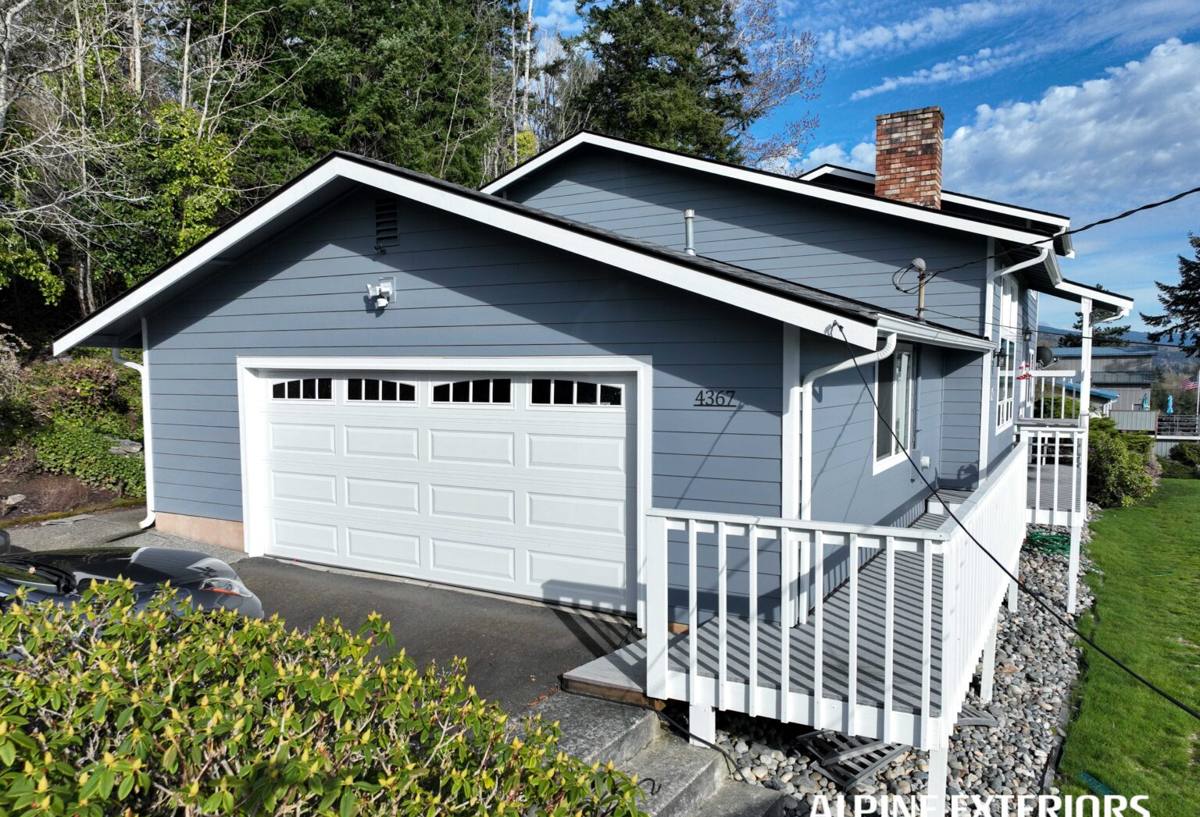
Why Composite Decking Fits This Environment
Composite decking — a blend of wood fiber and plastic, most of it now finished with a protective cap — is a reasonable answer to the specific problems Edison throws at a deck. It doesn't absorb water into open wood grain the way untreated lumber does, it won't rot from the inside out, and it doesn't need annual staining or sealing to keep moisture out. That matters a lot in a climate where you might not get more than a handful of consecutive dry days to do maintenance work anyway.
That said, composite isn't maintenance-free, and it isn't immune to Edison's conditions — it's just more forgiving of them than wood, if it's installed correctly. Salt air still deposits residue on the surface. Moss and algae still grow on any decking material that stays damp and shaded, composite included. The difference is that composite won't structurally degrade from that exposure the way wood eventually does; the surface can be cleaned rather than sanded and refinished.
Capped vs. Uncapped Composite
Not all composite decking is built the same, and the distinction matters more here than in a dry climate. Capped composite has a plastic shell wrapped around the core, blocking moisture from soaking into the wood fiber inside. Uncapped composite, common in older or lower-tier product lines, has no such barrier and can absorb moisture at the edges over time, especially at cut ends that weren't properly sealed.
| Factor | Capped Composite | Uncapped Composite |
|---|---|---|
| Moisture absorption | Very low, protected by cap | Higher, especially at cut ends |
| Mold/algae resistance | Better surface resistance | More prone to surface growth in shaded, damp areas |
| Fading in coastal sun/salt exposure | More consistent long-term color | Can fade or discolor unevenly |
| Upfront cost | Higher | Lower |
| Best fit for Edison's climate | Recommended for shaded, low-airflow, or near-water lots | Workable only on sunny, well-drained, well-ventilated sites |
Our standard recommendation for Edison properties, particularly anything close to the water or under tree cover, is capped composite. It costs more up front, but the moisture protection is doing real work in this specific climate, not just on a spec sheet.
What a Correct Composite Deck Install Actually Involves
Composite decking is often marketed as low-maintenance, and it is — but that reputation only holds up if the substructure and installation details are handled right. A composite deck installed like a wood deck, with wood-deck assumptions about drainage and airflow, will develop the same moisture problems underneath that composite is supposed to solve on top.
Substructure and Moisture Management
The framing underneath a composite deck needs the same attention as the decking itself, if not more, because it's usually still pressure-treated lumber that can rot even when the boards above it can't. In Edison's rain and humidity, that means:
- Joist tape over every joist top, to keep standing water off the wood and out of fastener holes
- Proper ledger board flashing where the deck attaches to the house, so water is directed away from the wall assembly rather than into it
- Adequate airflow underneath the deck — low-to-ground decks with poor ventilation are where we see the worst moss and mildew buildup on the underside of boards
- Correct footing depth and drainage away from posts, so standing water isn't sitting against the base of the structure through the wet months
Skip any of this and you can still end up with a rotten frame under a perfectly good composite deck surface a few years in — the composite just hides the problem longer, which isn't the same as preventing it.
Fastening and Board Spacing
Composite boards need slightly different gapping than wood, both between boards and at the ends, to account for thermal expansion and to give water somewhere to go instead of pooling between boards. Hidden fastener systems are worth using here specifically because face-screwed boards create small penetration points where moisture can work its way in around the screw over time — not a huge risk with capped composite, but an unnecessary one when a clean fastening system avoids it entirely. Board spacing that's too tight for the conditions is one of the more common corners cut on rushed decking jobs, and it's exactly the kind of detail that shows up as cupping or debris buildup once the rains set in.
Design Choices Worth Thinking Through for This Location
A few decisions have more impact on how a deck performs in Edison's specific conditions than they might elsewhere in Washington:
- Color: Very dark composite boards absorb more heat and can accelerate slight expansion/contraction cycling; lighter and mid-tone colors also show pollen, salt residue, and light algae film less than solid dark colors.
- Railing material: Metal railing hardware near the water should be corrosion-resistant; composite or vinyl railing systems avoid the rust staining that plain steel components can develop under salt air exposure over time.
- Board orientation and shading: Decks tucked under heavy tree cover or on the north/shaded side of a house hold moisture longer and need more attention to airflow underneath — sometimes that means adjusting joist spacing or adding ventilation gaps at the deck's edge.
- Elevation and drainage: Low-clearance decks close to grade are the most common moss and mildew complaints we see; where the lot allows it, a bit more clearance underneath makes a real difference.
Our Process for an Edison Composite Deck
We approach a decking project the same methodical way regardless of size, because the substructure work matters as much as the visible finish:
- On-site assessment: we look at existing framing (if any), grade and drainage around the deck footprint, sun/shade exposure, and proximity to moisture sources before recommending a decking tier.
- Framing and structure: repair or build the substructure to current code, with proper flashing, joist protection, and footing placement for the site's drainage.
- Decking installation: board layout planned for correct spacing and expansion gaps, hidden fastening where the product line supports it, and clean end-cuts sealed where required by the manufacturer.
- Railings and finish details: installed to match the decking material's moisture and corrosion profile, not just its color.
- Final walkthrough: we go over basic care for the specific product installed, since capped and uncapped composite have slightly different cleaning needs.
What Drives the Cost of a Composite Deck
Composite decking costs more per square foot than pressure-treated wood, but the honest way to think about it is total cost over the life of the deck, not just the material line item. Broad ranges vary a lot by size, framing condition, and product tier — a firm number only comes from seeing the site — but these are the factors that move the price the most:
| Cost Factor | Why It Matters |
|---|---|
| Existing framing condition | Reusing sound, code-compliant framing costs far less than rebuilding a rotten or undersized substructure |
| Composite tier (capped vs. uncapped, product line) | Capped, higher-tier boards cost more upfront but hold up better against salt air and moisture |
| Deck size and shape | More cuts, borders, and picture-framing detail add labor time |
| Railing system | Composite or cable railing costs more than basic wood or aluminum |
| Height and stairs | Elevated decks need more structural work and code-compliant guardrails and stair stringers |
| Site access and drainage work | Sites needing regrading or extra drainage work to keep the substructure dry add cost but reduce long-term moisture problems |
Living With a Composite Deck in Skagit County's Wet Months
Composite decking cuts down maintenance significantly compared to wood, but "low-maintenance" isn't "no-maintenance" in a climate like this one. A realistic seasonal routine keeps a composite deck looking and performing the way it should:
- Sweep debris off regularly through fall — wet leaves and needles left sitting on composite boards are one of the main causes of surface staining and localized algae growth
- Rinse the surface periodically through the wet months to clear salt residue and organic film before it builds up
- Clean visible moss or algae with a soft-bristle brush and a composite-safe cleaner rather than a pressure washer on high setting, which can damage the cap layer on some products
- Check that gaps between boards and at the deck's perimeter stay clear so water keeps draining as designed
- Inspect railing hardware and fasteners once a year for any early corrosion, particularly on decks with more direct water exposure
Why It Matters That We Already Work in Edison
A crew that already does work in and around Edison and greater Burlington isn't guessing at how this climate treats a deck — we've seen where moss takes hold first, which lots hold water longest through the winter, and which framing details actually hold up versus which ones look fine on installation day and fail two winters later. That local pattern recognition affects real decisions: how much airflow to build under a low deck, whether a given lot needs extra drainage work before decking goes down, and how to schedule the framing and install phases around a wet season that doesn't leave a lot of reliable dry windows. It also means we're a known, findable business in Skagit County if a warranty question or a maintenance question comes up years down the road — not a crew that showed up from out of the area for one job.
If you're weighing composite decking for a property in Edison or nearby, we're glad to come take a look, walk the site, and give you a straightforward, no-pressure estimate based on what your specific lot and framing actually need — no upsell on a product tier your situation doesn't call for. There's a quick form below to get that started.