 Burlington
 Why Siding in Edison Has to Work Harder Than Siding Inland
Edison sits close enough to tidal water that homes here deal with a version of siding wear you don't see twenty miles inland. Salt-tinged air moves through on a regular basis, driving rain comes in sideways off Pacific storm systems most of the fall and winter, and the mild, damp Skagit County climate keeps shaded walls wet long enough for moss and algae to take hold and stay there for months. None of these things individually destroys a wall overnight. Together, over years, they punish whatever siding product can't handle sustained moisture, and they're unforgiving of shortcuts in the original installation.
This page is about one job, done right, in one area we already work: James Hardie fiber cement siding installed on homes in and around Edison. We're not going to give you a generic rundown of what Hardie siding is — we install it every week in this exact climate, and this is what that actually means for a house here.
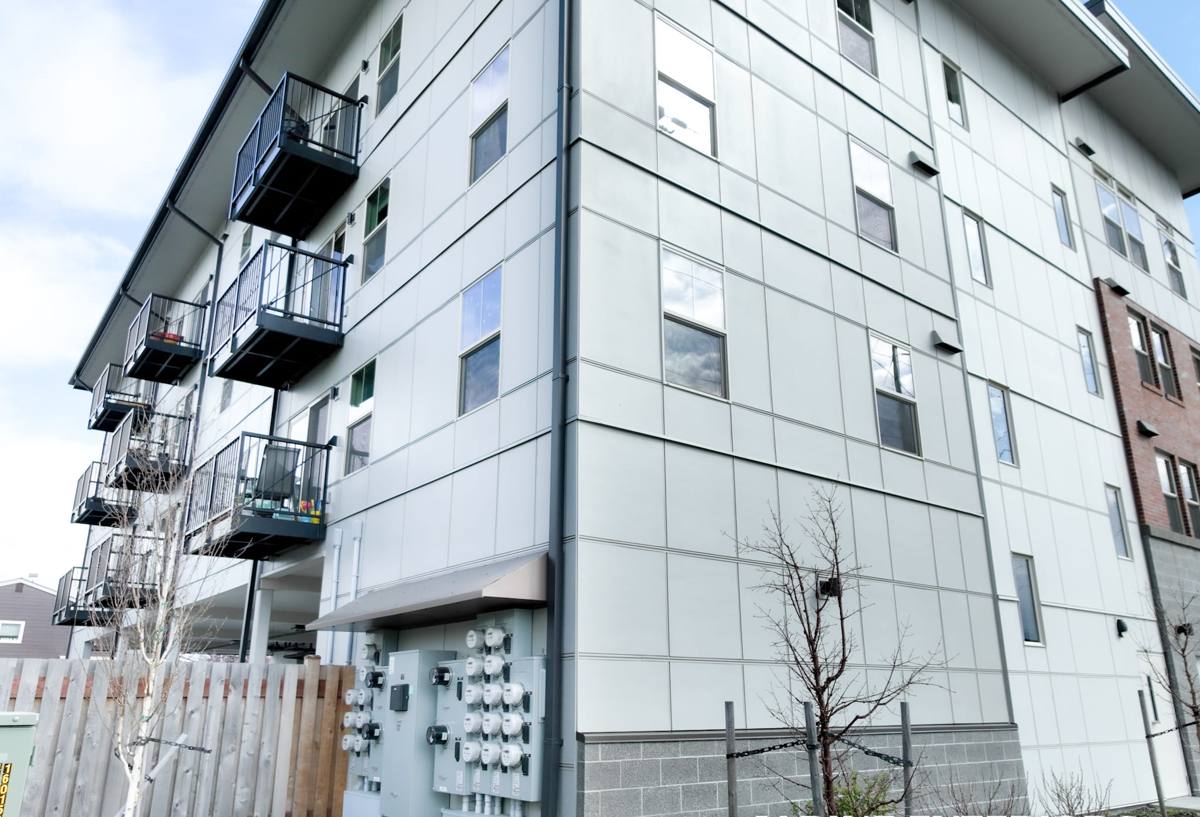
What Salt Air, Driving Rain, and Moss Actually Do to a Wall
Salt Air
Airborne salt accelerates corrosion on anything metal — fasteners, flashing, trim screws — and it can dull or degrade lower-quality factory finishes faster than it would in a dry inland climate. The siding material itself matters less here than the hardware and finish holding it together; a product with a weak factory coating or the wrong fastener spec will show it first in a setting like Edison's.
Driving Rain
Wind-driven rain doesn't just fall on a wall — it pushes sideways and works its way into laps, butt joints, and trim intersections that aren't detailed correctly. A siding job that looks fine on a calm dry day can still be letting water behind the cladding during a real Skagit County storm if the flashing and gapping weren't done to spec.
Moss Season
Shaded and north-facing walls in this region can stay damp for a large part of the year. Moss and algae don't just sit on the surface — organic growth traps moisture against the substrate underneath it. Wood-based sidings feed that cycle because the growth can find something to root into; fiber cement doesn't give it the same foothold, but it still needs to be washed off periodically or it will stain and shade the finish over time.
What James Hardie's Engineered-for-Climate Lines Are Built to Handle
James Hardie makes region-specific formulations of its fiber cement siding, and the versions specified for the Pacific Northwest are engineered for exactly this combination of sustained moisture and temperature swings. That matters more in Edison than in a drier climate, because the margin for error on moisture management is smaller.
- Fiber cement composition — won't rot, delaminate, or feed mold the way wood-based sidings can when they stay wet.
- ColorPlus factory finish — baked on under controlled conditions, holding color and resisting fade and moisture intrusion far better than a field-applied paint job, which is the part of most siding jobs that fails first in a wet climate.
- Dimensional stability — Hardie doesn't swell and contract with moisture the way wood does, which keeps joints and caulk lines tighter for longer.
- Non-combustible material — not a climate factor specific to Edison, but it's part of why we standardized on this product everywhere we work.
The product being right for the climate is only half the equation. The other half is whether it's installed to the manufacturer's specification for this climate — and that's where most of the difference between a siding job that lasts and one that doesn't actually shows up.
What a Correct Installation Actually Involves Here
A James Hardie installation that's going to hold up against Edison's rain and salt air needs several details done correctly, every time, not just on the parts of the wall that are easy to see:
Clearance and Drainage
Proper clearance from grade, roof lines, decks, and other siding terminations so water has somewhere to go instead of wicking into the bottom of a board.
Flashing at Every Penetration
Windows, doors, vents, hose bibs, light fixtures — anywhere something interrupts the siding plane is a place water can get behind it if flashing wasn't installed correctly underneath the trim, not just caulked over the top of it.
Fastening Specification
Correct fastener type, length, and placement, driven flush and not overdriven, following Hardie's published fastening schedule rather than whatever the crew is used to from other siding products.
Gapping and Sealant
The small gaps James Hardie specifies at butt joints and trim aren't optional — they allow for expansion and give sealant a place to actually do its job instead of bridging a joint with no depth behind it.
- Butt joints and trim seams sealed with a high-quality, paintable sealant rated for exterior exposure
- Weather-resistive barrier installed and lapped correctly behind the siding, not just stapled on as an afterthought
- Starter strips set level and true, since everything above follows that first course
- Fastener heads set flush, not overdriven into the board or left proud
- Kick-out flashing at roof-to-wall intersections to direct water away from the siding, not down behind it
Signs an Existing Installation Was Rushed
If you're evaluating siding on a home you already own, or checking a bid from another contractor, these are worth looking for:
- Caulk visibly bridging gaps instead of sitting flush against both surfaces
- Boards installed tight against each other with no expansion gap
- Trim without visible flashing tucked behind it at the top edge
- Fastener heads dimpled into the surface of the board
- Siding running straight down to grade or a deck surface with no clearance
Common Failure Points We Watch For on Edison-Area Homes
Because we work this area regularly, we see the same handful of problems come up on homes with poorly detailed siding — Hardie or otherwise:
| Symptom | Usual Cause |
|---|---|
| Dark staining or streaking on shaded walls | Moss/algae growth on siding that isn't getting sun exposure or periodic washing |
| Rust-colored streaks below fasteners or trim screws | Wrong fastener material or coating for a salt-air environment |
| Soft or discolored trim at window and door corners | Missing or improperly lapped flashing letting driving rain behind the trim |
| Cracked or peeling caulk lines | Sealant applied without a proper gap, or the wrong product for exterior movement |
| Bubbling or lifting paint near the bottom course | Siding installed too close to grade, wicking ground moisture |
Our Process, From Estimate to Finished Wall
- On-site walk-through — we look at the whole envelope, not just the siding: trim, flashing, roofline intersections, any existing moisture or rot damage.
- Honest assessment — if there's damage under the current siding, we tell you before we quote, not after we've opened the wall.
- Install plan specific to your home — clearances, flashing details, fastener spec, and product line chosen for your home's exposure, not a one-size-fits-all approach.
- Installation — following James Hardie's published installation guidelines for this climate zone, not shortcuts adapted from other siding products.
- Final walkthrough — we go over the finished work with you before calling the job done.
- Warranty registration — so the manufacturer's coverage is properly on record for your home.
Why We Only Install James Hardie — Not Vinyl, LP, or Cedar
We get asked why we don't offer other siding products, especially since some cost less up front. The honest answer is that in a climate like Edison's, the trade-offs on other materials show up faster and cost more to deal with later.
| Factor | James Hardie Fiber Cement | Vinyl / LP / Cedar |
|---|---|---|
| Moisture behavior in sustained rain | Dimensionally stable, doesn't swell or rot | Wood-based products can swell, rot, or delaminate if moisture gets behind them |
| Finish durability against salt air | Factory-baked ColorPlus finish resists fade and chalking | Field-applied or lower-grade finishes degrade faster in coastal-influenced air |
| Susceptibility to moss/algae staining | Non-organic surface won't feed growth, but still benefits from washing | Wood surfaces can host and be damaged by sustained organic growth |
| Fire resistance | Non-combustible | Combustible (wood, LP) or can deform under heat (vinyl) |
| Installation sensitivity | Forgiving once installed to spec; long service life | Often more sensitive to moisture intrusion if house wrap or flashing details are imperfect |
None of this means other products are junk — plenty of homes around the country are sided in vinyl, LP, or cedar and do fine. It means that given what this particular climate does to a wall over ten, twenty, thirty years, we decided we'd rather put our name behind one product we can install and warranty with full confidence than offer several and let cost be the deciding factor.
Cost Factors for an Edison Siding Job
We don't quote sight-unseen, but these are the things that actually move a bid up or down on a home in this area:
| Factor | Why It Matters Here |
|---|---|
| Existing moisture or rot damage | Long wet seasons mean sheathing damage is more common on older or poorly-flashed homes and has to be repaired before new siding goes on |
| Trim and detail complexity | More corners, penetrations, and roof intersections mean more flashing work, which is where quality separates itself |
| Number of stories and access | Affects scaffolding/staging needs and labor time |
| Siding profile and accessories | Lap width, trim style, and factory color selection all affect material cost |
| Removal of existing siding | Tear-off and disposal of old material adds labor versus a bare-wall install |
We'll walk your home, flag anything that affects the number before we hand you a quote, and explain what's driving it — no padded estimate to negotiate down from later.
Why a Crew That Already Works Edison and Burlington Matters
Siding installation isn't just about following a manufacturer's manual — it's about applying that manual correctly to the conditions a specific house actually faces. A crew that works Skagit County regularly already knows which walls on a given lot are going to stay shaded and damp longer, which sides typically take the worst of the driving rain, and how to detail flashing so it holds up to salt-tinged air rather than just looking finished on install day. That's knowledge you build by working this area repeatedly, not by reading a spec sheet once.
It also means we're not disappearing after the job is done. If a warranty question comes up, or you want a wall checked after a bad storm season, you're calling a crew that's still working nearby, not tracking down someone who did one job in the area and moved on.
What to Expect After Installation
Correctly installed James Hardie siding is low-maintenance, not no-maintenance. In Edison's climate, plan on:
- Periodic washing of shaded or north-facing walls to keep moss and algae from building up
- An occasional visual check of caulk lines at trim and penetrations, especially after a hard storm season
- Keeping gutters and downspouts clear so roof water isn't dumping onto siding it wasn't designed to handle
- Leaving repairs or repainting of ColorPlus-finished siding to a professional familiar with the product, since the factory finish behaves differently than a field-applied paint job
If you're weighing James Hardie siding for a home in Edison, we're glad to come take a look, walk you through what your specific house needs, and give you a straightforward, no-pressure estimate. There's a form below to get that started.